 Bellingham Roofing
 Roofing in Lynden's Climate: What a New Roof Is Really Up Against
Lynden sits in the farm country of Whatcom County, close enough to Bellingham Bay and the Salish Sea that marine air reaches it year-round, but open enough that fields and low tree lines let wind and rain hit rooflines with little to break them up. That combination is harder on a roof than most manufacturer warranties assume. Salt-tinged marine air accelerates corrosion on exposed metal fasteners, flashing, and vents. Long stretches of driving rain, often blown sideways across open farmland, push water into laps and seams that would stay dry in a calmer climate. And the region's mild, wet winters create a moss season that can run eight months or more, since moss needs shade and moisture more than cold, and Whatcom County supplies plenty of both.
None of this means a roof in Lynden is doomed to fail early. It means the installation has to account for these conditions from the start, rather than relying on a generic install that would hold up fine in a drier part of the state.
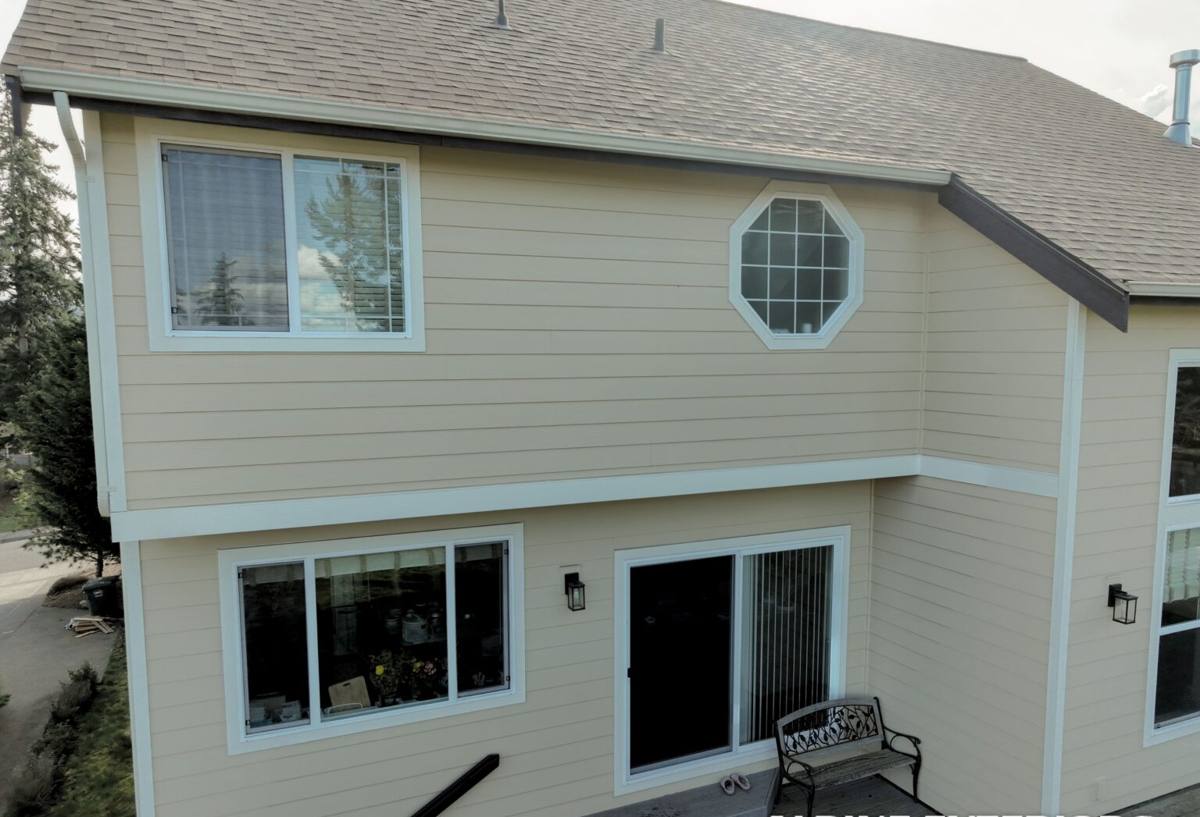
Signs a Lynden Home Needs a New Roof, Not Another Repair
Homeowners often ask us to patch a leak, only to find the roof is past the point where patching makes sense. A few patterns tell us a full replacement is the honest recommendation rather than another repair:
- Granule loss heavy enough that you can see bare, shiny patches on shingles, or granules collecting in gutters
- Shingles that are curling, cupping, or cracking across large sections rather than just one isolated area
- Soft, spongy spots in the roof deck when walked on, which usually means water has already reached the wood
- Moss that has worked its way under shingle edges and started lifting them, rather than just sitting on the surface
- Daylight visible through the roof deck from inside the attic, or damp insulation after a rain
- A history of repeated repairs to the same areas over the last few years
- A composition shingle roof approaching or past 20 to 25 years old, which is the realistic service life in this climate rather than the longer numbers printed on the shingle wrapper
If a roof shows one or two of these signs in a small area, a repair may still be the right call. When several show up at once, or the deck itself is compromised, a repair is usually just delaying a full tear-off at a higher eventual cost.
What a Correct New Roof Installation Actually Involves
Tear-Off and Deck Inspection
A proper installation starts with removing the old roofing down to the deck, not layering new material over old. Layering hides problems and traps moisture, which is exactly what a marine climate does not need. Once the deck is exposed, every sheet of plywood or OSB gets inspected. Soft, delaminated, or water-stained sections get cut out and replaced before anything new goes down. Skipping this step is the single most common shortcut behind an early roof failure.
Underlayment and Moisture Protection
Given how much rain Whatcom County sees in a given year, the underlayment layer matters as much as the visible roofing material. We use synthetic or self-adhered underlayment in vulnerable areas such as eaves, valleys, and low-slope sections, since these are where wind-driven rain and persistent winter moisture tend to find their way in. This layer is the roof's backup system if wind ever lifts or damages the outer material.
Flashing Details
Flashing around chimneys, skylights, vents, and wall intersections is where most roof leaks actually start, not in the open field of shingles. Correct flashing means new metal at every penetration, proper step flashing where a roof meets a wall, and counterflashing that sheds water rather than channeling it toward a seam. In salt-influenced air, we favor flashing materials and fasteners that resist corrosion rather than the cheapest option available.
Ventilation
A new roof is also an opportunity to correct ventilation problems that shorten roof life. Balanced intake at the soffits and exhaust at the ridge keeps the attic closer to outdoor temperature and humidity, which reduces condensation, ice damming risk, and the kind of trapped moisture that feeds moss and rot from underneath.
Choosing a Roofing Material for Lynden's Weather
There is no single "best" roofing material for every home. The right choice depends on roof pitch, budget, how the home looks, and how much long-term maintenance the owner wants to take on. Here is how the common options compare under Lynden's specific conditions:
| Material | Moss and Moisture Resistance | Wind and Rain Performance | Typical Lifespan | Maintenance |
|---|---|---|---|---|
| Asphalt composition shingle | Moderate; benefits from algae-resistant granules and periodic cleaning | Good when properly nailed and sealed; sensitive to poor installation | 20-25 years in this climate | Periodic moss removal and gutter clearing |
| Standing seam metal | Excellent; sheds moisture and resists moss better than any textured surface | Very good; performs well in driving rain and wind when properly fastened | 40-plus years | Low; occasional fastener and seam check |
| Synthetic or composite shingle | Good; less porous than asphalt, still benefits from clear sightlines and airflow | Good; check manufacturer wind ratings for exposed sites | 30-50 years depending on product | Low to moderate |
We do not install every product on the market. When we steer a homeowner away from a particular option, it is because our own installation standards, or the way a product behaves in sustained wet weather, do not line up with the durability we are willing to put our name behind, not because a manufacturer's product is inherently bad. We would rather explain the trade-off up front than sell a roof we would not put on our own house.
Our New Roof Installation Process, Start to Finish
- On-site inspection of the existing roof, deck condition, ventilation, and any problem areas, with photos and a plain-language explanation of what we find
- A written estimate covering material options, scope of work, and a realistic timeline
- Material selection, walking through the comparison above based on the home's roof pitch, budget, and how long the homeowner plans to stay in the house
- Permitting and scheduling, including building in flexibility around Whatcom County's rain patterns rather than promising a date we cannot guarantee
- Tear-off and deck inspection, with any damaged sheathing replaced before moving forward
- Installation of underlayment, flashing, ventilation components, and the new roofing material in that order
- Full site cleanup, including a magnetic sweep for nails and debris removal
- A final walkthrough where we explain what was done and what routine maintenance, if any, the new roof needs
What Drives the Cost of a New Roof in Lynden
Every roof is priced on its own specifics, but the same handful of factors move the number up or down on almost every project we quote:
| Cost Factor | Why It Matters |
|---|---|
| Roof size and pitch | More square footage and steeper pitches take longer to tear off and install safely |
| Number of existing layers | Removing multiple old layers of roofing adds labor and disposal cost |
| Deck condition | Rotted or soft sheathing found during tear-off has to be replaced before installation continues |
| Material choice | Asphalt, synthetic, and metal roofing carry different material and labor costs |
| Roof complexity | Valleys, dormers, chimneys, and skylights each add flashing work and time |
| Ventilation upgrades | Adding or correcting soffit and ridge ventilation is worth doing during a replacement, and adds modest cost |
| Site access | Steep driveways, tight lots, or difficult staging areas can affect equipment and labor time |
We walk through these factors during the on-site estimate so a homeowner understands what is driving their specific number, rather than being handed a flat quote with no explanation.
Ventilation and Moss: Playing the Long Game in Whatcom County
A new roof installed correctly still needs the attic and roof surface working together to shed moisture, or moss and rot problems simply return a few years later. Balanced ventilation, with enough intake at the soffits to match exhaust at the ridge, keeps warm, moist indoor air from condensing against the underside of the deck during Whatcom County's long wet season. On the outside, keeping overhanging branches trimmed back improves airflow and sunlight across the roof surface, which slows moss regrowth more effectively than any one-time treatment. Zinc or copper strips near the ridge can help suppress new moss growth over time as rain washes trace metal down the roof surface, though they work alongside good airflow and periodic cleaning rather than replacing them.
Why It Matters to Hire a Crew That Already Works in Lynden
A roofing crew that regularly works in and around Lynden brings a few practical advantages that an out-of-area contractor simply does not have. They know the local permitting process and inspection expectations, so paperwork does not become a scheduling bottleneck. They understand how exposed, open farmland sites differ from more sheltered lots closer to Bellingham, and adjust material choices and fastening schedules accordingly. They have working relationships with local material suppliers, which shortens lead times when a project needs a specific product or an unexpected deck repair changes the material order. And because they see the same climate conditions on job after job, they know which details, like flashing at a valley or ventilation at a low-slope section, tend to cause problems specifically in this area, and build the extra care into the install rather than treating it as an afterthought.
Pre-Installation Checklist for Lynden Homeowners
A little preparation before the crew arrives keeps the project moving smoothly:
- Clear attic access and move any stored items away from the areas directly under the roof deck
- Move vehicles, trailers, and outdoor furniture away from the house and driveway
- Trim back any tree branches overhanging the roofline if this has not been done recently
- Plan for pets and young children to be away from work areas during tear-off and material delivery
- Check any homeowners association requirements if the property is part of one
- Confirm where a dump trailer or material staging can be placed on the property
- Flag any satellite dishes, solar panels, or antennas that will need to be removed and reinstalled
If your roof is showing its age or you just want an honest read on how much life it has left, we are happy to take a look. A free, no-pressure estimate gets you a clear picture of your options and a straight answer on what your home actually needs, no obligation to move forward. Reach out through the form below to get started.