 Bellingham Roofing
 Why Siding Choice Matters More in Lynden Than People Think
Lynden sits inland from Bellingham Bay, but it doesn't escape the weather pattern that defines this part of Whatcom County: long stretches of low-intensity rain, wind-driven storms off the Pacific, and short winter days that leave siding wet for hours at a time. Add in the moisture that collects around farmland, tree lines, and low-lying yards common to the area, and you get a climate that's genuinely hard on exterior building materials. Homes here don't fail because owners neglected them. They fail because the siding installed on them was never engineered for this kind of sustained damp exposure in the first place.
That's the whole reason this page exists. Siding in Lynden isn't a cosmetic decision — it's a moisture-management decision first and a looks decision second. Get the moisture part wrong and the looks part won't matter for long.
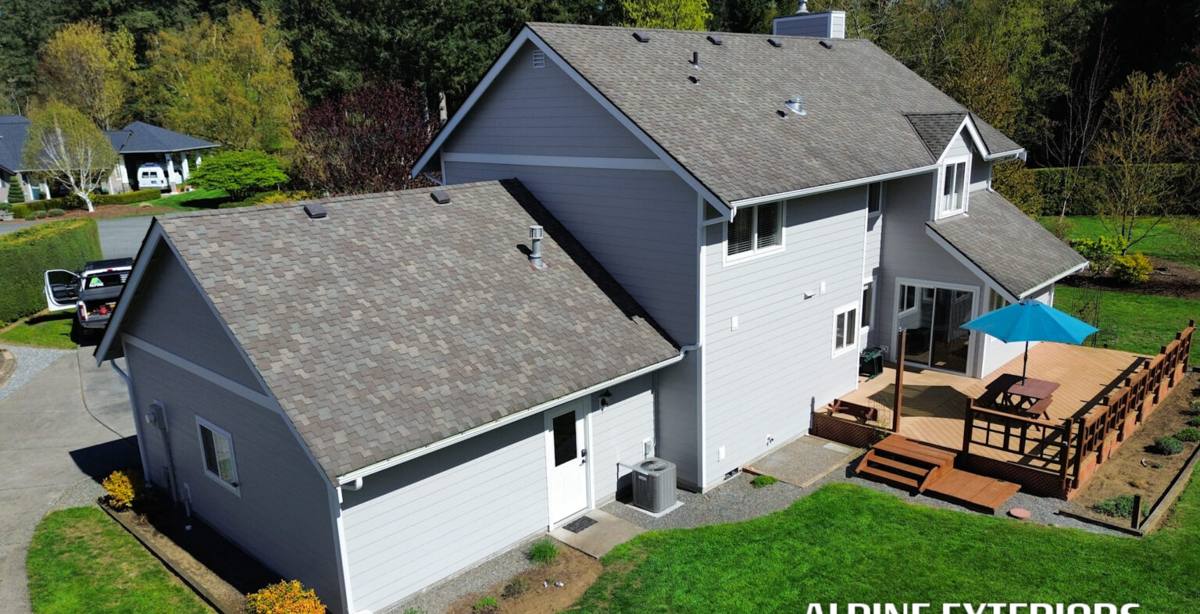
What Whatcom County Weather Actually Does to Siding
A few specific conditions drive most of the siding problems we see on homes throughout this region, Lynden included:
- Driving rain: Wind-blown rain doesn't just wet a wall's surface — it pushes moisture into seams, laps, and fastener penetrations that a calm-weather product might never see tested.
- Extended damp periods: Siding here can stay wet for days without a real drying window, which punishes any material that absorbs water or swells when saturated.
- Moss and organic growth: Shaded walls, north-facing elevations, and anywhere airflow is limited become long-term moss and algae hosts, holding moisture directly against the siding surface for months at a stretch.
- Salt-influenced air: Proximity to Puget Sound air currents means a measure of salt exposure works its way inland, which accelerates corrosion of fasteners and trim if they aren't rated for it.
- Temperature swings: Cool nights and milder days cause repeated expansion and contraction, which is where poorly installed siding starts to gap, crack, or pull away from fasteners over time.
None of this is unique to any one street or subdivision in Lynden — it's the baseline climate reality for this part of Whatcom County. The siding on a Lynden home needs to be chosen and installed with all five of these factors in mind, not just one or two.
Why We Only Install James Hardie
We made a decision as a company: we install James Hardie fiber cement siding, and we don't install vinyl, LP SmartSide, Cemplank, Allura, primed spruce, or cedar. That's not a marketing angle — it's a standard we hold because of what we've seen these products do (and not do) in exactly the conditions Lynden deals with.
Fiber cement, and James Hardie's version specifically, is built from cement, sand, and cellulose fibers. It doesn't absorb water the way wood-based products do, it doesn't soften or delaminate under sustained moisture the way some engineered wood sidings can, and it's non-combustible — a real advantage during dry-season wildfire smoke and ember exposure that the whole region has become more familiar with in recent years. James Hardie also engineers specific product lines (their "HZ5" and "HZ10" designations) for different climate zones, so the panels going on a home here are specified for the Pacific Northwest's damp, moderate climate rather than a generic national spec.
James Hardie's ColorPlus factory-applied finish is baked on under controlled conditions rather than field-painted, which means better color consistency and adhesion than a coat applied on a ladder in variable weather — a meaningful edge in a region where good painting weather is limited. The company backs its siding with a strong, transferable limited warranty, which matters to Lynden homeowners who may sell within the warranty period.
We're not saying every other product is worthless. We're saying that after installing and repairing siding on homes across this climate, fiber cement — installed correctly — is what we're willing to put our name on.
What "Correct" James Hardie Installation Actually Involves
James Hardie siding is only as good as the installation underneath it. A rushed or improperly detailed job can undercut even the best product. On a Lynden home, we pay particular attention to:
Water-Resistive Barrier and Flashing
A properly lapped weather-resistive barrier goes on before siding touches the wall, with flashing integrated at every window, door, and horizontal trim transition. This is the layer that actually keeps water out — the siding is the second line of defense, not the first.
Rain Screen Gap
Given how much sustained moisture this region sees, we build in a drainage gap behind the siding wherever the wall assembly allows it. That gap lets bulk water drain and lets the wall breathe, which reduces the trapped-moisture conditions that feed moss and rot behind the cladding.
Fastening and Clearances
James Hardie specifies exact nailing patterns, fastener types, and minimum clearances from grade, roofing, and decks. Skipping these details is the single most common cause of premature siding failure we see on jobs we're called to repair — not the product itself, but corners cut installing it.
Caulking and Joint Treatment
Panel joints, trim intersections, and penetrations need the right sealant, applied correctly, or they become the exact entry points driving rain is looking for.
Our Process for a Lynden Siding Project
| Step | What Happens | Why It Matters Here |
|---|---|---|
| 1. On-site assessment | We inspect current siding, sheathing, and any moisture or moss damage | Identifies hidden rot or barrier failures before covering them up |
| 2. Product and color selection | Choose the right James Hardie panel style and ColorPlus finish for the home | Matches the HZ climate spec and the home's architecture |
| 3. Tear-off and prep | Remove old siding, repair or replace damaged sheathing | Ensures the barrier and rain screen go over a sound substrate |
| 4. Barrier and flashing install | Weather-resistive barrier, window/door flashing, rain screen furring | This layer, not the siding, is the primary water defense |
| 5. Siding installation | Panels installed to Hardie's fastening and clearance specs | Prevents the cracking, gapping, and edge damage improper installs cause |
| 6. Trim, caulking, and final inspection | Seal joints and penetrations, walk the job with the homeowner | Closes off the entry points moisture and pests look for |
Signs a Lynden Home's Current Siding Is Falling Behind
Not every siding problem is obvious from the driveway. A few things worth checking, especially before winter:
- Soft or spongy spots when pressed, particularly near the bottom courses or around windows
- Persistent moss or dark streaking that comes back within weeks of cleaning
- Visible gaps, warping, or bowing between panels or boards
- Paint that's peeling or bubbling rather than just fading
- Rusted or popped fasteners visible on the siding face
- Musty smell or visible staining on interior walls that share an exterior wall with problem siding
Any of these can indicate the siding is no longer doing its job as a weather barrier, even if it still looks acceptable from a distance.
Cost Factors for a James Hardie Siding Project
We don't quote fixed prices without seeing the home, but a few factors consistently move the cost on Lynden projects:
| Factor | Effect on Cost |
|---|---|
| Panel style (lap, shingle, panel/board-and-batten) | Shingle and board-and-batten styles generally take more labor than standard lap siding |
| Existing wall condition | Rotten sheathing or hidden moisture damage adds repair scope before siding can go on |
| Home size and complexity | More corners, dormers, and trim details increase both material and labor time |
| Full tear-off vs. re-side over existing | Removing old siding down to sheathing costs more upfront but avoids covering hidden problems |
| ColorPlus vs. field-painted finish | Factory finish costs more initially but reduces future repainting needs |
Why Hiring a Crew That Works This Area Matters
Fiber cement installation isn't forgiving of guesswork. A crew that regularly works Whatcom County homes already knows how to detail a rain screen for this level of sustained moisture, where moss tends to establish on local roof and wall lines, and how far salt-influenced air reaches inland when it comes to fastener selection. That's the kind of judgment that doesn't come from a spec sheet — it comes from having installed and repaired siding on homes dealing with this exact weather pattern, year after year.
It also matters when something needs attention after the fact. A local crew is easier to reach for a warranty question, a caulk touch-up, or a color match years down the road than a company that installed the siding once and moved on.
Get a Straight Answer on Your Lynden Home's Siding
Whether your current siding is showing early wear or you're planning ahead for a full replacement, we're happy to take a look and give you an honest read on where things stand. Reach out for a free, no-pressure estimate using the form below — there's no obligation, and no pressure to move forward until you're ready.