 Bellingham Roofing
 Roofing in Lynden: A Different Climate Than It Looks
Lynden sits inland from Bellingham Bay, surrounded by farmland, and it's easy to assume that distance from the water means an easier ride for a roof. It doesn't. Whatcom County's weather moves through the whole region as one system — the same low-pressure fronts that push driving rain across Bellingham keep going east across the valley, and the moist marine air that rolls off the Salish Sea reaches Lynden roofs too, just with a little less salt bite than homes right on the coastline. What that means in practice: shingles, underlayment, and flashing on a Lynden home deal with the same long wet season, the same wind-driven rain that finds every gap in old flashing, and the same shaded, damp conditions that let moss take hold on north-facing slopes.
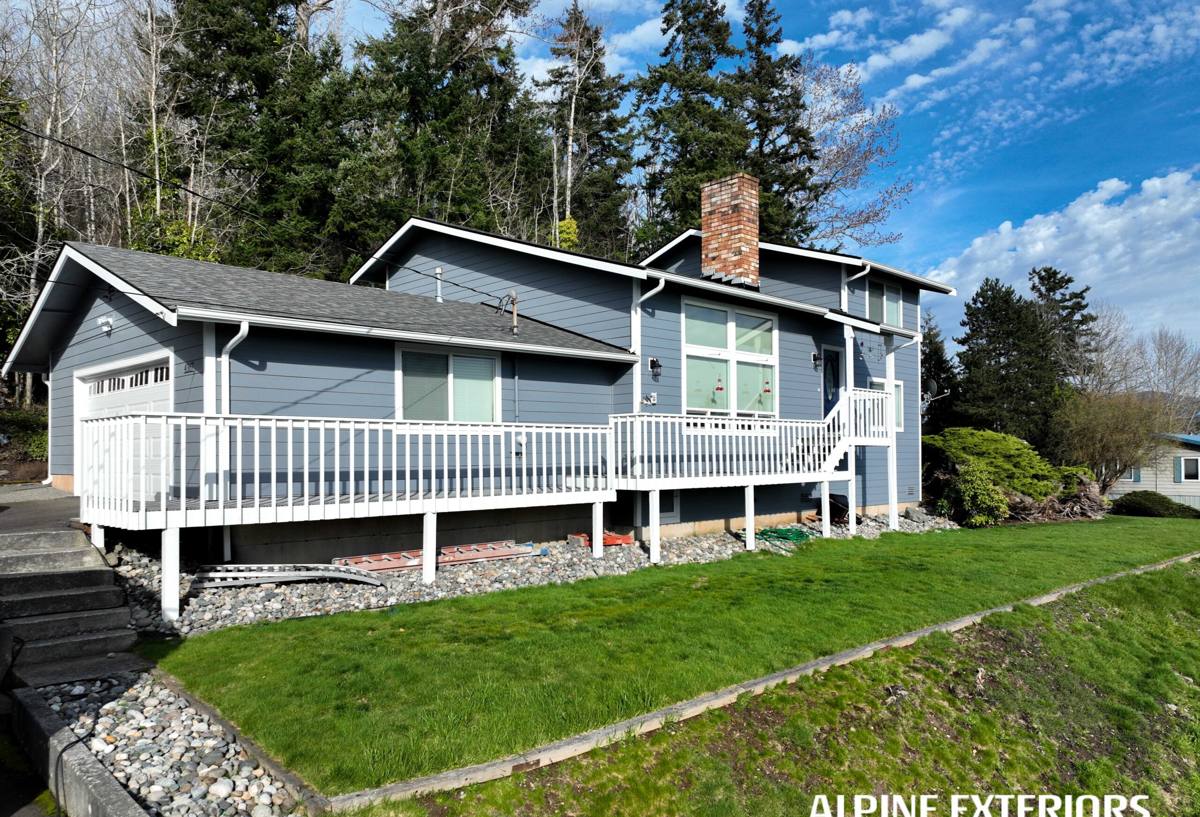
Add in Lynden's mix of older farmhouses, mid-century homes, and newer subdivisions, and you get roofs at very different points in their life cycle — some original to a 1970s build, some patched more times than they've been properly maintained. A roof replacement here isn't a one-size-fits-all job. It has to account for the specific pitch, ventilation, and material history of the house, and it has to be built to shed water and resist moss for years, not just look good on installation day.
What Whatcom County Weather Actually Does to a Roof
Driving Rain and Wind-Driven Moisture
Pacific Northwest rain isn't always straight-down rain. Wind off the Strait of Georgia and the Fraser Valley regularly pushes moisture sideways, forcing it up under shingle tabs and into flashing seams that would stay dry in a calmer climate. Over time, this is what causes leaks at valleys, chimneys, and skylights long before the shingles themselves are worn out — the field of the roof looks fine, but the details have failed.
Moss, Shade, and the Long Wet Season
Whatcom County's wet season runs long — roughly fall through spring — and that's plenty of time for moss and algae to establish on any roof surface that stays damp and shaded. North-facing slopes, roofs under tree cover, and lower-pitch sections are the most common trouble spots. Moss isn't just cosmetic: as it grows, it lifts shingle edges, holds moisture against the roof deck, and accelerates granule loss, which shortens the life of the roofing material underneath it.
Temperature Swings and Material Fatigue
Lynden sees a wider temperature swing than the immediate coastline — colder winter mornings and warmer summer afternoons than a house sitting right on Bellingham Bay. That daily and seasonal expansion and contraction is hard on aging shingles, sealant strips, and flashing, especially once a roof is past the midpoint of its expected life. It's part of why older roofs in the area tend to fail at the details first, not all at once.
Signs a Lynden Roof Is Ready for Full Replacement
Not every roof problem calls for a full tear-off — some issues are legitimately repairable. But there's a point where patching stops making financial sense and a full replacement becomes the honest recommendation. Here's what we look for:
- Granule loss heavy enough that you can see bare or shiny patches on the shingle surface
- Moss or algae established across multiple slopes, not just a small isolated patch
- Shingles that are cupping, curling, or cracking, especially on south- and west-facing slopes
- Soft spots in the decking when walked, or visible sagging along the roofline
- Repeated leaks in different spots after previous patch jobs
- A roof at or past the manufacturer's expected service life for its material type
- Daylight visible through the attic sheathing, or consistently damp insulation below the roof deck
If you're only seeing one or two of these, a repair may still be the right call. If several are present together, replacement is usually the more cost-effective path — chasing leaks on a roof that's structurally at the end of its life tends to cost more over a few years than doing the job right once.
What a Correct Roof Replacement Actually Involves
Tear-Off and Deck Inspection
A proper replacement starts with a full tear-off down to the deck, not a layover of new material on top of old. This is the only way to actually see the plywood or plank decking underneath, catch any rot or soft spots from past leaks, and replace those sections before anything new goes down. Skipping this step is how a new roof ends up failing early — you can't fix what you can't see.
Underlayment and Water Barrier
Given how much wind-driven rain this region gets, underlayment choice matters more here than in drier climates. Self-adhered ice-and-water barrier belongs at eaves, valleys, and around every penetration — chimneys, skylights, vent stacks — where wind-driven moisture is most likely to find a way in. The rest of the deck gets a synthetic underlayment that holds up better than old-style felt against repeated wetting and drying.
Ventilation
Proper intake and exhaust ventilation keeps the attic space at a stable temperature and humidity, which does two things: it protects the decking from moisture damage from the inside, and it helps prevent the freeze-thaw and heat-cycling stress that shortens shingle life. A lot of older Lynden homes were built before current ventilation standards, and a replacement is the right time to correct that.
Flashing Details
Since driving rain attacks the details before it attacks the field of the roof, flashing at valleys, chimneys, sidewalls, and any roof-to-wall transitions gets replaced, not reused, on every full replacement we do. Reusing old, bent, or corroded flashing to save time is one of the most common shortcuts that leads to a callback within a few years.
Material Installation
Shingles, panels, or whatever material is chosen get installed to manufacturer spec for nail pattern, exposure, and sealant activation — details that matter more in wind and rain than they do in a mild, dry climate. Proper installation is what the material's warranty actually depends on.
Choosing a Roofing Material for This Climate
There's no single "best" roofing material for every Lynden home — it depends on budget, roof pitch, how much moss resistance you want to pay for up front, and how long you plan to stay in the house. Here's how the common options compare for this specific climate:
| Material | Moss/Moisture Performance | Typical Lifespan | Maintenance Burden |
|---|---|---|---|
| Standard asphalt composition shingle | Good with proper ventilation; needs periodic moss treatment | 20-25 years | Moderate — occasional cleaning recommended |
| Architectural/laminate shingle | Better shedding profile, still benefits from moss prevention | 25-30 years | Moderate |
| Metal panel roofing | Very good — moss struggles to establish on a slick metal surface | 40-50+ years | Low |
| Synthetic/composite shingle | Good, engineered for moisture resistance | 30-50 years depending on product | Low to moderate |
We're generally cautious about any roofing product that doesn't have a strong, long track record in Pacific Northwest weather specifically. A material that performs well in a dry climate can behave very differently under year-round moisture exposure — this is a standard we hold ourselves to, not a knock on any particular brand. If a product has installation quirks or maintenance requirements that don't suit this climate, we'll tell you that up front rather than let you find out after the warranty period.
Cost Factors for a Lynden Roof Replacement
We don't publish flat pricing because roof cost depends on real variables specific to your house — but these are the factors that move the number most:
| Factor | Why It Matters |
|---|---|
| Roof size and pitch | Steeper or more complex roofs take longer and require more safety setup |
| Number of existing layers | Multiple layers of old shingles add tear-off time and disposal cost |
| Decking condition | Rotted or soft plywood sections need replacement before new roofing goes down |
| Material choice | Asphalt, metal, and synthetic options carry different material and labor costs |
| Ventilation and flashing upgrades | Bringing an older roof up to current standards adds scope but reduces future problems |
| Access and site conditions | Tree cover, steep lots, or limited driveway access affect equipment and labor time |
The only way to get an accurate number is a physical inspection — we're not going to quote a Lynden roof off a satellite photo or a phone description.
Our Replacement Process, Start to Finish
- Inspection. We walk the roof and attic, check the decking, ventilation, and flashing, and take photos of anything you should know about.
- Written estimate. You get a clear scope of work and pricing — what's included, what materials, what it would cost to address any decking repair if it's needed.
- Material selection. We walk through the tradeoffs for your specific roof so you're picking based on your priorities, not a sales pitch.
- Scheduling around the weather. Roofing in this climate means watching the forecast — we schedule tear-off and dry-in to avoid leaving a deck exposed during a wet stretch whenever possible.
- Tear-off and deck prep. Old material comes off, the deck gets inspected and repaired as needed, and debris is hauled off site.
- Installation. Underlayment, flashing, ventilation components, and the roofing material go on to spec.
- Cleanup and magnetic sweep. The property gets cleared of debris and nails before we consider the job done.
- Final walkthrough. We go over the finished roof with you and answer any remaining questions.
Keeping Moss and Water Damage From Coming Back
A correctly installed roof still benefits from basic upkeep in this climate — moss and standing moisture are an ongoing regional condition, not a one-time problem you solve at installation. A few habits go a long way toward protecting the investment:
- Keep gutters clear so water isn't backing up under the eaves during heavy rain
- Trim back overhanging branches to reduce shade and debris buildup on the roof surface
- Have moss growth treated early, before it has a chance to lift shingle edges
- Schedule a periodic visual inspection, especially after a hard windstorm
- Address small leaks immediately rather than waiting for a bigger problem to show up inside
Why Hiring a Crew That Already Works Lynden Matters
A roofing crew that regularly works Whatcom County knows how to sequence a job around this region's weather windows, understands which materials and details actually hold up here versus just on paper, and isn't learning the local permitting process on your project. That local familiarity shows up in small but real ways — knowing to prioritize flashing and ventilation on an older Lynden home, recognizing early moss damage before it becomes a structural issue, and not being caught off guard by a wet forecast mid-tear-off. It's the difference between a roof that's built for a showroom and one that's built for this specific climate.
If your Lynden roof is showing its age or you just want an honest opinion on where it stands, we're glad to come take a look. Use the form below to request a free, no-pressure estimate — we'll walk the roof, tell you what we actually see, and give you a straightforward quote with no obligation.