 Bellingham Roofing
 Why Lynden Roofs Wear Differently Than You'd Expect
Lynden sits in the farm country north of Bellingham, close enough to the Canadian border that most homeowners here think of their weather as "just rain" and don't give it much more thought than that. But asphalt shingle roofs in this part of Whatcom County take a specific kind of beating over the years: long stretches of steady, driving rain in the fall and winter, humid air that sits over the valley and never fully dries out between storms, and shaded, north-facing roof planes that stay damp for days after everything else has dried. Add in the salt-laden marine air that moves through the county off the Sound, and you've got a combination that's harder on fasteners, flashing, and shingle granules than most manufacturers' warranty language assumes.
None of that means asphalt shingles are the wrong choice for a Lynden home — they're still the most practical, cost-effective roofing material for the vast majority of houses out here. It means the installation details matter more here than they would in a drier climate. A roof that's put on correctly for this area will shed water fast, dry out between storms, and resist moss for years. A roof that's put on with shortcuts will show problems within a few seasons, usually starting with moss lines, soft spots at the eaves, or granule loss in the valleys.
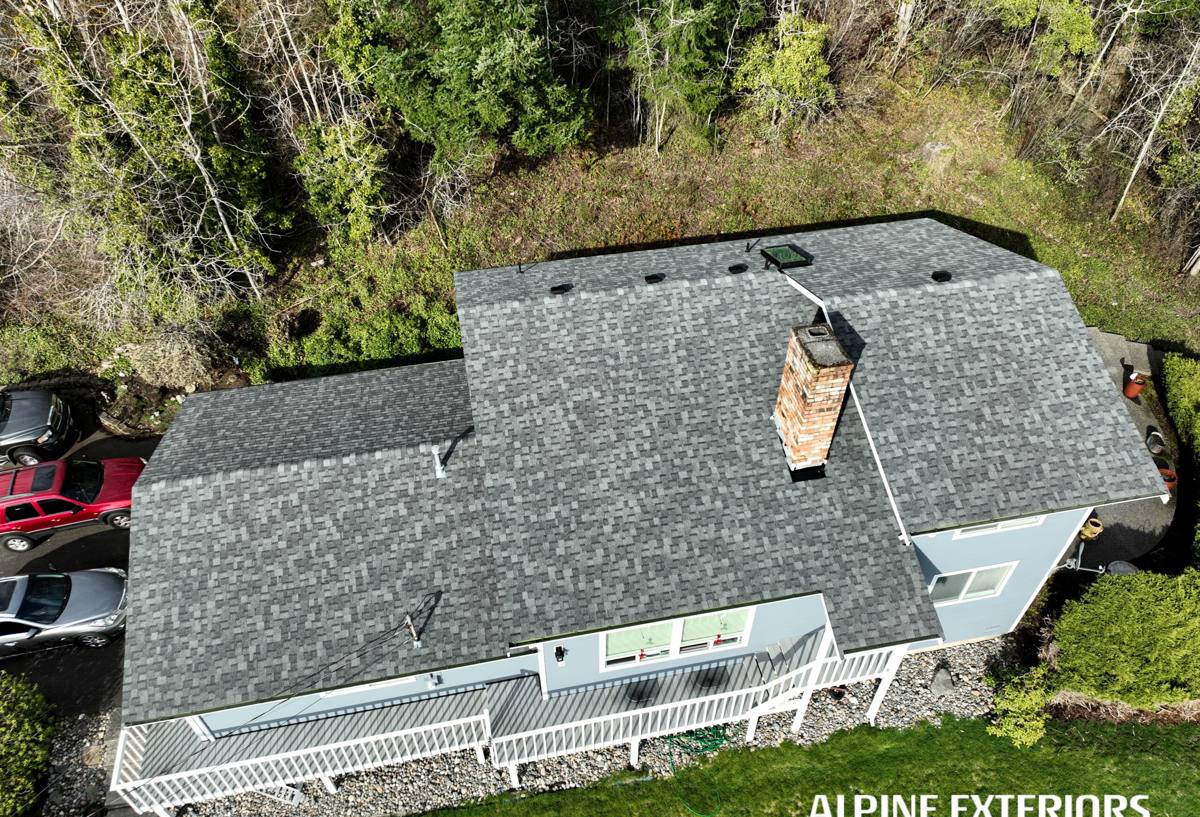
What Lynden's Climate Actually Does to a Shingle Roof
Driving Rain and Wind-Driven Moisture
Storms coming through Whatcom County don't just drop rain straight down — wind pushes it sideways, up under shingle tabs, and into any gap in the flashing or underlayment. Roofs with proper overlap, sealed nail heads, and good flashing details shrug this off. Roofs with even minor installation gaps let water track sideways and find its way into the roof deck, where it can sit unnoticed for a long time before it shows up as a stain on a ceiling.
The Long Moss Season
Lynden's mix of shade trees, humidity, and mild temperatures gives moss and algae a long growing window — often most of the year on north-facing slopes and roof sections that don't get much direct sun. Moss isn't just cosmetic. Once it establishes itself under shingle tabs, it holds moisture against the roof deck, lifts shingle edges, and accelerates granule loss. A roof designed and maintained with moss in mind lasts noticeably longer than one that isn't.
Temperature Swings and Fastener Movement
Whatcom County doesn't get extreme heat, but the daily swing between damp mornings and warmer afternoons still causes roofing materials to expand and contract. Over years, that movement can work improperly set nails loose or stress sealant strips that weren't given time to bond properly during a cool installation window. Correct fastening technique and installing at the right temperature both matter more here than the label on the shingle bundle would suggest.
What a Correct Asphalt Shingle Installation Includes
A shingle roof is a system, not a single product. Every layer has to do its job for the roof to perform the way it's supposed to in this climate.
Underlayment
We use synthetic or self-adhered underlayment sized to the exposure of each roof plane, with extra protection — typically a self-adhered ice-and-water membrane — at eaves, valleys, and any low-slope transitions where water is most likely to back up or pool. This is the layer that protects the deck if wind ever drives water past the shingles themselves.
Ventilation
A shingle roof that can't breathe traps warm, moist air in the attic, which shortens shingle life from underneath and can contribute to moss and mildew on the roof deck itself. We check that intake (usually soffit vents) and exhaust (ridge or roof vents) are balanced, not just present. A lot of older Lynden homes have one or the other but not both working together, which quietly shortens the life of an otherwise good roof.
Flashing
Flashing around chimneys, skylights, sidewalls, and roof-to-wall transitions is where the majority of leaks actually start — not in the open field of shingles. We install new step flashing, counter-flashing, and valley metal rather than reusing old flashing, and we seal penetrations with materials rated for this climate rather than general-purpose caulk that breaks down in a few seasons.
Fastening
Shingles are nailed in the manufacturer's specified nailing zone, with the correct number and placement of fasteners for the local wind exposure. Overdriven or underdriven nails are one of the most common causes of early shingle failure, and it's a detail that's easy to get wrong on a rushed job and easy to get right on a careful one.
Choosing the Right Shingle for a Lynden Home
Not every shingle product is built for the same conditions, and the right choice depends on your roof's exposure, your budget, and how much maintenance you want to plan for down the road.
| Shingle Type | Typical Lifespan | Best For | Trade-Offs |
|---|---|---|---|
| 3-Tab (economy) | 15–20 years | Budget-focused projects, rentals | Lower wind rating, less algae resistance, flatter appearance |
| Architectural / Dimensional | 25–30 years | Most Lynden homes | Best balance of durability, appearance, and cost for this climate |
| Premium / Impact-Rated | 30+ years | Heavily shaded lots, homeowners planning to stay long-term | Higher upfront cost, may qualify for insurance discounts |
For most Lynden properties, we recommend an architectural shingle with algae-resistant granules. The added cost over a 3-tab product is modest, and the algae resistance specifically addresses the moss and staining issues that are common on shaded roof planes in this area. We'll walk your specific roof's exposure and budget with you before recommending a tier — there's no single right answer for every house.
Our Process, Start to Finish
- On-site inspection. We get on the roof, not just in the yard — checking deck condition, ventilation, flashing, and any moss or moisture damage before quoting anything.
- Written estimate. You get a clear scope of work and price before any work starts, with material options explained in plain language.
- Deck evaluation and repair. Once tear-off begins, we check the decking for soft spots or rot, especially near eaves and valleys, and repair or replace bad sections before anything new goes down.
- Underlayment and flashing installation. This is the layer that actually keeps your home dry, and it's the layer that's easiest to shortcut. We don't.
- Shingle installation. Installed to manufacturer nailing specs, with attention to valleys, ridges, and any transitions that see the most water.
- Cleanup and final walkthrough. Magnetic sweep for nails, debris hauled off, and a walkthrough so you know exactly what was done.
Signs Your Lynden Roof Needs Attention
Most roof problems in this area give some warning before they become a real leak. Worth checking for, especially after a hard winter:
- Moss growth along shaded slopes, ridges, or valleys
- Dark streaking or staining that doesn't wash off with rain
- Granules collecting in gutters or at downspout outlets
- Shingle edges that look curled, cupped, or lifted
- Soft or spongy spots when walked on (have a professional check this — don't walk your own roof to test it)
- Daylight visible through the attic roof deck
- Water stains on interior ceilings, especially near chimneys or skylights
Catching any of these early is almost always cheaper than waiting for an active leak.
Living With Moss Season: What Actually Helps
Moss prevention on a Lynden roof is mostly about a few consistent habits rather than one big fix. Keeping overhanging branches trimmed back lets more light and air reach the roof surface, which slows moss growth on its own. Gutters clear of debris keep water moving instead of backing up under the shingle edge. And a roof with algae-resistant shingles and correct ventilation from the start simply gives moss less to hold onto. We're glad to point out problem areas on your roof and explain what's worth doing yourself versus what should be left to a professional — moss removal done the wrong way (pressure washing, for example) can strip granules and shorten the life of an otherwise sound roof.
Why Hire a Crew That Already Works in Lynden
A roofing crew that works across Whatcom County regularly already knows how local shingle roofs actually fail — not from a manual, but from opening up dozens of them. That means knowing which flashing details tend to get skipped on rushed jobs, which roof orientations in this area need extra ventilation attention, and how long a shingle roof here really lasts when it's installed correctly versus when it isn't. It also means we're not learning the permitting and inspection process for the first time on your project, and we're a known, findable business if you ever need a warranty question answered years down the road — not a crew that worked the area for one season and moved on.
Get a Straightforward Estimate
If your Lynden home needs a new roof, a repair, or just an honest opinion on how much life is left in your current shingles, we're happy to take a look and give you a clear, no-pressure estimate. Use the form below to get started.