 Bellingham Roofing
 Roof Repair in Lynden: What Local Homes Are Up Against
Lynden sits inland from Bellingham Bay, out toward the Whatcom County farmland near the Canadian border, but the roof problems we see there aren't much different from what we find closer to the water. Moist Pacific air moves through the whole county, and Lynden roofs deal with the same long, wet stretch from fall through spring that every roof in this region faces. Add in salt-tinged air that carries inland on the wind, driving rain that comes in sideways during winter storms, and a moss season that can run eight months or longer, and you've got a roof that's under near-constant low-grade stress even when nothing dramatic ever happens to it.
None of that means Lynden roofs fail faster than anywhere else in Whatcom County. It means small problems don't stay small if they're ignored. A lifted shingle tab or a hairline gap in flashing that would sit quietly for a season in a drier climate becomes a slow leak here, because there's rarely enough dry weather between storms for materials to fully dry out and reseal themselves.
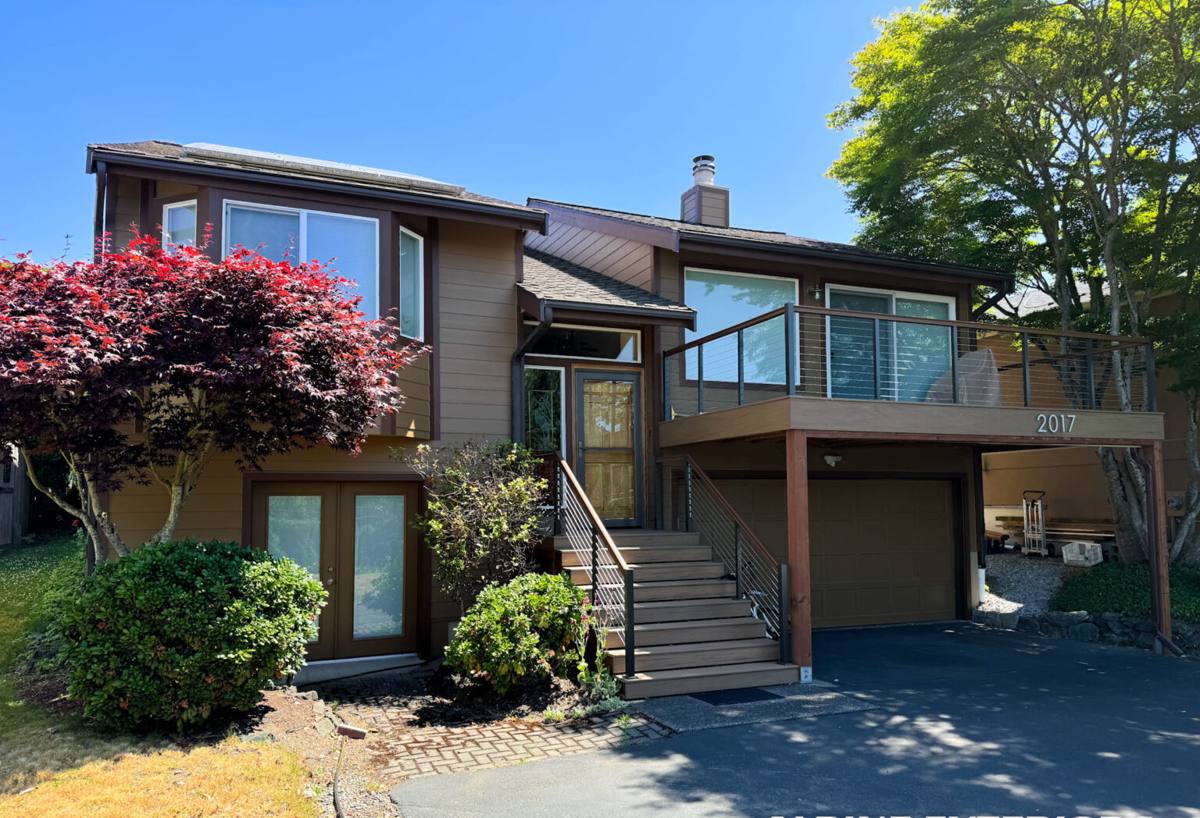
Common Roof Repair Needs We See in Lynden
Moss and Organic Growth
Moss doesn't just sit on top of shingles looking bad. Its root structure works into the granule surface and shingle mat, and as it spreads it holds water against the roof deck far longer than open air would. On roofs with mature moss growth, we regularly find soft, saturated decking underneath once we lift shingles to inspect. Moss also dams water at valleys and eave edges, forcing it sideways under shingles instead of down and off the roof.
Flashing and Valley Leaks
Flashing around chimneys, skylights, dormers, and roof valleys is where we trace the majority of Lynden leak calls back to. Metal flashing shifts slightly with temperature swings and settling over the years, and the sealant that backs it up is not designed to be the primary water barrier forever. When a homeowner has a leak that only shows up during heavy, wind-driven rain and not during a light drizzle, flashing is almost always the first place we look.
Wind and Storm Damage
Whatcom County gets its share of winter windstorms, and Lynden's more open, rural exposure can mean roofs take wind loads that tighter, tree-sheltered neighborhoods don't see as often. Lifted or torn shingle tabs, exposed nail heads, and displaced ridge cap pieces are the typical damage pattern. Left alone, an exposed nail head becomes a pinhole leak within a season or two as the sealant around it degrades.
Signs Your Lynden Roof Needs a Repair Call
- A ceiling stain that appears or grows only during wind-driven storms, not steady rain
- Granules collecting in gutters or at downspout outlets in noticeably larger amounts
- Visible moss ridges building along shingle tabs or in shaded valleys
- Shingle tabs that look lifted, curled, or cracked when viewed from the ground
- Daylight visible through the roof deck from inside an attic or crawlspace
- Rust streaking or gaps at flashing around a chimney, skylight, or vent pipe
- Sagging or soft-feeling spots noticed when walking the attic space
What a Correct Repair Actually Involves
A roof repair that holds up through a Whatcom County winter is not a matter of caulking over the visible problem and calling it done. It starts with figuring out why the failure happened in the first place, not just where water is currently showing up inside the house — those two locations are often several feet apart, since water travels along the underlayment or decking before it finds a gap to drip through.
| Repair Type | What's Actually Involved | What a Shortcut Repair Skips |
|---|---|---|
| Flashing repair | Remove surrounding shingles, replace or re-bed flashing, reseal with proper underlayment integration | Smearing sealant over the existing flashing without lifting shingles |
| Moss-damaged section | Strip affected shingles, inspect and repair decking, treat remaining moss, replace with matched material | Pressure-washing moss off without checking the decking underneath |
| Storm-lifted shingles | Reseal or replace torn tabs, check surrounding fasteners and underlayment for wind-driven intrusion | Re-nailing the visible tab and ignoring nearby loosened shingles |
| Valley leak | Open the valley, inspect underlayment condition, rebuild with correct valley material and lap direction | Applying roof cement into the valley from the surface |
The right materials matter too. A repair patched with mismatched shingles or the wrong-grade flashing metal might look fine for a season, but it's working against the rest of the roof system instead of with it, and it usually shows up again as a callback within a year or two.
Our Repair Process
- Inspection. We look at the roof from the ground and, when it's safe and useful, get on it directly — not just at the spot where the leak is showing inside, but the surrounding field, flashing points, and attic ventilation.
- Honest diagnosis. We tell you what's actually causing the problem, what it will take to fix it correctly, and whether a repair makes sense versus a larger scope of work.
- Written estimate. A clear scope and price before any work starts — no surprise add-ons once we're on the roof.
- The repair. Matched materials, proper flashing technique, and attention to the surrounding area so we're not leaving a second problem behind.
- Walkthrough. We explain what we did and what to keep an eye on, especially if the repair is a targeted fix on an older roof.
Repair or Replace? Honest Factors to Weigh
Not every roof problem in Lynden calls for a full replacement, and we're not going to tell you it does when a solid repair will genuinely hold. But a repair on a roof that's already near the end of its service life can end up being money spent on a system that needs replacing within a year or two anyway.
| Factor | Leans Toward Repair | Leans Toward Replacement |
|---|---|---|
| Roof age | Under roughly two-thirds of expected material lifespan | Nearing or past expected lifespan for the material |
| Damage extent | Isolated to one section, flashing point, or valley | Spread across multiple slopes or recurring in different spots |
| Decking condition | Solid, dry decking found once shingles are lifted | Soft, delaminated, or repeatedly wet decking |
| Shingle condition overall | Granule loss and brittleness limited to the damaged area | Widespread granule loss, curling, or brittleness across the roof |
Materials We Work With
Most Lynden roof repairs we handle involve asphalt composition shingles, since that's the majority material in this area, but we also repair metal roofing and cedar where it's still in service. Our standard on any repair is matching material weight, profile, and where possible color to the existing roof — a repair that's a different shingle line or a lighter-gauge flashing than what's already up there tends to age differently, which shows and can create new stress points at the seams.
On older roofs where an exact shingle match is no longer manufactured, we'll say so upfront and talk through the closest reasonable option rather than installing something mismatched and hoping it blends in. That's a trade-off worth discussing honestly, not something to spring on a homeowner after the work is done.
Why a Crew That Already Works in Lynden Matters
A roofing crew that's out in Whatcom County regularly, not just occasionally passing through, has a working sense of which roof problems are typical here versus what's unusual and needs a closer look. We know how our regional moss season behaves, how driving rain finds its way into flashing that would hold fine in a drier climate, and what decking condition tends to look like on homes of different ages once you actually get up there.
There's also a practical side to it. A local crew can get to a leak faster during storm season, doesn't have to guess at permitting norms for the area, and has a reputation in the community that's worth protecting with work that actually holds up — not just looks fixed for the length of a warranty period.
Maintenance That Extends the Life of a Repair
A good repair lasts longer when the rest of the roof is kept in reasonable shape around it. A few habits go a long way in this climate:
- Clear gutters and downspouts before the fall rains start, so water isn't backing up at the eaves
- Keep overhanging branches trimmed back to cut down on shade, debris, and moss-friendly moisture
- Have moss treated before it builds up thick mats, rather than after
- Walk the attic occasionally, especially after a hard storm, and look for new daylight, staining, or damp insulation
- Get a roof looked at after any major windstorm, even if nothing looks obviously wrong from the ground
If you're dealing with a leak, storm damage, or just want an honest read on what shape your Lynden roof is in, we're glad to come take a look. The estimate is free, there's no pressure to sign anything on the spot, and you'll get a straight answer about whether a repair makes sense or not — just fill out the form below to get started.