 Bellingham Roofing
 Why Ferndale Windows Wear Out Faster Than the Brochure Says
Ferndale sits close enough to Bellingham Bay and the Strait of Georgia that salt-laden air is a real factor in how fast window hardware, seals, and finishes break down. Add Whatcom County's long wet season, driving rain that comes in sideways off the water during winter storms, and the shade and humidity that fuel moss and algae growth on north-facing walls and trim, and you have a climate that is genuinely tougher on windows than most manufacturers' warranty language assumes. Windows built or installed for a drier, milder region tend to show their age here years ahead of schedule: clouded glass, swollen sashes, corroded hardware, and soft trim.
None of this means Ferndale homes need exotic products. It means the material choices, glazing package, and installation details all need to account for moisture and salt exposure from day one, not get patched later. That's the difference between a window job that looks fine at handoff and one that still performs correctly ten winters from now.
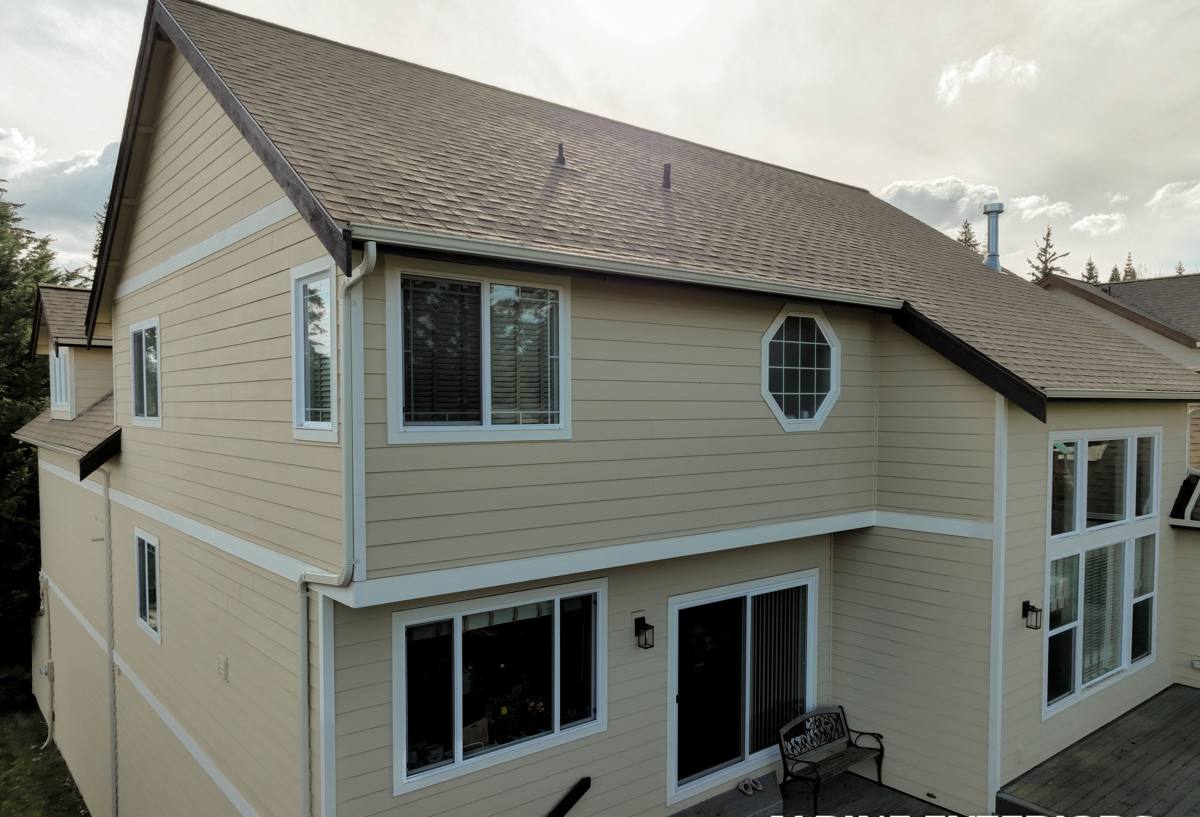
Signs Your Current Windows Are Losing the Battle
Before we talk about what a correct job looks like, it helps to know what failure actually looks like in this climate. If you're seeing any of the following, it's worth having windows evaluated rather than waiting:
- Fogging or a milky haze between panes — the seal has failed and the gas fill (if any) is gone
- Sashes that stick, drag, or won't stay up without a prop, often from swollen wood or warped vinyl
- Visible corrosion or chalky white buildup on aluminum hardware, latches, or cranks
- Soft or spongy trim and sill wood, especially on walls that get little direct sun
- Persistent moss, algae, or black streaking around the frame edges even after cleaning
- Cold drafts near the frame in winter, or condensation forming on the interior glass or sill
- Paint or finish that's peeling or bubbling specifically at the corners and bottom rail
Any one of these on its own might just mean a repair. Several at once, especially on a home more than 15-20 years old, usually points to windows that are past the point where sealant and adjustment will fix things for good.
What a Correct Window Installation Actually Involves
Flashing and Water Management
Most window failures we see aren't glass failures — they're water management failures. The window itself can be a fine product and still fail if it's not flashed correctly against the wall's water-resistive barrier. In a climate with sustained driving rain, the flashing has to shed water down and out, layered so nothing traps moisture behind the frame or inside the wall cavity. This is the step that's easiest to rush and hardest to inspect after the fact, which is exactly why it deserves the most attention during installation, not the least.
Air Sealing and Insulation
Once the window is set and flashed, the gap between the frame and the rough opening needs to be sealed and insulated correctly — not overpacked with foam that bows the frame, and not left with gaps that let in drafts and moisture-laden air. Done right, this step also stops the interior condensation that shows up on cold, damp Whatcom County mornings when warm indoor air meets a poorly sealed frame.
Sill and Framing Condition
Any custom window replacement is a chance to check the condition of the rough opening itself. In an area where hidden moisture problems are common, we check sills and framing for rot or soft spots before setting a new window, rather than installing over a problem and letting it resurface later, worse and harder to reach.
Choosing the Right Frame Material for This Climate
There's no single "best" window material for every home — the right choice depends on budget, sun exposure, and how close the home sits to salt air and standing moisture. Here's how the common options generally hold up under Ferndale conditions:
| Frame Material | Coastal/Moisture Performance | Maintenance | Typical Fit |
|---|---|---|---|
| Vinyl | Good — won't rot or corrode, handles salt air well | Low; occasional cleaning | Budget-conscious replacements, rentals, most standard rooms |
| Fiberglass | Excellent — very stable in temperature and moisture swings, resists warping | Low | Homes wanting a long-term, low-drama option, larger openings |
| Wood or wood-clad | Fair to good depending on cladding — bare wood needs real upkeep near salt air and moss-prone shade | Higher; finish and caulk lines need regular attention | Historic or traditional-style homes where the look matters |
| Aluminum | Weaker here — prone to corrosion and condensation in damp, salty air unless thermally broken | Moderate to high | Best reserved for specific architectural needs, not general replacement |
Our standard for Ferndale homes leans toward vinyl or fiberglass for most replacements, specifically because they don't corrode or rot in salt air and don't need repainting every few years to keep moisture out. That's a maintenance and moisture-behavior call, not a knock on wood-clad or aluminum products — those still make sense on the right project, and we'll say so plainly if that's your home.
Glass and Glazing: What Actually Matters Here
The glass package affects comfort, condensation, and energy use more than most homeowners expect. A few points specific to this climate:
| Glazing Choice | Why It Matters in Whatcom County |
|---|---|
| Double vs. triple pane | Triple pane adds real comfort and condensation resistance on cold, damp mornings, but at added cost and weight — often worth it on north- and west-facing rooms, less critical elsewhere |
| Low-E coatings | Help control heat loss through our long heating season and reduce fading from the lower-angle winter sun |
| Argon or krypton gas fill | Improves insulation value; seal quality matters more than the gas choice itself, since a failed seal loses the gas regardless |
| Warm-edge spacers | Reduce cold spots at the glass edge, which cuts down on the interior condensation and mold risk that shows up in damp, low-airflow rooms |
We'll walk through these trade-offs room by room rather than pushing a single "best" package on the whole house — a sunroom, a shaded north bedroom, and a garage window all have different real needs.
Our Process, Start to Finish
- On-site assessment: We look at existing windows, framing condition, sun exposure per elevation, and what's actually failing before recommending anything.
- Honest proposal: Material, glazing, and installation scope laid out plainly, with trade-offs explained rather than a single upsell option.
- Precise measurement and ordering: Custom sizing to the actual opening, not a generic stock size, so flashing and sealing can be done correctly.
- Careful removal: Old windows and any hidden rot or damage are dealt with before the new unit goes in, not covered over.
- Installation with proper flashing and sealing: The step that determines whether the window performs for one winter or twenty.
- Final walkthrough: Operation, locks, and finish checked with you before we consider the job done.
Why Hiring a Crew That Already Works in Ferndale Matters
Window installation done wrong doesn't usually announce itself right away — it shows up as a draft, a soft sill, or a fogged pane two or three winters later, once the crew that did the work is long gone. A crew that regularly works Ferndale and the surrounding Whatcom County area has already seen how driving rain finds gaps in flashing, how moss and shade behave on specific home orientations, and how salt air treats different hardware finishes over time. That's not something a general contractor visiting once picks up on a single job. It shows up in the small decisions — where the flashing laps, how much sealant is enough versus too much, which rooms genuinely need triple pane and which don't — that separate a window job that lasts from one that needs revisiting.
Living With New Windows Through Moss Season
New windows reduce a lot of the moisture problems that come with old, failing units, but Whatcom County's wet season still calls for some basic upkeep:
- Rinse frames and tracks periodically to keep salt residue and grime from building up, especially on homes closer to the water
- Clear debris and moss from nearby gutters and trim so runoff doesn't sheet directly across window frames
- Check exterior caulk lines once a year, particularly after a hard winter, and have any gaps resealed promptly
- Wipe down interior sills if condensation forms on very cold mornings, so moisture doesn't sit against wood trim
- Operate locks and cranks a few times through the off-season so hardware doesn't seize from disuse and damp
A correctly installed, climate-appropriate window shouldn't demand much of this — but a little seasonal attention goes a long way toward getting the full lifespan out of the investment.
If your Ferndale home has windows showing any of the wear signs above, or you're planning a full replacement and want straight answers on materials and cost factors for your specific home, we're happy to take a look. Use the form below to request a free, no-pressure estimate.