 Bellingham Roofing
 Why Ferndale Roofs Take a Different Kind of Beating
Ferndale sits close enough to the water and low enough in the Whatcom County weather pattern that its roofs deal with a combination most inland homes never see. Salt-laden air off the Strait and the bay works into fasteners, flashing, and metal accessories over time. Driving rain, pushed sideways by wind off the water, finds every weak seam instead of just running off a slope like it would in a calmer climate. And the long, wet, mild winters here give moss and moisture months to work on a roof surface instead of just weeks. None of this means a roof in Ferndale needs to be exotic or overbuilt — it means the installation details that get skipped on an easier job can't get skipped here.
We install roofs on homes throughout the Bellingham area, and Ferndale jobs get the same attention: materials chosen for coastal exposure, flashing and underlayment done to handle sustained wet weather rather than the odd afternoon shower, and ventilation planned around a climate that rarely gives a roof a chance to fully dry out between storms.
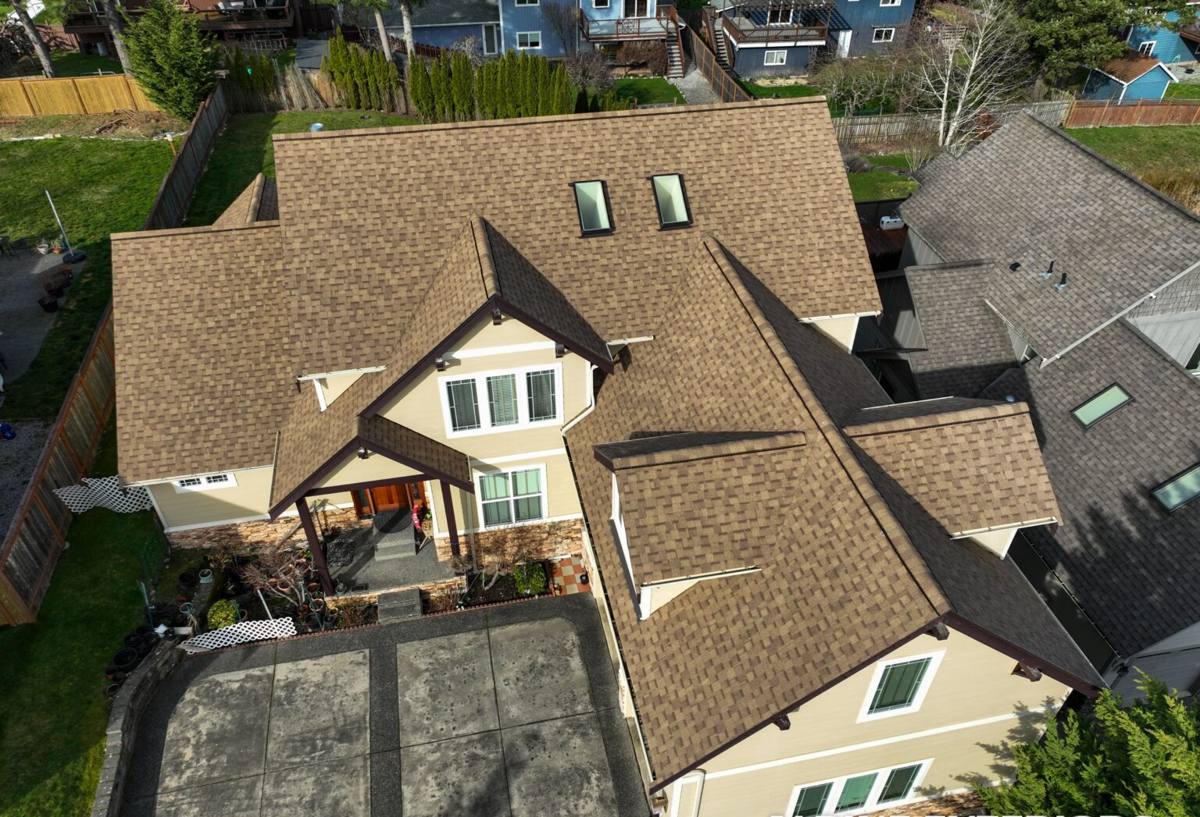
Signs a Ferndale Roof Needs Full Replacement, Not Another Repair
A lot of roofs get patched two or three times before anyone asks whether replacement would have made more sense. In this climate, moisture problems tend to be further along than they look from the ground, because moss and algae hide granule loss and early leaks. Some signs that point toward a full new roof rather than another repair:
- Shingles that are cupping, curling, or losing granules across large sections, not just one isolated area
- Moss growth that keeps coming back within a season or two of cleaning
- Soft or spongy spots on the roof deck, or sagging visible from the ground
- Daylight visible through the attic sheathing, or damp insulation and staining on attic rafters
- Flashing around chimneys, vents, and valleys that's rusted, lifted, or was never properly step-flashed
- A roof approaching or past the manufacturer's expected service life, especially if it's had storm damage along the way
- Rising energy bills paired with a roof that shows poor or blocked attic ventilation
If a roof is only showing one or two of these on a small section, a repair may still be the right call. When several show up together, or the roof is old enough that another winter of coastal weather is a real risk, replacement is usually the more honest recommendation — and it's one we'll tell you plainly, not upsell you into.
What Goes Into a New Roof Installation Done Right
A new roof is only as good as the layers underneath the material anyone sees from the street. In a climate like Whatcom County's, the underlayment and flashing work matters as much as the shingle or panel on top.
Tear-Off and Deck Inspection
We remove the old roofing down to the deck rather than layering over it. That's the only way to actually see the plywood or OSB underneath, check for soft or delaminated spots from years of moisture exposure, and replace any damaged sheathing before it's covered up again. Skipping this step is the single most common shortcut in the roofing trade, and it's the one that causes the most expensive problems five or ten years later.
Underlayment and Ice-and-Water Protection
Given how much rain this region sees, we don't treat underlayment as an afterthought. Synthetic underlayment across the full deck, with self-adhering ice-and-water membrane in the vulnerable spots — eaves, valleys, around penetrations, and low-slope transitions — gives the roof a real second line of defense if wind-driven rain ever gets under the primary material.
Flashing Details
Chimneys, skylights, wall-to-roof transitions, and valleys are where most leaks actually start, not in the open field of the roof. Proper step flashing, counter-flashing, and valley metal, installed rather than just caulked over, is what keeps salt-air corrosion and driving rain from finding a way in over the years.
Ventilation
A roof needs to breathe. Balanced intake and exhaust ventilation keeps the attic closer to outdoor temperature, which reduces condensation buildup during our wet, mild winters and helps shingles last their full expected life instead of aging early from trapped heat and moisture.
Choosing a Roofing Material for Salt Air and Moss
There's no single "best" roofing material for every home — it depends on the roof's exposure, the home's structure, and what the homeowner wants to maintain long-term. What we do steer clients away from is any material or installation shortcut that trades good short-term appearance for a heavier maintenance burden in a wet, mossy, salt-air climate. Here's how the common options generally compare for this area:
| Material | Moss & moisture behavior | Salt air / coastal notes | Typical maintenance |
|---|---|---|---|
| Architectural asphalt shingles | Good drainage profile; algae-resistant granule options help slow moss/algae staining | Performs well with proper flashing and fasteners | Periodic moss removal, gutter checks |
| Standing seam metal | Sheds moisture fast; moss has little to grip on smooth panels | Needs corrosion-resistant coatings and fasteners near the water | Low; occasional inspection of seams and fasteners |
| Cedar shake | Attractive but holds moisture; moss and rot risk is higher without diligent upkeep | Requires more frequent treatment in humid, salt-influenced air | Higher; regular treatment and moss control needed |
| Composite / synthetic shingle | Good moisture resistance, consistent performance in wet climates | Generally stable; check manufacturer coastal warranty terms | Low to moderate |
We'll talk through these trade-offs honestly during an estimate rather than steering every homeowner toward the same product. What matters most is that whatever material goes on gets installed with the flashing, ventilation, and fastening details this climate actually requires.
What Drives the Cost of a New Roof in Ferndale
Every roof is priced based on its own specifics, so we won't quote a number without seeing the roof — but the main factors that move the price up or down are consistent from job to job:
| Factor | Why it matters |
|---|---|
| Roof size and number of stories | More square footage and steeper access both add labor time |
| Roof pitch and complexity | Multiple valleys, dormers, and roof lines take longer to flash correctly than a simple gable |
| Deck condition | Rotten or soft sheathing found during tear-off requires replacement before new roofing goes on |
| Material choice | Asphalt, metal, and specialty materials carry different material and labor costs |
| Ventilation and flashing upgrades | Bringing an older roof's ventilation up to current standards adds material and labor but pays off in roof lifespan |
| Tear-off layers | Removing multiple old layers of roofing takes more labor and disposal than a single-layer tear-off |
Our Installation Process, Start to Finish
Homeowners in Ferndale generally go through the same straightforward process with us:
- Free on-site inspection. We walk the roof and attic where accessible, check the deck condition where visible, and note flashing, ventilation, and moss or moisture issues.
- Written estimate. We explain material options, what the tear-off is likely to reveal, and a clear price — no pressure, no scare tactics.
- Scheduling around the weather. We plan installation for a realistic dry window whenever possible, given how much of the year here is wet.
- Tear-off and deck repair. Old roofing comes off, the deck gets inspected, and any damaged sheathing is replaced before anything new goes down.
- Underlayment, flashing, and material installation. Done in the sequence and to the details described above, not shortcuts.
- Cleanup and final walkthrough. We clear debris and nails from the property and walk the finished roof with you before calling the job done.
Permits, Weather Windows, and Whatcom County Timing
Roof replacements typically require a permit through the applicable local jurisdiction, and we handle that coordination as part of the job rather than leaving it on the homeowner. Timing matters more here than in drier climates — a roof torn off with no protection in place ahead of a wet system rolling in off the coast is a problem waiting to happen. We plan tear-off and dry-in sequencing around realistic weather windows and keep the roof protected at every stage where full closure isn't possible in a single day.
Why a Bellingham-Based Crew Matters for Ferndale Homes
A roofing crew that already works this part of Whatcom County knows what the coastal exposure, moss cycle, and rain patterns actually do to a roof over time — not from a training manual, but from seeing it on homes nearby. That familiarity shows up in small decisions: which flashing details get reinforced, how ventilation gets balanced for a marine climate, and which materials hold up versus which ones look fine on day one and struggle by year five. Being local also means we're not far away if a question comes up after the job is done, and warranty follow-through isn't a phone call to somewhere out of state.
If your roof is showing its age, or you just want an honest read on whether repair or replacement makes more sense for your home, we're glad to take a look. Reach out for a free, no-pressure estimate using the form below.