 Bellingham Roofing
 Metal Roofing Built for Ferndale's Coastal Climate
Ferndale sits close enough to the water and the lowland farm country north of Bellingham that its homes take a different kind of weather beating than roofs just a few miles inland. Salt-laden air drifts in off the Strait and Bellingham Bay, driving rain comes sideways more often than straight down, and the long gray stretch from October through April gives moss every reason it needs to take hold. A metal roof can handle all of that better than most other materials available today, but only when the system, the fasteners, and the installation details are matched to this specific environment. A metal roof installed the same way you'd install one in eastern Washington or inland Oregon will not hold up the same way here.
This page covers what we look at when we install metal roofing specifically for Ferndale properties: the material choices that make sense for salt exposure and moss pressure, what a correct installation actually involves, and how our process works from first call to finished roof.
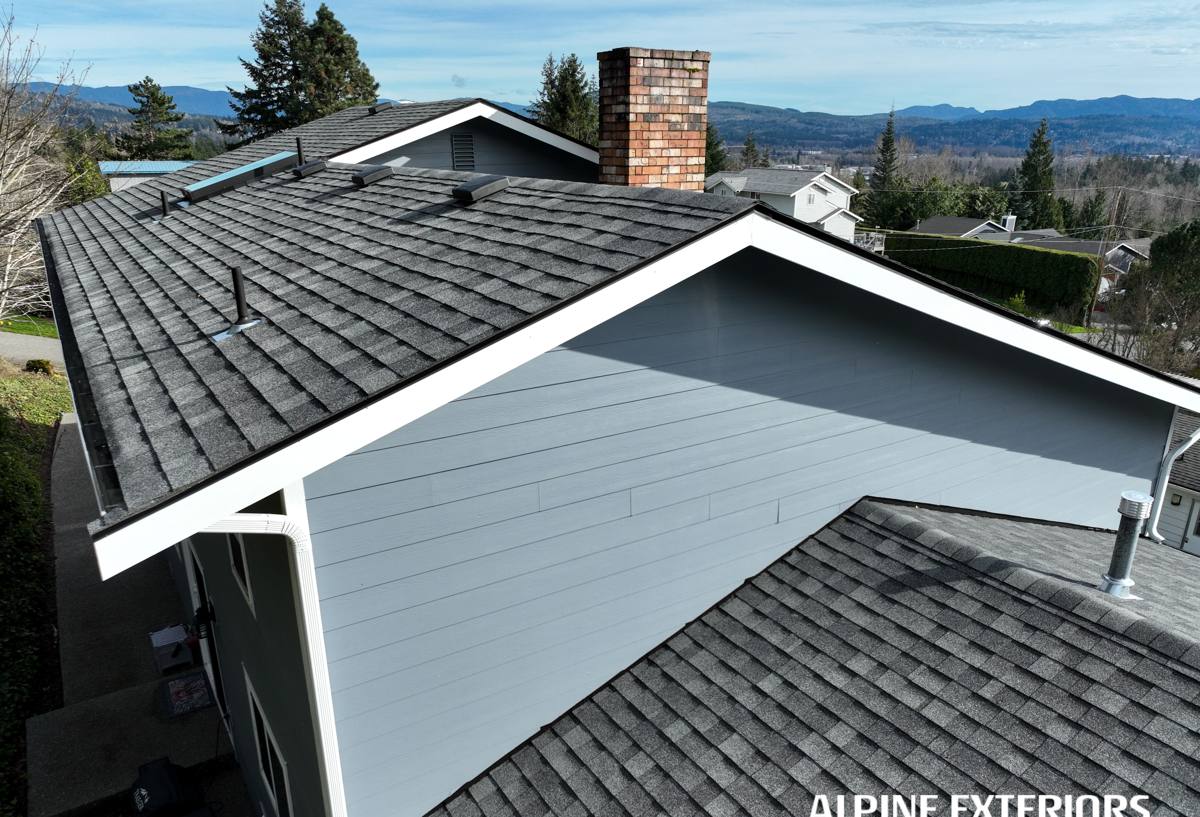
What Whatcom County's Climate Actually Does to a Roof
Salt Air and Corrosion
Homes closer to Ferndale's western edge and the shoreline get airborne salt carried in on wind off the water. Salt accelerates corrosion on any exposed metal — fasteners, flashing, cut edges, and lower-grade coatings all show it first. This doesn't mean metal roofing is a bad choice near the coast; it means the specific alloy, coating, and fastener hardware matter more here than they would on a roof twenty miles inland. Cutting corners on coating quality is where coastal metal roofs actually fail.
Driving, Wind-Driven Rain
Whatcom County storms frequently come with wind, which pushes rain up and under laps, seams, and flashing rather than letting it simply run down and off. A metal roof designed for calmer climates can rely on gravity alone at overlaps. A roof in this area needs properly engineered seams, correct fastener spacing, and flashing details built to resist wind-driven water intrusion, not just standard drainage.
Moss and Prolonged Moisture
Long, wet, mild winters are exactly what moss needs to establish itself. Moss holds moisture against a roof surface, and on materials like asphalt shingles or untreated wood, that trapped moisture is what shortens their life. Metal roofing doesn't feed moss the way organic roofing materials do, and it doesn't hold water against itself the same way — but roof geometry, shading from trees, and north-facing slopes still matter for how much moss pressure a given roof sees over time.
Choosing the Right Metal Roofing System
Not all metal roofing is the same product wearing different colors. The panel style, the metal itself, and the coating system all affect how the roof performs against salt air and sustained moisture. We walk homeowners through these trade-offs honestly rather than pushing whatever is easiest to install.
| System Type | Best For | Coastal/Moisture Notes |
|---|---|---|
| Standing seam steel | Most Ferndale homes, especially closer to the water | Concealed fasteners reduce corrosion entry points; strong wind and water resistance when seams are properly formed |
| Exposed-fastener metal panels | Budget-conscious projects, outbuildings, shops | Lower upfront cost, but exposed fasteners are the first thing salt air attacks; needs a maintenance plan |
| Aluminum panel systems | Properties with the heaviest salt exposure | Naturally corrosion-resistant, doesn't rust; a strong option for homes nearest the shoreline |
| Steel with premium paint/coating systems | Homes wanting steel's strength with better coastal durability | Coating quality matters more than panel thickness for long-term salt resistance |
For most Ferndale homes, a standing seam steel or aluminum system with a quality factory finish is the right balance of cost, durability, and low maintenance. We'll tell you plainly if your specific site — heavy tree cover, direct coastal exposure, an outbuilding versus a primary residence — points toward a different choice.
What a Correct Metal Roofing Installation Involves
Metal roofing has a reputation for lasting decades, but that reputation only holds when the installation is done right. A metal roof is not more forgiving than other roofing types if it's installed sloppily — in some ways it's less forgiving, because a mistake in flashing or fastening can go unnoticed until water is already inside the structure.
Underlayment and Moisture Barrier
A high-temperature-rated synthetic or self-adhered underlayment goes down first. This matters more here than in drier climates, because it's the backup layer that protects the deck if wind-driven rain ever gets past a seam, and because the underlayment also needs to manage any condensation that forms on the underside of the metal during our cool, humid nights.
Fasteners and Hardware
Fastener material has to match the panel material and be rated for coastal exposure — mismatched metals in contact with each other cause galvanic corrosion, which shows up as pitting and staining well before the panel itself would fail. This is one of the most common shortcuts on lower-quality installations, and it's invisible until the damage is already done.
Seams and Panel Overlap
On standing seam systems, seams need to be mechanically or hand-crimped to spec, not just snapped together loosely. On exposed-fastener panels, overlap and fastener spacing need to account for the wind loads this area actually sees, not a generic minimum.
Flashing at Valleys, Walls, and Penetrations
Chimneys, skylights, vent pipes, and roof-to-wall transitions are where most roof leaks start, on any roofing material. Flashing here needs to be formed to shed wind-driven rain, not just standard downhill runoff, and sealed with materials rated for long-term UV and moisture exposure rather than a bead of general-purpose caulk.
Ventilation
Metal roofs perform best with proper attic or roof-deck ventilation. Good airflow reduces condensation buildup under the panels and helps manage the moisture load this climate puts on every part of a home's exterior.
Our Process, Start to Finish
- On-site assessment — We look at your existing roof, deck condition, ventilation, tree exposure, and how close you are to salt air influence before recommending a system.
- Honest system recommendation — We explain the trade-offs between panel types and coatings for your specific site, in plain language, with real cost ranges.
- Written estimate — Materials, labor, tear-off (if needed), flashing details, and timeline, spelled out so there are no surprise line items later.
- Tear-off and deck inspection — We check the deck for rot or moisture damage before covering it up, since that's the last chance to catch problems cheaply.
- Underlayment and flashing installation — Done to the standard this climate requires, not a minimum-code shortcut.
- Panel installation — Fastened and seamed to spec, with attention to the details that matter most for wind and moisture in this area.
- Final walkthrough — We review the finished roof with you before we consider the job done.
Maintenance: What a Ferndale Metal Roof Actually Needs
One of metal roofing's real advantages is how little maintenance it needs compared to shingles or wood — but "little" isn't "none," especially in this climate. A short annual check catches small issues before they become expensive ones.
- Clear debris and organic buildup from valleys and around penetrations, especially after fall leaf drop
- Check for moss or algae starting in shaded, north-facing areas or under overhanging trees
- Inspect fastener heads and exposed hardware for early signs of corrosion or loosening
- Confirm gutters and downspouts are clear so water isn't backing up against roof edges
- Watch for any staining at seams or flashing points after heavy wind-driven rain events
- Have flashing at chimneys, skylights, and vents checked every few years, since sealants age faster than the metal itself
None of this requires major work in most years. It's the same logic as changing your furnace filter — a small, regular check that prevents a much bigger repair down the line.
What Affects Metal Roofing Cost in Ferndale
Metal roofing costs more upfront than asphalt shingles, but the honest comparison has to include lifespan, maintenance, and how each material actually performs in this climate. Here are the main factors that move the price on a given project, without pretending there's one number that fits every home.
| Factor | How It Affects Cost |
|---|---|
| Panel material (steel vs. aluminum) | Aluminum typically costs more but resists coastal corrosion better long-term |
| Panel system (standing seam vs. exposed fastener) | Standing seam costs more to install but has fewer long-term maintenance points |
| Roof complexity | Valleys, dormers, and multiple roof planes add labor and flashing work |
| Tear-off vs. install over existing roof | Removing old roofing adds cost but lets us inspect and fix deck issues |
| Coating/finish quality | Premium coatings cost more but hold color and resist corrosion longer near the water |
| Ventilation and deck repairs | Any rot or inadequate ventilation found during tear-off adds necessary work |
We'd rather walk you through these factors on your actual roof than quote a number that doesn't mean anything until we've seen the site.
Why a Crew That Already Works in Ferndale Matters
Roofing standards written for a national audience don't account for the specific mix of salt exposure, wind-driven rain, and moss pressure that Whatcom County homes deal with every winter. A crew that works this area regularly already knows which details tend to fail first here, which coatings actually hold up, and how local wind patterns affect flashing and seam performance. That local knowledge shows up in fewer callbacks and a roof that's built for the weather it will actually face, not a generic version of the same product installed the same way everywhere.
We're a Bellingham-based crew that works throughout Whatcom County, including Ferndale, and we bring that same standard to every roof — not a stripped-down version for smaller jobs.
Get a Straight Answer About Your Roof
If you're weighing metal roofing for a Ferndale home, we're happy to take a look and give you a straightforward assessment — what your roof actually needs, what it will cost, and why. There's no pressure and no obligation. Use the form below to request a free estimate.