 Bellingham Roofing
 Ferndale sits close enough to Bellingham Bay and the Strait of Georgia that salt-laden air is a daily fact of life for anything mounted on the outside of a house. Add Whatcom County's long wet season, wind-driven rain off the water, and months of shade and moisture that keep moss and algae established on north-facing walls, and you have a climate that is genuinely hard on exterior siding. Not every siding product is built to take that kind of punishment year after year. We install James Hardie fiber cement siding exclusively, and on Ferndale homes specifically, the reasons come down to how the material behaves when it's wet, salty, and shaded for weeks at a time.
What Ferndale's Climate Actually Does to Siding
Ferndale isn't just "rainy Pacific Northwest" — it has a few specific stressors that matter for siding decisions:
- Salt air corrosion: Proximity to the bay and strait means airborne salt settles on exterior surfaces, accelerating corrosion of fasteners and degrading finishes that aren't rated for coastal exposure.
- Driving rain: Storms off the water often come in sideways, driving moisture into lap joints, seams, and anywhere a wall assembly has a weak point.
- Long moss season: Shaded walls, especially north and east exposures under tree cover common in this area, stay damp for extended stretches, which is exactly what moss and algae need to take hold.
- Freeze-thaw cycling: Whatcom County gets enough winter cold snaps that trapped moisture in siding can freeze, expand, and accelerate material breakdown over time.
None of this is unusual for the region, but it means siding choices that work fine in a drier climate can underperform here. Wood-based products swell, delaminate, or invite rot when they stay wet longer than they were designed to. Vinyl can warp and doesn't stop moisture from reaching the wall behind it. Fiber cement, done right, is built for exactly this kind of exposure.
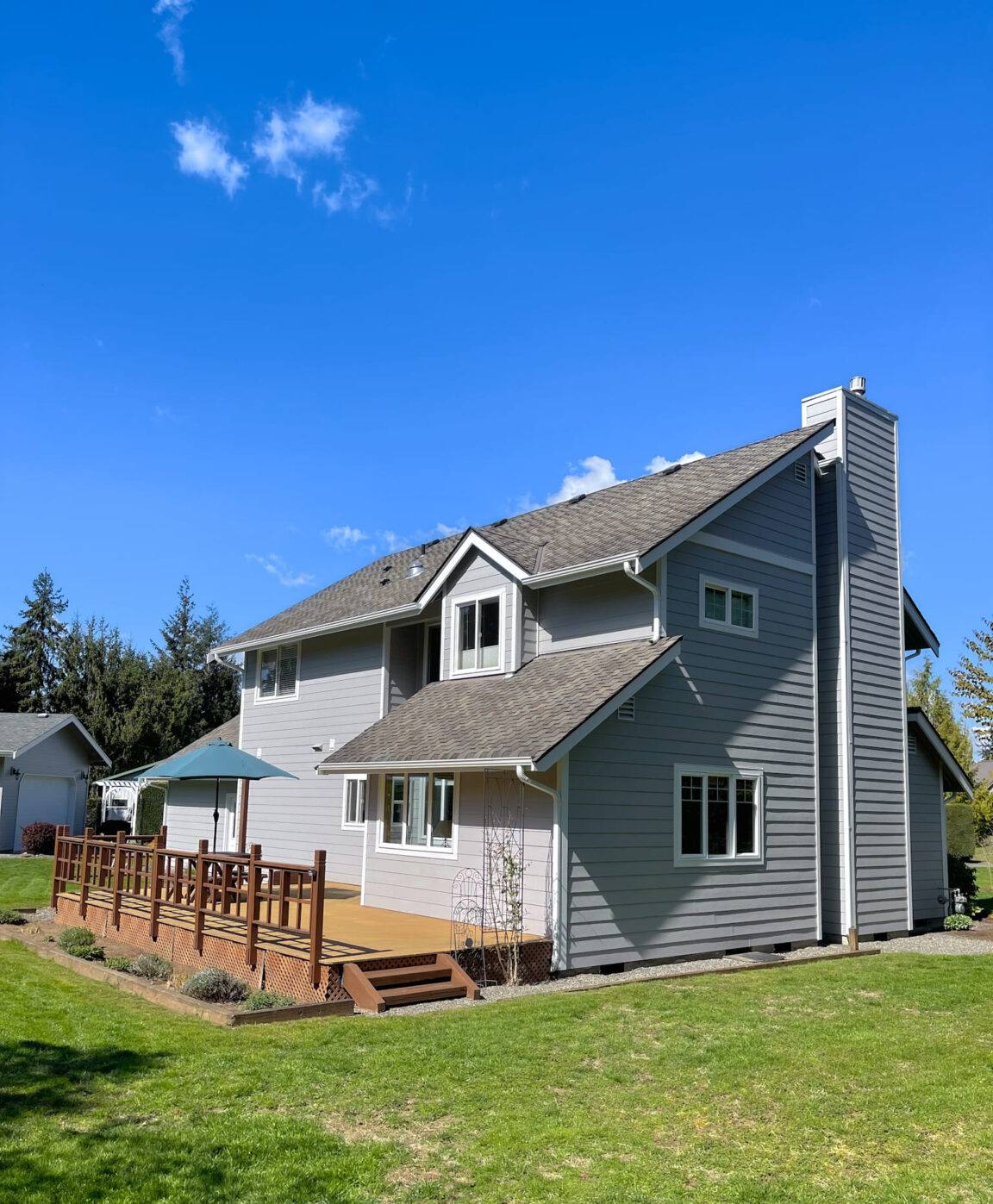
Why We Install James Hardie and Nothing Else
We don't install LP SmartSide, vinyl, Cemplank, Allura, primed spruce, or cedar. That's not a marketing position — it's a standard we hold because of what we've seen happen to those materials in this specific climate over time. Wood-based and engineered wood sidings depend on maintaining an intact factory coating to keep water out; once that coating is compromised at a cut edge, fastener hole, or joint, moisture gets into the substrate and the clock starts on rot. Vinyl is inexpensive and low-maintenance, but it's a thin plastic skin that flexes, fades unevenly, and doesn't add rigidity or fire resistance to a wall.
James Hardie fiber cement is cement, sand, and cellulose fiber — it doesn't rot, it's non-combustible, and it holds its factory-applied ColorPlus finish far longer than field-applied paint on wood siding. Hardie also engineers regional product lines (HZ5 for cold, wet climates like ours) specifically to handle the freeze-thaw and moisture conditions Whatcom County sees. That's the difference between a product that's merely available here and one that's actually engineered for here.
Salt Air and Coastal Exposure
Fiber cement doesn't corrode the way metal siding components can, and it doesn't absorb and hold moisture the way wood substrates do. The factory-baked ColorPlus finish is also more resistant to the fading and chalking that salt-laden coastal air tends to accelerate on field-painted surfaces.
Driving Rain and Water Management
A correct Hardie installation isn't just the boards — it's the whole water-management system behind them: proper weather-resistive barrier, correctly lapped flashing, and rainscreen or drainage detailing where the assembly calls for it. Fiber cement gives that system a facing material that won't degrade if it gets wet occasionally, which is a very different risk profile than wood-based products that depend on staying dry.
Moss and Algae Resistance
No siding is immune to moss taking hold in shaded, damp conditions — moss will grow on almost anything if it stays wet long enough. But fiber cement's dense, non-organic composition doesn't feed organic growth or soften under it the way wood and some engineered wood products can. Combined with the factory finish, it's easier to clean without damaging the material underneath.
What Correct Installation Involves
Fiber cement siding is only as good as its installation. Hardie's own warranty terms require installation to their published specifications, and cutting corners here is where most siding failures — regardless of brand — actually originate. A correct job on a Ferndale home includes:
- Inspecting and repairing the existing wall sheathing and framing before any new siding goes up
- Installing a code-compliant weather-resistive barrier, lapped correctly from bottom to top
- Proper flashing at every window, door, roofline, and penetration — the details that actually stop water intrusion
- Correct fastener type, spacing, and depth per Hardie's installation guide (this varies by product line and substrate)
- Maintaining Hardie's specified clearances from grade, roofing, and other surfaces to prevent wicking moisture
- Proper joint treatment and caulking at butt joints and trim, using compatible sealants
- Field-touching cut edges with Hardie-approved touch-up paint so no raw material is exposed to weather
Skipping any of these doesn't necessarily show up as a problem in year one. It shows up in year five or ten, as moisture intrusion, staining, or premature finish failure — and by then it's a much more expensive fix than doing it right the first time.
Our Process on a Ferndale Job
1. On-Site Assessment
We walk the exterior, check the condition of the existing siding and sheathing, look at drainage and grading around the foundation, and note any areas with a history of moisture problems — shaded north walls and spots near mature trees get particular attention given how long they stay damp here.
2. Product and Line Selection
We talk through Hardie's product lines and help you land on the right combination of plank style, texture, and ColorPlus color for the home, factoring in HOA or neighborhood considerations where relevant.
3. Written, Detailed Estimate
You get a clear scope of work — what's being removed, what's being repaired underneath, what's being installed, and how — not a vague lump-sum number.
4. Prep and Tear-Off
Old siding comes off, sheathing gets inspected and repaired as needed, and any rot or moisture damage found underneath is addressed before anything new goes up. This step matters more here than in drier climates, since hidden moisture damage is common on homes that have gone years without a close inspection.
5. Installation to Spec
Weather barrier, flashing, siding, and trim go in following Hardie's installation requirements, not shortcuts. This is also what keeps the manufacturer's warranty valid.
6. Final Walkthrough
We walk the finished job with you, cover care and cleaning basics for this climate, and make sure everything meets the standard we promised at the estimate.
Comparing Siding Options for a Ferndale Home
| Factor | James Hardie Fiber Cement | Wood / Engineered Wood | Vinyl |
|---|---|---|---|
| Moisture/rot resistance | Does not rot; cement-based | Vulnerable once coating is breached | Doesn't rot, but doesn't stop water reaching wall |
| Coastal salt air durability | Strong, factory finish holds up | Finish degrades faster in salt air | Can chalk and fade over time |
| Fire resistance | Non-combustible | Combustible | Can melt/deform under heat |
| Moss/algae resistance | Dense, non-organic material | Can soften and feed growth if wet | Resistant but doesn't breathe well |
| Finish longevity | Factory ColorPlus, long-lasting | Field paint, needs repainting | Molded-in color, can fade unevenly |
| Typical lifespan when installed to spec | Decades | Shorter, maintenance-dependent | Moderate |
Cost Factors Homeowners Should Know
Every Ferndale home is different, so we won't quote a number without seeing the job, but the main factors that move the price are worth understanding upfront:
| Factor | Why It Matters |
|---|---|
| Home size and wall complexity | More corners, dormers, and trim detail mean more labor and material |
| Condition of existing sheathing | Hidden rot or moisture damage found during tear-off adds repair scope |
| Product line and texture | HZ5 lines and certain textures/profiles cost more than base products |
| Trim and accessory scope | Fascia, soffit, and trim work done alongside siding affects total cost |
| Access and site conditions | Multi-story sections, tight lot lines, or landscaping can affect labor time |
Why Hire a Crew That Already Works in Ferndale
Siding installation isn't just about following a manual — it's about knowing how a specific area's conditions show up on real houses. A crew that regularly works in and around Ferndale has already seen which wall orientations hold moisture longest, which older homes tend to have sheathing issues from past moisture intrusion, and how salt air and moss actually affect siding locally over time. That local pattern recognition is what turns a generic installation into one that's actually built for this address, in this climate, on this coastline.
What to Look for When Vetting a Siding Contractor
- Manufacturer training or certification specific to the fiber cement product being installed
- A written scope that details flashing, weather barrier, and fastening — not just "install siding"
- Willingness to inspect and address sheathing condition before covering it back up
- Clear communication about which product line and finish they're proposing, and why
- References or a track record specific to your region's climate, not just general experience
- A warranty structure you understand, including what's covered by the manufacturer versus the installer
If your Ferndale home's siding is showing its age, or you're planning ahead for a replacement, we're happy to take a look and walk you through what James Hardie fiber cement would involve for your specific house. Reach out for a free, no-pressure estimate using the form below.