 Bellingham Roofing
 Why Ferndale Siding Takes a Different Approach
Ferndale sits close enough to the water and open farmland that homes here take a different kind of weathering than siding fifteen miles inland. Salt-tinged air moving off the Strait of Georgia and the Nooksack lowlands accelerates corrosion on fasteners and trim. Driving rain, pushed sideways by wind off open fields, finds every gap in a siding installation that wasn't detailed correctly the first time. And the long, damp stretch from fall through spring gives moss and algae months to establish themselves on anything that stays wet. None of this is exotic — it's just Whatcom County weather doing what it does, year after year, to a building material that has to shed it correctly every single day.
Siding installation for a Ferndale home isn't a different product than what we'd use elsewhere in Bellingham. It's the same product installed with this specific climate load in mind — the flashing details, the fastener choice, the drainage plane, the clearances. Get those wrong and it doesn't matter how good the siding itself is.
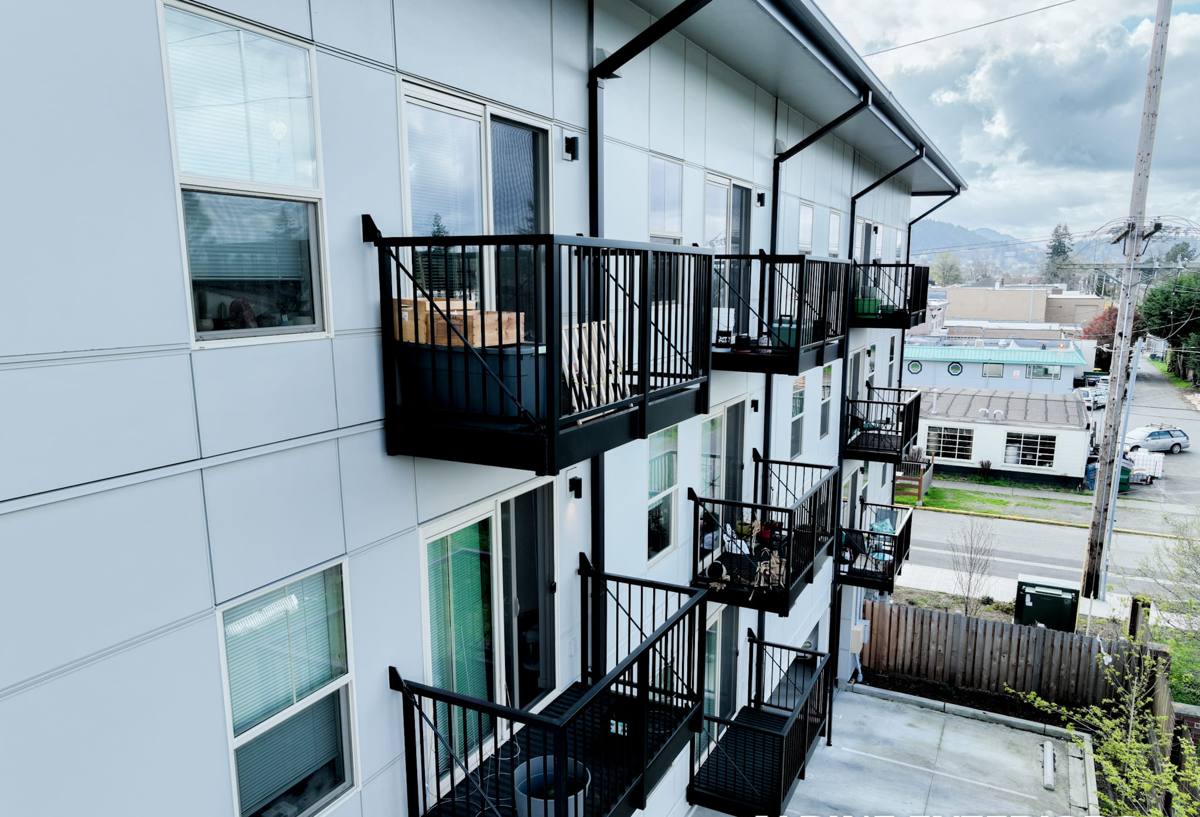
What Salt Air, Rain, and Moss Actually Do to Siding
Salt Air and Fasteners
Airborne salt is a slow corrosive. It doesn't rust through a wall overnight, but over years it attacks unprotected steel fasteners, cheap trim flashing, and any exposed metal edge. Streaking, rust bleed at nail heads, and pitted trim corners are usually the first visible sign that a previous installation used the wrong hardware for a coastal-influenced area.
Driving Rain and Wind-Driven Moisture
Wind off open water or farmland doesn't just drop rain straight down — it pushes it sideways and up under laps, around window trim, and into any seam that isn't lapped or flashed correctly. A siding system depends on gravity and overlap to shed water. When wind adds a horizontal or upward force, every gap becomes an entry point, which is why lap spacing, kick-out flashing, and butt joint sealing matter more here than they would in a calmer microclimate.
Moss and Algae Season
Whatcom County's wet season runs long. Any siding surface that stays damp for extended stretches — north-facing walls, areas shaded by trees, spots with poor airflow behind the cladding — becomes a place for moss and algae to take hold. Left alone, that growth holds moisture against the surface and accelerates whatever underlying problem let it establish in the first place.
What a Correct Siding Installation Actually Involves
Good siding installation is mostly invisible once it's done. The parts nobody sees are the parts that determine whether the wall stays dry for the next thirty years.
The Water-Resistive Barrier
Before a single piece of siding goes up, the wall needs a continuous water-resistive barrier, properly lapped shingle-style so water always drains outward and down, never into a seam. Every penetration — hose bibs, vents, electrical — needs to be flashed back into that barrier, not just caulked over it.
Flashing at Every Transition
Windows, doors, roof-to-wall intersections, and deck ledgers are where most siding failures start. Correct flashing at these transitions, including kick-out flashing where a roofline meets a wall, keeps water from ever reaching the sheathing.
Rainscreen Gap
A furring strip or engineered rainscreen product creates an air gap behind the siding. That gap lets any moisture that does get past the cladding drain and dry out instead of sitting against the wall — which matters directly in a climate where the siding surface can stay wet for days at a stretch.
Fastening
Fastener type, length, and placement all affect how well siding holds up to wind and how well it resists corrosion over time. Manufacturer fastening schedules exist for a reason, and skipping them is one of the most common shortcuts on a rushed job.
Why We Install Only James Hardie Fiber Cement
We don't install vinyl, LP SmartSide, Cemplank, Allura, or unfinished wood siding. That's a deliberate standard, not a sales pitch, and it's worth explaining honestly.
Vinyl is inexpensive and easy to install, but it expands and contracts significantly with temperature swings, can distort or crack in impact-prone areas, and its color is baked into the material — meaning fading over time can't be touched up without replacing panels. Engineered wood products like LP SmartSide perform reasonably well when installation and maintenance are perfect, but they're wood-based, which means any sustained moisture exposure — exactly what Ferndale's rain and humidity deliver — creates real risk of swelling or edge deterioration if caulking and paint aren't kept up religiously. Other fiber cement brands like Cemplank and Allura are legitimate competitors to Hardie, but we've standardized on one manufacturer so our crews master one set of installation specs, one flashing detail set, and one warranty structure rather than splitting attention across several.
James Hardie fiber cement is our standard because it's non-combustible, dimensionally stable across temperature and moisture swings, and available in HZ5 formulations engineered for wetter climate zones like ours. The factory-applied ColorPlus finish is baked on under controlled conditions, which holds color and resists the fading and moisture intrusion that raw-edge, field-painted products are more prone to.
Material Comparison
| Material | Moisture Behavior in Wet Climates | Maintenance Burden | Combustibility |
|---|---|---|---|
| James Hardie Fiber Cement (HZ5) | Engineered for wet, moderate climates; stable | Low — factory finish, periodic wash | Non-combustible |
| Vinyl | Doesn't absorb water, but can warp/gap with temperature swings | Low, but color can't be renewed | Combustible |
| Engineered Wood (LP SmartSide) | Vulnerable to swelling if seals fail | Higher — caulk and paint upkeep required | Combustible |
| Unfinished Cedar/Spruce | Absorbs moisture, prone to rot without upkeep | High — regular refinishing needed | Combustible |
Our Installation Process
- On-site assessment — we check existing sheathing condition, moisture history, sun/shade exposure, and wind exposure specific to the property.
- Tear-off and sheathing inspection — old siding comes off and we inspect for rot or damage before anything new goes up.
- Water-resistive barrier and flashing — installed and lapped correctly at every seam, window, door, and penetration.
- Rainscreen gap installation — furring or drainage mat installed to keep the assembly ventilated.
- Hardie panel or lap installation — fastened to manufacturer spec for our climate zone.
- Trim, caulking, and touch-up — factory-finished ColorPlus product minimizes field painting, but joints and cut edges are sealed correctly.
- Final walkthrough — we review the completed job with the homeowner before calling it done.
Signs a Ferndale Home Needs New Siding
- Soft spots or visible warping when pressing on the siding surface
- Persistent moss or algae growth that returns quickly after cleaning
- Rust streaking at nail heads or corner trim
- Paint that's peeling or bubbling, especially on north- or west-facing walls
- Visible gaps at butt joints, corners, or around window and door trim
- A musty smell or interior wall staining that suggests moisture is getting through
- Siding that's original to a home built more than 20-25 years ago with no major re-siding since
What Affects the Cost of a Siding Project
| Factor | Why It Matters |
|---|---|
| Home size and wall complexity | More corners, dormers, and trim details mean more labor and material |
| Existing sheathing condition | Rot repair found during tear-off adds scope but prevents covering up a hidden problem |
| Siding profile (lap vs. panel vs. shingle-style) | Different Hardie profiles carry different material and labor costs |
| Color and finish selection | Standard ColorPlus colors vs. custom field-painted options affect price and timeline |
| Accessibility of the site | Tight lots, slopes, or limited staging area can affect labor time |
We won't quote a job without seeing the home in person — broad ranges without an actual look at wall condition and complexity aren't useful to a homeowner trying to budget accurately.
Why Hiring a Crew That Already Works in Ferndale Matters
A crew that regularly works Ferndale and the surrounding Whatcom County area already understands how to detail a wall for this specific combination of salt-influenced air, wind-driven rain, and long wet seasons. That's different from a crew that mostly works drier inland climates and treats every job the same regardless of exposure. Local experience shows up in small decisions — where to add extra flashing, which walls need extra attention to ventilation, how tight to run caulk joints given how much the assembly will see rain from a given direction — that don't show up in a spec sheet but show up in how the siding performs ten years out.
It also matters for accountability. A contractor based in and around Bellingham and Whatcom County is easy to reach if a warranty question comes up years later, and has a reputation in the community worth protecting on every job, not just the ones with easy access or ideal conditions.
Maintenance After Installation
James Hardie siding installed correctly requires very little upkeep, but a little attention keeps it performing well for decades. An annual rinse with a garden hose removes surface grime before it can feed moss or algae growth. Caulk joints and trim connections are worth a visual check once a year, especially after a hard winter. Keep gutters clear and functioning so water isn't overflowing directly onto siding below, and trim back vegetation that's shading a wall and keeping it damp longer than it should be.
If your Ferndale home's siding is showing its age — or you're planning ahead before problems start — we'd be glad to take a look and walk you through what correct installation looks like for your specific home. Fill out the form below for a free, no-pressure estimate.