 Bellingham Roofing
 Ferndale's Climate Is Harder on Siding Than It Looks
Ferndale sits close enough to Bellingham Bay and the Strait of Georgia that salt-laden air is a real factor in how exterior materials age here, not just a coastal talking point. Add Whatcom County's long wet season, driving rain that comes in sideways off frequent windstorms, and months of shade and moisture that let moss and algae take hold on north-facing walls, and you have a climate that is genuinely tough on siding. Homes in Ferndale don't fail because of one dramatic event. They fail slowly, from siding that absorbs moisture it can't release, fasteners and trim that corrode faster than expected, and paint film that breaks down under repeated wet-dry cycling.
That combination is why siding replacement in this area isn't just a cosmetic project. Done right, it's a moisture-management upgrade for the whole wall assembly. Done wrong, or with the wrong material, it's a problem that resurfaces in five to ten years instead of thirty.
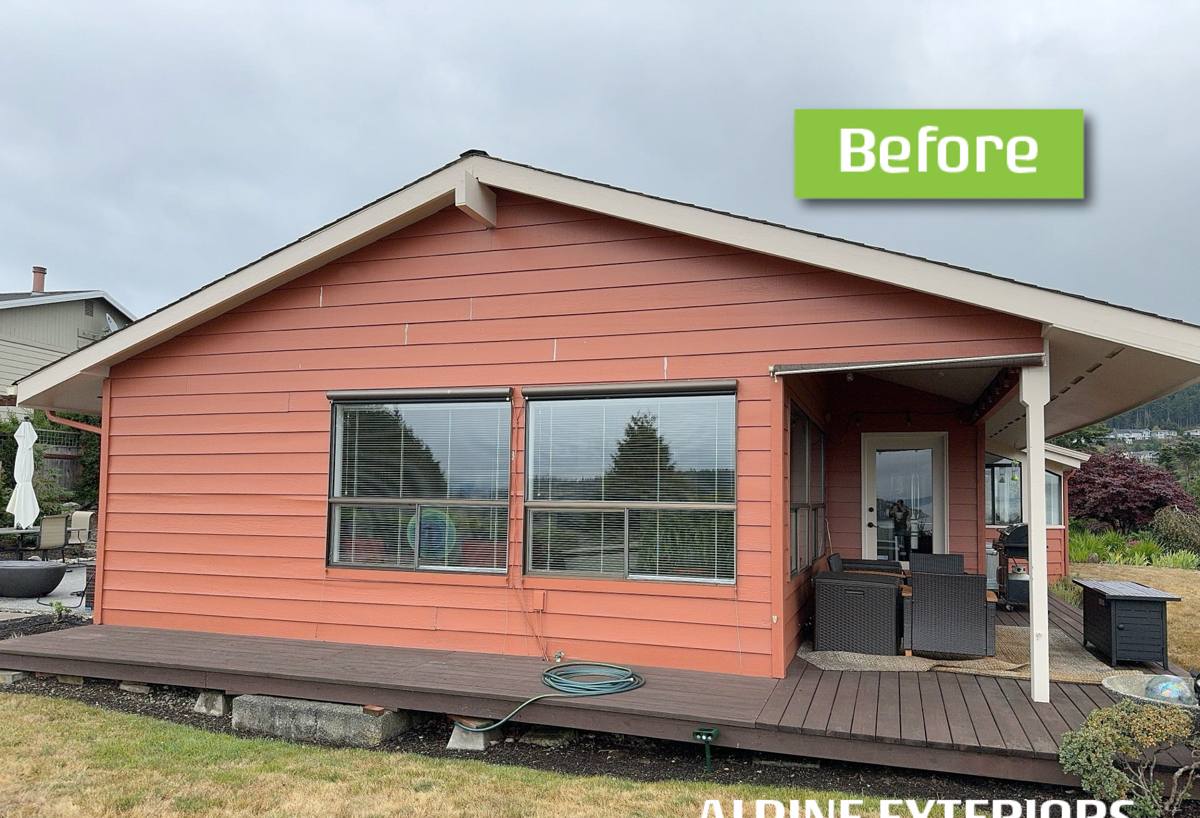
What a Correct Siding Replacement Actually Involves
A siding replacement is only as good as what happens underneath it. Homeowners often assume the job is mostly about the visible panels, but the work that determines whether a wall stays dry for the next few decades happens before a single new board goes up.
Tear-Off and Inspection
Removing the old siding is also when we find out what's really going on behind it. In Ferndale we regularly find sheathing that's soft or discolored near window and door openings, house wrap that's torn or improperly lapped, and flashing details that were never installed to shed water correctly. None of that is visible from the street, and none of it gets fixed by simply screwing new siding over the top.
Weather-Resistive Barrier and Flashing
This is the layer that actually keeps water out, and it matters more in a driving-rain climate than the siding material itself. Correct installation means a properly lapped weather-resistive barrier, new flashing at every window, door, and roof-to-wall intersection, and attention to the details around penetrations like hose bibs, vents, and light fixtures. This is also where a rushed installer cuts corners, because it's the least visible part of the job and the easiest to shortcut.
Installation to Manufacturer Specification
James Hardie siding has specific requirements for fastener spacing, clearances above grade, roofing, and decks, joint treatment, and caulking. These aren't suggestions. Installing outside of spec is one of the most common ways a warranty gets voided, and it's also how you end up with the exact moisture and paint failures the product was engineered to avoid in the first place.
Why We Only Install James Hardie
We made a deliberate decision to install James Hardie fiber cement siding exclusively, and we don't install vinyl, LP SmartSide, or other engineered wood or fiber cement alternatives. That's not a marketing position, it's a standard we hold because of what we've seen play out on homes in this climate over time.
Vinyl is inexpensive and low-maintenance in the sense that it doesn't need paint, but it's also a material that can warp or become brittle with temperature swings, shows impact damage more readily, and offers limited protection in wildfire-adjacent conditions since it's not fire-resistant. LP SmartSide and other engineered wood products perform well when installation and maintenance are perfect, but they're wood-based, which means the moisture-heavy conditions common here put real pressure on cut edges and joints if caulking and paint aren't kept up religiously.
James Hardie fiber cement is non-combustible, dimensionally stable in wet climates, and available in HZ5 formulations engineered specifically for the freeze-thaw and moisture cycling patterns of the Pacific Northwest. The factory-applied ColorPlus finish is baked on under controlled conditions, which gives it better fade and moisture resistance than field-applied paint, and it comes with a strong, transferable warranty when installed by a qualified crew. For a coastal Whatcom County home, that combination of fire resistance, moisture stability, and finish durability is why we standardized on it and stopped installing everything else.
How Common Siding Materials Compare in This Climate
| Factor | James Hardie Fiber Cement | Vinyl | LP SmartSide / Engineered Wood |
|---|---|---|---|
| Moisture resistance | Excellent; dimensionally stable when wet | Good, but seams and gaps can trap moisture behind it | Moderate; sensitive at cut edges and joints |
| Salt air / coastal exposure | Strong, factory finish resists fading and staining | Can become brittle and discolored over time | Requires diligent maintenance to prevent edge swelling |
| Fire resistance | Non-combustible | Not fire-resistant, can melt or deform | Combustible, treated but still wood-based |
| Maintenance | Low; occasional wash, no repainting needed for years | Low, but repairs are visible and hard to color-match | Higher; caulking and touch-up paint needed regularly |
| Typical lifespan when installed correctly | 30+ years | 20-30 years, variable | 15-25 years, maintenance-dependent |
Signs Your Ferndale Home Needs Siding Replacement
- Visible moss, algae, or persistent dark streaking that returns quickly after cleaning
- Soft, spongy, or delaminating boards, especially near the ground or under windows
- Paint that's peeling, bubbling, or chalking heavily rather than just fading evenly
- Warping, buckling, or gaps opening up between boards or at corner trim
- Rising energy bills that suggest the wall assembly is no longer insulating or sealing well
- Visible fastener corrosion, rust streaking, or nail pops along the wall surface
- Interior signs like musty smells, discoloration, or soft drywall near exterior walls
Our Process for a Ferndale Siding Replacement
1. On-Site Assessment
We walk the exterior, check problem areas like north-facing walls and ground-level clearance, and look for signs of moisture intrusion that point to what's happening under the surface, not just what's visible.
2. Detailed, Written Estimate
You get a clear scope covering tear-off, sheathing repair allowances, weather barrier and flashing work, the specific James Hardie product line and color, and timeline. No vague allowances buried in fine print.
3. Tear-Off and Structural Check
Old siding comes off, sheathing gets inspected, and any rot or damage is addressed before anything new goes on. This is the step that protects the next 30 years, not just the next photo.
4. Weather Barrier, Flashing, and Installation
New house wrap, correctly lapped flashing at every opening, and James Hardie siding installed to manufacturer fastening and clearance specs so the warranty stays intact.
5. Final Walkthrough
We review the finished work with you, cover care and cleaning, and make sure everything meets the standard we'd want on our own homes.
What Drives Cost on a Job Like This
| Factor | Why It Matters |
|---|---|
| Extent of sheathing or structural repair | Hidden moisture damage found during tear-off adds material and labor |
| Home size and wall complexity | More corners, gables, and trim details mean more labor time |
| James Hardie product line selected | Lap siding, panel systems, and shingle-style products vary in material cost |
| Color and finish choice | Factory ColorPlus finishes vs. field-painted options affect price and longevity |
| Access and site conditions | Multi-story walls, tight lot lines, or landscaping can affect labor and staging |
We don't quote broad numbers without seeing the home, because the variables above genuinely change the scope. What we can tell you upfront is that we don't price a job to look good on paper and then discover "surprises" mid-project. What we find during tear-off gets documented and discussed with you before we move forward, not added to an invoice afterward.
Why Hiring a Crew That Already Works in Ferndale Matters
Siding installation isn't identical everywhere, and a crew that mostly works drier inland climates can miss details that matter here. A contractor familiar with Ferndale and the surrounding Whatcom County coastline already knows to pay closer attention to flashing at wall penetrations, to expect moss and moisture issues on shaded elevations, and to account for wind exposure in fastening and trim details. That local pattern recognition is the difference between a crew that installs siding correctly on paper and one that installs it correctly for this specific climate.
It also matters for something less obvious: knowing what "normal" looks like on a Ferndale home versus what's actually a red flag. A crew with local experience can look at a wall and tell you quickly whether staining is cosmetic or a sign of something happening behind the siding.
Ready to Talk Through Your Siding?
If your Ferndale home is showing any of the signs above, or you're just planning ahead, we're happy to take a look and give you an honest read on what your siding actually needs. Fill out the form below for a free, no-pressure estimate — we'll tell you straight whether it's time to replace, and why James Hardie is what we'd put on our own home in this climate.