 Bellingham Roofing
 Why Ferndale Decks Wear Differently Than Decks Inland
Ferndale sits close enough to the water that homes here deal with a specific combination of stresses most inland decks never see: salt-laden air drifting off Bellingham Bay and the Strait, long stretches of driving rain that comes in sideways during winter storms, and a moss season that can run from October well into spring. None of these problems are dramatic on their own. The damage they cause is slow, and that's exactly what makes it dangerous — a deck can look fine from a distance while the framing underneath is quietly losing strength.
Salt air accelerates corrosion on metal fasteners, hardware, and any exposed nail heads faster than a standard inland environment would predict. Combine that with near-constant moisture exposure for half the year, and you get a perfect setup for hidden rot, especially where boards meet ledgers, posts meet footings, or old fasteners were never rated for coastal exposure in the first place. Add a heavy moss season on top of that — moss holds water against wood and traps organic debris in board gaps — and it's easy to see why decks in this part of Whatcom County age faster than the manufacturer's warranty paperwork suggests they should.
None of this means Ferndale is a bad place to have a deck. It means a deck here needs to be built and repaired with that specific combination of exposure in mind, not treated like a generic outdoor structure.
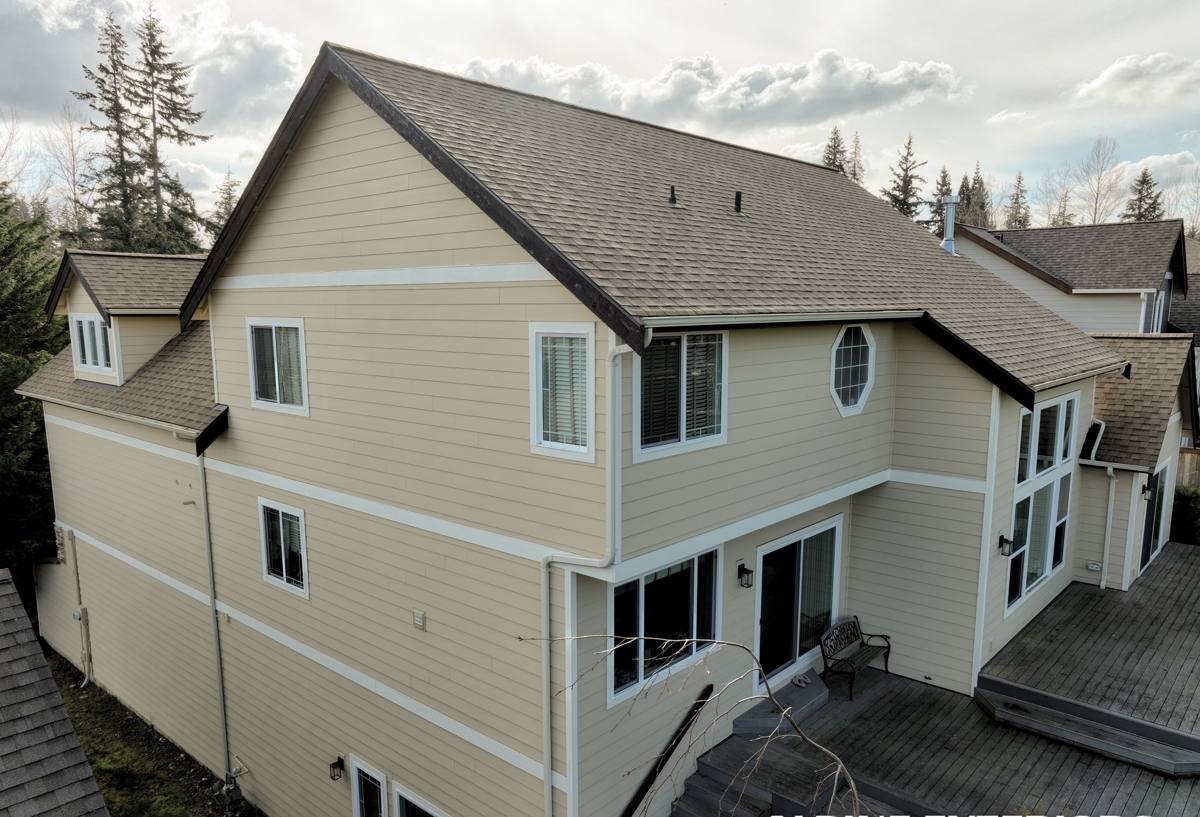
Signs Your Deck Needs Repair — Not Just a Wash
A lot of homeowners try to solve deck problems with a pressure wash and a coat of stain. Sometimes that's genuinely all that's needed. Other times it just makes the deck look better while covering up a structural issue that keeps getting worse underneath. Here's how to tell the difference.
- Boards that feel soft, spongy, or give slightly when you step on them, especially near the house or along the edges
- Visible gaps opening up between the ledger board and the house siding or trim
- Rust streaks running down from fasteners, joist hangers, or railing hardware
- Railings or posts that wobble or flex more than they used to
- Persistent green or black staining that comes back within weeks of cleaning
- Stairs that feel less solid underfoot, or noticeable sag between joists
- A musty smell coming from underneath the deck, especially after rain
Any one of these on its own might be minor. Two or three together usually mean the deck has moisture getting into places it shouldn't, and that's worth a real inspection rather than a guess.
What a Correct Deck Repair Actually Involves
It starts underneath, not on top
The visible decking boards are the last thing we look at, not the first. A repair that only addresses what you can see from the yard is a cosmetic fix, not a structural one. We start by getting underneath the deck wherever access allows, checking ledger board attachment, joist condition, post bases, and footings. This is where rot tends to start in this climate, because moisture collects and drains slowly in these areas, and it's also where a failure actually matters for safety.
Then the connections
Ledger flashing, joist hangers, and fastener condition matter more here than in drier climates. A ledger board that's improperly flashed or sealed against the house is one of the most common sources of hidden rot we find, because water gets behind the board and has nowhere to go. Corroded or undersized hardware gets replaced with fasteners and connectors rated for the exposure, not whatever happened to be on hand when the deck was originally built.
Then the surface
Only after the structure and connections are sound do we address decking boards, railings, and stairs — replacing individual boards where rot or splitting has set in, resetting or replacing loose railing posts, and re-securing stair stringers. Staining or sealing the surface before the structure underneath is solid is just delaying a bigger repair, not preventing one.
Common Problem Areas We See on Ferndale Decks
| Area | What Typically Goes Wrong | Why It Happens Here |
|---|---|---|
| Ledger board / house connection | Hidden rot behind the ledger, gaps at the siding line | Poor original flashing plus sustained rain exposure |
| Fasteners and hardware | Rust, corrosion, weakened joist hangers | Salt air accelerates metal corrosion |
| Post bases and footings | Soft or rotted post ends, shifting footings | Standing moisture at ground contact points |
| Board gaps and surfaces | Moss buildup, persistent staining, slick surfaces | Long moss season traps moisture against wood |
| Stairs and railings | Loose posts, flexing stringers | Repeated wet/dry cycling loosens connections over time |
Repair or Replace? How We Help You Decide
Not every aging deck needs to be torn out. A lot of the decks we look at in Ferndale are structurally sound where it counts — good footings, solid framing — but have isolated problem areas that repair can fully address. Others have enough compounding issues that patching them individually would cost more over time than doing the job right once. There's no formula that applies to every deck; it comes down to an honest look at the framing, the extent of any rot, and how the original deck was built.
| Factor | Leans Toward Repair | Leans Toward Replacement |
|---|---|---|
| Framing and footings | Solid, no widespread rot | Multiple rotted joists, unstable footings |
| Age of structure | Newer or well-built original deck | Original construction quality was poor to start |
| Extent of damage | Isolated to a few boards or one connection point | Rot or corrosion spread across multiple systems |
| Ledger condition | Properly flashed, dry when opened up | Chronic moisture intrusion at the ledger |
We'll walk you through what we actually find, not just what's easiest to sell. If a repair is the honest answer, that's what we'll recommend.
Materials and Fasteners We Use — and Why
Given the salt air and prolonged wet season in this part of Whatcom County, we lean toward hardware and fasteners rated for coastal or high-moisture exposure rather than standard interior-grade options, even where it costs a bit more upfront. The trade-off is straightforward: better-rated hardware resists corrosion longer, which means fewer hidden failures down the road and less chance of a repair needing to be redone in a few years because a fastener failed before the wood around it did.
For decking material choices, whether we're matching existing wood decking or discussing composite options during a repair, we're upfront about the maintenance and moisture behavior of each. Wood needs regular sealing to hold up to this climate. Composite reduces some of that maintenance burden but behaves differently around fasteners and edge details, and installation sensitivity matters more than people expect — done wrong, it traps moisture just as easily as poorly maintained wood does. We'll talk through what fits your deck, your budget, and how much upkeep you actually want to take on.
Our Repair Process
- Inspection: We check the deck from underneath as well as on the surface — framing, ledger, footings, hardware, and board condition.
- Honest assessment: You get a clear explanation of what's actually wrong, what's cosmetic versus structural, and what your realistic options are.
- Written scope: A specific plan for what gets repaired or replaced, with straightforward pricing — no vague allowances.
- The work: Structure and connections first, surface repairs and finish work last.
- Walkthrough: We show you what was found and what was done before we call the job complete.
Why Hiring a Crew That Already Works in Ferndale Matters
A deck repair crew that mostly works drier, inland jobs can still do competent framing work, but they don't necessarily think in terms of salt air corrosion timelines or how long moss holds moisture against a ledger board in a Whatcom County winter. That's not a knock on general skill — it's a knowledge gap that shows up later, usually as a repair that looked fine going in but didn't account for how this specific coastal climate behaves over the following few years.
Working decks in and around Bellingham and Ferndale regularly means we're used to what these conditions actually do to a structure over time, not just what a repair manual says in general terms. That shows up in small decisions — which fastener grade to use, where extra flashing attention matters, how much drainage slope a rebuilt section needs — that add up to a repair that holds up rather than one that needs revisiting in a couple of seasons.
Keeping a Repaired Deck in Good Shape
A quality repair buys you years, but a little seasonal attention keeps it that way, especially given how long the wet season runs here.
- Clear leaves, needles, and debris out of board gaps before fall rains set in
- Treat moss growth early in the season rather than letting it establish over winter
- Check railings and stair posts for looseness once or twice a year
- Keep gutters and downspouts near the deck clear so runoff isn't draining onto or under it
- Reseal wood decking on the manufacturer's recommended schedule, not just when it looks faded
- Glance underneath once a year for new staining, soft spots, or corrosion on hardware
If you're noticing soft boards, rust stains, wobbly railings, or a deck that just doesn't feel as solid as it used to, it's worth having someone take an honest look before winter rains make the problem worse. We offer free, no-pressure estimates for deck repair work in Ferndale and the surrounding area — fill out the form below and we'll take a look at what your deck actually needs.