 Bellingham Roofing
 Siding Repair for Ferndale Homes: A Different Job Than New Construction
Siding repair in Ferndale is rarely as simple as swapping out one damaged board. It starts with figuring out why that board failed in the first place, because in this part of Whatcom County, siding damage is almost never random. Salt-laden air moving in off the water, wind-driven rain that finds its way into seams and trim joints, and a moss season that can run most of the year on shaded walls all leave a pattern, and reading that pattern correctly is what separates a repair that actually holds from one that just covers up the problem for a season or two.
Ferndale's mix of open farmland, river-bottom lots, and residential streets set back from the water creates its own version of this climate stress. Homes here don't always get the same direct hillside or bay-front exposure you'd see closer to Bellingham, but they make up for it with wide-open wind paths across flat agricultural land and consistently damp ground conditions that keep lower wall sections wet longer after a storm passes. We treat every repair call as a chance to figure out what Ferndale's specific conditions did to that particular wall, not just patch the visible symptom.
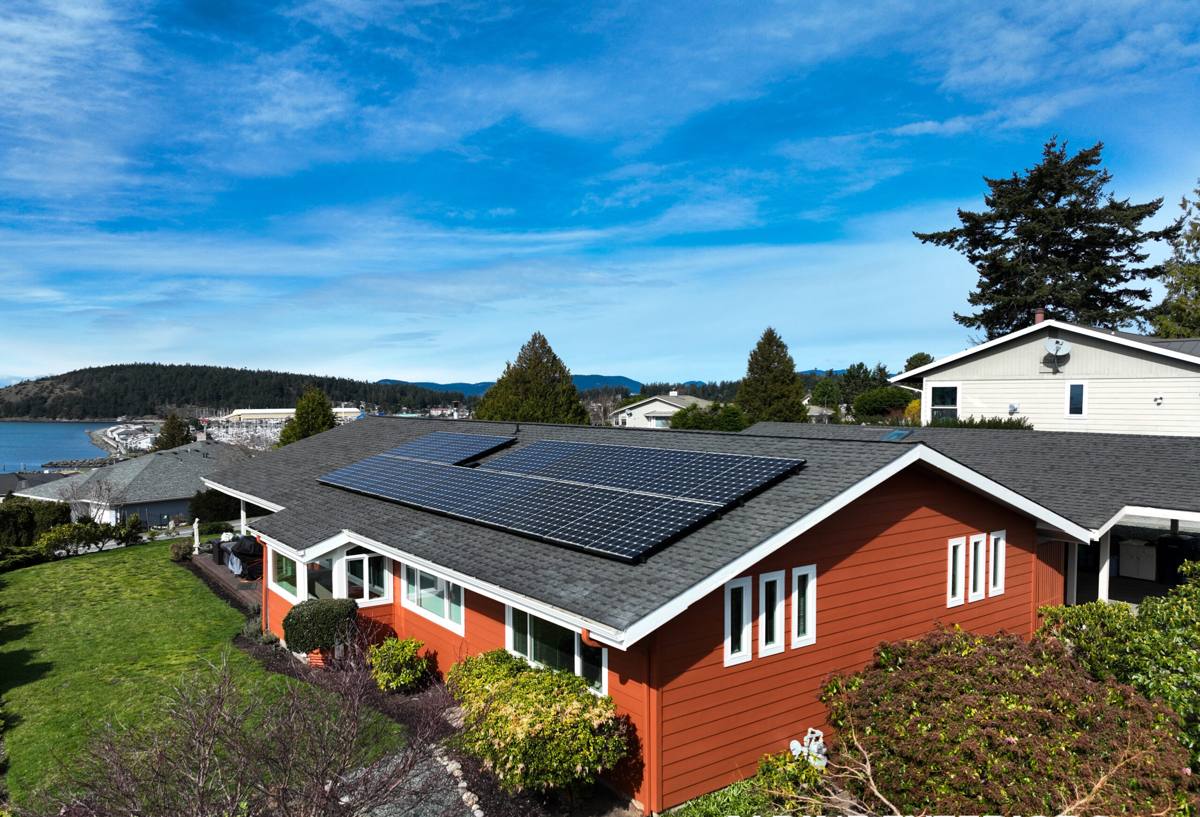
How Ferndale's Climate Accelerates Siding Damage
Salt-Laden Marine Air
Ferndale sits inland from the open water, but it's still close enough to Bellingham Bay and the Strait of Georgia that salt-tinged marine air reaches homes here on a regular basis, especially on days with onshore wind. That kind of exposure works slowly. It doesn't announce itself with obvious damage the way a storm does. Instead it degrades fasteners, finishes, and caulk joints a little at a time, so a repair that looks cosmetic on the surface often has a slower-moving cause underneath it.
Wind-Driven Rain Across Open Ground
Because so much of the land around Ferndale is flat and open, farmland and river-bottom terrain included, wind can pick up real speed before it ever reaches a house. That means rain doesn't just fall on siding here, it gets driven into it sideways, working into lap joints, trim seams, and anywhere a house wrap or flashing detail was installed even slightly off-spec. A repair that doesn't address how water is actually arriving at the wall is a repair that's likely to fail again in the same spot.
A Long Moss and Mildew Season
Mild temperatures and consistent dampness mean moss and mildew growth isn't confined to a short window here, it can persist across most of the year on north-facing walls, shaded siding, and areas near mature trees or fence lines. Growth like that holds moisture against the siding surface for extended periods, and on porous or damaged material that moisture eventually works its way to the substrate underneath.
Signs a Ferndale Home Needs Siding Repair, Not Just Cleaning
- Soft, spongy, or crumbling siding, especially near the bottom of walls or around window and door trim
- Moss or dark staining that returns within weeks of being cleaned off
- Cracked, split, or missing siding sections after a windstorm
- Visible gaps or separation at seams, corners, or trim joints
- Peeling paint or bubbling finish on a specific section rather than the whole wall
- A musty smell near an exterior wall, or interior drywall that feels damp or discolored on the other side of a suspect area
Any one of these on its own might be minor. Several showing up in the same area of the house usually means water has been getting in for a while, and the visible damage is just the part you can see.
Repair or Replace? How We Make That Call Honestly
Not every siding problem in Ferndale means the whole house needs to come off. An isolated impact from a fallen branch, a section that failed around a single window, or trim that's worked loose over time can usually be repaired and matched into the surrounding siding without touching anything else. We do that work regularly, and we'd rather fix what's actually broken than sell a full re-side when it isn't warranted.
What changes the answer is what we find once we open up the damaged area. If moisture has been tracking behind the wall assembly for months or years, if the sheathing underneath is soft or rotted, or if the existing siding is an older product that's simply reached the end of its service life across the whole wall, a patch just delays a bigger job and can mask how much damage is actually there. We'll show you what we find and explain plainly which situation you're in before we recommend either path.
What a Correct Siding Repair Actually Involves
Matching Material and Finish
A repair that's obvious from the sidewalk isn't a good repair, even if it stops the leak. Matching board profile, reveal, and finish color is part of doing the job right, and it's a big part of why we standardized on one siding system rather than juggling matches across several product lines with different specs and finish processes.
Checking What's Behind the Damage
Before any new material goes up, we look at what's underneath: the house wrap, the flashing at that section, the condition of the sheathing. Replacing a damaged board over compromised house wrap or rotted sheathing is a repair that looks fine for a season and fails again once moisture finds the same path back in.
Fastening, Flashing, and Sealing the Repair
The repair area gets fastened, flashed, and sealed to the same standard as new installation, not a shortcut version of it. That means correct fastener placement and spacing, flashing that ties into the existing wall assembly rather than just sitting on top of it, and sealant used at the actual points where water can track in, not as a general-purpose patch over an unresolved gap.
Why We Repair (and Only Install) James Hardie Fiber Cement
We install James Hardie fiber cement siding exclusively, and that shapes how we approach repair work too. Hardie's factory-applied ColorPlus finish is formulated to be matched consistently from batch to batch, its HZ5 formulation is engineered for regions with heavy sustained moisture, and it doesn't swell, cup, or warp the way some engineered wood or wood-based products can after repeated wet-season cycles. That combination makes a repair section blend in and perform the same as the surrounding wall years down the road, not just on install day.
If a Ferndale home already has Hardie siding, repair is usually straightforward: we match the existing product line and finish and tie the new section into the wall assembly correctly. If the existing siding is vinyl, cedar, primed spruce, or another fiber cement product, we'll still assess and repair what can honestly be repaired, but we won't pretend to match a product we don't install ourselves, and if the underlying problem is bigger than one section, we'll tell you that a full re-side with a system we stand behind completely is probably the better long-term move rather than continuing to patch a wall with a product we can't warranty our own work against.
Our Siding Repair Process in Ferndale
- Inspection: We walk the property, look at the damaged area, and check surrounding sections and wall orientations for related but less obvious issues.
- Diagnosis: We open up the affected area enough to see what's actually happening behind the siding, not just what's visible from outside.
- Honest recommendation: We explain what we found in plain terms, whether that means a targeted repair, a larger section replacement, or a conversation about full re-siding.
- The repair: Matched material, correct flashing and fastening, and finish work that blends into the existing wall.
- Follow-through: We stand behind the work and are straightforward about what to keep an eye on afterward, particularly in areas with ongoing shade or moisture exposure.
Siding Repair Cost Factors for Ferndale Homes
| Factor | What It Affects | Why It Matters in Ferndale |
|---|---|---|
| Extent of hidden moisture damage | Whether sheathing or framing repair is needed before new siding goes on | Wind-driven rain across open, flat terrain can push water deep into wall assemblies before it's visible outside |
| Existing siding material | Whether matching is straightforward or requires a broader repair plan | Homes with older or mixed siding products are more common on Ferndale's varied, spread-out housing stock |
| Size and location of the damaged area | Labor time and material needed | Ground-level and lower-wall damage is common where damp field and yard conditions keep siding wet longer |
| Wall orientation and shade exposure | Extent of moss-related moisture damage | North-facing and tree-lined walls carry Ferndale's longer moss season more heavily than open, sun-exposed sides |
| Site access | Labor time and equipment needs | Rural-edge and larger lots common around Ferndale can mean more setup and staging time than a tight in-town property |
These are the factors that move a repair estimate up or down. We walk the actual property and open up the damaged area before quoting a number, because guessing at scope from the driveway does nobody any favors.
Why Hiring a Crew That Already Works Ferndale Matters
A crew that repairs siding across Ferndale regularly develops a feel for how this specific area behaves that's hard to get anywhere else: which wall orientations hold moisture longest on the area's flatter, more open lots, how far wind-driven rain typically travels into a lap joint on a farmland-adjacent property versus a sheltered in-town lot, and which repairs tend to come back as callbacks because the underlying cause was never actually addressed. That local pattern recognition shows up in small decisions on repair day, like where to add extra flashing attention or how far past the visible damage to actually open up the wall, and those decisions are usually the difference between a repair that lasts and one you're calling us about again in a year or two.
If you're seeing damage on your Ferndale home's siding, or just want an honest opinion on whether it's a simple repair or something bigger, we're glad to take a look. Reach out using the form below to schedule a free, no-pressure estimate.