 Bellingham Roofing
 Building Decks for Ferndale's Coastal Climate
Ferndale sits close enough to the water and open farmland that its decks take a different kind of weathering than decks built twenty minutes inland. Homes near Birch Bay, Lummi Bay, and the lowland stretches around Ferndale deal with salt-laden air off the Strait, long stretches of driving rain that comes in sideways more often than straight down, and a moss and algae season that can run eight or nine months out of the year. A deck built with generic, catalog-spec framing and fasteners will show it within a few seasons — corroding hardware, soft spots at the ledger, green film on the boards by the second winter.
We build custom decks for homeowners throughout Whatcom County, and Ferndale jobs get treated as coastal builds, not standard Pacific Northwest builds. That distinction changes the fastener spec, the flashing detail, and sometimes the decking material we recommend before we ever talk about railing style or board pattern.
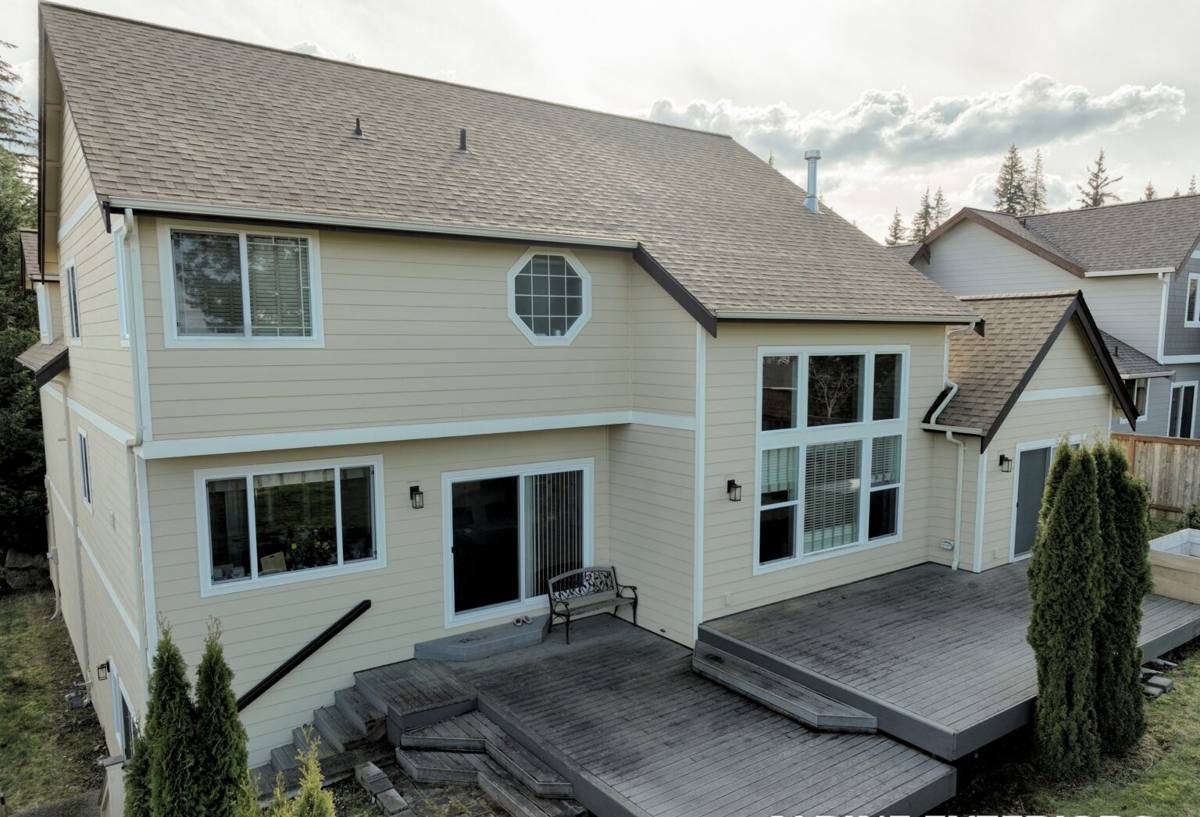
What Ferndale's Weather Actually Does to a Deck
Salt Air and Metal Fatigue
Airborne salt doesn't need to be visible to be corrosive. It settles on exposed metal — joist hangers, structural screws, post bases, railing hardware — and accelerates rust well beyond what you'd see on the same deck built in, say, Sumas or Deming. Galvanized hardware that would hold up fine forty miles inland can start pitting and staining within a few years this close to the water. This is the single most common corner-cutting mistake we see on decks we're called out to repair: builders used standard exterior-grade fasteners instead of stainless or heavy-coated hardware rated for coastal exposure.
Driving Rain and Water Intrusion
Storms coming off the water tend to push rain at an angle rather than straight down, which means water finds its way into gaps and joints that would stay dry in a calmer climate. Ledger board connections, stair stringer notches, and any spot where decking meets the house siding are the places we see rot start first on older decks. A ledger that isn't properly flashed and separated from the house wall with the right water diversion is, honestly, the number one structural failure point we find on deck inspections in this area.
Moss, Algae, and the Long Wet Season
Whatcom County's wet season stretches long, and Ferndale's open, low-lying terrain doesn't dry out as quickly as a sloped, sun-exposed lot might. Moss and algae need moisture and shade to establish, and a deck with poor drainage, tight board spacing, or heavy tree cover gives them both. Once moss gets into the wood grain of a cedar or untreated board, it holds moisture against the surface and speeds up decay from underneath — often invisible until a board feels spongy underfoot.
What a Correctly Built Deck Includes
A deck that's going to hold up here isn't just about the decking boards on top — most of what determines a deck's lifespan is invisible once the project is finished. Here's what we treat as non-negotiable on every custom deck we build in Ferndale:
- Ledger board flashing with proper water diversion, keeping rain from tracking behind the house siding
- Stainless steel or coastal-rated structural fasteners and joist hangers, not standard galvanized
- Joist tape or a comparable moisture barrier on top of framing lumber to slow rot at fastener penetrations
- Footings set to local frost depth and soil conditions, not a generic minimum
- Board spacing and airflow calculated for drainage, not just appearance
- Proper slope away from the house on the decking surface itself
- Ventilated skirting or open framing below the deck so moisture doesn't get trapped underneath
Skip any one of these and the deck may look fine for a season or two, but the failures show up early — usually right where they're hardest to see, at the ledger and the framing underneath the boards.
Choosing a Decking Material for This Climate
There's no universally "best" decking material — it depends on budget, how much upkeep you want to do, and how exposed the deck is to sun, shade, and moisture. Here's how the common options actually perform under Ferndale-area conditions:
| Material | Coastal/Rain Performance | Maintenance | Typical Lifespan Here |
|---|---|---|---|
| Pressure-treated fir/pine | Good if sealed regularly; prone to checking and mildew if neglected | Annual cleaning, resealing every 1-2 years | 15-20 years with upkeep |
| Western red cedar | Naturally rot- and insect-resistant, but needs ongoing sealing near salt air | Cleaning and oil/sealant every year or two | 15-25 years with consistent care |
| Composite decking | Excellent moisture resistance; won't rot, but can develop surface mold in constant shade/damp | Periodic washing, no sealing or staining | 25-30+ years, material-dependent warranty |
| PVC/capped polymer | Very strong moisture and salt resistance | Lowest upkeep of the group | 25-30+ years, material-dependent warranty |
For decks with heavy shade or close proximity to salt spray, we lean toward composite or capped polymer more often here than we would in a drier, sunnier part of the county — the reduced maintenance burden matters more when moss and mildew have a longer season to work with. That said, plenty of homeowners want the look and feel of real wood and are happy to keep up a sealing schedule; cedar is still a solid choice as long as that maintenance actually happens.
Managing Moss and Drainage Long-Term
No decking material is completely moss-proof if water sits on it. The framing and spacing decisions made during construction matter as much as the surface material:
- Board gaps sized to shed water and allow airflow underneath, rather than tight-fit aesthetics that trap moisture
- Deck orientation and any planned coverings designed to reduce standing shade-and-damp zones where possible
- Drainage systems under raised or multi-level decks so water doesn't pool on structural members
- Skirting with ventilation gaps instead of solid enclosure, which traps humidity against the framing
We'll also talk through realistic seasonal upkeep during the design phase — a quick fall cleaning and an occasional wash with a deck-safe cleaner goes a long way toward keeping moss from establishing in the first place, regardless of material.
Covered Decks and Partial Roofs
Given how much of the year Ferndale sees rain, a lot of homeowners ask about adding a roof or partial cover over some or all of a new deck. It's worth considering, especially if the deck will get regular use through the wetter months. A covered section keeps furniture and grills dry, reduces UV fading, and cuts down on the moisture exposure that drives mildew and decay. The tradeoff is cost and, depending on size and attachment to the house, potentially a building permit and structural engineering for the roof framing. We're happy to price a deck both with and without a cover option so you can see the real cost difference before deciding.
Our Process for a Ferndale Deck Project
1. On-Site Visit and Design Conversation
We walk the property, look at drainage patterns, sun and shade exposure, existing structure (if replacing a deck), and talk through how you'll actually use the space — entertaining, grilling, a quiet spot off a bedroom, whatever the goal is.
2. Material and Layout Planning
We go over decking material tradeoffs specific to your site's exposure, railing options, and layout, including whether a partial cover makes sense for your household's use pattern.
3. Permitting
Most custom decks above a certain height or attached to the home require a permit through Whatcom County or the City of Ferndale depending on your address. We handle that paperwork and make sure the footings and structure meet current code before we ever cut a board.
4. Construction
Footings and framing go in first, built to the coastal-hardware standard described above, followed by decking, railing, and any stairs or covered elements.
5. Final Walkthrough
We walk the finished deck with you, cover basic maintenance expectations for the material you chose, and make sure everything meets what was agreed on before we call the job done.
Why Local Experience Matters Here
A deck contractor who mostly builds inland or in drier climates isn't automatically going to think about ledger flashing details, fastener grade, or moss-conscious spacing the same way a crew that works Ferndale and the surrounding coastal parts of Whatcom County will. It's not about skill level — it's about what problems you've actually seen fail and fixed. We've repaired enough rusted-out hardware and rotted ledger boards on decks that weren't built with this climate in mind to know exactly where corners get cut, and we build to avoid those failure points from the start rather than fixing them five years later.
Deck Maintenance Checklist for Ferndale Homeowners
Whatever material you choose, a few habits go a long way toward getting the full lifespan out of a custom deck in this climate:
- Clean the surface at least once or twice a year, focused on shaded and low-airflow areas where moss starts
- Check and reseal wood decking on the schedule appropriate to that material — don't let it go past due
- Inspect railing posts and stair connections annually for loose hardware or early rust
- Keep gutters and downspouts near the deck clear so runoff isn't dumping directly onto or under it
- Trim back overhanging vegetation that keeps sections of the deck shaded and damp longer than necessary
- Address any soft or spongy boards immediately rather than waiting — localized rot spreads
Get a Straightforward Estimate
If you're planning a new custom deck or replacing one that's showing its age, we're glad to come take a look, walk you through material options suited to your spot in Ferndale, and give you a clear, no-pressure estimate. Use the form below to get started.