 Bellingham Roofing
 Building New in Ferndale? Get the Windows Right the First Time
New-construction window work is a different job than swapping out an old window in an existing wall. On a new build, the windows go in before the siding closes up the wall, while the rough openings, weather-resistive barrier, and flashing details are all still exposed and workable. That's actually an advantage — it's the one point in the process where a window can be installed with every layer of water management done correctly, instead of retrofitted around what's already there. For homeowners and builders working in Ferndale and the surrounding Whatcom County area, getting this stage right matters more than almost anywhere else in the state.
Ferndale sits close enough to Bellingham Bay and the Strait of Georgia that salt-laden air is a regular part of the local weather, and the broader Puget Sound climate brings long stretches of driving rain, especially in fall and winter. Add in a moss season that can run for months given how much moisture the region holds onto, and you've got a set of conditions that will find every weak point in a window installation over time. New-construction windows installed here need to be planned for that climate from the start, not just ordered off a spec sheet.
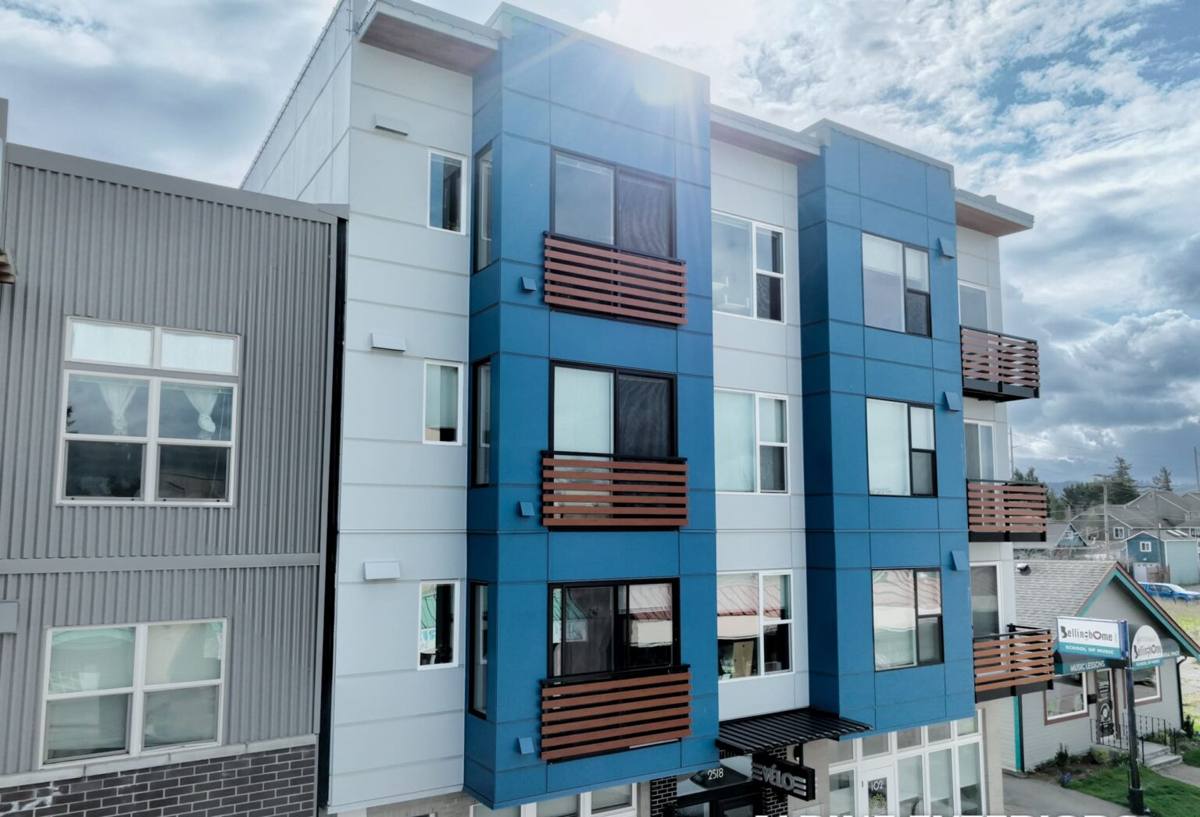
What Ferndale's Climate Actually Demands
Salt Air and Corrosion
Homes closer to the water deal with airborne salt that accelerates corrosion on hardware, fasteners, and certain metal components over the life of a window. This doesn't mean every window needs to be a specialty coastal product, but it does mean hardware selection and flashing metal choices matter more here than they would 30 miles inland.
Driving Rain and Wind-Driven Moisture
Whatcom County storms regularly push rain sideways, not just down. A window that would be fine in a calm-weather climate can leak here if the flashing and sealant details aren't built to handle wind-driven water working its way up and under trim, not just running down the face of the wall.
Long Moss and Damp Season
Persistent regional dampness keeps siding, trim, and window sills wet for extended periods. Any gap in the water management plan around a new window becomes an ongoing moisture trap rather than an occasional nuisance, which is how rot and mold problems get started in framing that's otherwise brand new.
Why the Installation Details Matter More Than the Window Itself
A well-built window installed poorly will underperform a mid-grade window installed correctly. That's true everywhere, but it's especially true in a climate like ours where the wall assembly is under near-constant moisture pressure for months at a time. On new construction, the installation sequence typically includes:
- A properly sloped sill pan flashing under the window, so any water that gets past the glazing drains back outside instead of pooling in the rough opening
- Correct integration with the weather-resistive barrier, using the shingle-lap method so upper layers always overlap lower layers
- Flashing tape or flexible flashing at the jambs and head, sealed to both the window flange and the WRB
- A head flashing or drip cap detail that sheds water away from the top of the window rather than letting it run behind the trim
- Backer rod and sealant at the interior and exterior, sized and placed to allow the window to expand and contract without failing the seal
- Fasteners placed correctly in the nailing fin, following the manufacturer's schedule so the window stays square and the seal isn't compromised
Skip or rush any one of these steps and the window can still look fine for a year or two before a leak shows up — often well after the siding and interior finishes are done, which turns a simple fix into a much bigger repair.
Choosing Materials That Hold Up Locally
There isn't one universally "correct" window material — the right choice depends on budget, the home's design, and how much maintenance the owner wants to take on. Here's how the common options generally compare for a coastal Whatcom County build:
| Material | Moisture & Salt Air Behavior | Maintenance | Typical Use Case |
|---|---|---|---|
| Vinyl | Won't corrode or rot; performs well in damp, salty air | Low — occasional cleaning | Budget-conscious new builds, rental and spec homes |
| Fiberglass | Very stable dimensionally, resists moisture and corrosion well | Low | Higher-end new construction where durability matters most |
| Wood (unclad) | Attractive but needs consistent upkeep to resist rot in a wet climate | High — regular painting or sealing | Historic-style or interior-focused design goals |
| Wood-clad (aluminum or vinyl exterior) | Exterior cladding protects the wood from weather; good option for damp climates | Moderate | Custom homes wanting a wood interior look with better durability |
| Aluminum | Durable but can corrode faster in salt air without proper coatings | Low to moderate | Modern designs, commercial-style openings |
For most new construction in the Ferndale area, we steer homeowners toward vinyl or fiberglass unless the design specifically calls for a wood interior — the maintenance burden of unclad wood in a climate this damp is real, and it's an honest trade-off worth having up front rather than discovering it a few winters in.
Our New-Construction Window Process
1. Rough Opening Review
Before any window arrives on site, we check that rough openings are framed square, level, and to the correct dimension. Catching a framing issue at this stage is far cheaper than discovering it after windows are ordered.
2. Flashing and Water Management Plan
We plan the sill pan, jamb, and head flashing sequence for each opening based on the specific siding and WRB system being used on the home, since the details differ between products.
3. Window Setting
Windows are set plumb, level, and square, shimmed correctly, and fastened per the manufacturer's schedule — this is what keeps the unit operating smoothly and the seal intact for the long run.
4. Sealing and Insulation
Gaps between the window frame and rough opening are insulated and air-sealed correctly — not overpacked, which can bow the frame, and not left loose, which invites drafts and moisture.
5. Exterior Trim and Final Weatherproofing
Once siding and trim go on, we confirm the final weatherproofing details — caulking joints, drip edges, and trim seams — are done in a way that sheds Ferndale's rain rather than trapping it.
6. Walkthrough
Every window is checked for smooth operation, proper seal, and correct fit before we consider the job done.
Energy Performance and Code Considerations
Washington's energy code sets minimum performance requirements for new-construction windows, including U-factor limits that affect how much heat the window lets escape. In our climate, low-E glass coatings are worth the modest upcharge — they help manage heat loss through our long, wet winters and reduce interior condensation on cold glass surfaces, which is a common complaint in new homes with tight, well-insulated walls and older-style single-pane or poorly rated glazing. We can walk through what performance level makes sense for your specific build and budget rather than defaulting to the bare code minimum.
Mistakes We See on New Builds in This Area
Most window problems on new construction trace back to a handful of avoidable issues:
- Sill pan flashing skipped or installed without proper slope, so water has nowhere to drain
- Flashing tape applied out of sequence with the WRB, creating a path for water to get behind the barrier instead of over it
- Windows fastened without shimming, leaving them out of square and prone to seal failure
- Sealant used as the only line of defense instead of as a backup to proper flashing
- Trim installed tight against the siding with no drainage gap, trapping moisture against the window
- Mismatched materials between window hardware and fasteners, accelerating corrosion in salt-air conditions
None of these are exotic problems — they're common shortcuts that don't show up as a visible issue until a wet season or two has passed.
Why a Crew That Knows Ferndale Matters
General installation standards are the same everywhere, but knowing how to apply them to this specific climate comes from doing the work here repeatedly. A crew that's used to building in a drier region may not think twice about a detail that's genuinely optional there but is load-bearing for keeping water out of a Whatcom County wall assembly. We build every new-construction window installation around the reality of salt air, sideways rain, and a moss season that doesn't let up for months — because that's the climate these windows actually have to survive, not a generic one.
Coordinating Windows With Your Build Schedule
Timing matters on new construction. Windows typically need to be ordered well ahead of the framing being closed in, since lead times vary by manufacturer and configuration. We work with builders and homeowners to confirm measurements early, track order status, and schedule installation so it lines up with the rest of the build rather than becoming the item that holds up siding and interior work. Clear communication at this stage prevents the kind of delays that ripple through the rest of a construction timeline.
If you're planning a new build in Ferndale and want windows installed with the flashing, sealing, and material choices suited to our climate, we're happy to take a look at your plans and put together a free, no-pressure estimate. There's a form below — reach out and we'll walk through your project.