 Bellingham Roofing
 Asphalt Shingle Roofing Built for Ferndale's Weather
Ferndale sits close enough to the water and open farmland that its roofs take a slightly different beating than roofs a few miles inland in Bellingham. You get salt-laden air moving off Bellingham Bay and the Strait, wind-driven rain that finds its way under poorly lapped shingles, and a long, damp moss season that runs from fall through spring. None of that is unusual for Whatcom County, but it does mean an asphalt shingle roof here needs to be installed with those specific conditions in mind, not just installed to code and left at that.
Asphalt shingles remain the most practical choice for the vast majority of Ferndale homes. They're cost-effective, they perform well when installed correctly, and replacement material is easy to source and match years down the road. The issue we see most often isn't the shingle itself failing — it's underlayment, flashing, and ventilation details that were rushed or skipped, which is exactly where a roof starts leaking two or three winters after installation.
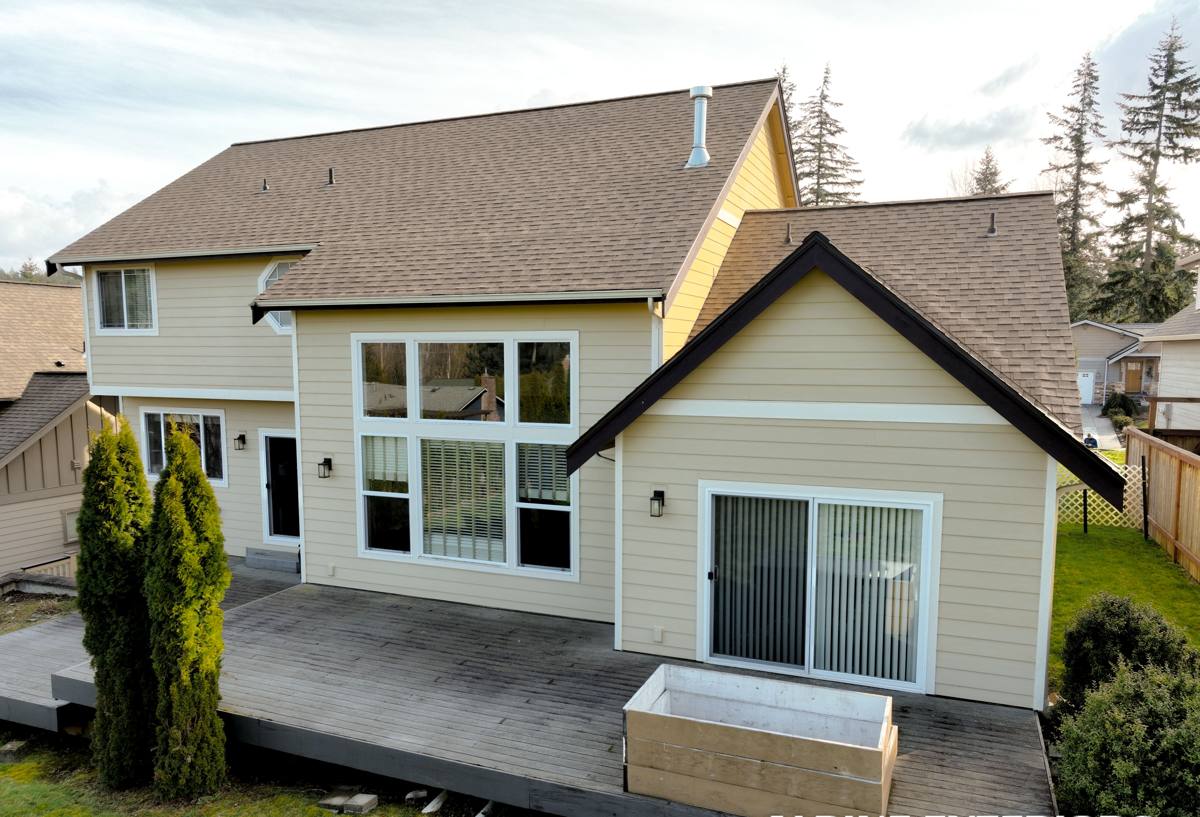
What Ferndale's Climate Actually Does to a Roof
Salt Air and Metal Components
Ferndale's proximity to the coast means airborne salt settles on roofing surfaces over time. This mostly affects exposed metal — nails, flashing, vent stacks, and gutter hardware — accelerating corrosion compared to what you'd see further inland. It's a slow process, but it's a real one, and it's why the fastener and flashing choices on a Ferndale roof matter more than they would on the same house built in, say, the Cascade foothills.
Driving Rain
Storms coming off the water tend to push rain sideways, not just straight down. A roof that would shed water fine in a calm, vertical rain can still take on water at wind-driven angles if the underlayment, valleys, and shingle overlaps aren't built with that in mind. This is a detail-level issue, not a material-level one — it's about how the roof is put together, not which shingle brand is on it.
Moss and Prolonged Moisture
Whatcom County's wet season is long, and shaded or north-facing roof sections can stay damp for weeks at a stretch. That's ideal growing conditions for moss, which works its way under shingle edges, holds moisture against the roof deck, and gradually lifts shingles from underneath. Left unaddressed, moss growth is one of the more common reasons we get called out to Ferndale roofs that are otherwise still within their expected lifespan.
What a Correct Installation Looks Like Here
A shingle roof that's going to hold up in this climate isn't defined by the shingle alone — it's defined by everything underneath and around it. For Ferndale homes specifically, we pay close attention to:
- Ice-and-water shield or high-quality synthetic underlayment at eaves, valleys, and any low-slope transitions, not just the minimum code-required areas
- Properly lapped and sequenced flashing at every wall intersection, chimney, and roof-to-roof valley, since these are the most common leak points in wind-driven rain
- Corrosion-resistant fasteners and flashing metal appropriate for coastal-influenced air, rather than the cheapest standard hardware
- Balanced intake and exhaust ventilation, which keeps the underside of the roof deck dry and reduces the moisture that feeds moss and accelerates shingle aging from below
- Shingle nailing patterns and exposure set to manufacturer spec for wind zones, not just "close enough"
None of this is exotic. It's standard trade practice done properly and consistently, which is a lower bar than it sounds like — but it's also the bar that gets skipped most often on rushed jobs.
Choosing Shingle Products for This Area
We install architectural (dimensional) asphalt shingles on the large majority of Ferndale roofs. They're heavier and thicker than older three-tab shingles, which gives them better wind resistance and a longer realistic service life in a climate that sees regular storm activity off the water. Algae-resistant (AR) shingles, which use copper-infused granules to slow the growth of the dark streaking algae common in the Pacific Northwest, are worth the modest upgrade cost for most homes here given how long roofs stay damp through the year.
We're selective about which manufacturer lines and shingle classes we install. That's not a knock on any particular brand — it's about matching the product's installation tolerances, warranty structure, and moisture behavior to what actually holds up under Whatcom County conditions over 20-plus years, rather than what looks good on a spec sheet in a drier climate.
Common Shingle Options Compared
| Shingle Type | Typical Lifespan | Wind Performance | Best Fit |
|---|---|---|---|
| 3-Tab Asphalt | 15–20 years | Lower wind rating | Budget-driven projects, lower-exposure roof sections |
| Architectural (Dimensional) | 25–30 years | Higher wind rating, better in gusts | Most Ferndale homes, especially open or elevated lots |
| Algae-Resistant (AR) Architectural | 25–30 years | Same as standard architectural | Shaded, north-facing, or tree-covered roofs prone to moss and algae |
Repair, Recover, or Full Replacement?
Not every roofing problem on a Ferndale home needs a full tear-off. We evaluate three things before recommending a scope: the age and remaining life of the existing shingles, the condition of the roof deck underneath, and how widespread the moisture or wind damage actually is.
- Repair makes sense when the damage is localized — a section lifted by wind, a flashing leak, or moss damage confined to one slope — and the rest of the roof still has meaningful life left.
- Recover (installing new shingles over sound existing ones) is rarely something we recommend, since it traps moisture and hides deck problems rather than solving them — and it's not a fit for a climate where deck moisture is already a concern.
- Full replacement is the right call when the roof is near the end of its service life, when moss or moisture damage has affected the deck, or when multiple areas are showing wear at once. It's also the point where you get to correct any underlying ventilation or flashing issues rather than build around them again.
Our Process on a Ferndale Roofing Project
- On-site inspection. We walk the roof, check the attic or roof deck access where possible, and look specifically for the moisture, flashing, and ventilation issues common to this area.
- Straightforward scope and estimate. You get a clear breakdown of what's being replaced and why — no pressure, no inflated scope.
- Tear-off and deck check. Old material comes off, and we inspect the deck underneath for soft spots or rot before anything new goes down.
- Underlayment and flashing first. This is where most future leaks are prevented or created, so it gets full attention before a single shingle is installed.
- Shingle installation to spec. Correct nailing pattern, exposure, and ventilation tie-in, matched to the wind and moisture conditions of your specific roof.
- Final walkthrough. We review the completed work with you before calling the job done.
Why a Crew That Already Works Ferndale Matters
Roofing crews that mostly work drier or more sheltered inland areas don't always build in the underlayment coverage, flashing details, or ventilation balance that a Ferndale roof actually needs — because their usual jobs don't demand it. A crew that regularly works Bellingham and Whatcom County knows which roof details tend to fail first in this specific climate, because we've been the ones called back to fix them. That familiarity shows up in things you won't see on a quote sheet: where we add extra underlayment even when code doesn't strictly require it, which flashing metal we won't use near the water, and how we sequence a tear-off around a stretch of unpredictable coastal weather.
Maintaining Your Roof Between Installations
A well-installed shingle roof still benefits from basic upkeep in this climate, particularly around moss and debris:
- Keep gutters clear so water isn't backing up under the shingle edge, especially heading into the wet season
- Remove moss growth gently — physical removal or appropriate treatments, never pressure washing directly on shingles, which strips granules and shortens shingle life
- Trim back overhanging branches on shaded sides of the roof to reduce the moisture and debris that feed moss growth
- Have flashing and valleys checked periodically, since these fail before the shingle field does in wind-driven rain
Get a Straightforward Estimate
If your Ferndale home needs a new roof, a repair, or you just want an honest read on how much life is left in what you've got, we're happy to take a look. The estimate is free, there's no pressure attached to it, and you'll get a clear explanation of what we find — good or bad. Use the form below to get started.