 Bellingham Roofing
 Why Ferndale Roofs Take a Different Kind of Beating
Ferndale sits close enough to the water north of Bellingham that salt-laden air isn't an occasional nuisance — it's a constant part of the weather. Add in Whatcom County's long wet season, driving rain that comes in sideways off open ground, and yards with enough tree cover to keep roof surfaces shaded and damp for months at a time, and you get a roof that ages differently than one fifty miles inland. We see the same three stresses on Ferndale roofs over and over: corrosion working on metal components, wind-driven rain finding its way past flashing and fasteners, and moss that gets a running start almost every year because the roof rarely gets a real chance to dry out.
None of that means Ferndale roofs are doomed to constant problems. It means repairs here have to account for causes that a generic patch job ignores. A repair that works in a drier climate can fail here within a season if it doesn't account for how water and salt actually move across a roof in this part of Whatcom County.
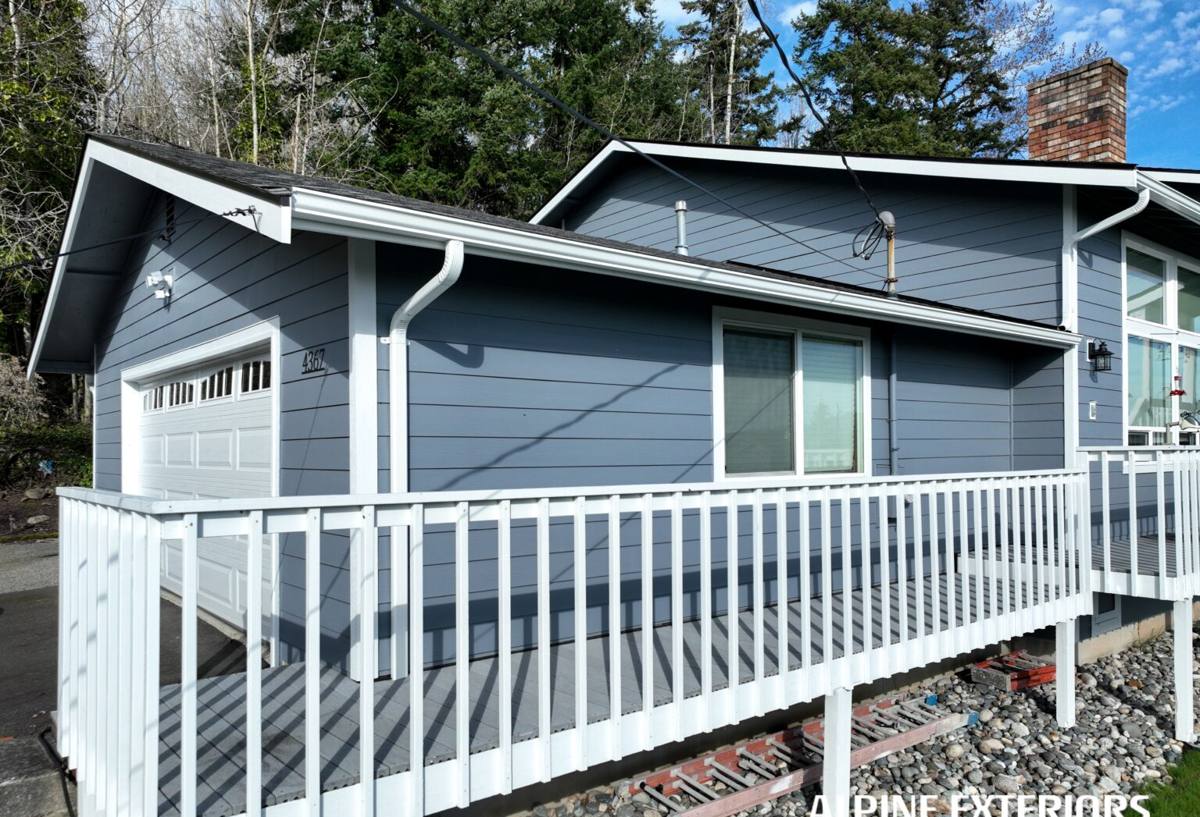
Common Repair Needs We See in Ferndale Homes
Moss and Organic Growth Damage
Moss doesn't just look bad — it holds moisture against the roof surface, lifts shingle edges as it grows, and channels water sideways under the shingle line instead of letting it run off. On shaded, north-facing slopes, or roofs bordered by trees, moss can establish itself within a year or two of a roof being cleaned. Left alone, it eventually opens small leak paths at shingle edges and around penetrations.
Wind-Driven Rain Intrusion
Rain that falls straight down is easy for a roof to shed. Rain that's being pushed sideways by wind off open water behaves differently — it can work its way under shingle tabs, up under flashing, and into vent boots that would otherwise hold up fine. Most of the leak calls we run in Ferndale trace back to a flashing or fastener detail that was fine for vertical rain but wasn't built for wind-driven rain.
Corrosion on Fasteners, Flashing and Vents
Salt air accelerates corrosion on exposed metal — nail heads, step flashing, vent collars, and gutter hardware. Corroded fasteners back out or lose their seal over time, and corroded flashing thins until it stops shedding water reliably. This is gradual damage, which is exactly why it tends to get discovered only after a leak shows up inside.
Aging Composition Shingle Fields
Most Ferndale homes are roofed in asphalt composition shingle. In this climate, granule loss, curling, and brittle edges tend to show up a bit earlier than the manufacturer's general timeline suggests, because of the added stress from moisture cycling and salt exposure. An aging shingle field doesn't always need full replacement — but it does need an honest look at how much service life is actually left.
What a Correct Roof Repair Actually Involves
Finding the Real Source, Not Just the Wet Spot
Water travels. A stain on a ceiling is rarely directly below the actual entry point on the roof. A correct repair starts with tracing the path — checking flashing, valleys, penetrations, and the roof deck itself before deciding what actually needs to be replaced.
Matching Materials and Fastener Types
Mixing incompatible metals or using standard fasteners in a salt-air environment invites corrosion right back into a fresh repair. We match flashing metal and fastener type to what's already on the roof, or upgrade it where the original choice was clearly the weak point.
Rebuilding Flashing Details Properly
Flashing is where most leaks actually start and where most bad repairs actually fail — caulk over a flashing problem is a temporary cover, not a fix. A correct repair reconstructs the flashing detail (step flashing, counter-flashing, valley metal, or vent boot) so water is shed by design, not by sealant alone.
Checking Ventilation While We're Up There
Poor attic ventilation traps moisture underneath the roof deck, which feeds the same moss and rot problems the outside weather is already working on. Any repair worth doing includes a quick check of intake and exhaust venting, since it's often part of why a section of roof aged faster than the rest.
How Our Ferndale Repair Process Works
- Inspection and photo documentation — we walk the roof (or use a camera where pitch or safety requires it) and document what we find, including areas beyond the reported leak.
- Written scope and honest recommendation — you get a clear explanation of what's actually wrong, what repair options exist, and whether replacement makes more sense, before any work starts.
- Repair day — we bring matching materials, do the tear-out and rebuild of the affected area, and clean up flashing and fastener details as needed, not just the visible damage.
- Cleanup and walkthrough — job site debris and old materials are cleared, and we walk the repair with you so you know exactly what was done and why.
Repair or Replace? How We Help You Decide
Not every leak means a new roof, and not every "just patch it" request is the responsible answer either. Here's how we weigh it:
| Factor | Leans Toward Repair | Leans Toward Replacement |
|---|---|---|
| Age of roof | Under 15-18 years | Approaching or past expected shingle life |
| Damage extent | Isolated to one area, valley, or penetration | Widespread granule loss, curling, or multiple leak points |
| Moss history | Recently cleaned, minor regrowth | Years of untreated growth with visible shingle lifting |
| Decking condition | Solid, no soft spots | Soft, delaminated, or water-stained deck sheathing |
| Flashing condition | Isolated corrosion or gaps | Widespread thinning or failed metal throughout |
We'll tell you plainly which side of that line your roof falls on. If a repair is the honest answer, that's what we'll recommend and price — a bigger job isn't a better outcome for you if it isn't the right one.
Materials We Use for Salt Air and Moss Conditions
Fasteners and Flashing Metal
Where corrosion resistance matters most — flashing, vent collars, exposed fasteners — we use materials chosen for standing up to salt exposure rather than defaulting to whatever is cheapest at the yard. It's a small cost difference on a repair and a real difference in how long the fix lasts.
Underlayment Choices
On repair sections, we use underlayment suited to the amount of wind-driven rain exposure the area actually sees, rather than a one-size-fits-all approach. Valleys, low-slope sections, and areas near penetrations get extra attention here since that's where wind-driven rain does the most work.
Our Approach to Moss
Rather than pressure-washing (which can strip granules and shorten shingle life) or relying on a single chemical treatment, we treat moss removal as part of the repair itself: clear existing growth by hand where needed, treat the surface, and address the shade or drainage issue that let moss take hold in the first place. A repair that doesn't deal with the moss cause will just need the same work again in a couple of years.
Timing a Repair Around Whatcom County's Seasons
Roof repairs can be done in Ferndale nearly year-round, but timing still matters. The drier stretch of the year gives us the most working days without interruption and lets fresh materials cure properly before the next round of driving rain arrives. That said, an active leak doesn't wait for good weather — we handle emergency and off-season repairs regularly, using methods appropriate for wetter conditions, and schedule the more involved flashing or moss work for the first available dry window.
Why Hiring a Crew That Already Works Ferndale Matters
A roofer who mostly works dry inland climates can still do fine general carpentry, but may not default to salt-resistant fasteners, may underestimate how far wind-driven rain travels under a shingle edge, or may treat moss as cosmetic rather than structural. A crew that regularly works Ferndale and the surrounding Bellingham and Whatcom County area already knows which details fail first in this climate and builds repairs accordingly — not by guessing, but because we've seen the same failure patterns repeat across the neighborhood's roofs. That local familiarity also means faster response when a leak shows up during a storm, since we're not driving in from out of the area.
A Simple Maintenance Checklist for Ferndale Homeowners
- Have moss removed and treated before it visibly lifts shingle edges — waiting until it's thick makes the repair bigger.
- Keep gutters and downspouts clear so water isn't backing up under the roof edge during heavy rain.
- Trim back tree branches that keep roof sections shaded and slow to dry.
- After any major windstorm, do a visual check (from the ground, with binoculars if needed) for lifted or missing shingles.
- Have flashing around chimneys, skylights, and vent pipes inspected every couple of years, since these are the first spots salt air and wind-driven rain tend to compromise.
- Address a small leak immediately rather than waiting — a contained repair now is almost always less than the deck and insulation repair that follows a delay.
If you're dealing with a leak, moss buildup, or just want an honest read on where your Ferndale roof stands, we're glad to take a look. Estimates are free, there's no pressure to sign anything on the spot, and you'll get a plain explanation of what we find — just fill out the form below to get started.