 Bellingham Roofing
 Storm Damage Roof Repair Built for Ferndale's Weather
Ferndale sits close enough to the water and open farmland that storms arrive with more wind than homes a few miles inland ever see. Add Whatcom County's long wet season, salt-laden air drifting off the strait, and a moss season that can run eight months out of the year, and you get roofs that age differently here than they do in drier parts of the state. When a windstorm rips a ridge cap loose or driving rain finds a gap in the flashing, the damage doesn't always announce itself right away. We repair storm-damaged roofs across Ferndale and the surrounding Whatcom County area, and this page walks through what that actually involves — not a generic overview, but the specifics of what your roof is up against here and how we fix it correctly the first time.
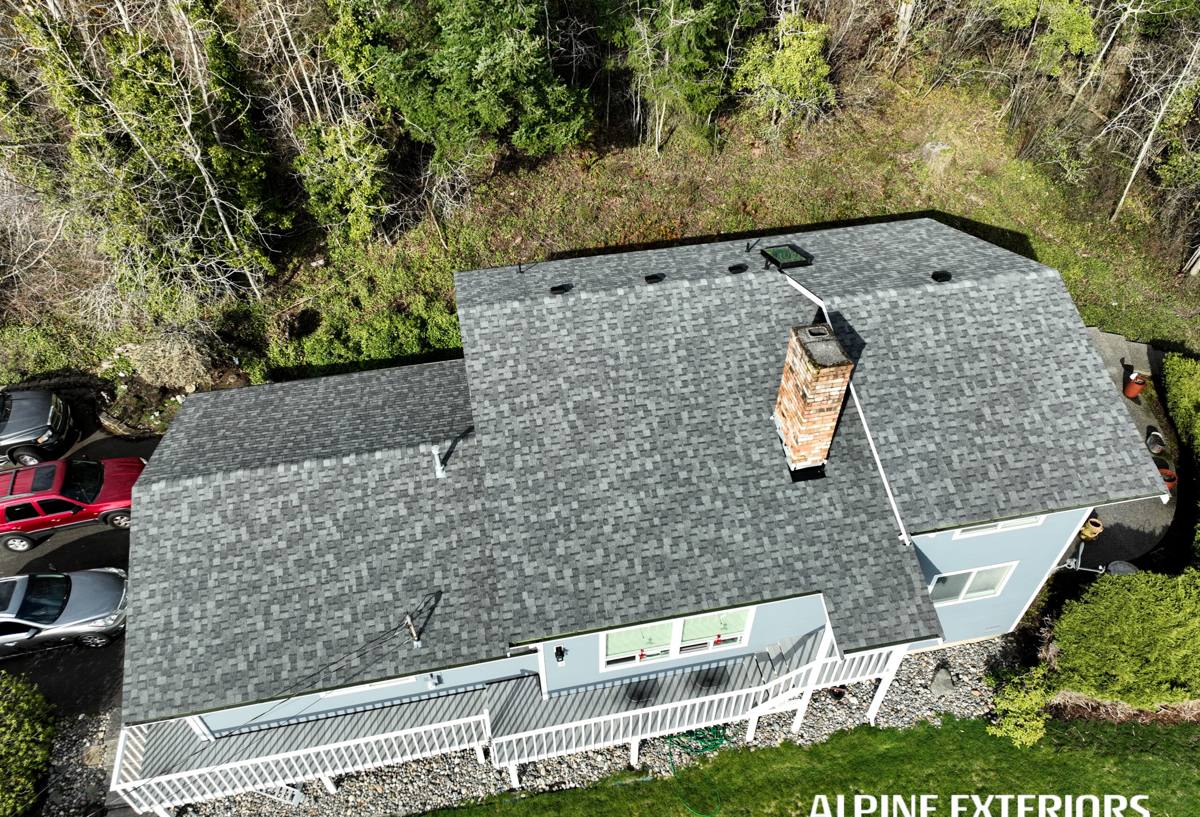
Why Ferndale Roofs Take a Different Kind of Beating
Every roofing market has its own combination of weather stressors. Ferndale's is a mix that punishes roofs from more than one direction at once.
Salt Air and Corrosion
Homes closer to the water pick up salt in the air, and that salt settles on metal flashing, fasteners, gutters, and any exposed hardware. Over years, it accelerates corrosion in ways that inland roofs simply don't experience. A storm that loosens a flashing seal on a roof with already-corroded fasteners fails faster and more completely than the same event would on a drier, saltier-free roof.
Driving Rain and Wind-Driven Water
Wind off the water doesn't just push rain sideways for an afternoon — it drives water uphill under shingles, into laps that were only ever designed to shed water moving downward. This is one of the most common ways storm damage becomes water damage: the shingles themselves may look fine from the ground, but wind-driven rain has already worked its way past them.
Moss and Trapped Moisture
Whatcom County's long damp season keeps moss growing on north-facing and shaded roof sections nearly year-round. Moss holds water against the roofing material long after a storm has passed, and it lifts shingle edges just enough that the next wind event can finish the job. A roof with an active moss problem is more vulnerable to storm damage than a clean one, not less.
What Actually Counts as Storm Damage
Homeowners often assume "storm damage" means a hole punched through the roof. In practice, most of what we repair is subtler than that, and knowing the difference matters for both the repair plan and any insurance claim.
Wind Damage
Lifted, creased, or missing shingles along ridges, hips, and roof edges — the areas that take the most direct wind load. Wind can also loosen ridge vents, satellite mounts, and flashing without leaving obvious visible signs from the ground.
Impact Damage
Falling branches, blown debris, or hail can bruise or puncture shingles, dent metal flashing and vents, and crack skylights. Impact damage is sometimes easy to spot and sometimes nearly invisible until it's already let water in.
Water Intrusion
Wind-driven rain finding its way past compromised flashing, worn underlayment, or lifted shingle tabs. This is the category that causes the most long-term harm because it often isn't discovered until there's a stain on a ceiling or damp insulation in the attic — weeks or months after the storm that caused it.
What Isn't Storm Damage
Gradual granule loss, general shingle aging, and moss-related deterioration that built up over years aren't storm damage on their own, even if a storm is what finally exposes the problem. We're upfront about that distinction because it affects whether a repair is a maintenance issue or a legitimate storm claim.
Our Storm Damage Repair Process
A correct storm repair isn't just patching the spot that's obviously broken. It's finding everything the storm affected, in the right order, before it causes secondary damage.
1. Full Roof Inspection, Not Just the Reported Spot
We start at the area you noticed damage, then walk the entire roof plane by plane. Wind and impact damage rarely stay confined to one spot — a storm strong enough to lift one section of shingles usually stressed the whole roof, and we'd rather find a second problem now than have you call us back after the next rain.
2. Documentation
We photograph and note every area of damage we find, with enough detail to support an insurance claim if you're filing one. This documentation is done before any repair work starts, so there's a clear record of the roof's condition immediately after the storm.
3. Emergency Protection, When Needed
If a section of roof is actively letting water in, our first priority is stopping that — temporary tarping or sealing to protect the interior of your home — before we move to a permanent fix. This step happens fast, often the same day we're called.
4. The Permanent Repair
Once the roof is stabilized, we repair the actual damage: replacing shingles, resetting or replacing flashing, repairing underlayment where water reached it, and reattaching or replacing anything the wind took loose. We match existing materials where the roof is otherwise sound, and we're honest with you if a section's condition means a patch won't hold as long as it should.
5. Follow-Up Check
After a major storm event, we recommend a follow-up look once the repair has been through at least one more rain, just to confirm everything is sealed and performing as expected.
Repair vs. Replacement: How We Make the Call
Not every storm-damaged roof needs a full replacement, and not every roof can be safely patched. The decision comes down to the extent of damage relative to the roof's remaining life and overall condition.
| Situation | Typical Approach | Why |
|---|---|---|
| Isolated wind damage on a roof under 10 years old | Targeted repair | Surrounding shingles are still in good shape and will bond well with matched replacements |
| Storm damage on a roof already near the end of its service life | Often recommend replacement | A patch on an aging roof rarely lasts as long as the rest of the roof, and further storms will keep finding new weak points |
| Widespread wind damage across multiple roof planes | Case-by-case, sometimes partial re-roof | Extensive lifted or missing shingles can compromise the underlayment's ability to shed water even where shingles remain |
| Water intrusion with soaked decking or insulation | Repair includes decking replacement | Wet sheathing won't hold fasteners properly and needs to be replaced, not just covered over |
What Storm Repair Costs Depend On
We don't publish flat prices for storm repair because the range is genuinely wide, but the factors that drive cost are consistent from job to job.
| Factor | How It Affects Cost |
|---|---|
| Extent of the damage | A single lifted shingle section costs far less than repairs spanning multiple roof planes |
| Roof access and pitch | Steeper roofs and difficult access add labor and safety setup time |
| Whether decking or underlayment needs replacement | Water intrusion that reached the wood sheathing adds material and labor beyond a surface-level repair |
| Material matching | Older or discontinued shingle lines can be harder to match, sometimes requiring a broader repair area for a consistent look |
| Insurance involvement | Claims-based repairs may require additional documentation steps but don't inherently change the physical scope of work |
Insurance Claims: What Ferndale Homeowners Should Know
Many storm repairs in this area go through homeowner's insurance, and a few practical habits make that process smoother.
- Photograph any visible exterior damage yourself as soon as it's safe to do so, before any cleanup
- Avoid climbing onto the roof to inspect it yourself — leave that to a professional with the right safety equipment
- Get a written inspection report with photos before your adjuster visits, so there's an independent record
- Ask your contractor to be present for the adjuster's inspection if your schedule allows it
- Keep receipts for any emergency tarping or temporary repairs — these are typically reimbursable
- Don't sign a contract that requires you to pay a deductible waiver or inflates the claim — legitimate contractors work within your actual policy
Why Hiring a Crew That Already Works in Ferndale Matters
Storm damage repair rewards local familiarity in ways that other roofing work doesn't. A crew that regularly works Ferndale roofs already knows which neighborhoods sit closer to the water and take more wind and salt exposure, which roof styles and ages are common in the area, and how quickly moss reestablishes itself in this climate if it isn't addressed during a repair. That familiarity shows up in faster, more accurate inspections and repairs that account for what's actually happening to the roof over time, not just the immediate storm event. It also means faster response — when a storm moves through Whatcom County, a local crew isn't driving in from across the region to reach you.
Preventing the Next Storm From Doing More Damage
Every storm repair is also a chance to reduce how much damage the next event causes. A few things we routinely check and recommend during a repair visit:
Gutter and Downspout Condition
Clogged or damaged gutters send wind-driven rain back up under the roof edge instead of away from the house. We check gutters as part of any storm repair, since it's a small fix that prevents a repeat problem.
Moss Growth on Shaded Slopes
If moss contributed to the damage, we'll flag it — moss removal and prevention treatment is a separate, straightforward step, but skipping it means the same section of roof stays vulnerable.
Flashing Age Around Penetrations
Chimneys, vents, and skylights are common weak points during wind events. If flashing around these penetrations is older or already showing corrosion from salt air, we'll point it out even if it wasn't the cause of the current damage.
Signs You Should Have Your Roof Checked After a Storm
You don't need visible damage to justify a call. Some of the most common signs we hear from Ferndale homeowners include:
- Shingle granules collecting in gutters or at the base of downspouts after a windstorm
- A new stain or damp patch on an interior ceiling or wall
- Visible gaps, curling, or missing shingles from ground level
- A ridge cap or vent that looks out of place or is missing entirely
- Unusual light coming through the attic in daylight
- A musty smell in the attic that wasn't there before
Any one of these is worth a quick inspection. Catching wind or water damage early is almost always cheaper and simpler than waiting until it spreads to decking or interior finishes.
If a recent storm has you wondering whether your roof took damage, we're happy to come take a look. The estimate is free, there's no pressure to move forward, and you'll get a straight answer about what — if anything — needs to be repaired.