 Bellingham Roofing
 Why Siding Wears Differently in Sudden Valley
Sudden Valley sits on the south shore of Lake Whatcom, wrapped in the kind of dense tree cover that makes the neighborhood beautiful and makes siding work harder. Homes here spend more of the year in shade than most Bellingham lots, sit close to a large body of water, and catch the same driving rain and long moss season that defines Whatcom County's marine climate. That combination — shade, moisture, and slow drying — is exactly the profile that shortens the life of the wrong siding product and exposes sloppy installation faster than it would in a drier, more open setting.
We install James Hardie fiber cement siding exclusively, and we've done enough work in and around Sudden Valley to know what actually holds up here versus what looks fine for the first few years and then starts showing problems. This page covers what the local climate does to siding, what a correct Hardie installation involves, and what our process looks like for homes in this specific area.
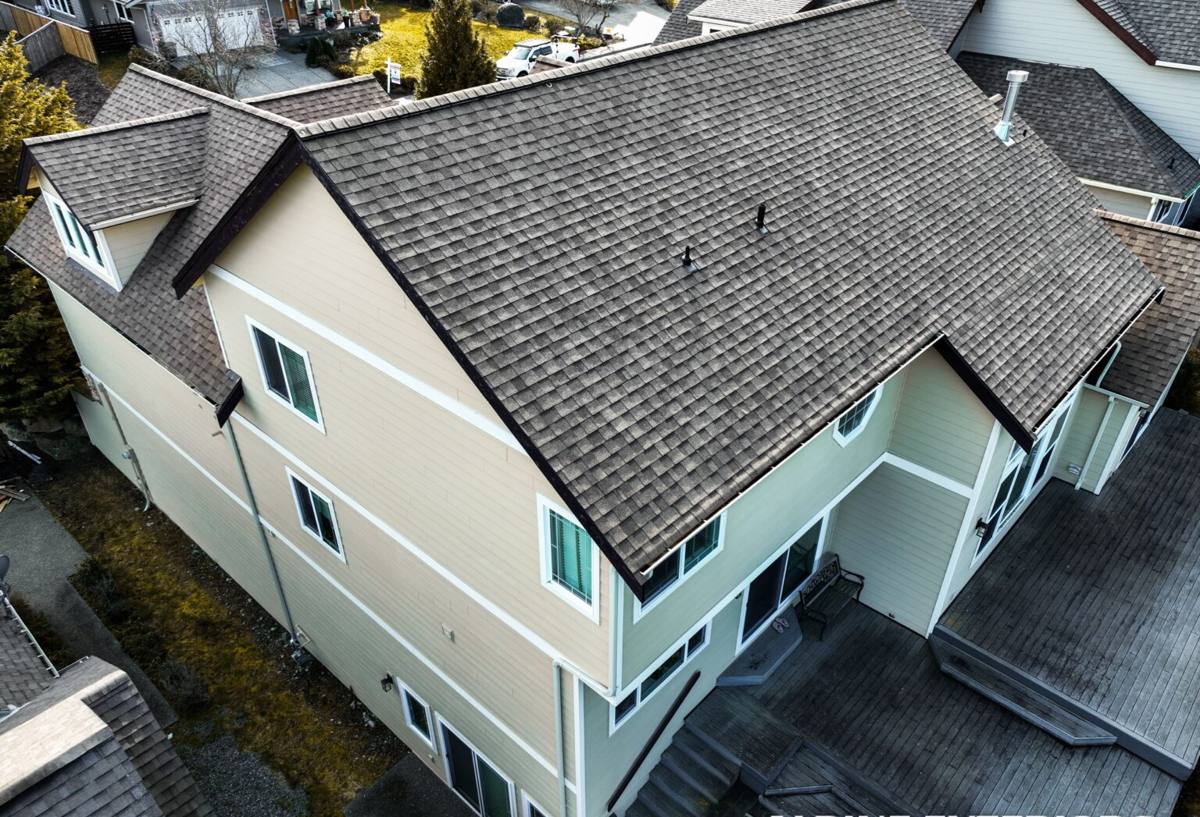
What This Climate Does to Siding Over Time
Whatcom County's marine air, the wind-driven rain off Bellingham Bay and the lake, and the long stretch of overcast, damp months between fall and spring all put steady pressure on exterior siding. In a shaded, tree-heavy community like Sudden Valley, that pressure is amplified because surfaces simply don't dry out as fast.
Moss and Algae on Shaded, Wooded Lots
Moss doesn't just grow on roofs. On siding, it takes hold in the same conditions that keep a north-facing roof green year-round: constant shade, high humidity, and surfaces that stay damp long after a storm has passed. Once moss or algae gets a foothold on siding, it holds moisture directly against the material, which accelerates whatever damage that material is already prone to. On wood-based products, that means faster rot. On the finish itself, it means staining and premature fading. Sudden Valley's dense canopy means most homes here deal with more of this than a lot on open ground closer to town.
Wind-Driven Rain and Wall Assembly Moisture
Rain in this region rarely falls straight down. Wind pushes it sideways and up under laps, around trim, and into any gap that wasn't properly flashed or caulked. Over years, that repeated wetting finds every weak point in a siding system — a missing piece of flashing, a caulk joint that was never installed, a butt joint that wasn't back-primed. The siding material matters, but so does every detail behind it that a homeowner never sees once the job is done.
Why We Install James Hardie in This Environment
James Hardie fiber cement is engineered specifically for climates like this. It doesn't absorb and swell with moisture the way wood-based products can, it's non-combustible, and its ColorPlus factory finish is baked on and formulated to resist the fading and staining that shaded, damp environments cause faster than most homeowners expect. For a neighborhood surrounded by trees and water, that combination matters more than curb appeal alone.
| Factor | James Hardie Fiber Cement | Wood / Primed Spruce or Cedar | Vinyl |
|---|---|---|---|
| Moisture behavior | Dimensionally stable, resists swelling | Absorbs moisture, prone to rot without diligent upkeep | Doesn't rot, but can warp and trap moisture behind it |
| Moss / algae resistance | Factory finish resists staining, cleans up well | Porous surface holds moisture, feeds growth | Surface resists growth but seams and laps trap debris |
| Fire resistance | Non-combustible | Combustible | Combustible, can deform in heat |
| Typical maintenance | Periodic wash, repaint on ColorPlus timeline or as needed | Regular repainting, caulk and rot inspection | Low maintenance but limited repair options once cracked |
| Expected service life when installed to spec | Multiple decades | Shorter without consistent upkeep | Variable, shorter in impact and UV exposure |
We don't install LP SmartSide, vinyl, cedar, or primed spruce, and we're upfront about why: each of those products asks a homeowner to either accept more maintenance, accept more moisture risk, or accept a shorter realistic lifespan in exchange for a lower upfront cost. In a climate that's already working against siding year-round, we'd rather put one product on a home that we know handles it correctly.
What a Correct Installation Involves
James Hardie siding performs the way it's supposed to only when it's installed to the manufacturer's specifications — and in a wet, shaded climate, the installation details matter as much as the product itself.
Water Management Behind the Siding
Every correct installation starts with a proper weather-resistive barrier and flashing at every penetration, window, door, and horizontal transition — the places where wind-driven rain finds its way in first. Butt joints get flashed or sealed per spec rather than just butted together, and any siding installed near grade, decks, or roof lines gets the clearances Hardie specifies to keep splash-back and standing moisture away from the bottom edge of the panel.
Fastening and Gaps for the Right Climate Zone
James Hardie manufactures its products in different formulations for different climate zones (HZ5 for regions like ours, HZ10 for hot, humid climates), and each has its own fastening pattern, gap, and clearance requirements. Getting these wrong doesn't show up immediately — it shows up two or three winters later as cracking, buckling, or water intrusion at the joints.
Ventilation and Drying Room on Shaded Lots
On a heavily wooded lot like most in Sudden Valley, siding and the wall assembly behind it get less sun and airflow to dry out after rain. That makes proper rainscreen or drainage detailing, correct caulking, and attention to any spots where siding meets trim or masonry more important than it would be on an open, sun-exposed lot. We install accordingly rather than treating every job the same regardless of site conditions.
Our Process for Sudden Valley Projects
- On-site assessment. We look at the existing siding, check for hidden moisture or rot at trim, corners, and penetrations, and account for the lot's shade and drainage pattern before we quote anything.
- Full tear-off, not overlay. We remove existing siding rather than installing over it, because covering up a wall assembly without inspecting the sheathing underneath just hides problems instead of solving them.
- Sheathing and moisture check. Any water damage found during tear-off gets addressed before new siding goes on — no siding job should seal moisture problems behind a new wall.
- Weather barrier and flashing installation. This is the step that determines how the siding performs for the next several decades, and it happens before a single piece of Hardie board goes up.
- James Hardie installation to manufacturer spec. Correct fastening, gapping, and caulking for our climate zone, with trim and joint detailing done to hold up to wind-driven rain.
- Final walkthrough and cleanup. We go over the finished work with the homeowner and clear the site of debris and old material.
Maintenance After Installation
James Hardie siding is low-maintenance compared to wood, but "low-maintenance" isn't "no-maintenance," especially in a shaded, moisture-heavy setting like this one.
- Rinse siding periodically with a garden hose to keep moss and algae from establishing, especially on shaded, north-facing walls
- Avoid pressure washing directly at seams and joints, which can force water behind the panels
- Keep gutters clear and downspouts directed away from the foundation so runoff isn't constantly wetting the lower courses of siding
- Trim back branches and vegetation that hold moisture against exterior walls or block airflow and sun
- Inspect caulk joints every year or two and have any cracked or missing caulk replaced before it lets water in
- Repaint on the manufacturer's recommended ColorPlus finish timeline, or sooner if you notice fading or chalking
What Affects Cost on a Sudden Valley Job
| Factor | Why It Matters |
|---|---|
| Home size and wall complexity | More corners, gables, and trim detail mean more labor and material cuts |
| Existing siding removal | Full tear-off takes more time than a straightforward re-side over sound sheathing |
| Site access | Sudden Valley's wooded lots and private roads can limit staging space and equipment access compared to open, in-town lots |
| Hidden repairs | Rot or moisture damage found during tear-off adds scope, but skipping the repair isn't an option |
| Trim, color, and board profile | Custom trim details and certain ColorPlus finishes cost more than standard lap siding in a stock color |
We walk every project through these factors during the estimate so there are no surprises once work starts — a wooded, water-adjacent lot isn't a reason to cut corners on prep, and we price the job to reflect what it actually needs.
Why It Matters That We Already Work in This Neighborhood
A crew that's worked Sudden Valley before understands the site conditions before they show up: the tree cover, the access on private community roads, and the moisture patterns that come from being this close to the lake. That familiarity shows up in small ways that add up — knowing where to expect hidden rot on a shaded wall, planning around the drying time a wooded lot needs between steps, and not treating a Sudden Valley home like it's sitting on an open, sun-exposed lot in town. It's also simply easier to schedule and coordinate a project with a contractor who already knows the neighborhood's layout and access points.
If you're planning a siding project in Sudden Valley, we're happy to take a look at your home and walk you through what a correct James Hardie installation would involve for your specific lot and exposure. Reach out for a free, no-pressure estimate using the form below.