 Bellingham Roofing
 Siding Built for Sudden Valley's Microclimate
Sudden Valley sits in a pocket of Whatcom County that gets its own weather story. Nestled along Lake Whatcom with heavy tree cover on most lots, homes here deal with more shade, more standing moisture, and a longer moss season than houses out in the open flats of Bellingham proper. Add in the driving rain that rolls off the water during fall and winter storms, and you've got siding conditions that punish anything less than a genuinely weather-resistant product installed correctly the first time.
We install James Hardie fiber cement siding exclusively, and neighborhoods like Sudden Valley are exactly why. This is a page about one job in one place: what siding here actually needs to hold up, what correct installation looks like, and why it matters that the crew on your roofline has already worked this specific terrain.
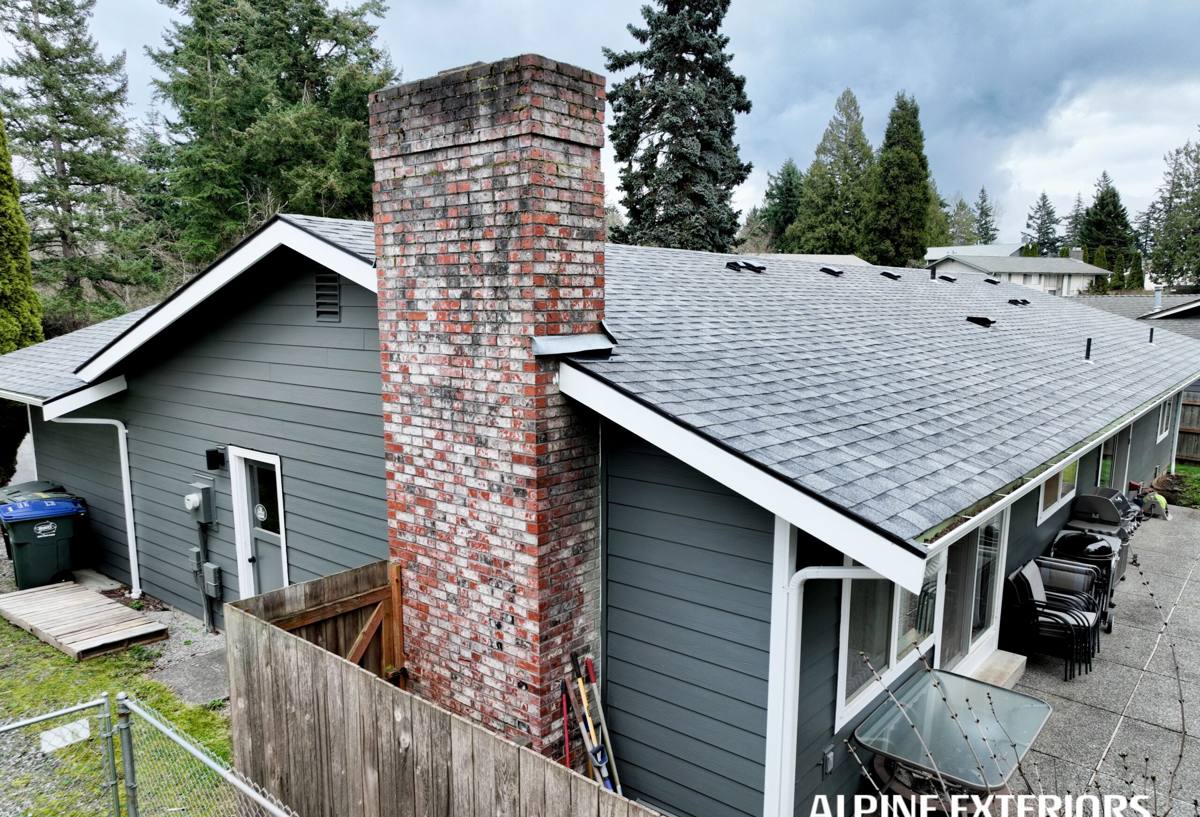
What Sudden Valley's Climate Does to Siding
Shade and Moisture Retention
Heavy tree canopy is part of what makes Sudden Valley appealing, but it also means siding on many homes doesn't get much direct sun to dry out after rain. Combined with the lake's humidity, that's a recipe for prolonged moisture contact on exterior walls — the exact condition that lets moss, algae, and mildew take hold and that causes wood-based products to soften and swell over time.
Moss Season Runs Long
In shaded, moisture-retentive spots, moss doesn't just grow on roofs — it colonizes siding too, especially on north-facing walls and anywhere water sheets down from gutters or rooflines. Moss holds moisture against the surface even longer, which accelerates whatever underlying damage the substrate is already prone to.
Driving Rain and Wind-Driven Moisture
Storms coming off Lake Whatcom and the broader Whatcom County weather pattern don't just rain straight down — wind pushes moisture sideways into wall assemblies, seams, and butt joints. Siding that isn't installed with correct flashing, gapping, and water management becomes a slow leak waiting to happen, even if the material itself is sound.
Why We Only Install James Hardie Here
We don't install vinyl, LP SmartSide, primed wood, cedar, or other fiber cement brands. That's not a marketing position — it's a standard we hold because of what we've seen these products do in exactly this kind of climate over time.
- Vinyl expands and contracts with temperature swings, and in shaded, damp conditions it doesn't stop moss and mildew from forming on its surface — it just doesn't rot from it the way wood does, but it also doesn't shed grime well and can warp near heat sources.
- Wood siding (cedar, primed spruce) is a real fire and moisture liability in a shaded, wet environment like Sudden Valley. Even well-maintained wood needs frequent repainting and sealing to resist the moisture load here, and any gap in that maintenance schedule shows up fast as soft spots, cupping, or rot.
- LP SmartSide is an engineered wood product, meaning it still relies on resin-treated strand board as its core — it performs better than raw wood, but it's still wood-based, which means it's still more sensitive to sustained moisture exposure than a true fiber cement product.
- Other fiber cement brands (Cemplank, Allura) are legitimate fiber cement products, but we've standardized on James Hardie specifically for its factory-baked ColorPlus finish, its climate-engineered HZ5 formulation for the Pacific Northwest, and the strength of its transferable warranty.
James Hardie fiber cement is non-combustible, doesn't feed mold or moss the way organic materials can, and holds its factory finish for years without repainting. In a neighborhood where trees keep siding shaded and damp for long stretches, that durability isn't a nice-to-have — it's the difference between siding that needs attention every couple of years and siding you can largely forget about.
What Correct Siding Installation Actually Involves
Fiber cement siding is only as good as its installation. A poorly installed Hardie job can still trap moisture and fail early — the material isn't magic, it's a system that depends on getting the details right.
Water Management Comes First
Before a single course of siding goes up, the wall needs a correctly lapped weather-resistant barrier, properly flashed windows and doors, and kick-out flashing wherever a roofline meets a wall. In a high-moisture, tree-shaded setting like Sudden Valley, this step matters more than almost anywhere else in the county — it's the layer that keeps incidental moisture from ever reaching the structure.
Fastening and Gapping to Spec
James Hardie publishes specific fastener patterns, gap requirements at butt joints and trim, and clearance minimums above rooflines, decks, and grade. Skipping these specs is the single most common cause of premature siding failure we see on fiber cement jobs done by crews unfamiliar with the product — cracked boards, caulk failures, and moisture intrusion almost always trace back to installation shortcuts, not the material itself.
Trim, Caulking, and Paint Line Details
Correct caulking at trim joints and a factory ColorPlus finish that isn't compromised by field-cutting without sealing cut edges both matter for long-term performance. Cut edges exposed to Sudden Valley's shaded, wet conditions without proper sealant are a common weak point if a crew rushes the trim work.
Installation Checklist We Follow on Every Job
- Weather-resistant barrier installed and lapped correctly, no gaps at penetrations
- Flashing at every window, door, and roof-to-wall intersection
- Minimum clearance maintained above grade, decks, patios, and roofing
- Fastener spacing and type matched to Hardie's published specifications
- Butt joints and trim gapped per manufacturer requirements, not caulked tight
- All field-cut edges sealed before installation
- Final inspection for consistent reveal lines and secure attachment
Product Lines That Fit This Setting
James Hardie offers several siding profiles, and the right one for a Sudden Valley home often comes down to the style of the house and how much of the wall is shaded versus exposed to lake-driven weather.
| Product Line | Best Fit | Why It Works Here |
|---|---|---|
| HardiePlank Lap Siding | Most home styles, especially traditional and craftsman | Widely proven in wet PNW conditions; straightforward water-shedding profile |
| HardieShingle | Accent areas, gables, cottage-style homes | Classic look without the moisture vulnerability of real cedar shingle |
| HardiePanel | Modern or board-and-batten styles | Clean vertical lines; fewer horizontal joints for water to catch on shaded walls |
| HardieTrim | Corners, window and door surrounds | Matches durability of field siding so trim doesn't fail before the rest of the wall |
All of these come with Hardie's HZ5 formulation engineered for the Pacific Northwest's freeze-thaw and moisture cycles, which is a meaningfully different product than the HZ10 formulation built for hot, dry climates.
Our Process for a Sudden Valley Siding Project
1. On-Site Assessment
We walk the property, note which walls get sun and which stay shaded, check for existing moisture damage or moss buildup, and look at how water currently moves off the roof and around the foundation. Tree cover and lake proximity change the plan wall by wall, not just house by house.
2. Removal and Substrate Check
Old siding comes off and we inspect the sheathing underneath for rot or soft spots before anything new goes up — a step that matters even more in a shaded, damp setting where hidden moisture damage is more common.
3. Water Barrier and Flashing Installation
This is the step that determines whether the siding performs for decades or fails early. We don't shortcut it regardless of how straightforward the visible siding work looks.
4. Hardie Installation to Manufacturer Spec
Fastening, gapping, and clearances follow Hardie's published requirements exactly, which is also what keeps the manufacturer's warranty intact.
5. Trim, Caulk, and Final Walkthrough
We finish trim work, seal cut edges, and walk the completed job with the homeowner before calling it done.
Cost Factors Specific to This Kind of Job
Every siding job is priced on its own details, but a few factors come up consistently in wooded, lakeside settings like Sudden Valley:
| Factor | Why It Affects Cost |
|---|---|
| Substrate condition | Hidden moisture damage under old siding, more likely in shaded walls, adds repair scope before new siding goes on |
| Access and tree clearance | Dense landscaping and tree cover can slow staging and scaffolding setup |
| Wall complexity | Multiple gables, dormers, and trim details increase flashing and cutting time |
| Product line mix | Combining lap siding with shingle accents or panel sections changes material and labor totals |
| Existing moss or moisture treatment | Heavily colonized old siding may need extra prep or disposal handling |
Why Local Experience in Sudden Valley Matters
A crew that only works in dry, sunny parts of Whatcom County can install siding correctly on paper and still miss what a shaded, lake-adjacent property actually needs — where water tends to collect, which walls stay damp longest, and how much moss pressure a given side of the house will face year-round. Working this neighborhood repeatedly means we already know where those problem areas tend to show up before we ever get on a ladder.
It also means we're not guessing at how Bellingham's broader climate interacts with Sudden Valley's specific terrain — the combination of lake humidity, tree shade, and wind-driven rain off the water is a distinct set of conditions, and siding installed without accounting for it tends to show problems within the first few wet seasons.
Get a Free, No-Pressure Estimate
If you're weighing a siding replacement or new installation in Sudden Valley, we're glad to come take a look, walk the property with you, and give you a straight answer on what your home needs. Use the form below to request a free estimate — no pressure, no obligation.