 Bellingham Roofing
 Board & Batten in a Wooded, Lake-Adjacent Setting
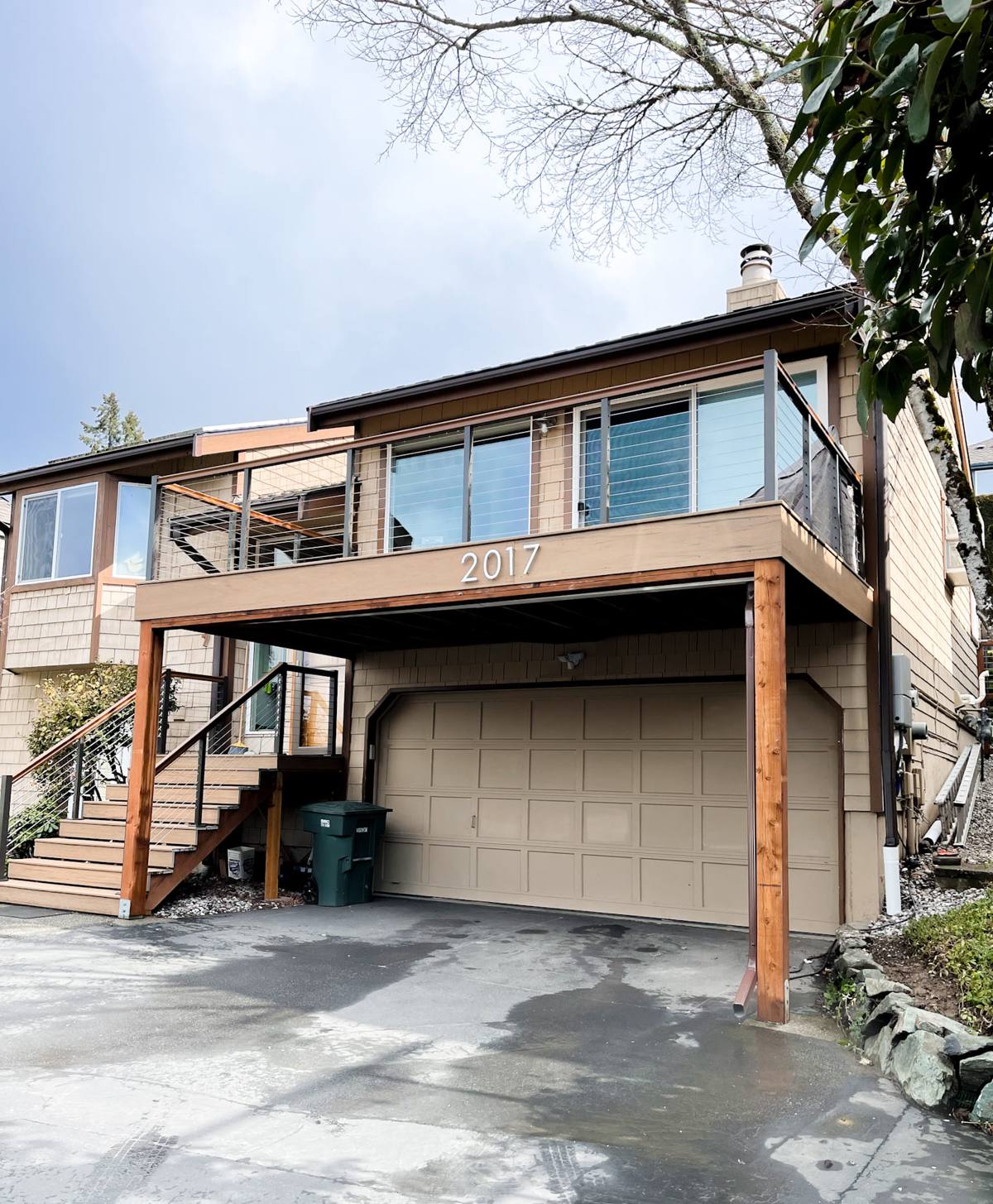
Sudden Valley sits in one of the more heavily treed, moisture-retentive pockets of the Bellingham area, and that setting changes what "good siding" means. Tree cover holds shade and humidity against exterior walls longer than it does on an open lot in town. Lake-adjacent air stays damp well after a storm system has moved through the rest of Whatcom County. Add the marine air that rolls in off the Puget Sound and Bellingham Bay through the wider region, and you get a set of conditions that punishes the wrong siding choice slowly, quietly, and expensively.
Board and batten is a strong fit for a lot of Sudden Valley homes architecturally — it reads well against the wooded backdrop, it works with cabin-style and craftsman rooflines, and the vertical lines shed water differently than horizontal lap siding does. But the look only holds up long-term if the material underneath the battens can actually handle what this microclimate throws at it. That's the part most homeowners never see until it's already gone wrong.
What This Climate Actually Does to Board & Batten Siding
Moss and organic growth
Whatcom County runs a long wet season, and the shade from mature trees around Sudden Valley extends how long siding surfaces stay damp after rain. Moss, algae, and mildew don't need standing water — they need consistent moisture and shade, and this area supplies both for months at a stretch. Board and batten's vertical seams and batten strips create extra edges and shadow lines where organic growth likes to start, especially on north-facing walls that see less direct sun.
Driving rain and wind-driven moisture
Storms coming off the water don't just fall straight down — wind pushes rain sideways into wall assemblies, and it finds every gap in flashing, caulking, or panel seams. Board and batten has more vertical seams per square foot than plain lap siding, which means more places where a rushed install can let water behind the cladding instead of off of it.
Marine air and general weathering
The broader Bellingham region sits close enough to Bellingham Bay and the Sound that marine air is a real factor in material selection, even inland toward the lake. Salt-tinged, humid air accelerates the breakdown of anything that relies on paint film or sealant alone for protection, which is exactly why some cheaper siding systems age faster here than their spec sheets suggest.
What a Correct Board & Batten Installation Involves
Board and batten looks simple from the curb — vertical boards, battens over the seams — but the assembly behind that look is where the siding actually earns its keep. A correct install for a climate like this includes:
- A drainable rainscreen gap behind the siding so any moisture that does get past the surface can dry out and drain instead of sitting against the wall sheathing
- Correct fastener placement and spacing per the manufacturer's engineering, not "close enough" — under- or over-driven fasteners are one of the most common causes of early siding failure
- Proper flashing and integration at every window, door, and roofline transition, since these are the highest-risk water entry points regardless of siding type
- Batten spacing and fastening that accounts for the wider panel's expansion and contraction, so boards don't cup, bow, or pull loose over time
- Factory-finished material wherever possible, so the color and protective coating aren't dependent on field paint quality
- Sealed, back-primed cuts and properly gapped joints at every seam, corner, and butt joint
Skip any one of these and the siding can still look fine for a year or two — the problems that show up in wooded, moisture-heavy settings like Sudden Valley tend to be slow ones: soft trim, staining, moss creeping up from the bottom courses, or moisture damage discovered only when a board is finally pulled off.
Why We Only Install James Hardie Board & Batten Here
We don't install LP SmartSide, vinyl, Cemplank, Allura, primed spruce, or cedar board and batten. That's not a marketing line — it's a standard we've held to because of exactly the failure modes described above. Wood-based and engineered-wood panels depend on an intact factory coating and diligent field caulking to keep moisture out; once that skin is compromised in a shaded, damp environment, the substrate underneath is vulnerable to rot and swelling. Vinyl board and batten is low-maintenance in the sense that it doesn't rot, but it's a thin, flexible material that can warp, fade, and doesn't hold paint or color depth well over decades in this kind of climate.
James Hardie fiber cement is what we put on Sudden Valley homes instead, specifically their HZ5 product line, which is engineered for Pacific Northwest-style wet, marine-influenced climates rather than a generic national spec. Fiber cement is non-combustible, doesn't support moss and mildew growth the way wood-based products can, and holds its shape without the expansion and contraction issues that plague vinyl and engineered wood in temperature and moisture swings.
ColorPlus factory finish
Hardie's ColorPlus finish is baked on at the factory under controlled conditions, which gives it far more consistent coverage and UV/moisture resistance than field-applied paint achieves on wood or engineered panels. In a climate that's hard on painted surfaces, that's not a cosmetic upgrade — it's the difference between repainting in eight to ten years and not needing to.
Backed by a real warranty
Hardie's product warranty is transferable and substantial when the installation is done to their specifications, which is part of why correct installation technique matters as much as material choice. A great product installed wrong voids the protection that made it worth choosing in the first place.
Board & Batten vs. Other Siding Approaches for This Setting
| Factor | James Hardie Board & Batten | Vinyl Board & Batten | Wood/Engineered Wood Panel |
|---|---|---|---|
| Moss/mildew resistance | High — fiber cement doesn't feed organic growth | Moderate — surface can host growth in shaded areas | Low to moderate — organic material is more susceptible |
| Wind-driven rain tolerance | High when installed with rainscreen and proper flashing | Moderate — seams can flex and open over time | Depends heavily on coating integrity |
| Finish longevity in marine air | Factory ColorPlus, long repaint interval | Color molded in, but can fade and chalk | Field-applied paint, shorter repaint cycle |
| Fire resistance | Non-combustible | Combustible | Combustible |
| Long-term maintenance | Low — periodic cleaning and caulk checks | Low, but limited repair options if damaged | Higher — coating upkeep is ongoing |
Our Process for a Sudden Valley Project
Every project starts with an on-site look at the specific wall exposures — which sides get shade most of the day, where moss is already forming, where existing siding shows staining or soft spots, and how the roofline and gutters are managing water around the home. That assessment drives decisions on flashing details, rainscreen depth, and any trim or transition work that needs attention before new siding goes up, not after.
From there: removal of the old siding with a check of the sheathing underneath (this is often where hidden moisture damage from a prior install shows up), installation of a code-compliant water-resistive barrier and rainscreen system, then the Hardie board and batten installation itself following manufacturer fastening and clearance specs. We finish with proper caulking at penetrations, trim work, and a final walk-through so you know what to expect from the finish over the coming months as it weathers in.
Sudden Valley's wooded lots and private road network also mean access and staging look different than a straightforward in-town job — driveway space, tree clearance for material delivery, and neighborhood or HOA logistics are worth sorting out before a crew shows up, not after.
Why a Crew That Already Works This Area Matters
A contractor who's worked Sudden Valley before already knows what the shaded, lake-humid exposures typically do to different wall orientations, has a feel for the access and staging realities of the community's wooded lots, and isn't guessing at flashing details based on a spec sheet written for a drier climate. That familiarity shows up in fewer surprises mid-project and a finished install that's actually built for what this specific setting does to a home over the next twenty or thirty years — not just what looks good on install day.
Maintaining Board & Batten Siding in This Climate
- Rinse siding annually, focusing on shaded north- and east-facing walls where moss establishes first
- Keep tree branches and shrubs trimmed back from siding to improve airflow and sun exposure
- Check and clear gutters before the fall rains so overflow isn't running down wall surfaces
- Inspect caulking at trim, window, and door transitions every year or two and re-seal as needed
- Watch for moss or dark staining at the base of walls and address it early rather than letting it spread upward
- Have any visible cracking, chipping, or fastener issues looked at promptly rather than waiting for a full repaint cycle
Get a Straight Answer for Your Home
If you're weighing a siding replacement or new build in Sudden Valley, we're happy to walk the property, look at your specific sun and shade exposures, and give you a straightforward, no-pressure estimate for James Hardie board and batten done right for this climate. Use the form below to get started.