 Bellingham Roofing
 Why Sudden Valley Decks Wear Out Faster Than You'd Expect
Sudden Valley sits in a pocket of Whatcom County shaped by two things that are hard on wood and framing alike: the lake and the trees. The humidity that sits over Lake Whatcom doesn't burn off the way it might in a more open, sun-exposed neighborhood. Add in the heavy tree canopy that gives so many of these lots their privacy, and you get decks that stay damp longer after every rain, get less direct sun to dry out between storms, and collect a steady drop of needles, leaves, and pollen that traps moisture against the boards.
Across greater Bellingham, the broader marine climate brings salt-tinged air, driving rain off the water, and a moss season that can run most of the year in shaded spots. In Sudden Valley specifically, that climate gets amplified by tree cover and lake-side humidity. The result is decks where the surface boards look tired years before the structure underneath actually fails — or, just as often, decks that look fine on top while the framing, ledger connection, or footings have quietly been failing underneath for years.
That combination is exactly why deck replacement in this neighborhood isn't a cosmetic job. It's a structural one, and it needs to be treated that way from the first inspection.
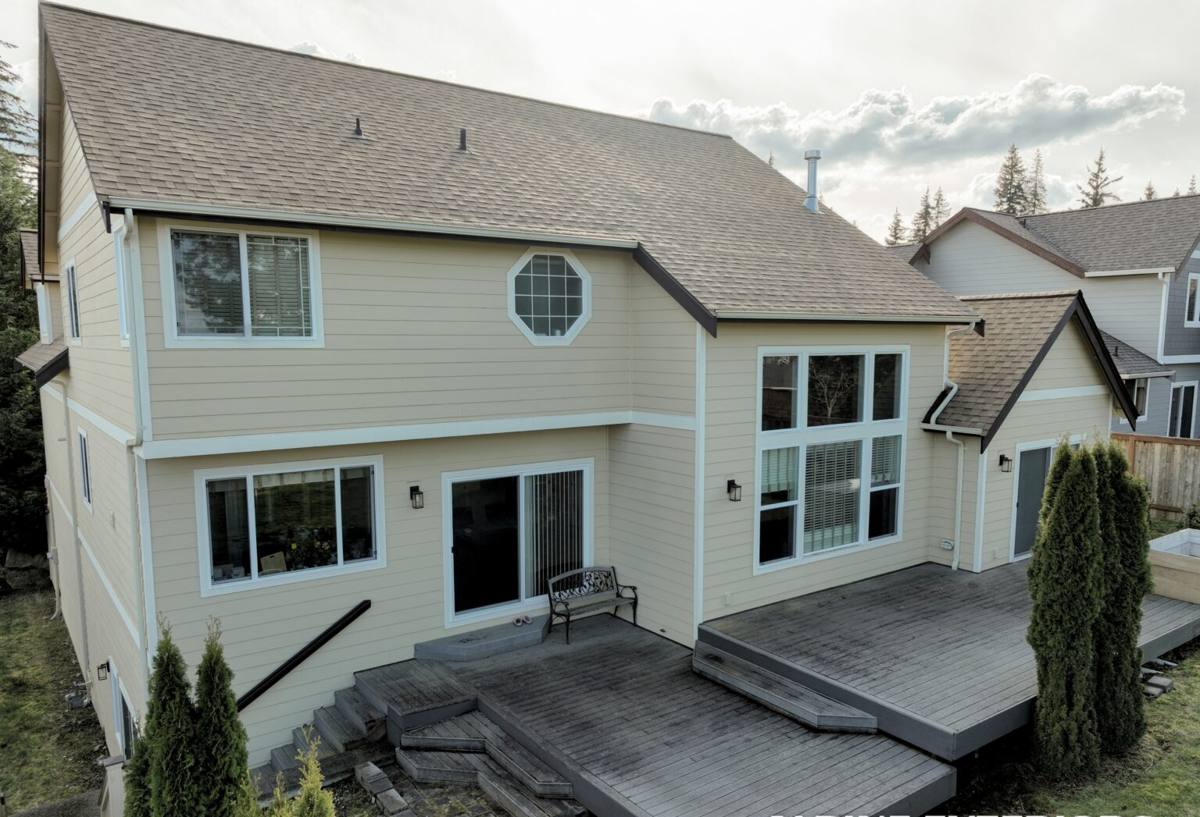
Repair or Replace? How We Make the Call
Not every tired-looking deck needs a full tear-off. We look at a handful of specific things before recommending replacement over repair:
- Soft, spongy, or discolored spots in the decking boards, especially near the house or at board ends
- Rot or soft wood at the ledger board where the deck attaches to the house — a common failure point in wet climates
- Rust, corrosion, or missing structural connectors on joists and posts
- Posts or footings that have shifted, settled, or show signs of ground movement
- Railings that flex or feel loose under normal pressure
- Widespread moss or algae growth that's worked its way into the wood grain rather than just sitting on the surface
If the problems are limited to surface boards and the framing underneath is sound, repair or a partial board replacement can make sense. But once we find rot at structural connections, a compromised ledger, or a substructure that's been undersized or poorly built from the start, patching the surface is just delaying a bigger problem — and often masking it from future inspection.
What a Correct Deck Replacement Actually Involves
The Ledger and Flashing
The single most common failure point on decks in wet climates is the ledger board — the framing member that bolts the deck to the house. If it's not properly flashed to shed water away from the house framing, moisture works its way behind the deck and into the wall structure over years, often without any visible sign until damage is advanced. A correct replacement means new flashing, correct fasteners, and a ledger connection built to current code, not just a rebuild of whatever was there before.
Framing and Footings
We check post spacing, joist sizing, and footing depth against current structural requirements, not just against what the original deck happened to have. Older decks in this area were sometimes built with under-sized framing or shallow footings that technically held up for years but don't meet what's required today. Replacement is the right time to correct that, not repeat it.
Fasteners and Hardware
In a humid, tree-covered environment, fastener choice matters more than most homeowners realize. Standard hardware corrodes faster here, and corroded fasteners are a quiet structural risk — they can look intact on the surface while losing holding strength underneath. We use corrosion-resistant hardware rated for the connection type and exposure.
Decking Material
The visible surface is where most homeowners focus, and it's worth getting right — but only after the structure underneath is solid. We'll walk through material options based on your budget, sun exposure, and how much upkeep you want to take on.
Comparing Decking Materials for This Climate
| Material | Moisture Performance | Maintenance | Typical Lifespan |
|---|---|---|---|
| Pressure-treated wood | Good if maintained; prone to moss and mildew in shade | Annual cleaning, periodic sealing/staining | 15-20 years with upkeep |
| Cedar | Naturally rot-resistant but still needs sealing in shaded, damp spots | Regular sealing to preserve color and resistance | 15-20 years with upkeep |
| Composite decking | Strong moisture resistance; won't rot or absorb water like wood | Periodic washing to prevent surface moss/algae buildup | 25-30+ years |
| PVC decking | Fully moisture-resistant, no wood fiber for organic growth to root into | Occasional washing | 25-30+ years |
We don't push one material over another as a matter of course. Wood costs less up front and has a natural look a lot of homeowners want, but it asks for real annual maintenance in a climate like this — sealing, cleaning, and watching for the early signs of rot. Composite and PVC cost more initially but hold up better against the moss and moisture cycle Sudden Valley sees for much of the year, which is why we see more homeowners here choosing them for long-term, lower-maintenance decks.
How the Replacement Process Works
1. On-Site Assessment
We inspect the existing deck from the ground up — decking, framing, ledger connection, posts, and footings — and give you a straight answer on what's failing and why, in plain terms.
2. Design and Material Selection
We talk through layout, railing options, and material choice based on your home's exposure to sun, shade, and moisture, plus your maintenance preferences and budget.
3. Permitting
Deck replacement work is typically subject to Whatcom County or local building permit requirements, especially when structural framing, footings, or railings are involved. We handle the permitting process so you don't have to navigate it yourself.
4. Demolition and Structural Rebuild
Full removal of the old decking and, where needed, the framing and footings — followed by a rebuild to current structural standards, not a repeat of the original construction.
5. Final Decking, Railing, and Finish Work
Installation of the new surface material and railing system, with attention to drainage and airflow underneath the deck to reduce future moisture buildup.
6. Walkthrough and Cleanup
We walk the finished deck with you, cover care and maintenance specific to the material you chose, and make sure the site is left clean.
What Matters About Working in Sudden Valley Specifically
A neighborhood like Sudden Valley comes with practical realities that a crew unfamiliar with the area can miss. Many lots are wooded and sloped, which affects equipment access, footing placement, and how a deck needs to be framed to sit correctly on the terrain. Tree cover close to the house means we're often planning around root systems and branch clearance, not just the footprint of the old deck. And because many homes here sit close to the lake or in heavily shaded lots, drainage planning underneath and around the new deck is a bigger factor than it would be on a flat, open, sun-exposed lot elsewhere in Bellingham.
If the property is part of an HOA or community association with design guidelines, we'll work within whatever material, color, or railing requirements apply — that's a conversation worth having early, before material selection, so there's no rework later.
Keeping Moss and Moisture From Cutting a New Deck Short
Whatever material you choose, a few habits go a long way in this climate:
- Keep nearby branches and shrubs trimmed back to let sun and air reach the deck surface
- Sweep leaves and needles off regularly rather than letting them sit and hold moisture
- Rinse or wash the surface periodically to keep moss and algae from taking hold, especially on shaded sections
- Check railings and stair connections once a year for looseness or corrosion
- For wood decks, reseal on the schedule recommended for the product — don't wait until it looks dry and gray
- Make sure gutters and downspouts near the deck are directing water away, not onto it
What Deck Replacement Typically Costs
| Factor | Why It Moves the Price |
|---|---|
| Deck size and layout | More square footage and multi-level designs mean more material and labor |
| Material choice | Composite and PVC cost more up front than pressure-treated wood or cedar |
| Structural condition | Rotted framing, footings, or ledger connections add rebuild work beyond surface decking |
| Site access and terrain | Sloped or wooded lots can require more careful, labor-intensive access and footing work |
| Railing and stair systems | Custom railing materials and multiple stair sections add cost |
| Permitting requirements | Structural changes typically require permits, which factor into project timeline and cost |
Because so much depends on the condition of what's underneath the existing decking, we don't quote deck replacement sight unseen. An honest number comes from an actual look at your deck's framing and footings, not a flat per-square-foot estimate.
Get a Straight Answer on Your Deck
If your deck in Sudden Valley is showing soft boards, persistent moss, or just feels less solid than it used to, it's worth having someone look before another wet season passes. We'll give you a clear, honest assessment of what's actually going on — repair or replace — and a straightforward estimate with no pressure attached. Use the form below to request your free estimate.