 Bellingham Roofing
 Roof Repair Built for the Sudden Valley Setting
Sudden Valley sits in a different microclimate than a roof a few miles away in downtown Bellingham. Between the tree cover, the lake-adjacent humidity, and the driving rain that rolls in off the Salish Sea through much of the fall and winter, roofs out here age differently than roofs on open, sunny lots. A shingle or shake roof shaded by tall conifers for most of the day simply stays wetter, longer, than one that gets full sun. That single fact drives almost everything about how we diagnose and repair roofs in this neighborhood.
We're not describing a roof repair process that's generic to Whatcom County. We're describing what actually shows up when we're on a ladder on a Sudden Valley roof: heavier moss growth on north-facing slopes, flashing that's corroded faster because it never fully dries out, and gutters that clog with needles and leaf litter well before the rest of the region's do. Repairing a roof here means accounting for all of that, not just patching the spot that's leaking.
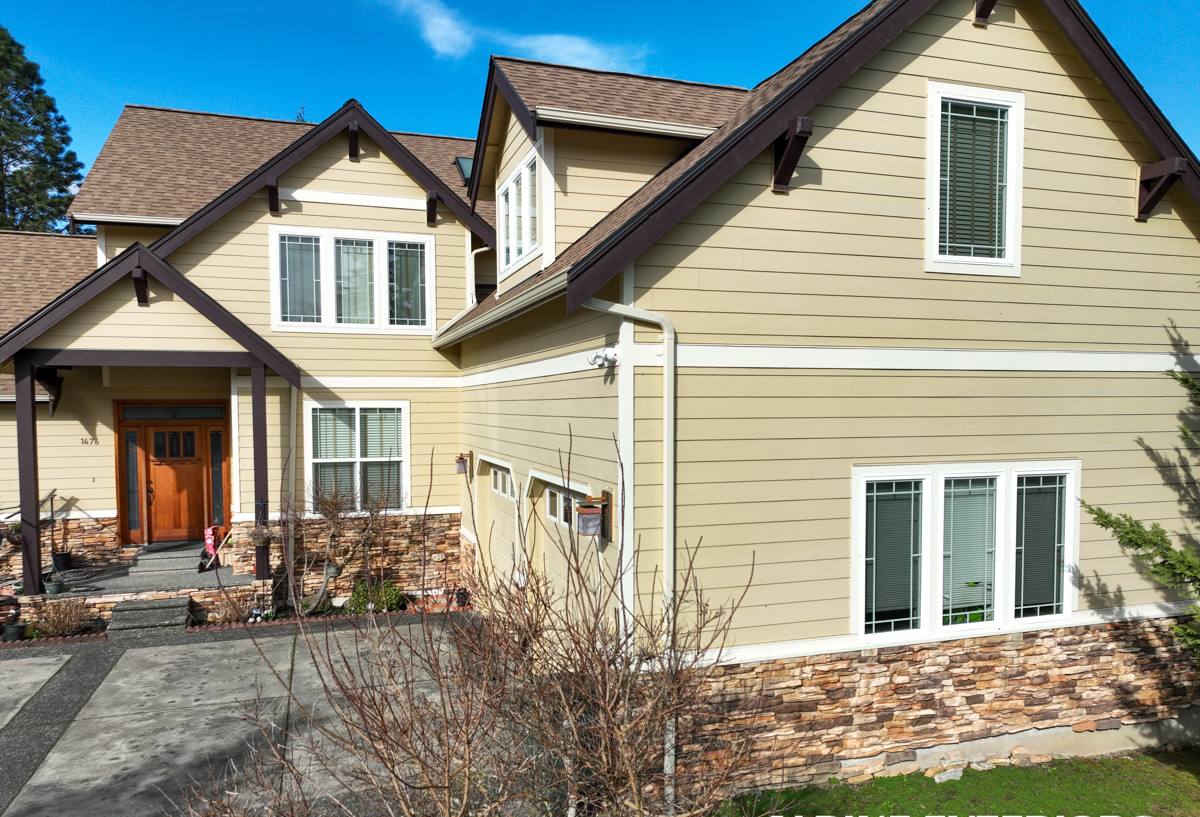
Why Local Climate Wears These Roofs Down Faster
Three conditions do most of the damage to roofs in and around Sudden Valley, and they compound each other:
- Salt air. Bellingham's proximity to the water means airborne salt reaches roofing metal — flashing, nails, vent boots, and gutter hardware — and accelerates corrosion over time, especially on fasteners that aren't rated for a marine-influenced climate.
- Driving rain. Wind-driven rain doesn't just fall straight down and run off; it gets pushed sideways and upward under shingle edges, around chimney flashing, and into any gap that a calmer climate would never test. A repair that would hold up fine in a dry inland climate can fail here within a season if it isn't sealed and lapped correctly.
- A long moss season. Cool, damp, shaded conditions for much of the year mean moss and moisture-loving growth get a long runway. Moss isn't just cosmetic — it holds water against the roofing material, lifts shingle edges as it grows, and works its way under flashing over time.
None of these conditions are unique to any one house. What's unique to Sudden Valley is how much tree canopy and lake-influenced humidity intensify all three at once, which is why roofs here often need attention on a shorter cycle than roofs in more exposed, sun-exposed parts of Bellingham.
Signs a Sudden Valley Roof Needs Repair — Not Just a Wash
Homeowners often call us after noticing moss and assume a cleaning will fix it. Sometimes that's true. Often, though, the moss is a symptom of an underlying repair need. Watch for these signs:
- Moss or dark streaking concentrated on shaded, north- or east-facing slopes
- Granule buildup in gutters or at downspout outlets (a sign of shingle wear, not just age)
- Soft or spongy spots underfoot on a walked roof, especially near valleys or chimneys
- Water stains on interior ceilings, especially after a stretch of wind-driven rain
- Curling, cupping, or lifted shingle edges, particularly where moss has taken hold
- Rust streaking below metal flashing or vent boots
- Daylight visible through the roof deck from inside an attic
Any one of these on its own might be minor. Two or three together usually means there's an active repair need, not just a maintenance item.
What a Correct Repair Actually Involves
Diagnosis before demolition
A repair that starts with tearing off shingles before anyone has traced the actual water path is a repair that risks missing the real problem. We start by finding where water is actually entering — which is very often not directly above where the stain or leak shows up inside, especially on a sloped roof with valleys or dormers. Water travels along the underlayment and framing before it finds its way through drywall or insulation.
Matching materials, not just patching
A patch that doesn't match the surrounding roofing in material, weight, and age creates a new weak point — a spot where two materials expand, contract, and shed water differently. Where an exact match isn't available because the original roofing has weathered or discontinued, we use the closest reasonable match and detail the transition so it sheds water correctly rather than relying on sealant to do the job that flashing should be doing.
Flashing and underlayment get the same attention as the surface
Most roof leaks in this climate trace back to flashing — around chimneys, skylights, valleys, and wall-to-roof transitions — or to underlayment that's failed, not to the shingles or shakes themselves. A repair that replaces surface material without addressing failed flashing or underlayment underneath it is a repair that will need to be redone.
Moss and debris removal done without damaging the roof
Pressure washing a mossy roof is one of the fastest ways to strip granules and shorten the life of asphalt shingles, and it can force water under laps that were never designed to handle that kind of force. We remove moss and debris using methods appropriate to the roofing material, then treat the surface to slow regrowth — rather than blasting it clean and creating new problems in the process.
Repair Approaches: What Fits This Climate and What Doesn't
| Situation | What we recommend | Why it fits this climate |
|---|---|---|
| Heavy moss on shaded slopes | Manual/low-pressure removal plus zinc or copper control strips | Avoids granule loss from pressure washing; metal strips slow regrowth through runoff, not chemicals reapplied yearly |
| Corroded flashing or fasteners | Replace with corrosion-resistant metal and fasteners rated for coastal exposure | Standard-grade hardware corrodes faster with the salt air common near Bellingham |
| Failed underlayment under intact shingles | Selective tear-back and underlayment replacement rather than full re-roof | Targets the actual failure point without the cost of a premature full replacement |
| Recurring leaks at valleys | Open or woven valley metal replacement, sized for higher water volume | Valleys concentrate the driving rain typical of fall and winter storms here |
| Gutter overflow contributing to fascia rot | Gutter repair or upsizing alongside the roof repair, not as a separate job | Needle and leaf load from surrounding trees clogs standard gutters faster than in open areas |
Our Repair Process
1. Inspection and honest assessment
We walk the roof (weather permitting) and inspect the attic from inside where accessible, tracing water paths rather than guessing from the ground. We'll tell you plainly if what you're dealing with is a targeted repair, a larger repair, or something closer to needing a full replacement — and explain why.
2. A clear, written estimate
You get a written scope of what we found, what we recommend, and why — not just a price. If there's a lower-cost option and a more thorough option, we'll lay out the tradeoffs honestly so you can decide what makes sense for your timeline and budget.
3. The repair itself
We protect landscaping and gutters during the work, remove and dispose of damaged material properly, and match new material to existing roofing as closely as reasonably available. Flashing and underlayment get replaced wherever they're compromised, not just where it's visible from the ground.
4. Cleanup and a final walk-through
We clear debris, check gutters and downspouts are running clean, and walk you through what was done before we consider the job finished.
Why Hiring a Crew That Already Works This Neighborhood Matters
Sudden Valley has its own access considerations, tree cover, and roof styles that differ house to house depending on when a section was built and how mature the surrounding trees have gotten. A crew that's worked roofs in this specific setting already understands things that take time to learn on the job: how much a given slope's shade exposure affects moss regrowth, which flashing details tend to fail first on the roof styles common here, and how to plan a repair day around narrower, tree-lined access where a standard-size truck or lift setup doesn't always fit the way it would on an open suburban street.
That familiarity shows up as fewer surprises during the job and a repair that's sized correctly to the actual conditions of your roof and lot — not a generic approach applied to every roof in Whatcom County regardless of setting.
Before You Hire: A Practical Checklist
- Ask whether the estimate includes flashing and underlayment inspection, not just visible shingle damage
- Confirm how moss and debris will be removed and whether pressure washing is involved
- Ask what happens if they find additional damage once they open up the repair area
- Get the scope of work and materials in writing before the job starts
- Ask about fastener and flashing material — standard-grade hardware corrodes faster in this climate
- Confirm cleanup, debris disposal, and gutter clearing are part of the job, not an add-on
- Ask whether they've worked in Sudden Valley specifically, and what access or scheduling considerations that involves
Get a Straight Answer on What Your Roof Needs
If you're seeing moss buildup, a stain on a ceiling, or just want a second opinion before winter's rains set in, we're glad to take a look. We'll tell you honestly whether you're looking at a repair, a bigger repair, or something else entirely — no pressure either way. Use the form below to request a free estimate, and we'll get back to you to schedule a time to come take a look at your roof.