 Bellingham Roofing
 Asphalt Shingle Roofing Built for Happy Valley's Climate
Happy Valley sits close enough to Bellingham Bay that homes here deal with a specific combination of weather stress: salt-laden air drifting up from the water, long stretches of driving rain off the Sound, and a moss season that can run nine months out of the year under the neighborhood's tree cover. None of that is unusual for Whatcom County, but it does mean a roof that would hold up fine in a drier inland climate can fail early here if it wasn't installed with these conditions in mind. Asphalt shingle roofing is still the right call for the vast majority of Happy Valley homes — it's proven, repairable, and reasonably priced — but the details of the installation matter more here than they would somewhere with a milder, drier climate.
This page is about what a correctly installed and maintained asphalt shingle roof looks like specifically for a Happy Valley property, not a generic overview of shingle roofing everywhere.
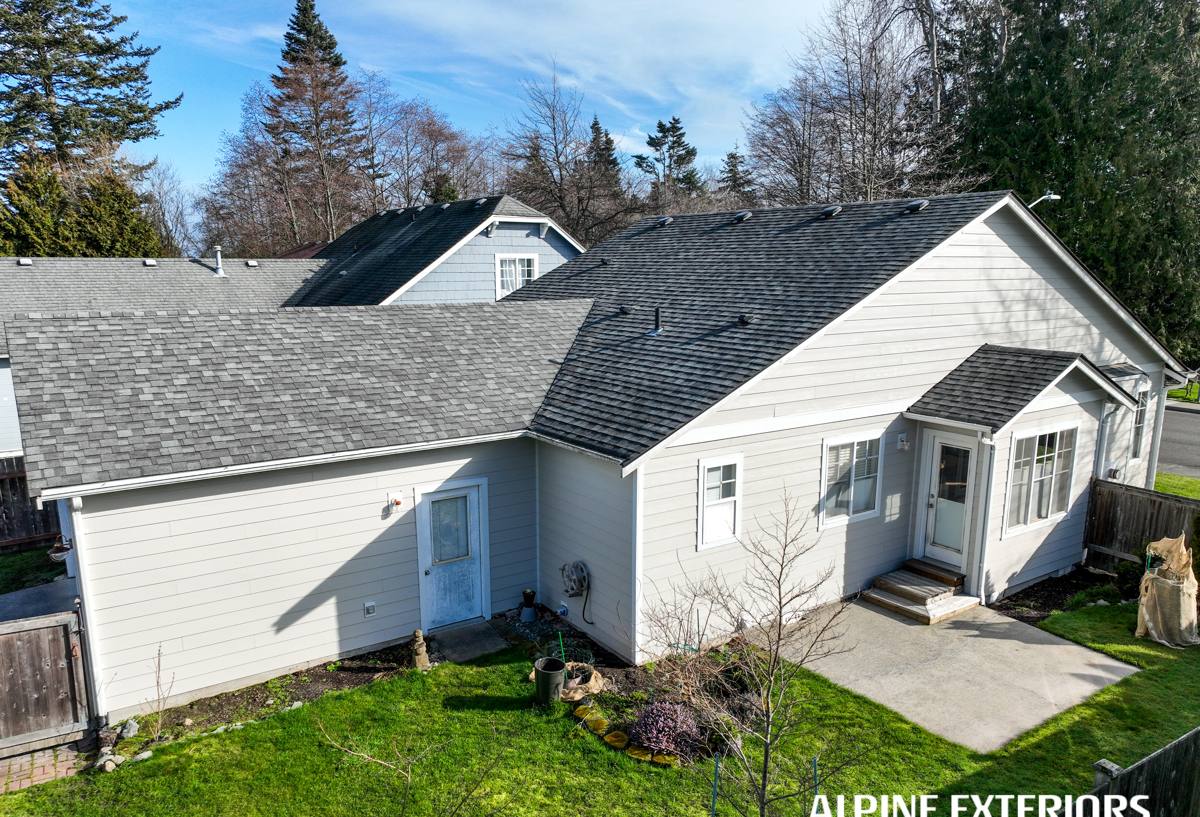
What Happy Valley's Climate Actually Does to a Roof
Salt Air and Metal Components
Proximity to Bellingham Bay means airborne salt settles on every exterior surface, including the roof. Salt air is hardest on unprotected metal — nails, flashing, and vent components corrode faster here than they would further inland. This is less about the shingles themselves and more about everything holding the roof system together. Cheap or improperly rated fasteners and flashing are where salt-driven failures usually start.
Driving Rain and Wind-Driven Water
Storms moving in off the Sound don't just drop rain straight down — wind pushes it sideways, up under shingle tabs, and into any gap in the flashing or underlayment. A roof that's only built to shed water moving downward will eventually leak in Happy Valley. The underlayment, valley work, and flashing details have to account for water being pushed uphill, not just falling.
Moss and Shade
Happy Valley's mature tree canopy is one of the neighborhood's best features, but it also means a lot of roofs sit in partial shade for much of the day. Shade keeps moisture on the roof surface longer after rain, and that moisture is exactly what moss needs to establish. Once moss takes hold, it lifts shingle edges, holds water against the roof deck, and accelerates granule loss. Moss control has to be part of the roofing plan from day one, not an afterthought once it's already a problem.
What a Correct Asphalt Shingle Job Involves Here
A roof that's going to hold up under these conditions needs more than good shingles. Every layer of the system matters:
- Deck inspection and repair — any soft, delaminated, or water-stained decking gets replaced before anything goes back on, not covered over.
- Ice and water shield at vulnerable points — eaves, valleys, and around penetrations get a self-adhering waterproof membrane, not just standard felt, since these are the spots wind-driven rain finds first.
- Synthetic underlayment across the full deck — more consistent water resistance than old-style felt, and it holds up better through a wet install season.
- Corrosion-resistant fasteners and flashing — given the salt air, this isn't optional. Standard galvanized components can start showing rust within a few years this close to the water.
- Proper valley and step flashing — cut and layered so wind-driven water can't work its way underneath, especially on the side of the roof facing prevailing weather.
- Balanced attic and roof ventilation — keeps the underside of the deck dry and reduces the moisture that feeds moss and mildew from below.
- Shingle selection suited to shaded, damp conditions — algae-resistant granules (usually copper- or zinc-infused) are worth the modest upcharge on a shaded lot.
Choosing the Right Shingle for a Shaded, Damp Lot
Not every asphalt shingle product performs the same way under shade and moisture. The table below covers the practical trade-offs for a Happy Valley property specifically.
| Shingle Type | Moss/Algae Resistance | Typical Lifespan Here | Best Fit |
|---|---|---|---|
| Standard 3-tab | Low — no algae-resistant granules | Shorter under heavy shade | Budget-driven projects on sun-exposed roofs only |
| Architectural (laminate), standard granules | Moderate | Solid if the roof gets some sun | Homes with partial, not heavy, tree cover |
| Architectural with algae-resistant (AR) granules | High | Best real-world performance in shaded Whatcom County lots | Most Happy Valley homes under tree canopy |
| Impact-rated architectural | High (usually paired with AR granules) | Comparable to standard AR, plus better resistance to debris impact | Lots with overhanging branches or storm debris exposure |
We don't push premium products as a default upsell — a standard architectural shingle is a fine choice for a roof that gets decent sun. But for a shaded Happy Valley lot, the algae-resistant upgrade is one of the few places where spending a bit more genuinely reduces long-term maintenance, since it directly targets the moss and algae growth that's the neighborhood's biggest roofing headache.
Our Process for Happy Valley Roof Installs
1. On-Site Assessment
We walk the roof and the attic, not just the roof surface. Tree cover, roof orientation, existing moss or algae staining, ventilation setup, and deck condition all factor into the plan before we quote anything.
2. Straightforward Written Estimate
You get a written scope covering tear-off, deck repair allowances, underlayment and flashing specs, shingle selection, and ventilation work — no vague line items. If something's a judgment call (like how much deck repair might be needed once tear-off starts), we tell you that up front instead of surprising you mid-project.
3. Tear-Off and Deck Inspection
Full tear-off lets us actually see the deck, which is the only way to catch hidden water damage — something you can't evaluate from the ground or from photos of the old roof.
4. Installation to Spec
Ice and water shield at vulnerable points, correct flashing details, proper nailing patterns, and ventilation balancing — done in the order that keeps the deck protected even if weather moves in partway through the job, which it often does here.
5. Final Walkthrough
We go over what was done, what to expect from the new roof, and a basic maintenance rhythm — including when it makes sense to have moss growth cleared before it becomes a bigger problem.
Maintenance That Actually Matters in Happy Valley
A good install buys you a lot, but ongoing care extends it further. For a shaded, salt-air property, the maintenance priorities are different from a roof out in the open:
- Keep gutters and valleys clear of needles and leaf litter — clogged valleys are where wind-driven rain finds its way under shingles.
- Have moss and algae growth removed before it visibly lifts shingle edges, using methods that don't damage the granule surface.
- Trim back branches that keep sections of the roof in constant shade — even modest trimming can meaningfully reduce moisture retention.
- Have flashing and fasteners checked periodically given the salt air's effect on unprotected metal, especially at chimney and vent penetrations.
- Address small leaks immediately — in a wet climate, a small leak becomes deck rot faster than homeowners expect.
Why It Matters That We Already Work in Happy Valley
A crew that already works this neighborhood knows which lots run heavy shade, which streets catch the worst of the wind off the bay, and what moss pressure actually looks like here versus a drier part of Whatcom County. That's not a marketing point — it changes real decisions, like whether a particular roof needs AR shingles as a default rather than an upsell, or how aggressive the ventilation plan needs to be given a specific tree canopy. We'd rather make that call correctly the first time than have a homeowner find out the hard way three years in.
Common Mistakes We See on Older Happy Valley Roofs
When we're called out for repairs on roofs that weren't installed with local conditions in mind, the same few issues come up repeatedly:
- Standard felt underlayment instead of a self-adhering membrane at eaves and valleys, leaving those areas vulnerable to wind-driven rain.
- Standard granules on a heavily shaded roof, leading to moss establishing within a few years instead of a decade or more.
- Inadequate attic ventilation, which traps moisture under the deck and accelerates rot from below rather than above.
- Flashing reused from the old roof during a re-roof, rather than replaced — a shortcut that saves a little labor now and costs a lot in leaks later.
None of these are dramatic failures on day one. They're slow problems that show up as a leak, a soft spot, or a moss-covered north slope a few years down the road — which is exactly why getting the install right matters more than most homeowners realize at the time.
Get a Straightforward Estimate
If you're weighing a new roof, a re-roof, or just want an honest read on how much life is left in your current one, we're glad to come take a look. There's no pressure and no obligation — just a clear assessment of your roof's condition and what it would take to get it built right for Happy Valley's climate. Use the form below to request a free estimate.