 Bellingham Roofing
 Why Board & Batten Fits Birchwood's Homes
Board and batten has become one of the most requested siding styles in Birchwood, and it's easy to see why. The vertical lines and crisp shadow reveals work well on the mix of craftsman-influenced ranches, updated mid-century homes, and newer infill builds you'll find through this part of Bellingham. It reads as clean and modern without looking out of place next to a more traditional lap-sided neighbor, which matters in an established residential area where curb appeal and consistency both count.
But style is only half the decision. Board and batten is also a functional siding profile — the vertical battens shed water differently than horizontal lap siding, and the wider panel sections behind them mean fewer seams overall. Done right, in the right material, it's a strong performer for this climate. Done with the wrong product or a rushed install, it's one of the faster ways to end up with a moisture problem behind the wall.
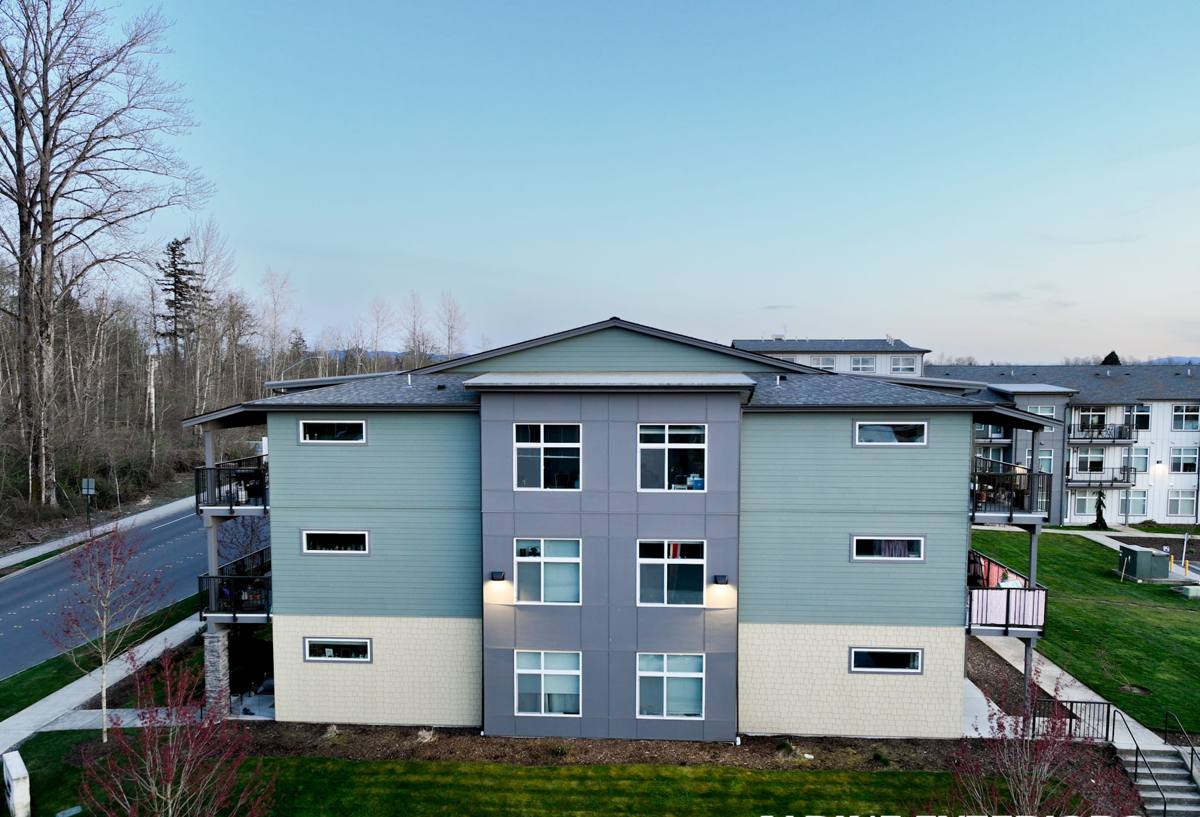
What Bellingham's Climate Does to Vertical Siding
Whatcom County's marine climate is mild, but it is relentless in specific ways that matter to any exterior surface — and board and batten siding has more vertical seams and batten-to-panel joints than a typical lap profile, which gives water more places to test.
Salt Air and Corrosion
Proximity to the Puget Sound and Bellingham Bay means airborne salt is a real factor for homes in this area, not just for waterfront properties. Salt accelerates the breakdown of untreated wood fibers, degrades cheap fasteners, and speeds up paint failure on anything not engineered to resist it. Siding materials and fastener hardware both need to be selected with that in mind.
Driving Rain and Wind-Driven Moisture
Bellingham doesn't just get rain — it gets sustained, wind-driven rain that pushes water sideways into siding joints and battens rather than letting it run straight down. On a board and batten wall, that means the seams between panels and the vertical battens covering them are under constant pressure to perform. Any gap in flashing, caulking, or panel spacing becomes a direct path for water intrusion.
The Long Moss Season
Shade, moisture, and mild temperatures give moss and algae a long growing season here — often most of the year on north-facing or tree-shaded walls, which describes a lot of lots in this neighborhood. Moss holds moisture against the siding surface and, on porous or absorbent materials, can accelerate rot from the outside in. A siding material's surface needs to resist that growth, and the finish needs to be able to be cleaned without stripping away protection.
How Board & Batten Siding Actually Works
Board and batten isn't a single product — it's a siding system. Understanding the parts helps explain why the material choice underneath matters as much as the look on top.
The Batten System
Wide panels or boards are installed first, then narrower battens are fastened over the vertical seams between them. The battens both cover the joint and create the signature shadow-line look. That means every batten location is a fastener penetration and a potential water path — the quality of the flashing and sealant detail at each one determines how the wall performs over the following one to two decades.
Substrate and Panel Choices
The panels behind the battens can be cedar boards, primed spruce, vinyl, engineered wood, or fiber cement. This is where most of the long-term performance difference actually comes from, because the batten look is similar across materials — the substrate is what determines how the wall handles this climate over time.
Why We Install Board & Batten Only in James Hardie Fiber Cement
We get asked regularly about cedar board and batten, primed spruce, vinyl board and batten panels, and engineered wood options like LP SmartSide. We don't install any of them, and we think homeowners deserve a straight answer on why.
Cedar board and batten looks beautiful new, and we understand the appeal — but real wood siding in this climate needs consistent refinishing, is vulnerable to moisture wicking at end grain and batten fasteners, and is a food source for the moss and algae that thrive here. Primed spruce carries similar moisture risk with less natural rot resistance than cedar. Vinyl board and batten is low-maintenance but it's a thin, flexible material that can warp in temperature swings and shows its seams and fastener slots more visibly on a vertical profile than it does in horizontal lap runs. Engineered wood products like LP SmartSide perform reasonably well when installation and caulking are perfect, but they rely on a treated wood-strand core that is only as good as its factory coating and field-applied sealant — any breach at a cut edge or fastener is a long-term liability.
James Hardie fiber cement is what we've standardized on for board and batten because it removes the two biggest failure points at once: it's non-combustible and dimensionally stable, so it doesn't expand, contract, warp, or crack the way wood and some engineered products do, and the factory-applied ColorPlus finish is baked on rather than field-painted, which means the color and protective coating are consistent across every panel and batten before they ever go on the wall. Hardie's HZ5 product line is engineered for climates like ours — freeze-thaw cycles, sustained moisture, and coastal exposure — and it comes with a strong, transferable manufacturer warranty when installed to spec. We'd rather install one product correctly than juggle five and hope each one gets detailed right.
What a Correct Board & Batten Installation Involves
The material is only one half of the equation. A board and batten job can be built with premium fiber cement and still fail early if the installation skips the details that matter in a wet climate. A correct install includes:
- A properly lapped weather-resistive barrier behind the panels, with all seams taped or shingled to shed water downward
- A rainscreen air gap between the WRB and the siding panels, so any moisture that does get past the surface can drain and dry instead of sitting against the wall sheathing
- Correct panel and batten spacing per manufacturer specification, allowing for seasonal expansion without cracking or buckling
- Flashing at every horizontal transition — window and door heads, roof-to-wall intersections, and the base of the wall — not just caulk
- Corrosion-resistant fasteners set at the correct depth, since over-driven or under-driven nails are one of the most common causes of premature siding failure
- Factory-finished cut edges sealed with manufacturer-approved product wherever a panel is trimmed on site
- Batten placement that actually lines up with the seams and studs beneath it, not just aesthetically even spacing
Skipping any one of these is invisible on installation day and expensive five years later.
Comparing Board & Batten Material Options
| Material | Moisture Resistance | Maintenance | Typical Lifespan | Fire Rating |
|---|---|---|---|---|
| Cedar | Moderate — needs sealing/staining | High — refinish every 3-5 years | 15-25 years with upkeep | Combustible |
| Primed Spruce | Low-Moderate | High — repaint regularly | 10-20 years | Combustible |
| Vinyl | Good, but can warp/gap | Low | 20-30 years | Combustible |
| Engineered Wood (LP SmartSide) | Moderate — depends on sealed edges | Moderate | 20-30 years if detailed perfectly | Combustible |
| James Hardie Fiber Cement | Excellent, factory-engineered | Low — occasional wash | 30-50 years | Non-combustible |
Our Process for Birchwood Projects
Every project starts with an on-site look at the existing walls, not just a quote from measurements. We check the current siding and sheathing for hidden moisture damage, evaluate roofline transitions and window flashing, and talk through where the house is getting the most weather exposure — which side takes the driving rain, which walls stay shaded and moss-prone. From there we plan the tear-off, WRB and rainscreen installation, and Hardie board and batten install in a sequence that keeps the wall protected at every stage, since an open wall during a Bellingham rain event isn't something we leave to chance. Trim, flashing, and caulking details get finished before we call a section complete, and the site gets cleaned up daily, not just at the end.
Why a Crew That Already Works in Birchwood Matters
A crew that's worked repeatedly in this neighborhood already understands its specific exposure pattern — which lots sit in more shade and hold moss longer, which sides of a house take the worst of the wind-driven rain off the water, and how that compares to a similar-looking job three miles inland. That local pattern recognition changes real decisions on site: where extra flashing attention pays off, which walls need a closer look at the existing sheathing before covering it back up, and how the permitting and inspection process runs with the City of Bellingham and Whatcom County. It also means faster response if a warranty question or a follow-up detail comes up after the job is done — we're not driving in from out of the area to look at it.
Maintenance and Long-Term Care
One of the practical advantages of James Hardie board and batten is how little it asks of you after installation. The ColorPlus finish doesn't need repainting on the same cycle that wood or primed spruce does — an occasional gentle wash to keep moss and pollen from building up in shaded areas is typically enough to keep it looking right. We'd still recommend a periodic look at caulking around windows, doors, and penetrations every couple of years, since caulk is the one component in the system that wears out before the siding does, and catching it early is a five-minute fix instead of a bigger repair.
If you're weighing board and batten siding for a home in Birchwood, we're happy to take a look and walk you through what your specific walls need — no pressure, no obligation. Use the form below to request a free estimate.