 Bellingham Roofing
 Columbia is one of Bellingham's older, tighter-knit neighborhoods, and its housing stock reflects that — a mix of early-to-mid-century homes, postwar additions, and newer infill sitting close to Bellingham Bay. That proximity to the water is exactly why windows in this part of town wear out differently than windows ten miles inland. Salt-laden air off the bay, near-constant winter rain, and a moss season that can stretch from October through April put real, measurable stress on window frames, seals, and glazing. If you're planning a window replacement or a custom window project in Columbia, understanding that local stress load is the first step to getting it right.
Why Columbia's Location Changes the Window Equation
Windows are rated and built for climate, not just for looks. A window that performs fine in a dry inland town can fail early in a neighborhood that sits close to salt water and takes on-shore weather most of the year. Three things define the Columbia environment specifically:
- Salt air exposure: Airborne salt accelerates corrosion on hardware, screws, and unprotected metal components — even on vinyl and fiberglass frames, the fasteners and reinforcement pieces inside are often the weak point.
- Driving rain: Wind-driven rain off the bay doesn't just hit the glass, it gets pushed sideways into the frame joints and flashing. Any gap in the water management path shows up as a leak eventually.
- Moss and organic growth: Bellingham's damp season lets moss and algae establish on window sills, trim, and anywhere water sits instead of draining. Left alone, that growth holds moisture against wood and finish, which shortens the life of both.
None of this means Columbia is a hard place to own a home — it just means window choices and installation details that would be optional elsewhere are not optional here.
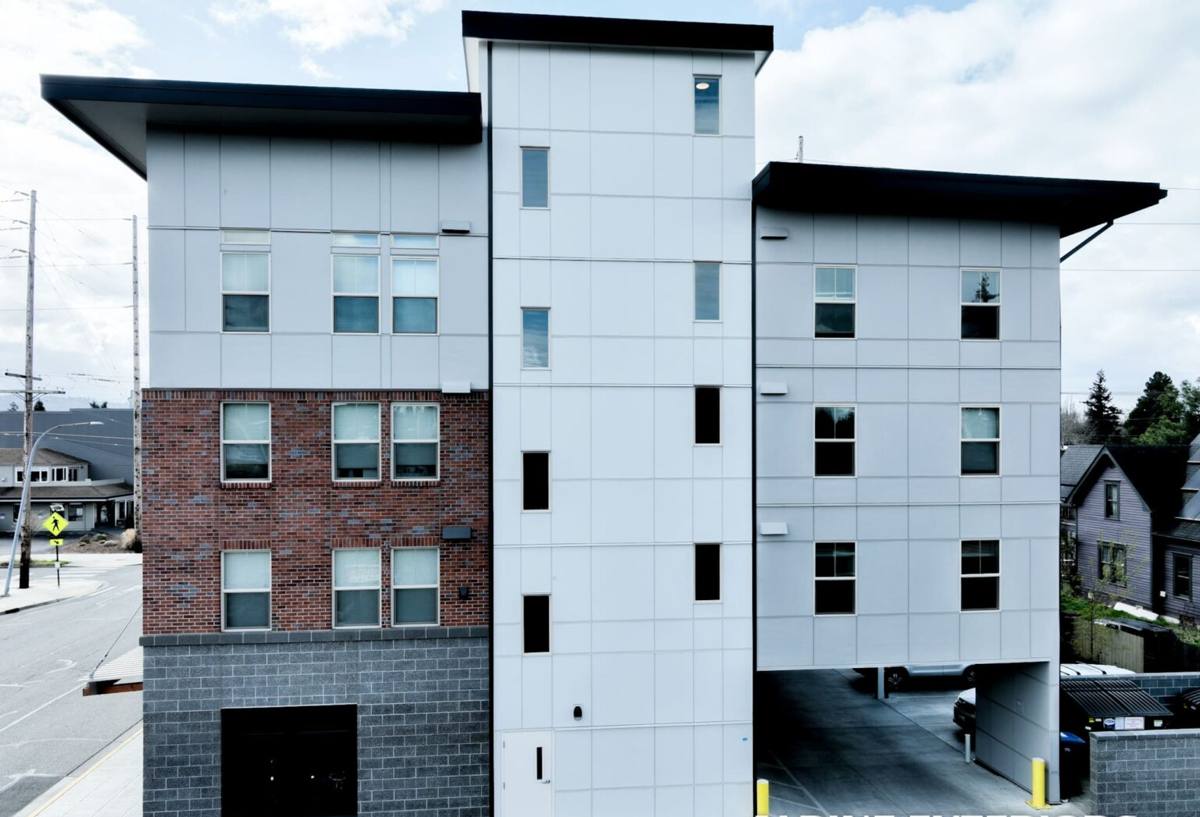
What "Custom Windows" Actually Means for This Job
Custom doesn't necessarily mean unusual shapes or high-end architectural glass, though we do that work too. Most of the time, custom simply means the window is built to the exact opening in your specific house rather than pulled from a stock size chart. In older Columbia homes, openings have often shifted slightly over decades of settling, so an accurate, custom-measured window is what actually seals correctly — a close-enough stock size just gives water and air more places to sneak in.
Common reasons homeowners in this area go custom
- Original openings are non-standard sizes, common in homes built before modern window manufacturing standardized dimensions.
- Replacing a single failed window without wanting to reframe the whole opening.
- Upgrading frame material or glazing package for better weather resistance without changing the home's look.
- Adding or resizing a window during a remodel, addition, or repurposed room.
Frame Materials and How They Hold Up Near the Bay
Material choice matters more in Columbia than it does in drier, inland Whatcom County neighborhoods. Here's how the common options actually perform under salt air and sustained moisture:
| Material | Behavior in Salt Air / Wet Climate | Maintenance Load |
|---|---|---|
| Vinyl | Doesn't corrode; consistent performance if hardware is quality and seals are installed correctly | Low — occasional cleaning |
| Fiberglass | Very stable dimensionally, resists moisture absorption, strong option for coastal exposure | Low |
| Aluminum | Prone to corrosion and pitting from salt air unless properly coated and maintained | Moderate to high |
| Wood (unclad) | Attractive but most vulnerable to moisture, rot, and moss buildup without diligent upkeep | High |
| Wood-clad (exterior) | Good compromise — protected exterior face with wood interior, but cladding seams need correct detailing | Moderate |
We don't push one material on every homeowner. The right call depends on your home's style, your budget, and how much upkeep you want to sign up for. What we won't do is install a material or configuration in a bay-adjacent home like yours without being upfront about its long-term maintenance trade-offs — that's a conversation we have before the contract is signed, not after a problem shows up.
Glazing and Weatherstripping: Where Most Failures Actually Start
Glass itself rarely fails first. What fails first is the seal — the weatherstripping, the glazing bead, and the sealant joints where the window meets the wall. In a driving-rain environment, those details do most of the work.
What a correct install includes
- Properly sized and compressed weatherstripping that maintains contact through seasonal expansion and contraction.
- Sill pan flashing that directs any water that does get past the exterior back out, rather than into the wall cavity.
- Continuous sealant beads at the correct locations — not just at the visible trim line, but at the structural opening.
- Insulated glazing units (double or triple pane) with intact seals, since a failed seal shows up as fogging between the panes.
Dual or triple-pane glazing is standard on most replacement windows now, and it earns its keep in Whatcom County — it reduces condensation on the interior glass during our cold, wet winters, which in turn reduces the moisture available for mold and mildew around the frame.
Moss, Algae, and Sill Design
Moss doesn't grow on glass, but it absolutely grows on horizontal sills, exterior trim, and anywhere the sun doesn't reach through a Bellingham winter. A well-designed window and trim detail sheds water instead of holding it:
- Sloped sills that drain outward rather than sitting flat.
- Drip caps above the window to break water flow before it reaches the frame.
- Trim materials and finishes chosen for moisture resistance in shaded, damp locations.
If your current windows have visible green growth on the sills or trim, that's worth mentioning during an estimate — it's often a sign the water isn't draining the way it should, not just a cosmetic issue.
Our Process for a Columbia Window Project
- On-site assessment: We look at existing window condition, framing, flashing, and any signs of water intrusion or moss buildup before recommending anything.
- Accurate measurement: Every opening gets measured individually — we don't assume older Columbia homes have standard dimensions.
- Material and glazing selection: We walk through frame material, glazing package, and finish options against your budget and how the home is oriented to wind and rain.
- Removal and prep: Old windows come out carefully, and we inspect the opening for rot or hidden moisture damage before anything new goes in.
- Installation with proper flashing and sealing: This is the step that determines whether the window performs for twenty years or leaks in five — we don't shortcut flashing or sealant details to save time.
- Final check and cleanup: We verify operation, seal integrity, and site cleanup before calling the job done.
Why It Matters to Hire a Crew That Already Works in This Neighborhood
A crew that's already worked on Columbia homes knows what to expect before they show up — how the older framing in this area tends to be built, where water problems typically originate on bay-facing exposures, and which details matter more here than they would on a job across town in a more sheltered part of Bellingham. That familiarity shows up in fewer surprises during the job and fewer callbacks after it. It also means we're not guessing about local permitting or how a house of a certain era is likely to be framed behind the wall — we've seen it before.
We're a Whatcom County crew, not an out-of-area company passing through. That matters for warranty follow-up too — if a question comes up two years after installation, we're still local and still reachable.
Signs It's Time to Replace Rather Than Repair
| Sign | What It Usually Means |
|---|---|
| Fogging or haze between panes | Seal failure in the insulated glass unit — not repairable, glass unit needs replacement |
| Drafts even with the window closed | Worn weatherstripping or a frame that's no longer square in the opening |
| Soft or discolored wood at the sill | Moisture intrusion, possibly into the wall framing — needs inspection before it spreads |
| Difficulty opening or closing | Frame warping or hardware failure, often accelerated by moisture cycling |
| Visible moss or algae on sills/trim | Poor drainage detail; may be cosmetic now but worth checking for underlying moisture |
A Practical Checklist Before You Call for an Estimate
- Note which windows face the water or prevailing wind — those usually show wear first.
- Check for soft spots, discoloration, or moss at the base of each window.
- Try opening and closing each window to feel for sticking or excess resistance.
- Look for condensation between panes on sunny days, which indicates seal failure.
- Have a rough sense of your priorities — energy efficiency, low maintenance, matching existing trim style — so we can steer the material conversation efficiently.
If you're in Columbia and dealing with drafty, foggy, or moss-stained windows, we're happy to take a look and give you an honest read on repair versus replacement — no pressure, no upsell. Reach out using the form below for a free estimate, and we'll walk your home's specific exposure to the bay and the weather it takes on.