 Bellingham Roofing
 Windows Built for Cordata's Weather, Not Just the Showroom
Cordata sits in north Bellingham, close enough to the water and the Whatcom County lowlands that homes here take a specific kind of beating: salt-tinged air rolling in off Bellingham Bay and the Strait, long stretches of driving rain pushed sideways by wind, and a moss season that seems to start earlier and last longer every year. None of that is dramatic on any given day. It's the slow, cumulative kind of wear that shows up five or ten years later as fogged glass, soft trim, or a heating bill that keeps climbing even though the thermostat hasn't moved. Energy-efficient windows done right address all of that at once — comfort, moisture control, and long-term durability — not just the R-value on a spec sheet.
We work Cordata regularly, alongside the rest of Bellingham and greater Whatcom County, and we've seen what generic, one-size-fits-all window jobs look like a few winters later. This page is about what actually matters when you're replacing or upgrading windows on a home in this specific corner of the county.
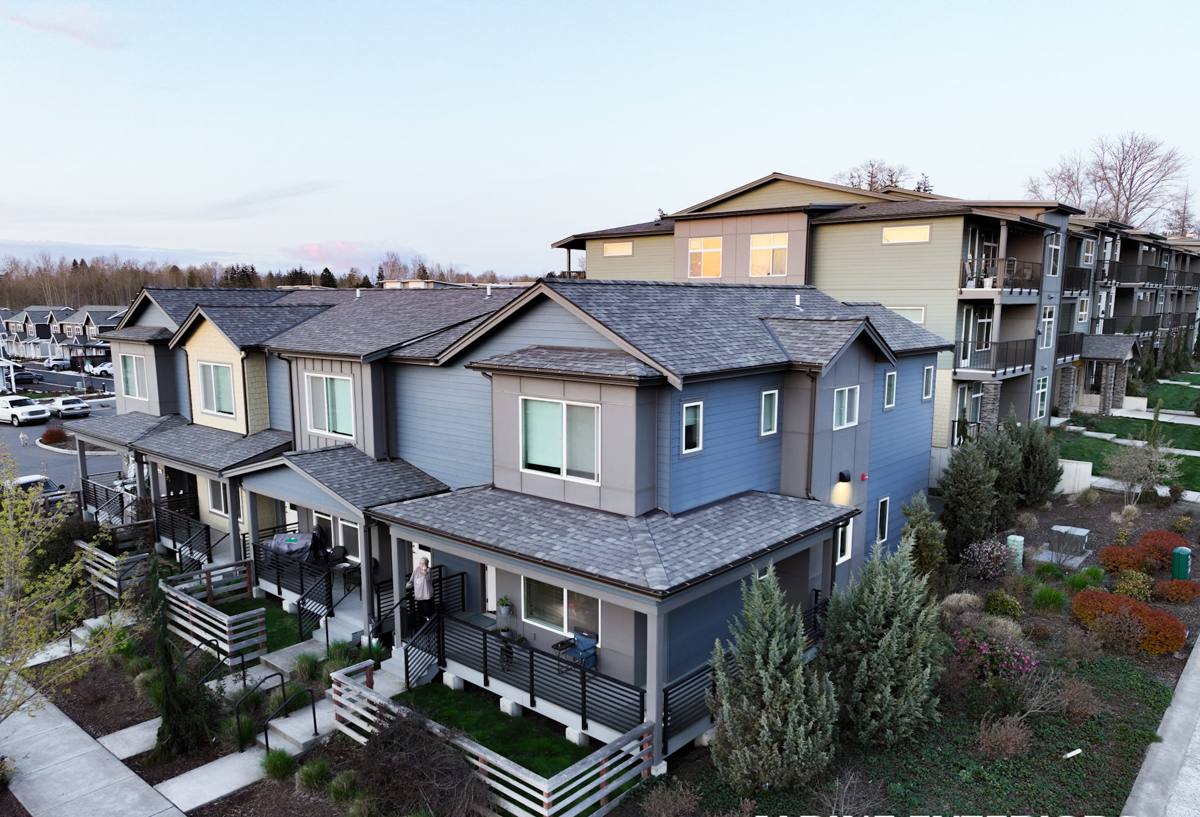
What "Energy-Efficient" Actually Means Here
Energy efficiency in a window comes down to three things working together: the glass package, the frame material, and how well the unit is sealed into the wall. In a marine climate like ours, all three matter more than they would in a drier region, because you're not just fighting heat loss — you're fighting constant moisture pressure from outside.
Glass Package
Most modern replacement windows use double-pane insulated glass with a low-emissivity (low-E) coating and an argon or krypton gas fill between the panes. The low-E coating reflects radiant heat back into the room in winter and blocks excess solar heat in summer, while the gas fill slows conduction across the airspace. For our climate — mild temperatures but persistent cloud cover and damp — a low-E coating tuned for heat retention (rather than solar blocking) usually makes more sense than what you'd spec for a hot, sunny region.
Frame Material
Frame material affects both insulation value and how the window handles years of rain exposure. Vinyl, fiberglass, and wood-clad frames each perform differently once you factor in our wet season, and we cover the trade-offs in the comparison table below.
The Installation Seal
The best glass package in the world underperforms if the window isn't flashed and sealed correctly against wind-driven rain. This is where most energy loss and moisture problems actually originate — not in the glass, but in a gap, a missing sill pan, or house wrap that wasn't lapped correctly around the opening.
The Local Climate Challenges, and What a Correct Window Response Looks Like
| Local Condition | What It Does to Windows | What a Correct Install Addresses |
|---|---|---|
| Salt-tinged coastal air | Accelerates corrosion of hardware, fasteners, and unprotected metal components | Corrosion-resistant hardware and fasteners rated for coastal/marine exposure |
| Driving, wind-pushed rain | Forces water sideways and upward at sills and corners, past standard flashing | Proper sill pan flashing, correctly lapped house wrap, and sealed corners |
| Long moss and damp season | Traps moisture against wood trim and sills, feeding rot and mildew growth | Durable trim material choices and sills detailed to shed water, not hold it |
| Persistent low light, cool interiors | Increases reliance on heating, exposes drafty or single-pane windows fast | Low-E glass tuned for heat retention, tight air-seal at the frame |
| Temperature swings, indoor humidity | Condensation on interior glass and sills, especially in older single-pane homes | Insulated glass units and proper frame insulation to raise interior glass temperature |
Signs Your Current Windows Are Costing You Money
Most homeowners don't replace windows because one thing breaks — they replace them because a pattern of small problems adds up. Walk your home and check for these:
- Visible fog or moisture trapped between panes (a failed seal on double-pane units)
- Cold drafts near the frame even when the window is fully latched
- Soft, discolored, or bubbling wood on the sill or exterior trim
- Difficulty opening, closing, or locking — often a sign the frame has shifted or warped
- Condensation forming on the inside of the glass regularly during cooler months
- Visible gaps or failing caulk between the window frame and siding
- A noticeable difference in room temperature near windows compared to the rest of the house
- Rising heating costs without a clear explanation elsewhere in the home
Any one of these on its own isn't an emergency. Several together, especially on the weather-facing side of the house, usually mean the windows are no longer doing their job.
Frame Material Options for Cordata Homes
There's no single "best" frame material — the right choice depends on your home's age, exposure, and budget. Here's how the common options actually perform in our climate, based on years of installing and maintaining them locally.
| Frame Material | Strengths in This Climate | Trade-Offs |
|---|---|---|
| Vinyl | Won't rot, low maintenance, good insulating value, competitive cost | Can expand/contract with temperature swings; quality varies a lot between manufacturers |
| Fiberglass | Very stable dimensionally, strong resistance to moisture and temperature movement, long service life | Higher upfront cost than vinyl |
| Wood-clad (wood interior, clad exterior) | Traditional interior look, good insulating properties | Exterior cladding must be detailed and sealed carefully at joints, or moisture can work behind it over time — we're selective about where and how we use this option given our rain exposure |
| Aluminum | Strong and slim sightlines | Poor insulator on its own, prone to condensation unless thermally broken — generally not our first recommendation for whole-home efficiency upgrades here |
For most Cordata homes prioritizing energy performance and low long-term maintenance, we steer conversations toward vinyl or fiberglass with a quality low-E, gas-filled glass package. We'll walk through what fits your home's style and your budget honestly, rather than pushing whatever has the best margin.
How We Approach a Window Job
The process matters as much as the product. A quality window installed poorly will underperform a mid-grade window installed correctly, especially in a climate that punishes sloppy flashing work.
1. Assessment and Measurement
We look at each opening individually — sun exposure, wind exposure, current condition of the framing and sill, and any existing moisture damage. Every window on a house doesn't necessarily need the same solution.
2. Product Selection
We go over frame material, glass package, and hardware options based on what we found during assessment, your budget, and your home's exterior style. No pressure toward the most expensive option if it isn't the right fit.
3. Removal and Opening Prep
Old windows come out carefully, and we inspect the framing underneath — this is often where hidden moisture damage from years of minor leaks first shows up, and it needs to be addressed before a new window goes in, not covered over.
4. Flashing and Sealing
This is the step that determines whether the window performs for twenty years or leaks in five. Sill pans, properly lapped house wrap or building paper, and correct sealant placement all happen here, sequenced to shed water outward and downward at every layer.
5. Installation and Insulation
The unit is set plumb, level, and square, shimmed correctly, and insulated around the frame without over-packing (which can bow vinyl frames) or leaving gaps (which defeats the point of the upgrade).
6. Interior and Exterior Finish
Trim, caulking, and touch-up work are finished to match your home, with attention paid to keeping exterior joints sealed against wind-driven rain.
Why a Crew That Already Works Cordata Matters
A window job isn't just a product — it's a set of decisions about how to detail an opening for the specific conditions it faces. A crew that regularly works Cordata and the surrounding Bellingham neighborhoods has already seen how homes of different ages and construction styles in this area hold up against our rain patterns and salt air exposure. That familiarity shows up in small but important calls: which sill details need extra attention on a weather-exposed elevation, how much clearance to leave for material movement given our seasonal temperature swings, and which flashing sequence actually keeps water out during a real Whatcom County storm rather than a mild-climate test case.
It also means faster response if something needs a warranty adjustment or a follow-up look — we're not traveling in from out of the area to handle it.
Maintenance That Extends the Life of Your Investment
Energy-efficient windows are a long-term investment, and a little seasonal attention goes a long way in our climate:
- Clear debris and moss buildup from sills and tracks before it holds moisture against the frame
- Check exterior caulking annually, especially after a hard winter, and reseal any cracked or gapped sections
- Operate hardware regularly so mechanisms don't seize from disuse in damp conditions
- Keep gutters and downspouts clear so roof runoff isn't cascading directly over window heads
- Watch for early condensation between panes — it's the first sign of a seal failure and is easier to address early
What Affects the Cost of a Window Project
Every home is different, so exact pricing depends on a site visit, but the main cost factors are consistent:
- Number of openings and their sizes
- Frame material chosen (vinyl, fiberglass, or wood-clad)
- Glass package (standard double-pane low-E versus upgraded gas fills or triple-pane)
- Condition of the existing framing — hidden rot or moisture damage adds repair scope
- Access and complexity, such as second-story openings or unusual shapes
- Trim and finish work required to match your home's existing exterior
We'd rather walk your home and give you real numbers than throw out a broad range that doesn't mean much either way. Most Cordata homeowners find that a clear, itemized quote makes the decision a lot easier than guessing.
Get a Straight Answer for Your Home
If your windows are drafty, fogged, or just old enough that you're wondering whether it's time, we're happy to take a look and give you an honest read — no pressure, no upsell. Use the form below to request a free estimate, and we'll walk your Cordata home in person before recommending anything.