 Bellingham Roofing
 New-Construction Windows Are a Different Job Than Replacement
When people hear "new-construction windows," they often assume it just means a window going into a new house. What it actually refers to is the type of window itself — one built with a nailing fin around the frame, designed to be installed before the siding goes on, while the wall is still open. That's a very different job from a replacement or "pocket" window, which is inserted into an existing opening after the fact. New-construction windows tie directly into the house's water-resistive barrier (WRB), flashing, and framing, which means the installation has to happen in the right order and in the right sequence relative to the other trades on the job.
For homes being built or additions being framed in Fairhaven, that sequencing matters more than most homeowners realize. Get it right and the window becomes part of a continuous drainage plane that sheds water for decades. Get it wrong — even in small ways — and you end up with hidden moisture problems that don't show up until the siding and interior finishes are already in place.
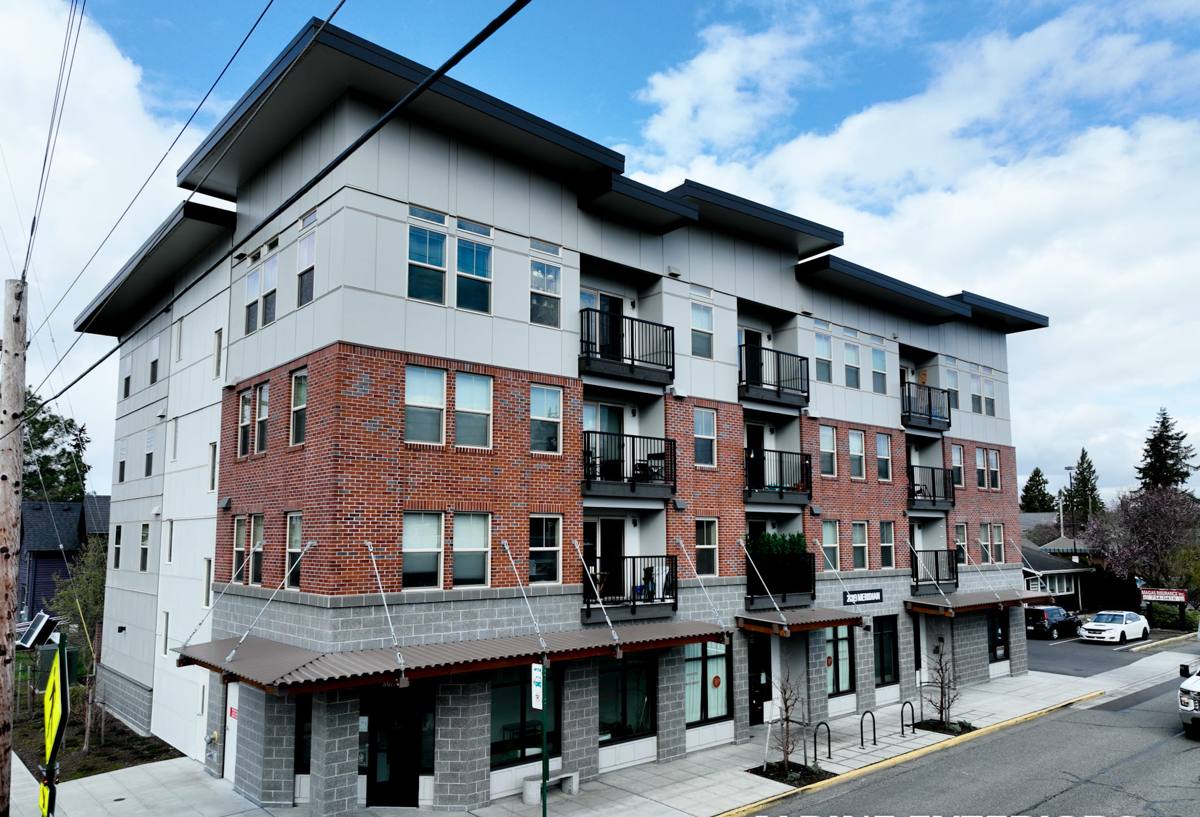
What Fairhaven's Climate Asks of a Window Installation
Fairhaven sits close to Bellingham Bay, which means homes here deal with a steady diet of salt-laden air on top of the general marine climate that defines Whatcom County. That combination shows up in a few specific ways during new construction:
- Salt air accelerates corrosion on exposed fasteners, hardware, and lower-grade metal components — something to plan for at the material-selection stage, not after installation.
- Driving, wind-driven rain off the water pushes water sideways against walls, not just straight down, which puts real demand on flashing details and sealant joints that a calm-weather installation in a drier region wouldn't face.
- Long moss and algae season keeps exterior surfaces damp for extended stretches, which means any gaps in the drainage plane around a window stay wet longer and give organic growth more time to take hold.
- Mild but persistent humidity year-round means wood and framing materials rarely get a long dry-out period, so mistakes in vapor and moisture management compound rather than self-correct.
None of this means new-construction windows in Fairhaven need to be exotic or overbuilt. It means the ordinary steps of a correct installation — flashing, drainage, sealant selection — can't be treated as optional or "good enough," because this climate doesn't forgive shortcuts the way a drier region might.
Frame Material Considerations for a Coastal Neighborhood
There's no single "correct" frame material for every new-construction project — the right choice depends on budget, the home's design, and how close the structure sits to the water and prevailing weather. What we do is walk through the honest trade-offs for a marine, salt-air environment like Fairhaven's.
| Frame Material | Salt Air / Moisture Behavior | Maintenance | General Cost Tier |
|---|---|---|---|
| Vinyl | Doesn't corrode; performs well in salt air | Low — occasional cleaning | Lower |
| Fiberglass | Very stable in temperature swings and moisture; strong corrosion resistance | Low | Mid to higher |
| Aluminum-clad wood | Good exterior protection if cladding and seals are intact; wood interior needs the seal to hold | Moderate | Higher |
| Bare wood | Attractive but most exposed to moisture and salt; requires diligent upkeep near the bay | High | Varies |
Hardware matters as much as the frame. Even a good window can develop premature corrosion at hinges, locks, or fasteners if lower-grade metal components are used in a salt-air setting. We factor that into product selection rather than treating hardware as an afterthought.
Glass and Weatherization Packages
Beyond the frame, the glass package affects both comfort and long-term performance. Low-E coatings and insulated (often argon-filled) glazing help manage the temperature swings and condensation risk that come with Bellingham's damp, moderate climate. We'll talk through glazing options relative to the specific orientation of each opening — a window facing prevailing wind and rain off the bay may warrant a different sealant and flashing detail than one tucked on a sheltered elevation, even on the same house.
What a Correct New-Construction Installation Actually Involves
A new-construction window installation is really a sequence of small, ordered steps. Skip or rush one, and the rest of the assembly can't do its job even if the window itself is high quality. Here's what we hold every install to, regardless of who the builder or general contractor is:
- Rough opening checked for square, level, and correct dimensions before the window ever goes in
- Sloped sill pan flashing installed so any water that gets past the window drains back out, not into the framing
- Water-resistive barrier (WRB) integrated with proper shingle-lap sequencing — flashing tucked under the layer above and over the layer below, never reversed
- Head flashing installed above the window to divert water around, not into, the opening
- Nailing fin fastened per manufacturer spec, with compatible sealant or flashing tape — not just a bead of caulk substituting for real flashing
- Kick-out flashing at any point where a roofline meets a wall near a window, to direct roof runoff away from the wall assembly
- Backer rod and sealant at interior and exterior joints, sized and installed to allow for expected movement without failing
- Final check of operation, seal integrity, and drainage before the wall is closed in with siding
That last point is worth emphasizing: once siding goes up, these details are hidden for the life of the house. A new-construction window installation is one of the few places in a build where a mistake is both easy to make and expensive to discover later.
How Our Process Works on a New-Construction Job
Coordinating With the Build Timeline
New-construction window work doesn't happen in isolation — it has to fit into a builder's or general contractor's schedule between framing and siding. Before we ever set a window, we review the plans, confirm rough opening sizes against the specified units, and align on a timeline that gives us the right window (weather-wise) to install before the building is closed in.
Product Selection
We go through frame material, glazing package, and hardware choices with the homeowner or builder, weighing Fairhaven's salt air and rain exposure against budget and the home's design. We're upfront about trade-offs rather than steering toward whatever is easiest to install.
Installation
Each opening gets the full flashing and drainage sequence described above — sill pan, WRB integration, head flashing, and sealant — installed in the correct order, not compressed to save time. We check every unit for square and proper operation before moving to the next.
Inspection and Sign-Off
Before the wall is closed in with siding, we do a walk-through of every opening so any issue is caught while it's still visible and easy to correct — not after the exterior finish makes it invisible.
Cost Factors for New-Construction Window Packages
Every project is different, but the main variables that move the price of a new-construction window package are consistent across jobs:
| Factor | Why It Affects Cost |
|---|---|
| Number and size of openings | More and larger units mean more material and labor |
| Frame material | Vinyl, fiberglass, and clad-wood carry different material costs |
| Glass and glazing package | Low-E coatings, gas fills, and multi-pane glazing add cost but improve performance |
| Opening style | Fixed picture windows are simpler than casements, awnings, or large sliders |
| Access and building height | Second-story or hard-to-reach openings take more time and equipment |
| Site coordination complexity | Tight scheduling around other trades can affect labor efficiency |
We provide a straightforward estimate after reviewing plans and the specific product selection — not a rough number pulled from a per-window average that ignores the details above.
Mistakes We See — and Why We Don't Cut These Corners
On new-construction projects, the most common issues we find (usually when correcting or inspecting someone else's work) aren't dramatic — they're small omissions that compound over time: sealant used in place of proper flashing, WRB laps installed backwards or left un-taped, missing sill pans, or head flashing skipped because "the siding will cover it anyway." None of these fail immediately. They fail years later, as slow moisture intrusion that's expensive to trace and repair once walls are finished. Holding to the full flashing sequence on every opening, every time, is simply our standard — not an upsell.
Why a Crew That Already Works in Fairhaven Matters
New-construction window installation depends on getting a lot of sequencing right relative to other trades, weather, and local permitting — and that gets easier with local experience. A crew that regularly works in Fairhaven and the greater Bellingham area already understands the practical realities of building close to Bellingham Bay: how to plan installation windows around driving rain, how salt air affects material and hardware choices over time, and how to coordinate cleanly with local builders and general contractors who are also working around Whatcom County's weather patterns. That familiarity translates into fewer surprises, better sequencing with the rest of the build, and a window installation that's built for the specific conditions of this neighborhood rather than a generic approach borrowed from a drier climate.
If you're planning new construction or an addition in Fairhaven and want windows installed correctly the first time, we're happy to walk the plans with you and provide a free, no-pressure estimate — just fill out the form below.