 Bellingham Roofing
 New Roof Installation for South Hill Homes
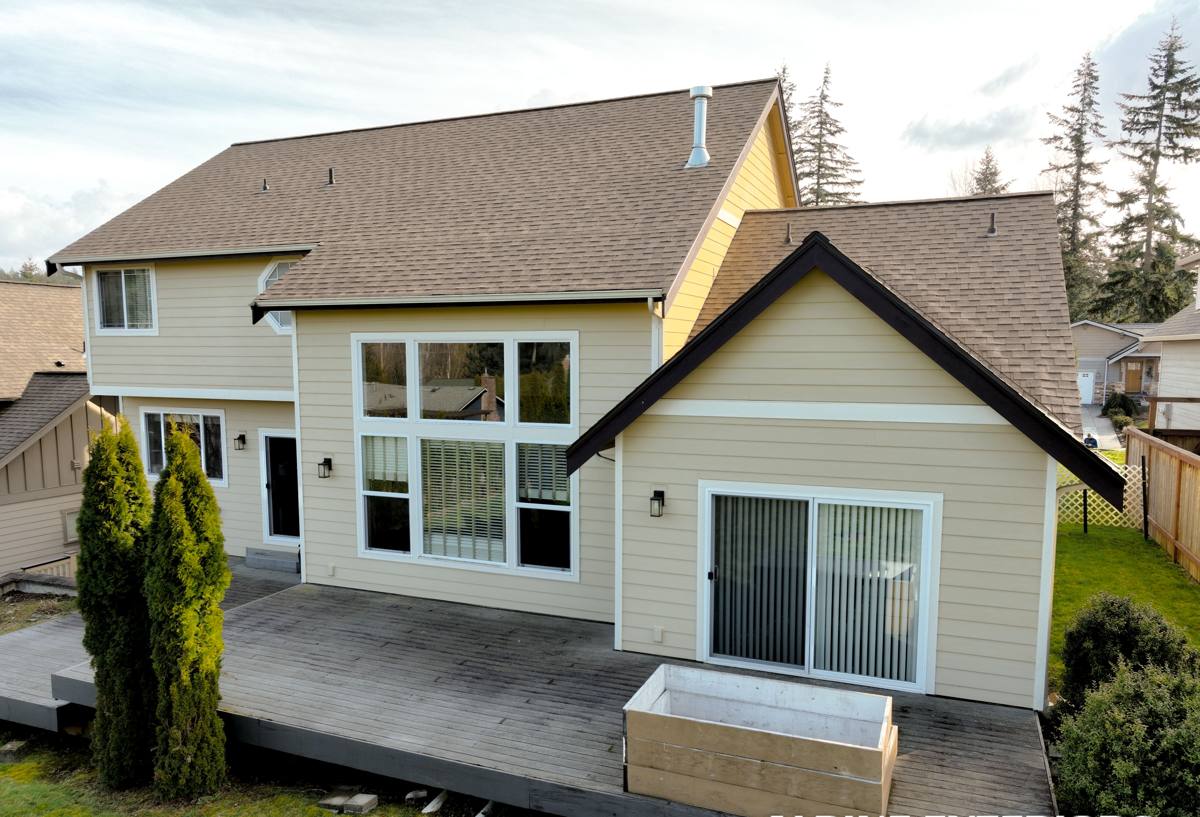
South Hill sits above the rest of Bellingham, which means more exposure to wind off Bellingham Bay, more direct rain during winter storms, and tree cover that keeps parts of many roofs shaded and damp for weeks at a time. A new roof up here isn't just about swapping old shingles for new ones — it's about building an assembly that can handle salt-laden air, driving rain, and a moss season that runs longer than most homeowners expect. We install new roofs for South Hill properties with that specific mix of conditions in mind, not a one-size-fits-all approach pulled from a warmer, drier market.
What South Hill's Climate Actually Does to a Roof
Whatcom County weather is not dramatic in the way hail or hurricane regions are, but it's relentless. That's the trade-off homeowners on South Hill need to understand before choosing materials and details for a new roof.
Salt Air and Metal Fasteners
Proximity to the bay means a steady drift of salt-laden moisture, especially on west- and north-facing slopes. Over years, this accelerates corrosion on lower-grade fasteners, flashing, and exposed metal edges. It doesn't ruin a roof overnight, but it does mean the difference between a fastener rated for coastal exposure and a generic one shows up as rust streaks and loosening within a handful of years, not decades.
Driving Rain and Wind-Driven Water
Rain here rarely falls straight down. Wind pushes it sideways under eaves, into hip and valley joints, and behind poorly lapped flashing. A roof that would be fine in a calmer climate can leak on South Hill simply because the water is arriving at an angle the original details weren't built to handle.
Moss and Shade
Tree canopy and north-facing slopes on many South Hill lots stay damp long after the rest of the yard has dried out. That's exactly the environment moss and algae need to establish. Once moss gets a foothold under shingle tabs, it holds moisture against the roofing material and can lift edges, which is where granule loss and early leaks usually start.
What a Correct New Roof Installation Includes
A new roof is really a system of layers working together, not a single product. Skipping or downgrading any one of these is where most premature failures on hillside homes start.
- Tear-off and deck inspection — full removal of old roofing so the deck can be checked for soft spots, delamination, or rot before anything new goes down.
- Ice and water shield at eaves, valleys, and penetrations — the first line of defense against wind-driven rain backing up under the roofing material.
- Synthetic underlayment across the full deck, lapped correctly with the slope so water sheds outward at every seam.
- Metal flashing at all walls, chimneys, skylights, and valleys — sized and formed for the actual roof geometry, not generic stock pieces bent to fit.
- Ventilation that balances intake at the eaves with exhaust at the ridge, so moisture and heat don't get trapped in the attic.
- Roofing material installed to manufacturer nailing and exposure specs, not shortcuts to save labor time.
Choosing a Roofing Material for a South Hill Home
There's no single "best" roofing material for this area — the right choice depends on slope, tree cover, budget, and how the roof reads on the house. What matters is understanding the honest trade-offs of each option before deciding.
| Material | Moss Resistance | Maintenance | Typical Lifespan Locally |
|---|---|---|---|
| Architectural asphalt shingle | Moderate — benefits from zinc/copper strips | Periodic moss treatment on shaded slopes | 25–30 years with proper ventilation |
| Standing seam metal | High — sheds moisture quickly | Low; occasional fastener/sealant check | 40–50+ years |
| Synthetic/composite shake | Moderate to high | Low to moderate | 30–40 years |
| Cedar shake | Low without ongoing treatment | Higher — regular cleaning and sealing | 20–30 years depending on care |
On heavily shaded South Hill lots, we often steer homeowners toward metal or a moss-resistant shingle system rather than cedar shake, not because cedar is a bad product, but because untreated shake in constant shade asks for a maintenance commitment many homeowners underestimate. That's a professional judgment call based on moisture behavior, not a knock on any manufacturer.
Our Installation Process
Every new roof we install on South Hill follows the same sequence, adjusted for the specific slope, tree exposure, and material chosen.
- On-site assessment — we walk the roof and attic, checking deck condition, ventilation, and problem areas like valleys or low-slope sections that collect debris.
- Written scope and material selection — a clear breakdown of what's being installed and why, including flashing and underlayment upgrades where the roof's exposure calls for it.
- Tear-off — full removal, with the deck inspected as it's exposed rather than assumed to be sound.
- Deck repair — any soft or rotted sheathing is replaced before underlayment goes down.
- Underlayment and flashing — installed in the order and lap pattern that actually sheds wind-driven rain, not just rain falling straight down.
- Roofing material installation — set to manufacturer spec for nailing pattern, exposure, and fastener type suited to coastal air.
- Ventilation check — intake and exhaust balanced so the attic isn't trapping moisture that feeds future moss and rot.
- Final walkthrough — cleanup, magnetic sweep for debris, and a review of the finished roof with the homeowner.
Timeline Expectations
Most South Hill homes with typical asphalt shingle roofs are torn off and reinstalled in one to three days, weather permitting. Metal or more complex rooflines with multiple valleys and dormers can run longer. Because Whatcom County winters bring extended stretches of rain, we plan installation windows around forecasts rather than pushing through a downpour, which protects the exposed deck and underlayment during the work itself.
Details That Matter More on a Hillside Roof
South Hill's mix of elevation, tree cover, and wind exposure means a few details deserve extra attention that a flatter, more open lot might not need.
Valley and Hip Treatment
Valleys collect the most water volume on any roof, and on tree-shaded slopes they also collect the most debris — needles, leaves, and moss spores. We treat valleys as a high-wear zone, with reinforced underlayment and metal detailing rather than relying on shingle-only valleys that clog faster.
Gutter and Roof Edge Coordination
A new roof installed without matching attention to drip edge and gutter capacity just moves the water problem downstream. We check that roof edge metal directs water into gutters correctly, especially on slopes where wind pushes rain past the edge instead of straight down into it.
Tree Overhang
Where branches overhang the roof, we'll flag it during the estimate. Trimming back overhang isn't something we do as roofers, but it directly affects how fast moss returns and how much debris collects in valleys — worth addressing alongside the new roof, not after.
Why a Local South Hill Crew Matters
A roofing crew that already works this neighborhood knows which slopes hold moisture longest, which streets catch the worst of the wind off the bay, and how local permitting and inspection actually works — not generic assumptions imported from a different climate. That familiarity shows up in smaller decisions throughout the job: where to add extra ice and water shield, which flashing details need reinforcing, and how to sequence work around Whatcom County's wetter months. It also means a crew that's still local and reachable after the job is done, not a traveling outfit that's moved on to the next region.
Signs Your South Hill Roof Needs Full Replacement, Not a Repair
- Granule loss heavy enough that shingles look bald or blotchy in several areas, not just one spot.
- Moss established under shingle tabs rather than just on the surface — surface cleaning won't fix this.
- Soft or spongy decking felt when walking the roof, indicating moisture has reached the sheathing.
- Daylight visible through the roof deck from inside the attic.
- Multiple past repairs in different areas, suggesting the roofing material is at the end of its service life rather than dealing with isolated damage.
- Flashing that's visibly rusted, lifted, or separated from walls and chimneys.
If your roof shows one or two of these signs, a targeted repair may still make sense. If several apply at once, a repair is usually just delaying the same investment while risking interior damage in the meantime.
Get a Straightforward Look at Your Roof
If you're weighing a new roof for a South Hill property, we're happy to come take a look and give you an honest read on condition, options, and cost — no pressure, no inflated urgency. Use the form below to request a free estimate and we'll go from there.