 Bellingham Roofing
 Why Puget Roofs Wear Differently Than Roofs Inland
Puget sits close enough to the water that homes here take on a different kind of weathering than roofs just a few miles inland in Whatcom County. The combination of salt-laden air off the Sound, long stretches of driving rain, and a moss season that can run most of the year adds up to a roof that ages on its own timeline. Two houses built the same year, one in Puget and one further from the water, can need replacement at noticeably different points — and it's usually the roof that shows it first.
Salt air accelerates corrosion on any exposed metal: fasteners, flashing, valleys, and vent stacks. Combined with near-constant moisture, that corrosion doesn't need a storm to do its damage — it works steadily, season after season, often hidden under shingles until a leak forces the issue. A roof replacement in this area has to account for that reality from the start, not patch around it later.
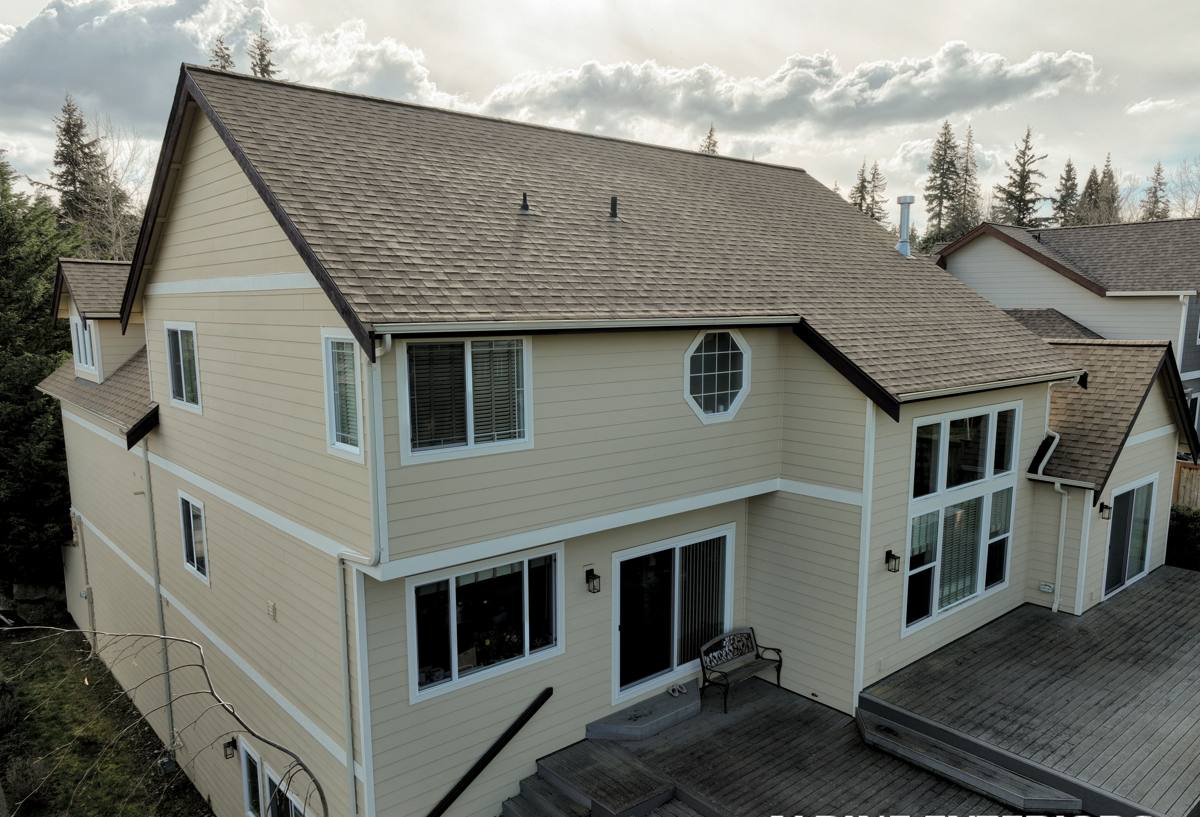
What "Driving Rain" Does to a Roof System
Bellingham's rain isn't just frequent, it often comes in sideways during winter storms off the Sound. Wind-driven rain finds its way into gaps that a straight-down rain never would — under shingle tabs, behind poorly lapped flashing, and through nail penetrations that have loosened over time. This is why the underlayment and flashing details matter as much as the shingles themselves on a Puget roof.
Where wind-driven rain typically gets in
- Valleys where two roof planes meet, especially with under-built or reused flashing
- Around chimneys, skylights, and any roof penetration
- Under starter courses and drip edges on the windward side of the house
- Low-slope sections and porch roofs where water sits longer before draining
A replacement is the one chance to correct all of these at once, rather than chasing individual leaks for years afterward.
Moss: A Year-Round Concern, Not Just a Fall Chore
Moss thrives in the shade, moisture, and mild temperatures typical of this part of Washington. On a Puget roof, moss isn't cosmetic — it holds water against the roofing material, lifts shingle edges, and works its way under tabs over time. Once moss has been established for a few seasons, granule loss and soft decking underneath are common, and by the time it's visible from the ground, it's often already affected the layers you can't see.
A correct replacement addresses moss two ways: removing what's already established (including the substrate damage it caused) and building in features — proper ventilation, sun-exposure-aware material choices, and metal strips at ridge lines — that slow regrowth going forward. No roof is moss-proof in this climate, but the rate of return can be managed.
Material Choices for This Climate
There's no single "best" roofing material for Puget — the right choice depends on the home's exposure, roof pitch, budget, and how long the owner plans to stay in the house. What matters more than the brand name is how well a given material handles sustained moisture and salt air over decades, not just its warranty paperwork.
| Material | Moisture/Salt Behavior | Moss Resistance | Typical Lifespan Here |
|---|---|---|---|
| Architectural asphalt shingles | Good with proper underlayment and flashing; standard fasteners should be corrosion-resistant near the water | Moderate — benefits from algae-resistant granules and ridge zinc strips | 20-30 years with good ventilation |
| Metal (standing seam or panel) | Excellent shedding of water; needs coated/stainless fasteners in salt-exposed areas | High — sheds moss more readily due to slick surface and heat | 40-50+ years |
| Synthetic composite | Good; consistent performance in wet climates, low water absorption | Moderate to high depending on product | 30-50 years per manufacturer specs |
| Wood shake | Higher maintenance burden — absorbs and holds moisture, which is a real liability in a moss-heavy, high-rain area | Low without regular treatment | Variable; maintenance-dependent |
We're upfront that wood shake, while attractive, asks a lot of an owner in this specific climate — the maintenance schedule needed to keep it performing well here is steeper than most other options, which is a fair trade-off to weigh before committing to it.
Fasteners and Flashing Matter as Much as the Field Material
Whatever the top layer, the metal underneath it — flashing, drip edge, valley metal, fasteners — is what actually determines how well a roof holds up to salt air. We spec corrosion-resistant metals and fasteners as standard on Puget jobs, not as an upgrade option, because the failure point on an otherwise sound roof is almost always a piece of ordinary steel that corroded faster than the shingles wore out.
Ventilation and Moisture Control: The Part You Don't See
A roof replacement that only addresses the visible surface is an incomplete job in this climate. Attic and roof-deck ventilation controls how much moisture builds up under the roofing material from the inside — condensation, not just rain intrusion. Poor ventilation traps humid air against the underside of the decking, which accelerates rot and gives moss and mildew an easier foothold from below as well as above.
During a replacement, we evaluate intake (soffit vents) and exhaust (ridge or roof vents) together, since one without the other doesn't move air properly. We also check for signs of past condensation damage on the decking once the old roofing is off — this is often the first real look anyone's had at that layer in decades.
Our Replacement Process
1. Inspection and Scope
We walk the roof and attic, note deck condition, existing ventilation, flashing condition, and any moss or moisture damage, then put together a scope that's specific to the house — not a generic package.
2. Tear-Off
Full tear-off to the decking on replacement jobs, so we can see and correct what's underneath rather than layering new material over hidden problems.
3. Deck Repair
Any soft, rotted, or moisture-damaged decking is replaced before anything new goes down — this step is non-negotiable, since it's the foundation the rest of the roof depends on.
4. Underlayment and Ice/Water Protection
Synthetic underlayment across the field, with additional water-resistant membrane at valleys, eaves, and other vulnerable areas where wind-driven rain is most likely to intrude.
5. Flashing and Metal Work
New corrosion-resistant flashing at all penetrations, valleys, and transitions — this is where most future leaks originate if it's skipped or reused to save cost.
6. Roofing Installation
Material installed to manufacturer specification, with attention to nailing patterns and exposure that hold up to sustained wind and rain rather than just meeting minimum code.
7. Ventilation Correction
Intake and exhaust balanced as part of the job, not treated as a separate add-on.
8. Final Walkthrough
We walk the finished roof and attic with the homeowner, explain what was found and fixed, and go over any maintenance that will help the roof perform over its full lifespan in this climate.
Signs a Puget Home May Need Replacement Rather Than Repair
- Granule loss heavy enough that shingles look patchy or bald in sun-facing areas
- Moss coverage that returns within a season or two of cleaning, especially on north-facing slopes
- Soft spots or noticeable sagging when walking the roof or viewing the deck from the attic
- Rusted or deteriorating flashing, vent boots, or fasteners visible from the ground or attic
- Interior water stains that appear or worsen specifically during wind-driven storms
- A roof approaching or past the upper end of its material's expected lifespan in this climate
Any one of these can sometimes be handled with a repair. Several at once, or a roof already near the end of its expected life, usually means repair costs start competing with replacement costs without buying much additional time.
What Drives Cost on a Puget Roof Replacement
| Factor | Why It Matters Here |
|---|---|
| Roof pitch and access | Steeper or harder-to-access roofs common in hillside Puget properties take more labor time and safety setup |
| Deck condition | Moisture and moss damage found during tear-off can require deck repair not visible before the job starts |
| Material choice | Asphalt, metal, and synthetic options carry different upfront costs and different long-term maintenance costs |
| Ventilation corrections | Adding or upgrading intake/exhaust vents is often necessary but sometimes overlooked in initial estimates |
| Flashing and metal upgrades | Corrosion-resistant metal costs more upfront but avoids early flashing failure near the water |
We walk every cost factor with the homeowner before work starts, so there aren't surprises once the tear-off reveals what's actually under the old roof.
Why a Crew That Already Works Puget Matters
A roof replacement done by a crew unfamiliar with this specific stretch of Bellingham is still likely to use sound general roofing practice — but general practice isn't always tuned to what a house a few blocks from the Sound actually needs. Knowing which slopes in Puget tend to hold moss longest, which exposures take the brunt of wind-driven rain, and how quickly ordinary fasteners corrode this close to salt air comes from working here repeatedly, not from a single visit.
That familiarity shows up in small decisions throughout a job: which fastener grade to default to, how much ventilation correction to plan for before the roof is even opened up, and where to expect deck damage before tear-off confirms it. None of it replaces sound roofing fundamentals, but it does mean fewer surprises and a roof built for the conditions it will actually face.
If you're weighing repair versus replacement, or just want a straight answer on where your roof stands, we're happy to take a look. Use the form below to request a free, no-pressure estimate — we'll walk the roof, explain what we find, and give you options without any obligation.