 Bellingham Roofing
 Building a Deck That Actually Holds Up in Sehome
Sehome sits close enough to Bellingham Bay that salt-laden air is a constant factor in how outdoor structures age, and the neighborhood's mix of older lots and infill homes means decks here run the gamut from small entry platforms to full-size elevated decks off daylight basements. Whatever the size, the same regional reality applies: this is a wet, moss-prone climate with long stretches of driving rain from fall through spring, and any deck we build has to be engineered around that fact from the framing up, not just finished to look good on day one.
A lot of deck problems we get called out to fix in this part of Whatcom County aren't from bad lumber or lazy carpentry — they're from decks that were built without enough attention to drainage, ventilation, and fastener choice for a marine climate. We build decks in Sehome to handle exactly those conditions, and we also repair and rebuild decks that were put up without them in mind.
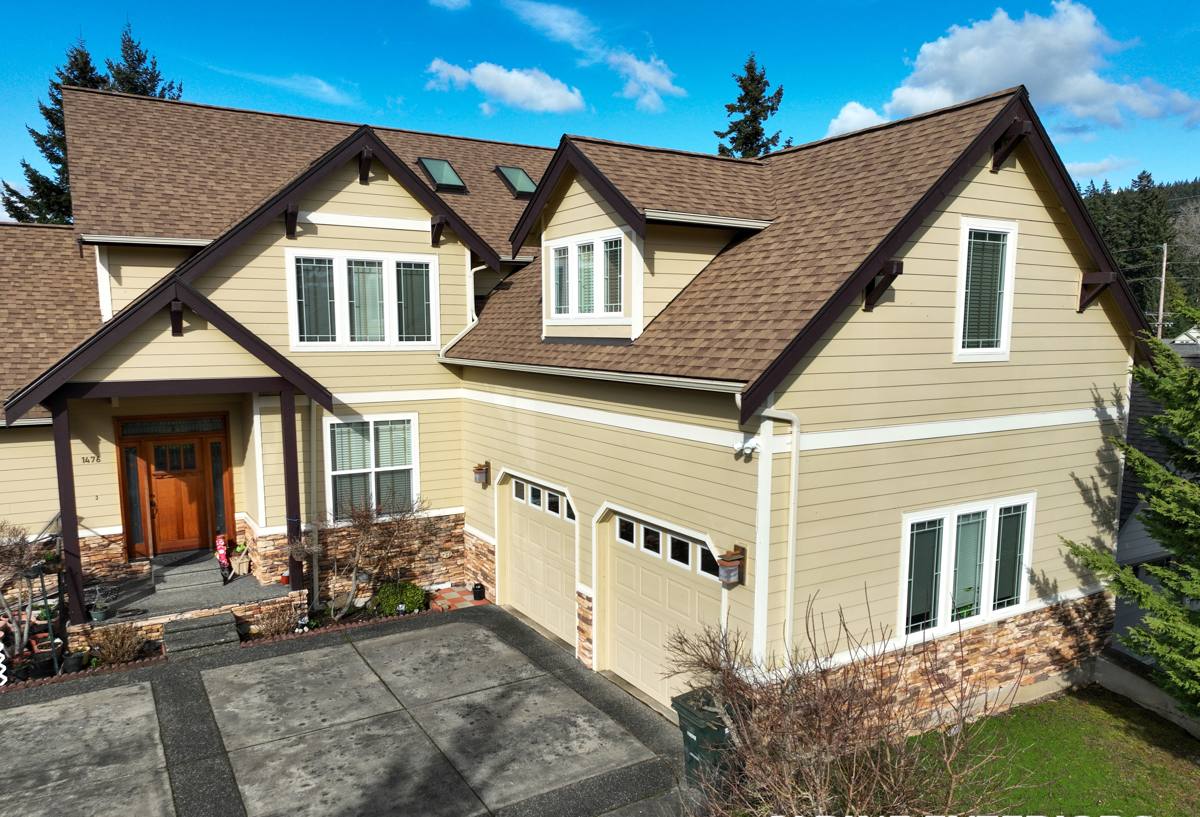
What Bellingham's Climate Does to a Deck
Salt Air and Corrosion
Proximity to the bay means airborne salt reaches further inland than people expect, especially on exposed or elevated decks. Standard fasteners and hardware corrode faster here than they would in a dry inland climate, and corroding fasteners are one of the more common hidden failure points we find on older decks — the boards can look fine while the ledger bolts or joist hangers underneath are quietly rusting.
Driving Rain and Moisture Intrusion
Bellingham's rain doesn't just fall straight down — wind-driven rain gets up under railings, into ledger board connections, and between deck boards if there isn't a gap or drainage path for it to escape. Water that sits instead of shedding is what leads to rot at the ledger, at post bases, and in structural framing that's much harder and more expensive to fix than the decking surface itself.
Moss and Algae
Whatcom County's long damp season, especially on shaded or north-facing decks common on wooded Sehome lots, grows moss and algae readily. Beyond looking bad, moss holds moisture against the wood surface and makes boards slick and genuinely dangerous underfoot, particularly on stairs. Deck material choice and board spacing both affect how much moss a deck collects and how easy it is to keep clean.
What a Correctly Built Deck Includes
A deck that's going to last in this climate isn't just about picking a nice-looking board. The details that don't show once the project is finished are the ones that determine whether the deck is still solid in fifteen years.
- Proper ledger board flashing and attachment, so the connection to the house sheds water instead of trapping it against the framing
- Joist hangers, screws, and structural hardware rated for the exposure the deck will actually see — not just whatever is standard-grade
- Correct board spacing and airflow underneath the deck so wood can dry out between rain events instead of staying wet
- Footings sized and set to local frost depth and soil conditions, not just poured to a minimum
- Post bases that keep wood off standing water and away from direct soil contact
- Railing and stair connections built to current code, since these are the components most often cited on inspections and most critical for safety
- A finish or material choice matched to how much sun, shade, and moss exposure the specific site actually gets
Choosing Deck Materials for a Sehome Property
There's no single "best" decking material — the right choice depends on budget, how much maintenance the homeowner actually wants to do, and how shaded the site is. We'll walk through the honest trade-offs rather than push whatever has the best margin.
| Material | Maintenance | Moss/Algae Resistance | Typical Lifespan Here |
|---|---|---|---|
| Pressure-treated lumber | Needs periodic staining/sealing to perform well | Moderate — moss grows readily if not maintained | 15-20 years with upkeep |
| Cedar | Needs sealing/staining to hold color and resist moisture | Naturally more rot-resistant, but still holds moss in shade | 15-25 years with upkeep |
| Composite decking | Low — periodic cleaning, no staining | Good, but shaded/damp spots still need occasional cleaning | 25-30+ years |
| PVC/capped composite | Lowest — cleaning only | Best resistance among common options | 25-30+ years |
For heavily shaded lots — common where mature trees back up to a property — we lean toward steering homeowners away from bare pressure-treated lumber left unsealed, since it's the combination most prone to moss buildup and surface graying in a hurry. That's a maintenance and appearance trade-off, not a claim that treated lumber is a bad product; it performs fine when it's properly sealed and kept up.
Our Process for a Deck Build in Sehome
1. On-Site Assessment
We look at the site itself — sun and shade exposure, drainage slope, how close the deck will sit to the house, soil conditions for footings, and whether there's an existing structure to remove or build from. This is also where we talk through how the family actually plans to use the space, since that shapes size, layout, and material choice.
2. Design and Material Selection
We put together a layout and material recommendation based on that assessment, with honest pros and cons for each option rather than steering toward a single default. Budget, maintenance tolerance, and how the deck will hold up to Bellingham's specific climate all factor into the recommendation.
3. Permitting
Deck construction in Bellingham and Whatcom County typically requires a building permit, especially for elevated decks or anything attached to the primary structure. We handle the permitting process and build to the code requirements that apply, including railing height, stair geometry, and structural attachment standards.
4. Construction
Framing and structural work go in first, built to the standards above — proper flashing, corrosion-resistant hardware, and drainage-conscious spacing. Decking, railings, and stairs follow. We don't cut corners on the parts that won't be visible once the project wraps, because those are the parts that determine how the deck ages.
5. Final Walkthrough
We walk the finished deck with the homeowner, cover basic care and cleaning for the material installed, and make sure everything meets expectations before calling the job done.
Signs an Existing Deck Needs Attention
If you're not building new but wondering whether your current deck needs repair or replacement, a few warning signs are worth checking for before another wet season sets in:
- Soft or spongy spots underfoot, especially near the house or stairs
- Visible rust or staining around fasteners and joist hangers
- Gaps or separation where the deck ledger meets the house
- Persistent moss or algae that returns quickly after cleaning
- Railings or stair posts that feel loose or wobble under weight
- Boards that have cupped, split, or delaminated at the surface
Some of these are simple fixes; others point to structural issues that are safer and cheaper to address before they get worse. A quick inspection can usually tell the difference.
Why Local Deck-Building Experience Matters
A deck design that works fine in a dry, inland climate can fail early here if it's built the same way. Crews who work regularly in Bellingham and around Bellingham Bay know which details actually matter for this environment — the flashing details, the hardware grade, the airflow and drainage considerations — because they're the ones who get called back when those details are skipped. That local pattern recognition, built from working Whatcom County job sites through repeated wet seasons, is worth as much as the materials themselves.
We also know how Sehome's terrain and lot layouts tend to run — sloped yards, mature tree cover, proximity to the water — and design around those realities rather than applying a one-size-fits-all layout.
Maintaining Your Deck Once It's Built
Even a well-built deck needs some seasonal attention in this climate. A simple annual routine goes a long way toward getting the full lifespan out of the structure:
- Clear leaves and debris from between boards before fall rains set in, since trapped debris holds moisture against the wood
- Rinse or scrub shaded areas prone to moss buildup before it gets a foothold
- Check railing and stair connections for looseness once a year
- Reseal or restain wood decking on the manufacturer's recommended schedule, not just when it looks faded
- Keep gutters and downspouts near the deck clear so overflow isn't dumping extra water onto the structure
If you're planning a new deck in Sehome or want an honest look at whether your current one needs repair, we're happy to come take a look. Reach out for a free, no-pressure estimate using the form below.