 Bellingham Roofing
 Asphalt Shingle Roofing Built for Puget's Climate
Puget sits close enough to the water that homes here take on a specific combination of weather stress that inland roofs never have to deal with: salt-laden air, wind-driven rain that gets pushed sideways into laps and flashings, and a moss season that runs longer than most homeowners expect. Asphalt shingle roofing is still the right call for the vast majority of houses in this area — it's cost-effective, well understood, and easy to repair in sections. But "asphalt shingles" installed generically and asphalt shingles installed correctly for a Puget-area roof are two very different products in terms of how long they actually last.
This page is about that gap. What the local climate actually does to a shingle roof, what a correctly built system looks like in response, and what our process involves when we work on a home in this part of Bellingham.
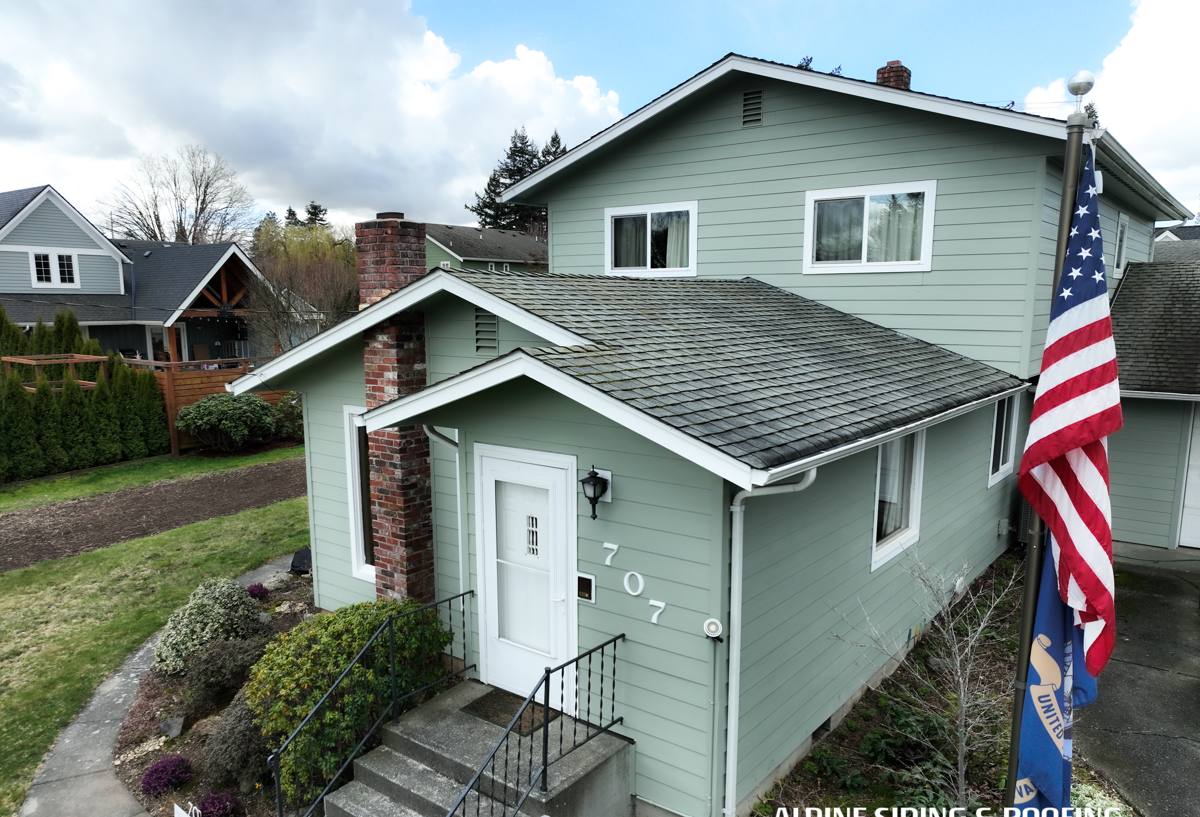
What Salt Air and Driving Rain Actually Do to a Shingle Roof
Salt air and metal components
Salt in the air doesn't damage the asphalt shingle mat itself in any dramatic way, but it accelerates corrosion on every metal component tied into the roof system — nail heads, drip edge, step flashing, valley metal, and vent boots. A roof can have shingles that still look serviceable while the flashing underneath them has started rusting through at the fastener points. That's where leaks usually start on homes near the water, not in the field of the shingle field itself.
Wind-driven rain and lap exposure
Normal rain falls mostly straight down and sheds off a shingle roof the way it's designed to. Wind-driven rain off the water comes in at an angle, which means it can work its way up under shingle tabs, into open laps, and along ridge and hip lines that would stay dry in a calmer climate. A roof built for this area needs tighter attention to sealant strips actually bonding down, proper nailing height so tabs don't lift, and underlayment that can handle water intrusion at the seams as a backup layer — not just as a formality.
What this means in practice
- Flashing and metal components often need replacement before the shingles themselves are worn out
- Sealant bond along tab edges matters more here than in drier, calmer parts of the state
- Underlayment quality and lap technique function as a real second line of defense, not just code minimums
- Fastener corrosion resistance (ring-shank, hot-dip galvanized or better) pays for itself over the life of the roof
Moss: The Slow Damage Most Homeowners Underestimate
Bellingham's moss season is long, and Puget's tree cover and moisture levels give moss plenty to work with. Moss on a shingle roof isn't just a cosmetic problem. As it grows, it lifts shingle edges, holds moisture against the granule surface far longer than the shingle is designed to tolerate, and works its way into laps and valleys where it traps water directly against the roof deck. Left long enough, that trapped moisture leads to granule loss, accelerated aging, and eventually deck rot underneath — which is a much more expensive repair than the roof itself.
Zinc or copper control strips near the ridge, proper attic and roof ventilation to reduce condensation, and periodic gentle cleaning (never pressure washing, which strips granules) are the practical tools for managing moss over the life of a roof. None of them make moss impossible, but together they buy years of extra service life and prevent the deck-level damage that turns a shingle replacement into a structural repair.
Choosing the Right Shingle for a Puget Roof
Not every asphalt shingle product is built the same way, and the differences matter more here than they would in a mild, dry climate. The table below lays out the practical trade-offs we walk homeowners through.
| Shingle Type | Typical Lifespan | Wind/Rain Performance | Best Fit |
|---|---|---|---|
| 3-tab (economy) | 15-20 years | Lower wind rating, more prone to tab lift in driving rain | Budget-driven projects, rental properties |
| Architectural / dimensional | 25-30+ years | Higher wind ratings, thicker mat resists tab lift better | Most Puget homes — the standard we recommend |
| Algae-resistant (AR) granules | Same as base shingle, with better appearance retention | No structural difference, but resists the dark streaking common in wet coastal climates | Any home with heavy shade or moisture exposure |
| Impact-rated (Class 3/4) | Same or longer, with stronger warranty terms | Better resistance to debris and hail impact | Homes with heavy tree cover or storm exposure |
For most Puget properties, we recommend a mid-to-upper-tier architectural shingle with algae-resistant granules as the baseline, not the upgrade. Given how much of this area's roof damage comes from moisture and biological growth rather than raw wind load, the algae-resistant granule technology earns its cost back in appearance and shingle life, not just curb appeal.
What a Correct Installation Actually Involves
The shingle brand gets most of the attention, but the parts of the job that determine whether a roof leaks in this climate are mostly things you can't see once it's finished.
Deck and ventilation first
Before any shingle goes down, the deck gets inspected for soft spots, delamination, or existing moisture damage — common on older Puget-area homes where moss or a prior undersized ventilation system let moisture sit against the sheathing for years. Balanced intake and exhaust ventilation is checked and corrected where needed, since poor attic ventilation is one of the leading causes of premature shingle failure and ice/condensation issues in this climate.
Underlayment and water-entry points
Ice-and-water shield membrane goes down at eaves, valleys, and around every penetration — chimneys, vents, skylights — since these are the highest-risk spots for wind-driven rain intrusion. The rest of the deck gets a synthetic underlayment layer that sheds water and holds up to job-site foot traffic better than older felt products.
Flashing that matches the climate
New step flashing, counter-flashing, and valley metal are used rather than reusing old, corroded pieces — reusing salt-corroded flashing is one of the more common shortcuts that leads to callback leaks two or three years down the line. Drip edge is installed at all eaves and rakes, which is a code requirement that also happens to matter a lot in a driving-rain climate.
Shingle installation details
Correct nail placement (not staples, not overdriven or underdriven nails), proper offset between courses, and confirming sealant strips actually activate and bond are all things that separate a roof that performs for 25+ years from one that starts showing tab lift and granule loss in year eight.
Our Process on a Puget Roofing Project
- Inspection and honest assessment — we look at the deck, ventilation, flashing condition, and moss/moisture history, not just the shingle surface, and tell you plainly whether repair or full replacement makes sense.
- Written scope and material selection — you get a clear breakdown of what's being replaced, what shingle and underlayment system we're recommending and why, and a straightforward cost range before work starts.
- Tear-off and deck check — old roofing is fully removed (we don't recommend overlay roofing in this climate, since it traps moisture problems rather than solving them) and the deck is inspected and repaired as needed.
- System installation — underlayment, flashing, ventilation components, and shingles go in as a coordinated system, not a stack of individual parts.
- Cleanup and final walkthrough — job site and gutters are cleared of debris and nails, and we walk the finished roof with you before calling it done.
Maintenance That Actually Extends Roof Life Here
A shingle roof in this climate isn't maintenance-free, even a well-installed one. The good news is that the maintenance that matters is simple and infrequent.
- Have gutters and downspouts cleared at least once or twice a year — clogged gutters back water up under the eave line, which is exactly where wind-driven rain already puts the most stress
- Get a visual roof check after major windstorms to catch lifted tabs or displaced flashing early
- Address moss growth early with gentle treatment rather than waiting until it's thick enough to lift shingles
- Keep overhanging branches trimmed back to reduce shade, debris buildup, and abrasion during wind
- Have a professional inspection every few years, especially once a roof passes the 10-year mark
Why It Matters to Hire a Crew That Already Works in Puget
A roofing crew that mainly works drier, inland regions will build a technically code-compliant roof that still underperforms here, because the code minimums don't fully account for sustained salt exposure, near-constant moisture, and a moss season this long. A crew that regularly works Puget and the surrounding Bellingham and Whatcom County area already knows which flashing details tend to fail first in this environment, which ventilation setups actually keep decks dry through the wet months, and which shingle and underlayment combinations hold up rather than just meeting minimum spec. That local pattern recognition is the difference between a roof that needs attention in year seven and one that's still solid at year twenty-five.
Get a Straightforward Estimate
If you're dealing with moss buildup, lifted shingles, corroded flashing, or you're just planning ahead for a roof that's getting older, we're happy to take a look and give you an honest read on what your roof actually needs — no pressure, no inflated scope. Use the form below to request a free estimate for your Puget-area home.