 Bellingham Roofing
 Fiber Cement Siding in Barkley: A Product That Has to Earn Its Keep
Barkley sits inside Bellingham's weather pattern, and that pattern is unusually hard on a house exterior. Salt-tinged air drifting off Bellingham Bay works into fasteners and trim hardware over years, not days. Storms typically arrive with wind behind them, driving rain sideways into laps, seams, and window flashing instead of letting it run straight down a wall the way a drier climate would. And between the cloud cover, humidity, and tree canopy common across Whatcom County, moss and algae get a growing season that runs close to year-round on shaded, north-facing walls. None of these are dramatic on any given day. They're cumulative, and a siding product that isn't built and installed to handle all three at once tends to show it within a handful of winters — softening trim, chalky or peeling paint, moss creeping up from the base of a wall.
Fiber cement is the material we install on Barkley homes because it's built for exactly this kind of sustained exposure. It doesn't absorb moisture the way wood-based products do, it won't feed mold or moss growth the way a porous wood surface can, and it holds a factory-applied finish far longer than field-applied paint holds up against this much rain and humidity. But fiber cement's real-world performance depends heavily on how it's installed — more so than most homeowners realize when they're comparing siding quotes. This page focuses specifically on what fiber cement siding needs to get right in Barkley's climate, what correct installation actually involves, and how our process works on a project here.
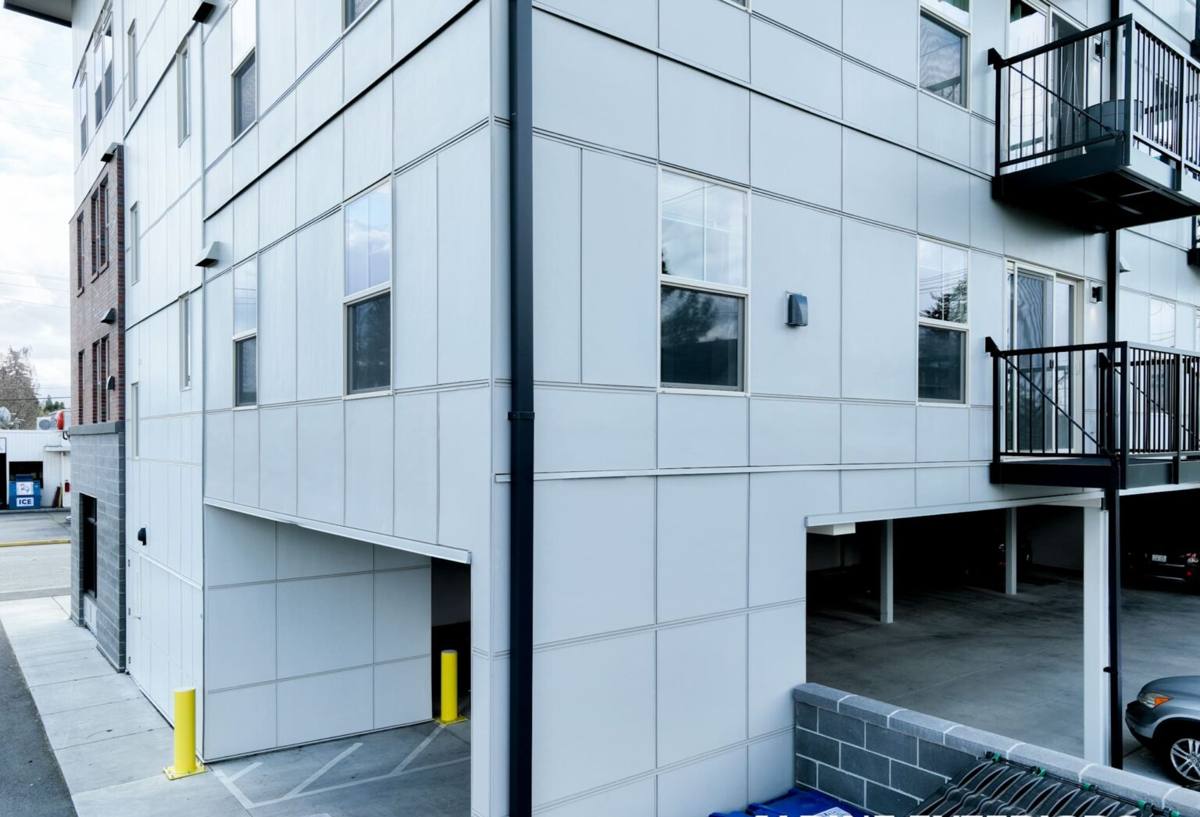
What Correct Installation Requires Behind the Siding
Most fiber cement failures we get called out to inspect aren't failures of the board itself — they're failures of what's behind it. Water that gets past the siding face and finds its way behind the cladding is what eventually causes sheathing damage, and by the time it's visible from outside, the problem has usually been developing for a while.
Weather-Resistive Barrier
Every fiber cement installation starts with a continuous weather-resistive barrier — house wrap or an equivalent membrane — installed and lapped correctly so that any water that does get past the siding face has a clear path down and out, rather than a place to pool against the sheathing. Seams need to be lapped in the right direction and sealed, not just stapled and left. This layer is invisible once the siding goes up, which is exactly why it's the step most likely to get rushed on a lower-quality job.
Flashing at Every Penetration
Windows, doors, hose bibs, vents, and any other wall penetration need flashing detailed so water is directed out and away from the wall assembly, not just caulked over and hoped for. In a climate where wind-driven rain gets pushed into gaps a calmer region wouldn't test as hard, flashing shortcuts are usually the first thing to fail — often well before the siding itself shows any wear.
Fastening, Clearance, and Joint Details
James Hardie publishes a specific installation manual covering fastener type, spacing, and placement, along with clearance and gapping requirements. Following it isn't optional if you want the product to perform as engineered or keep the manufacturer's warranty intact — and in a wet climate, the margin for error on these details is smaller than it would be somewhere dry.
Grade and Hardscape Clearance
Hardie's spec calls for a minimum clearance between the bottom edge of the siding and grade, roofing, or paved surfaces. In Barkley, where ground moisture stays elevated for much of the year, that clearance is what keeps the lowest courses of siding from sitting in near-constant dampness. Skipping it to save a little material or labor time is one of the more common shortcuts we see on older installs, and it's usually where rot shows up first.
Butt Joints and Caulking
Butt joints — where two boards meet end to end — need a small gap and the right sealant, not boards jammed tight together or caulked with whatever was on the truck. A joint that's too tight can't accommodate normal expansion and contraction, and a joint sealed with the wrong product breaks down faster under sustained UV and moisture cycling than Hardie's own recommended sealants do.
James Hardie's HZ Engineering and ColorPlus Finish
James Hardie doesn't make one universal fiber cement formulation — it engineers different HZ product lines for different climate zones.
HZ5 for Sustained Moisture Exposure
The HZ5 formulation is built for regions with heavy moisture exposure and freeze-thaw cycling, as opposed to desert heat or hurricane-force wind. That profile is a close match for what Bellingham and the rest of Whatcom County see through a typical year, which is why it's the formulation we specify on Barkley homes rather than a generic board meant for a milder or drier region.
Why the Factory Finish Matters Here
ColorPlus finish is baked on at the factory under controlled temperature and humidity, rather than brushed or sprayed on site and left to cure in whatever weather shows up that week. That matters a lot in a climate where a field-applied paint job often has a narrow window to properly cure before the next rain moves through. When a cut edge needs touch-up, it's done with Hardie's matched ColorPlus touch-up product, not field-mixed paint, so the finish stays consistent and doesn't introduce a weaker coating at the joints — which are already the spots most exposed to weather.
Where Installation Quality Actually Shows Up
The difference between a fiber cement job that lasts decades and one that causes problems within a few years usually comes down to a handful of specific details, not the board itself.
| Installation detail | Manufacturer spec | What a shortcut looks like |
|---|---|---|
| Fastener placement | Specific nail type, spacing, and depth per Hardie's installation manual | Overdriven or underdriven nails, inconsistent spacing, wrong fastener type |
| Clearance above grade | Minimum standoff from soil, decking, and roofing surfaces | Siding installed tight to grade or hardscape, trapping moisture at the base |
| Butt joints | Small gap with manufacturer-approved sealant | Boards butted tight or caulked with a general-purpose sealant |
| Weather barrier laps | Continuous coverage, correctly overlapped and sealed | Gaps, upside-down laps, or torn sections patched with tape |
| Cut-edge sealing | Factory-matched touch-up product on every field cut | Cut edges left unsealed or painted with mismatched field paint |
Choosing the Right Hardie Profile for a Barkley Home
James Hardie makes several distinct profiles, and the right one for a given Barkley home usually comes down to architectural style and how much of the wall surface takes direct weather.
- HardiePlank lap siding — the most common choice for traditional and craftsman-style homes, available in several widths and surface textures
- HardieShingle — a shingle-style profile for homes wanting a more textured, staggered or straight-edge look
- HardiePanel — vertical panel siding often used for accent walls, gables, or more modern exteriors
- HardieTrim — fiber cement trim boards used at corners, window surrounds, and fascia so trim ages at the same rate as the siding around it
We walk through these options during the estimate based on the home's style and exposure, rather than defaulting to one profile for every project.
How a Fiber Cement Project Runs on a Barkley Home
- Inspection and estimate: We look at the existing siding condition, wall orientation and sun/shade exposure, and any early signs of trapped moisture before pricing the job.
- Tear-off and sheathing check: Old siding comes off and we inspect the sheathing underneath for rot or soft spots before anything new goes up — installing over damaged sheathing just hides a problem that keeps growing behind the wall.
- Weather barrier and flashing: A continuous, correctly lapped barrier goes on first, with flashing detailed at every window, door, and penetration.
- Installation to spec: Hardie boards go up following the manufacturer's fastening pattern, clearance, and joint requirements.
- Trim and finish detail: Corner boards, window trim, and any cut-edge touch-up are finished with matched Hardie products.
- Final walkthrough: We review the completed work with the homeowner before calling the project done.
Signs a Fiber Cement Installation Was Rushed
Not every fiber cement job is installed to spec, even when the product itself is correct. These are the details worth checking, whether you're evaluating a past install or getting a second opinion on a quote:
- Siding that sits flush against soil, mulch beds, or a patio surface with no visible clearance gap
- Nail heads that are noticeably overdriven, crushing the board surface, or left proud of it
- Butt joints that are jammed tight with no gap, or caulked with an obviously mismatched sealant
- Cut edges with visible raw material and no touch-up coating
- Corner boards or trim that don't match the siding's finish or color
- Visible staining, streaking, or soft spots concentrated near ground level or under window sills
What Affects the Cost of a Fiber Cement Project in Barkley
| Factor | Why it matters |
|---|---|
| Home size and wall complexity | More corners, dormers, and cutouts mean more cut waste and labor time than a simple footprint |
| Sheathing condition | Rot found during tear-off adds repair scope that can't be priced accurately until the old siding is off |
| Siding profile and trim detail | Lap width, shingle or panel accents, and trim complexity all affect material and labor cost |
| Access and site conditions | Steep lots, tight setbacks, or limited staging space can add time and equipment cost |
| Tear-off vs. new construction | Removing and disposing of existing siding adds a labor step new-construction siding doesn't require |
We price a project after walking the property, not off a flat per-square-foot number, since two similarly sized Barkley homes can end up with meaningfully different costs depending on condition and access.
Why a Crew That Already Works Barkley Matters
Fiber cement performs the same everywhere on paper, but installing it correctly depends on judgment calls that come from seeing how it actually behaves on homes in this specific climate — how much clearance a given wall needs based on how the ground drains, which flashing details tend to fail first in a Bellingham winter, where moss establishes on a particular lot based on shade and tree cover. A crew that installs fiber cement regularly in Whatcom County has already made those calls dozens of times over; a crew installing it occasionally, or primarily trained on a different climate's requirements, is more likely to treat every detail as optional rather than load-bearing. A local crew is also easier to reach years down the line if a warranty question comes up, rather than a name from an out-of-area lead service that's hard to track down once the final payment clears.
If you're planning a fiber cement siding project in Barkley or want a second opinion on an existing installation, we're glad to walk the property and put together a straightforward, no-pressure estimate. Use the form below to get started.