 Bellingham Roofing
 Board & Batten Siding, Done Right, for Columbia
Columbia is one of the older, closer-in neighborhoods on Bellingham's east side, and it shows in the housing stock: a mix of early-1900s cottages, mid-century bungalows, and newer infill, many sitting on lots with mature trees and tight setbacks that keep the ground and the siding shaded and damp for long stretches of the year. Board and batten is a natural fit here — it reads as a craftsman or farmhouse look that suits the neighborhood's older bones, and the vertical lines shed water differently than horizontal lap siding, which matters more in this part of Whatcom County than most homeowners realize until they've lived through a few wet winters.
This page is specifically about installing board and batten siding on Columbia homes, not a general siding overview. We'll cover what the climate here actually does to siding, what a correct board and batten installation involves, and why the details matter more in this neighborhood than a glossy brochure photo ever shows.
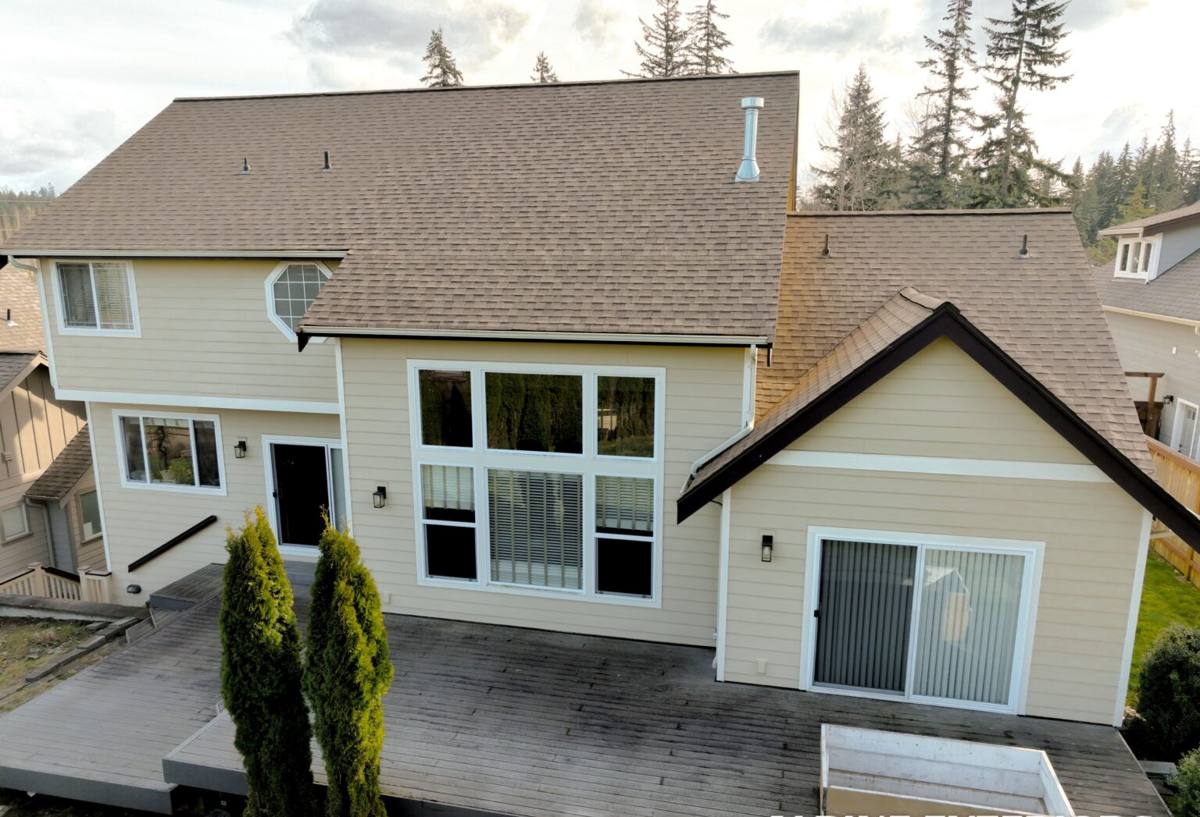
What Bellingham's Climate Does to Vertical Siding
Bellingham sits close enough to Bellingham Bay and the Salish Sea that salt-laden air is a real factor, not a theoretical one, especially on homes in Columbia that are within a mile or two of the water and catch onshore wind. Add in driving rain that comes sideways off Pacific storms several months a year, and a moss season that can run from October through May in shaded, tree-covered lots, and you have three separate stresses acting on siding at the same time:
Salt Air
Airborne salt accelerates corrosion on fasteners, flashing, and trim hardware. It also settles into porous or poorly sealed materials and holds moisture against the substrate longer than it would in a drier inland climate. Board and batten has more exposed vertical joints and batten edges than lap siding, which means more places for that salt-laden moisture to sit if the installation isn't sealed and fastened correctly.
Driving Rain
Wind-driven rain doesn't just run down a wall — it gets pushed sideways and upward under laps, at butt joints, and behind trim. Board and batten depends on the battens themselves, the panel joints beneath them, and the flashing details at every penetration to keep that water out. A vertical siding system is only as good as the water management behind it.
Moss and Prolonged Dampness
Columbia's tree cover is a blessing for shade and curb appeal and a liability for siding. Shaded walls dry out slower after every rain event, which is exactly the condition moss and mildew need to take hold. Any organic growth on siding holds moisture against the surface even longer, which is where wood-based and improperly sealed cement-board products start to show trouble years before they should.
Why Board and Batten Needs to Be a System, Not Just a Look
Board and batten gets chosen for its appearance — clean vertical lines, deep shadow reveals, a look that suits both historic cottages and newer builds. But the appearance is the easy part. What actually determines whether it holds up in a Columbia backyard for the next 30 years is what's happening behind the boards: the water-resistive barrier, the rainscreen gap, the fastening pattern, and the flashing at every window, door, and roof intersection.
We install James Hardie fiber cement exclusively — through the HardiePanel vertical siding system with Hardie batten strips, or the Artisan vertical siding line for a more refined, tighter-reveal look. We don't install LP SmartSide, vinyl, Cemplank, Allura, or unfinished wood board and batten, and on a job like this, in this climate, the reasons are concrete rather than abstract.
Moisture Behavior
Fiber cement doesn't swell, rot, or delaminate the way engineered wood or unfinished cedar can when it stays damp for weeks at a time. In a neighborhood where shaded walls can stay wet well into spring, that difference shows up in maintenance calls, not marketing copy.
Finish Durability
James Hardie's ColorPlus factory finish is baked on under controlled conditions and backed by its own finish warranty, which matters directly against salt air — field-applied paint on wood or engineered wood siding tends to fail at the edges and joints first, and those are exactly the spots salt air attacks hardest.
Fire Performance
Fiber cement is non-combustible. That's not a Columbia-specific climate issue, but it's a standard we hold on every home we side, and it's part of why we don't offer combustible alternatives even when a customer's budget would prefer them.
What a Correct Board and Batten Installation Involves
The single biggest failure point on vertical siding isn't the boards — it's what's behind them. Here's what we consider non-negotiable on every board and batten job, in Columbia or anywhere else in Whatcom County:
- A code-compliant water-resistive barrier installed shingle-style, lapped correctly at every seam, with no upside-down laps
- A drainable rainscreen gap behind the panels so any water that does get past the surface has somewhere to go and can dry out instead of sitting against the sheathing
- Proper flashing at every window, door, hose bib, light fixture, and roofline intersection — the places where the vast majority of siding leaks actually start
- Correct batten spacing and fastening per James Hardie's published installation guidelines, not a generalized "it looks even" approach
- Fasteners rated for coastal and corrosive environments, given the salt air exposure common to Columbia's location
- Caulking used only where Hardie's specifications call for it — over-caulking traps moisture just as badly as under-caulking lets it in
Skipping any one of these doesn't necessarily cause a problem in year one. It shows up in year five or eight, usually as a soft spot near a window, a moss line following a batten seam, or a paint failure that traces straight back to a flashing detail nobody checked during the original install.
Board and Batten Materials: A Straight Comparison
| Material | Behavior in Salt Air / Driving Rain | Maintenance Over Time | Finish Longevity |
|---|---|---|---|
| James Hardie fiber cement (our standard) | Non-combustible, dimensionally stable, engineered moisture-resistant HZ formulations available | Occasional wash; no repainting for years with ColorPlus finish | Factory-baked finish, separate finish warranty |
| Engineered wood (e.g. LP SmartSide) | Wood-based core can absorb moisture at cut edges and damaged spots if not perfectly sealed | Field-applied finishes need more frequent attention, especially at edges | Site-applied paint typically shorter-lived than factory finish |
| Vinyl | Doesn't rot, but can warp or crack in temperature swings and doesn't hold up structurally in high wind-driven rain the same way rigid panel systems do | Low maintenance but limited repairability if damaged | Color is through-body but fades over time and can't be repainted easily |
| Unfinished cedar / primed spruce | Natural material, attractive, but genuinely vulnerable to moss, rot, and moisture absorption in a shaded, damp climate | Requires ongoing sealing, staining, or painting to stay ahead of moisture | Finish life depends heavily on maintenance discipline |
None of these alternative products are "bad" in every setting. They're simply not what we've chosen to stand behind, because the trade-offs land hardest in exactly the kind of shaded, salt-exposed, high-rainfall conditions common in Columbia.
Our Process on a Columbia Job
Assessment
We start by walking the exterior and identifying the specific exposure conditions on that lot — how much direct sun the walls get, how close the home is to prevailing wind and salt exposure, where moss or staining already shows, and where the existing siding or trim has failed. This tells us where to pay the closest attention during install, not just what color to order.
Tear-Off and Sheathing Check
Once the old siding comes off, we check the sheathing underneath for rot or soft spots before anything new goes up. Covering damaged sheathing with new siding just hides a problem that gets worse. Any repairs happen before the weather barrier goes on.
Weather Barrier and Rainscreen
This is the step that determines whether the siding performs for decades or needs attention in a few years. We install the water-resistive barrier and rainscreen furring correctly the first time, because it's essentially invisible — and irreversible without tearing the siding back off — once the boards go up.
Board, Batten, and Trim Installation
Panels and battens go up to James Hardie's fastening and spacing specifications, with flashing integrated at every penetration as we go, not added after the fact. Trim details around windows, doors, and corners get the same attention, since these are the areas most exposed to wind-driven rain.
Final Walkthrough
We walk the finished job with the homeowner, checking reveals, seams, and trim lines, and confirming everything matches the agreed scope before we call it done.
Why a Crew That Already Works Columbia Matters
A siding crew that's worked a range of homes in Columbia and the surrounding Bellingham neighborhoods has already seen how this specific mix of tree cover, proximity to the bay, and older housing stock plays out on real walls — which sides of a house tend to hold moss longest, which lot layouts trap moisture behind fences and outbuildings, and where older trim details need extra attention during tear-off. That local pattern recognition doesn't replace following the manufacturer's install specs, but it does mean fewer surprises once the old siding comes off and the sheathing underneath is visible for the first time in years.
It also means a shorter learning curve on permitting and typical construction in this part of Whatcom County, and a crew that isn't guessing at how a Bellingham winter will treat a given detail.
Maintenance Expectations After Installation
Correctly installed James Hardie board and batten is low-maintenance, not no-maintenance. In Columbia's climate, we recommend:
- An annual visual check for moss or algae starting on the shadiest walls, especially where tree cover is heaviest
- A gentle wash (not high-pressure blasting, which can force water behind panels) if moss or grime builds up
- Prompt attention to any caulking that cracks or pulls away at trim joints, since that's the first place wind-driven rain finds a way in
- Keeping gutters and downspouts clear so wall-washing water doesn't concentrate at corners and end walls
Questions to Ask Before Hiring Anyone for This Job
- Will you show me the rainscreen and flashing details before the siding goes on, not just after?
- What fastener type are you using, and is it rated for coastal or corrosive exposure?
- Are you following the manufacturer's published spacing and fastening spec, or a general approach?
- What happens if you find rotten sheathing once the old siding is off?
- What's covered under the product warranty versus the workmanship warranty, and for how long?
If a contractor can't answer these clearly before the contract is signed, that's worth noticing.
If you're considering board and batten siding for a home in Columbia, we're happy to walk the exterior with you, point out what your specific lot and exposure will demand, and put together a straightforward, no-pressure estimate. There's a form below — reach out and we'll get back to you.