 Bellingham Roofing
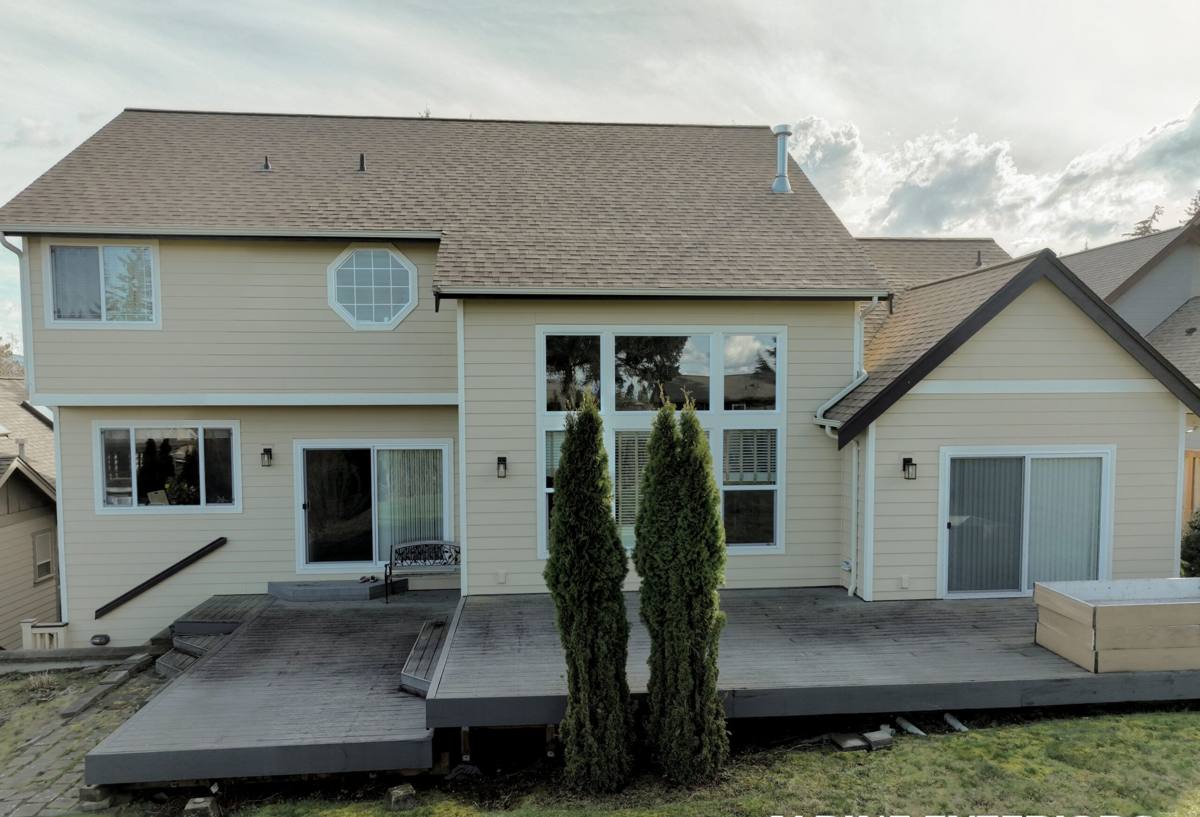
 Deck Building in Columbia: What This Neighborhood Actually Needs
Columbia is one of the older, established residential pockets close to the water in Bellingham, and that proximity shapes what a deck has to survive here. Homes in this part of Whatcom County deal with a specific combination of conditions: salt-tinged air rolling off Bellingham Bay, long stretches of driving rain from fall through spring, and a moss and algae season that can run most of the year in shaded yards. A deck built without those three things in mind will look fine for a season or two and then start showing problems that are expensive to reverse.
We build and repair decks throughout Bellingham, but Columbia's mix of older housing stock, mature tree cover, and closeness to the bay means the details matter more here than in a drier, more exposed part of town. This page walks through what a correctly built deck for this area actually involves, not just what it costs.
Why Salt Air and Moss Season Change the Job
Salt Air and Metal Hardware
Bellingham Bay is close enough to Columbia that airborne salt reaches exterior wood and metal, even on inland lots, especially during winter storms. Ordinary construction-grade fasteners and connectors corrode faster in this environment than the same hardware would in a landlocked town. Corroded fasteners aren't just an appearance issue — a ledger bolt or joist hanger that rusts through is a structural failure waiting to happen. This is why we spec stainless steel or coated fasteners rated for coastal exposure on every deck we build near the water, not just the ones a customer specifically asks about.
Driving Rain and Water Management
Whatcom County rain rarely falls straight down. Wind-driven rain gets pushed sideways into ledger boards, under railing posts, and into any gap where flashing was skipped or done wrong. The ledger connection — where the deck attaches to the house — is the single most common failure point we see on older decks in this area, because it's also the hardest spot to flash correctly and the easiest to shortcut. Water that gets behind a poorly flashed ledger doesn't just rot the deck; it can work its way into the house's rim joist and wall framing.
Moss, Algae, and Shade
Columbia has enough mature tree canopy in places that some decks stay shaded and damp for long stretches of the year. That's ideal growing conditions for moss and algae on decking surfaces, and it's a safety issue as much as a cosmetic one — wet moss on a walking surface is slick. Board spacing, surface texture, and drainage underneath the deck all affect how fast moss takes hold and how easy it is to keep clean.
What a Correctly Built Deck Involves
A deck that holds up in this climate isn't about any single fancy material — it's about getting a handful of details right, in order, every time.
- Ledger flashing: proper metal flashing integrated with the house's existing weather-resistant barrier, not just caulk over a bolted board.
- Fasteners and connectors: stainless or coastal-rated hardware at every structural connection, not just the visible ones.
- Framing grade and treatment: pressure-treated framing lumber rated for ground contact where posts meet footings, with cut ends re-treated on site.
- Footings below frost and drainage: footings sized and set to local code, with soil around them graded so water doesn't pool against posts.
- Decking gaps for drainage: board spacing that lets water run through rather than sit on the surface, which also slows moss growth.
- Airflow underneath: enough clearance and ventilation below the deck to let framing dry out between rain events instead of staying damp.
- Railing attachment: posts through-bolted to framing, not just lag-screwed to a rim board, since this is a common failure point under lateral load.
Choosing Decking Material for This Climate
There's no single right answer here — it depends on budget, how much upkeep the homeowner wants to do, and how shaded the lot is. The honest tradeoffs:
| Material | Upfront Cost | Maintenance | How It Handles This Climate |
|---|---|---|---|
| Pressure-treated wood | Lowest | Annual cleaning, periodic sealing/staining | Performs well if sealed and maintained; neglected boards trap moisture and moss fastest |
| Cedar | Mid | Regular oiling or sealing to hold color and resist moisture | Naturally moisture-resistant but still needs upkeep in shaded, damp spots |
| Composite decking | Higher | Occasional washing, no staining or sealing | Resists rot and doesn't need refinishing, but can still grow surface algae in constant shade and needs a textured, capped product for grip |
| PVC decking | Highest | Lowest — mostly rinsing | Fully moisture-resistant material; best long-term option for heavily shaded, damp lots but priciest up front |
We don't push customers toward the most expensive option by default. A well-maintained cedar or treated-wood deck can last decades in this climate — it just requires the homeowner to actually keep up with cleaning and sealing on schedule. If someone tells us up front they don't want that upkeep, composite or PVC is the honest recommendation, not an upsell.
How Our Process Works
1. On-Site Assessment
We look at the site specifically: how much shade the deck area gets, how exposed it is to wind-driven rain, what the existing ledger connection looks like if this is a rebuild, and what the drainage and grading around the footing area currently do with water.
2. Design and Material Discussion
We walk through decking material, railing style, and layout with the actual tradeoffs in front of the homeowner — cost, maintenance, and how each option behaves in a shaded, damp yard versus a more open, sunnier one.
3. Permitting
Deck projects above certain heights or attached to the house typically require a permit through the City of Bellingham or Whatcom County, depending on the property's location. We handle that process as part of the job so the homeowner isn't chasing paperwork.
4. Framing and Flashing
This is where most of the long-term performance of the deck gets decided. Ledger flashing, footing placement, and fastener selection all happen at this stage, and it's the stage we're least willing to rush.
5. Decking, Railing, and Finish
Surface material goes down with drainage gaps, railing gets through-bolted to structural framing, and any stairs or transitions are finished to match.
6. Walkthrough
We go over basic maintenance expectations for whatever material was chosen — cleaning frequency, sealing schedule if applicable, and what to watch for around the ledger and footings over the first year.
Repair, Rebuild, or New Build?
Not every deck in Columbia needs to be torn out and replaced. We evaluate three paths depending on condition:
- Repair: makes sense when the framing and footings are sound but decking boards, railing, or flashing have failed — common on decks 10-15 years old that were never sealed on schedule.
- Rebuild on existing footings: appropriate when the substructure checks out but the deck as a whole is outdated or undersized for how the homeowner uses the space.
- Full new build: necessary when the ledger connection shows rot, footings weren't set to current code, or the framing has moisture damage that's spread beyond a few boards.
We'll tell a homeowner honestly which category their deck falls into rather than defaulting to the most profitable option. A deck with a rotted ledger isn't safe to simply re-deck over, and we won't do that kind of work even if it's what's requested.
Pre-Project Checklist for Columbia Homeowners
- Note how much direct sun versus shade the deck area gets through the day — this drives moss risk and material choice.
- Check whether the current deck (if replacing) shows any soft or discolored wood near the house-side ledger board.
- Think about how much ongoing maintenance you actually want to commit to before choosing a decking material.
- Confirm property lines and any setback questions before finalizing layout, especially on older Columbia lots with less standardized dimensions.
- Ask about permit requirements early — height, attachment to the house, and footprint all affect whether one's needed.
Why a Crew That Works This Neighborhood Matters
Deck building isn't exotic work, but building one that actually holds up in Whatcom County's specific combination of salt air, wind-driven rain, and long moss season takes attention to details that don't show up in a generic install. A crew that regularly works in and around Bellingham's bay-adjacent neighborhoods has already seen which ledger flashing methods fail in this climate, which fastener grades hold up, and which decking materials handle heavy shade without turning into a hazard. That experience shows up in fewer callbacks, not in a fancier sales pitch.
If you're planning a new deck or dealing with an aging one in Columbia, we're glad to take a look and give you a straight assessment — repair, rebuild, or new build — along with a free, no-pressure estimate. There's a form below to get that conversation started.