 Bellingham Roofing
 Siding Repair in Columbia: A Neighborhood With Its Own Set of Problems
Columbia is one of Bellingham's older, established neighborhoods, which means a lot of the homes here are carrying siding that's been through decades of Pacific Northwest weather. When we get called out to Columbia for a siding repair, we're rarely looking at one clean, isolated problem. More often it's a combination of things: a section that took direct wind-driven rain for years, a north-facing wall that never quite dries out, and trim details that were never sealed quite right to begin with. Repair work in this part of Bellingham has to account for all of that, not just patch the spot the homeowner noticed.
What makes Columbia siding repair different from a generic siding fix isn't exotic — it's the accumulation of ordinary Whatcom County weather acting on homes that are old enough to have some history built into the walls. That history matters when we're deciding whether a repair will actually hold or whether we're just delaying a bigger job.
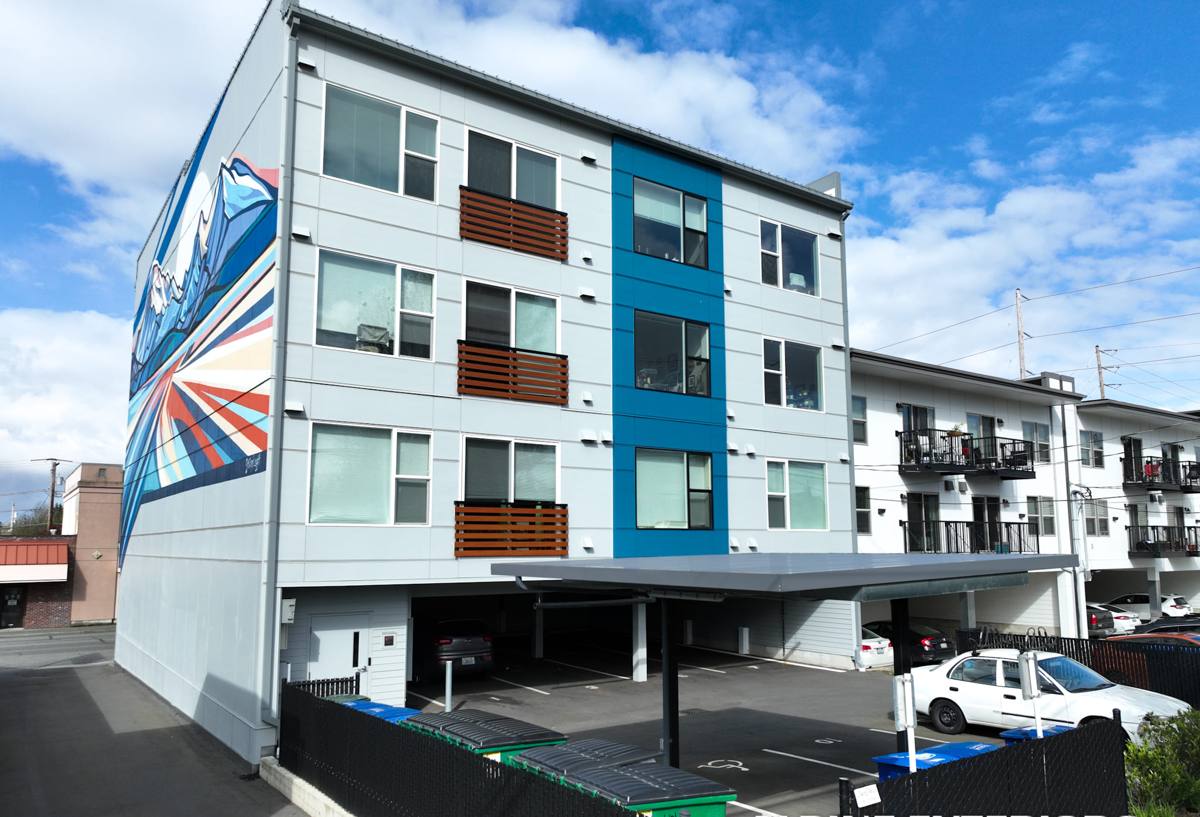
Why Salt Air, Driving Rain, and Moss Season Hit Siding Hard Here
Salt Air
Bellingham's proximity to the water means salt-laden air is a constant, low-level presence, even for homes that aren't right on the shoreline. Salt air accelerates corrosion on fasteners, flashing, and any exposed metal trim, and it can work its way into small cracks in siding finishes faster than plain moisture would on its own. Over years, that speeds up the breakdown of caulk joints and paint films, which is usually where visible siding problems start.
Driving Rain
Whatcom County doesn't just get a lot of rain — it gets a lot of wind-driven rain, especially during fall and winter storms. Driving rain finds its way into joints, seams, and butt ends that would stay dry in a calmer climate. Once water gets behind a piece of siding, it doesn't evaporate quickly here; the air stays damp for long stretches, so trapped moisture has time to do real damage before anything dries out.
Moss Season
Bellingham's moss season runs long — shaded, north-facing, and low-airflow wall sections in neighborhoods like Columbia can stay damp enough to grow moss and algae for much of the year. Moss holds moisture directly against the siding surface, and its root structure can work into hairline cracks and seams, widening them over time. Left alone, that turns small cosmetic staining into actual structural softening underneath.
Signs Your Columbia Home Needs Siding Repair
- Soft, spongy, or bubbling spots when you press on the siding, especially near the bottom courses
- Visible gaps at seams, corners, or where siding meets trim, windows, or doors
- Persistent moss or dark streaking that comes back shortly after cleaning
- Paint or finish that's peeling, chalking, or flaking in patches rather than evenly
- Warping, cupping, or buckling boards, particularly on walls that face prevailing wind and rain
- Rust staining running down from nail heads or metal trim pieces
- Interior clues — a musty smell, peeling interior paint, or a damp patch on an exterior-facing wall
What Happens If It's Ignored
Siding is the first line of defense for the wall assembly behind it — sheathing, framing, insulation. Once water gets past a failed section of siding, it's the sheathing and framing that start absorbing damage, and that's a far more expensive repair than the siding itself. In a climate like Bellingham's, a small gap that would be a minor cosmetic issue somewhere drier can turn into rot within a couple of wet seasons.
What a Correct Siding Repair Actually Involves
A repair that's done right is not just replacing the board that looks bad. It typically includes:
- Removing more than the visibly damaged area — water travels, so the rot or moisture staining often extends past what's visible from outside.
- Inspecting the sheathing and framing underneath once siding is pulled back, before anything new goes on.
- Correcting the water-entry point — a repair that doesn't fix the flashing detail, caulk joint, or drainage gap that let water in will fail again in the same spot.
- Matching materials and reinstalling properly — with correct fastener placement, proper overlap, and clearances that let the wall drain and dry.
- Finishing and sealing to blend with the surrounding siding and protect exposed edges.
Skipping any of these steps is how homeowners end up paying for the same repair twice. A patch that looks fine for a season but doesn't address the underlying moisture path is not a real repair — it's a delay.
Repair or Replace? An Honest Comparison
Not every siding problem calls for full replacement, and we don't push replacement when a repair will genuinely hold. The table below is how we think through that decision on a Columbia home.
| Factor | Repair Likely Makes Sense | Replacement Should Be Considered |
|---|---|---|
| Extent of damage | Isolated to one or two wall sections | Recurring problems across multiple walls |
| Underlying material | Sound siding elsewhere, good remaining life | Siding is aging out or already failing broadly |
| Sheathing/framing | Dry and solid once opened up | Soft, stained, or rotted framing found |
| Moss/moisture pattern | Manageable with cleaning and maintenance | Chronic dampness regardless of upkeep |
| Original installation | Generally correct, one weak spot failed | Systemic installation issues (bad flashing, no drainage plane) |
We'll tell you honestly which category your home falls into. If a repair is the right call, that's what we recommend — not everything needs to turn into a full siding replacement conversation.
Our Process for a Columbia Siding Repair
Because we work regularly in Bellingham neighborhoods with this kind of housing stock, our repair visits follow a consistent process:
- On-site inspection of the damaged area plus a broader check of the wall for related issues nearby
- Opening up the affected section to assess what's happening underneath before quoting anything
- A clear explanation of what caused the failure — not just what we're replacing
- A written scope that separates repair-only work from anything that would be better handled as a partial or full replacement, so you can decide with real information
- Repair work completed with attention to the water-management detail that failed the first time, not just cosmetic patching
Why We Standardize on James Hardie for Replacement Work
When a repair visit turns into a "this section needs to be replaced" conversation, we install James Hardie fiber cement siding — and only that. We don't install vinyl, LP SmartSide, or cedar, and we're upfront about why: in a climate like Whatcom County's, with sustained damp and long moss seasons, the products we've chosen not to install tend to carry higher long-term maintenance burdens, more sensitivity to moisture and installation quality, or shorter practical lifespans under these exact conditions.
James Hardie's fiber cement is non-combustible, holds its factory-applied ColorPlus finish far longer than field-painted alternatives, and Hardie engineers specific product lines (HZ5, for instance) for climates that see the kind of sustained wet weather Bellingham gets. It also carries a strong, transferable warranty — useful if you sell the home before the siding's life is up. None of that means every repair needs to become a Hardie replacement job; it means that when replacement is genuinely the right answer, this is the material we stand behind.
Why a Crew That Already Works in Columbia Matters
Siding repair is a trade where local familiarity actually changes outcomes. A crew that's worked on Columbia homes before recognizes the housing vintages common to the area, understands how the neighborhood's mix of sun exposure and tree cover affects moss growth on different walls, and has already seen how driving rain off the water tends to hit certain wall orientations harder than others. That's not marketing — it's the difference between a repair that guesses at the cause and one that's seen this exact failure pattern on the street over before.
It also means a faster, more accurate first visit. We're not learning Bellingham's climate behavior on your house; we're applying what we already know about how homes in this area age.
Maintaining Your Siding Between Repairs
Whatever siding is on your home right now, a few habits reduce how often repair calls come up:
- Keep gutters clear so water isn't overflowing directly onto wall sections
- Trim back vegetation and tree cover that keeps a wall section shaded and damp
- Clean moss and algae growth before it has a chance to work into seams
- Re-caulk visibly failing joints promptly rather than waiting for a bigger problem
- Have questionable spots looked at during dry stretches, before winter storms test them
If you're seeing any of the warning signs above on a Columbia home, or you'd just like an honest opinion on whether it's a repair or a bigger conversation, we're happy to take a look. Fill out the form below for a free, no-pressure estimate.