 Bellingham Roofing
 Siding Replacement Built for Columbia's Coastal Climate
Homes in Bellingham's Columbia neighborhood sit close enough to Bellingham Bay and the surrounding hills that siding takes a beating most inland houses never see. Salt-laden air off the water, long stretches of driving rain through fall and winter, and a moss season that seems to start earlier every year all work against whatever is nailed to your exterior walls. If your siding was installed more than fifteen or twenty years ago, or if it was never really suited to this climate in the first place, Columbia is exactly the kind of neighborhood where that shows up early.
We work on Columbia homes regularly, and the pattern repeats: paint failing first on the north and west-facing walls, soft spots low on the wall where splashback and moss hold moisture against the surface, and seams that have opened just enough to let water behind the cladding. None of that is bad luck. It is what this climate does to exterior materials over time, and it is the reason siding replacement here has to be treated differently than it would in a drier part of the state.
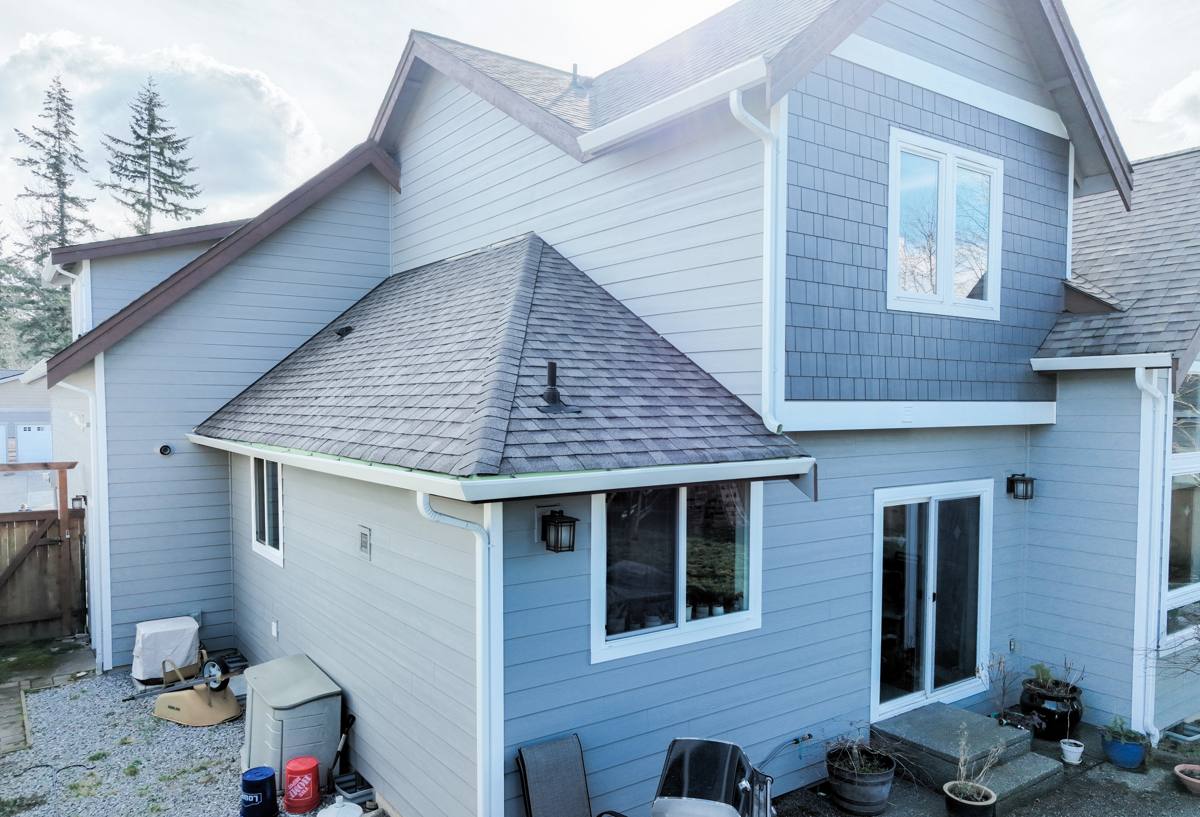
What Salt Air, Rain, and Moss Actually Do to Siding
Whatcom County's marine climate is mild, which is part of why people move here, but "mild" also means "consistently damp." That combination is harder on exterior materials than a hotter, drier climate would be, because siding rarely gets a real chance to fully dry out between wet spells.
Salt Air and Moisture Cycling
Airborne salt from the bay accelerates corrosion on fasteners, flashing, and any exposed metal trim, and it draws moisture out of the air onto exterior surfaces even on days without rain. On siding materials that rely on paint film or a factory coating to keep water out, that constant low-grade dampness shortens the life of the finish and gives moisture more opportunities to find a way behind the board.
Driving Rain and Wind-Driven Wetting
Bellingham doesn't just get rain, it gets rain pushed sideways by wind coming off the water. That matters because it forces water into laps, seams, and butt joints that would stay dry in a straight-down rain. A siding system that isn't detailed for wind-driven rain, or that was installed with tight or caulked joints instead of proper clearances, will eventually let water track behind the cladding at exactly those spots.
Moss, Algae, and Prolonged Dampness
Shaded walls, tree cover, and north-facing exposures around Columbia hold moisture long after the rest of the house has dried. That's where moss and algae take hold first, and once they do, they hold water against the siding surface almost permanently. On wood-based products this feeds rot. On any product, it accelerates coating breakdown and gives mildew a permanent foothold.
Why We Install Only James Hardie Fiber Cement in Columbia
We made a deliberate decision as a company to install James Hardie fiber cement siding exclusively, and nothing else. We don't install vinyl, LP SmartSide, Cemplank, Allura, primed spruce, or cedar. That's not a marketing line, it's a standard we hold ourselves to because of what we see on real Bellingham homes, and Columbia's exposure to salt air and constant moisture is a good example of why.
Fiber cement is non-combustible and dimensionally stable, meaning it doesn't expand, contract, or absorb water the way wood-based or wood-adjacent products can. James Hardie's ColorPlus factory finish is baked on and warranted separately from the substrate, which matters in a climate where field-applied paint gets tested hard by rain and salt air every single winter. Hardie also engineers specific product formulations for climate zones rather than selling one universal board everywhere, which is a meaningful difference in a wet, marine environment like ours. On top of that, Hardie backs the product with a strong, transferable material warranty, which carries real value if you ever sell the home.
None of this means other products can't be installed correctly, or that every home that has vinyl or cedar today is in trouble. It means that when we're the ones putting siding on a Columbia home, we want a product where the climate math works in the homeowner's favor for decades, not just for the first few years.
What a Correct Siding Replacement Job Involves
Siding replacement is not just removing old boards and nailing up new ones. In a climate like ours, most siding failures trace back to what happened underneath the surface, not the surface material itself.
Tear-Off and Sheathing Assessment
Once the old siding is off, the sheathing gets inspected before anything new goes up. This is the point where hidden moisture damage from years of small leaks becomes visible, and it's also the only point where it can be fixed properly. Skipping this step, or covering over soft or damaged sheathing, is one of the most common corners cut in siding work, and it's the one that causes the most expensive problems later.
Moisture Management Behind the Cladding
A weather-resistive barrier goes on correctly lapped and sealed, flashing gets installed at every window, door, and horizontal transition, and drainage is built in so that any water that does get behind the siding has somewhere to go instead of sitting against the wall. This layer matters more in Bellingham's rain than almost anywhere else in the state, because the barrier and flashing are doing real work most of the year, not just during occasional storms.
Installation to Manufacturer Spec
James Hardie publishes specific fastening patterns, clearances, and gap requirements, and those specs exist for a reason: they're what keeps water moving down and out instead of getting trapped. Correct gapping at butt joints, proper clearance above grade and roof lines, and factory-finished cut edges treated where required are all details that separate a job that lasts thirty-plus years from one that starts showing problems in five.
Comparing Siding Options for a Columbia Home
Homeowners in Columbia often ask how the options actually stack up given the local climate. Here's an honest comparison based on how these materials perform in a wet, salt-air environment specifically.
| Material | Moisture Behavior | Maintenance Burden | Typical Lifespan Here |
|---|---|---|---|
| James Hardie fiber cement | Dimensionally stable, factory-sealed finish resists moisture intrusion | Low — occasional wash, no repainting on ColorPlus | 30+ years |
| Vinyl | Doesn't rot, but warps and gaps with temperature swings, allowing water paths | Low, but seams and fasteners need periodic checking | 15–25 years |
| LP SmartSide (engineered wood) | Treated wood strand product, still moisture-sensitive at cut edges and seams | Moderate — edge sealing and paint upkeep matter | 15–25 years with diligent upkeep |
| Cedar | Natural material, absorbs and releases moisture constantly; needs finish upkeep | High — refinishing, sealing, moss and rot monitoring | Varies widely, often 15–20 years without heavy upkeep |
This isn't a claim that the other materials fail outright, it's a reflection of how much upkeep and moisture-management margin each one gives a homeowner in a marine climate. That margin is exactly why we standardized on Hardie.
Our Process, Start to Finish
- Free on-site estimate and visual inspection of current siding condition, including any obvious moisture or rot signs.
- Discussion of Hardie product line, profile, and ColorPlus color options that fit the home and any HOA or neighborhood character considerations.
- Written estimate covering scope, product, and timeline, with no pressure to sign on the spot.
- Tear-off, sheathing inspection, and any necessary repairs before new material goes up.
- Installation of weather-resistive barrier, flashing, and Hardie siding to manufacturer specification.
- Final walkthrough and cleanup, with the site left as clean as we found it.
Why a Crew That Already Works Columbia Matters
Bellingham's neighborhoods aren't all identical, and Columbia's mix of exposure to the water, mature tree cover in places, and a range of home ages means the moisture and moss patterns aren't the same as they'd be a few miles inland. A crew that already works this area knows which walls tend to hold moss longest, where wind-driven rain hits hardest, and what kind of sheathing condition to expect once the old siding comes off, because we've seen it on the house down the street, not just read about it.
That familiarity also means fewer surprises during the job. We're not guessing at how Whatcom County's permitting and inspection process works, and we're not learning the local climate's quirks on your dime. It's the difference between a contractor doing siding replacement in general and one that does it specifically for homes like yours, in this exact setting.
Signs Your Columbia Home Needs Siding Replacement Now
- Paint that's peeling, bubbling, or chalking, especially on north or west-facing walls
- Soft or spongy spots when you press on the siding near the bottom of the wall
- Visible gaps, warping, or buckling at seams and butt joints
- Persistent moss or algae growth that comes back within weeks of cleaning
- Rising interior heating costs or drafts near exterior walls
- Visible rot, staining, or discoloration around windows, doors, or the foundation line
- Siding that's original to a home built more than 20–25 years ago
If you're seeing even one or two of these on a Columbia home, it's worth having it looked at before another wet season adds to the damage.
If you're weighing a siding replacement for a home in Columbia or elsewhere around Bellingham, we're happy to take a look and give you a straight, no-pressure estimate. There's no obligation, just an honest read on where your siding actually stands and what it would take to get it right.