 Bellingham Roofing
 Building a Deck That Can Actually Handle a Cordata Winter
A deck in Cordata doesn't fail the way a deck in a dry climate fails. It doesn't crack from heat or bake apart in the sun. It fails slowly, from the inside out, because of moisture that never fully leaves. Bellingham sits in a marine climate zone, and homes on the north side of the city catch a steady mix of driving rain, salt-tinged air moving in off Bellingham Bay, and long stretches of gray, damp weather where wood surfaces simply don't dry between storms. A deck built without that reality in mind will look fine for a year or two and then start showing problems — soft spots, black staining, moss creeping across boards, fasteners bleeding rust through the finish.
Custom decks done right for this neighborhood aren't just about design and layout. They're about material choices, framing details, and drainage decisions that account for a Whatcom County winter that can run wet for months at a stretch. That's the difference between a deck that needs to be rebuilt in ten years and one that's still solid in thirty.
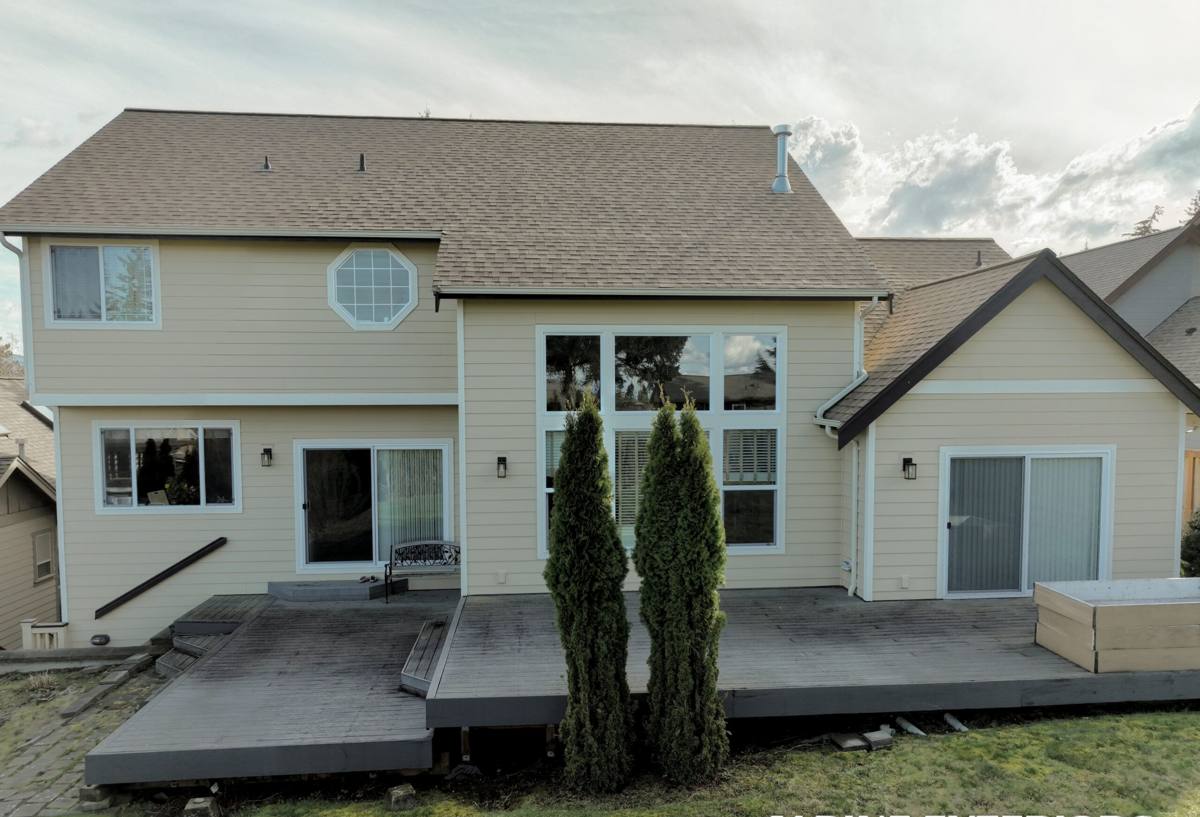
What This Climate Actually Does to an Unsuitable Deck
It helps to understand the specific failure points, because they're predictable and preventable.
- Moss and algae growth on horizontal surfaces that stay shaded or don't get afternoon sun, especially under trees or on the north side of a house — common throughout this part of Bellingham.
- Fastener corrosion from standard hardware that isn't rated for the moisture load, or worse, mismatched metals that trigger galvanic corrosion where they touch pressure-treated lumber.
- Ledger board rot where a deck attaches to the house, if flashing wasn't installed correctly and water gets trapped against the rim joist.
- Trapped moisture in framing from decking boards installed tight together with no gap for airflow, or joists sitting directly on wet ground with no drainage path.
- Salt-influenced finish breakdown on stains and sealers that weren't formulated to handle the combination of UV exposure and airborne moisture common near the bay.
None of these are exotic problems. They're the ordinary result of building a deck the same way you'd build one in a drier part of the country and expecting Bellingham weather to be forgiving. It isn't.
Decking Material Options for Cordata Homes
There's no single "best" decking material — the right choice depends on how much upkeep a homeowner actually wants to do, how the deck is oriented, and how much sun or shade it gets. Here's how the common options hold up in this specific climate.
| Material | Moisture & Moss Resistance | Maintenance | Typical Lifespan Here |
|---|---|---|---|
| Pressure-treated fir/hem-fir | Good if sealed and re-sealed regularly; needs airflow underneath | Annual cleaning and re-staining recommended | 15-20 years with upkeep |
| Cedar | Naturally moisture- and insect-resistant, but still needs sealing to slow graying and moss | Sealing every 1-2 years | 20-25 years with upkeep |
| Capped composite | Excellent — resists moisture absorption and won't rot | Periodic washing to remove surface algae; no staining or sealing | 25-30+ years |
| PVC decking | Best in class for wet climates; non-porous, doesn't feed mold or algae growth as readily | Occasional washing only | 30+ years |
We don't push one material on every job. A shaded, low-sun deck under mature trees is a poor fit for wood if the owner doesn't want to be out there scrubbing moss every spring — composite or PVC earns its higher upfront cost there. A sunnier, more open deck can do well in cedar or treated lumber for a lot less money, as long as it's finished and maintained on schedule. Part of our job is telling you honestly which category your specific site falls into before you spend money on the wrong one.
A note on pressure-treated lumber
Modern pressure-treated lumber uses copper-based preservatives that are more corrosive to standard steel fasteners and connectors than older treatments were. Any hardware touching treated wood on a Cordata deck needs to be rated for that — stainless steel or a heavy-duty coated fastener designed for ACQ-treated lumber. Standard zinc-coated screws will corrode faster in this damp climate than they would somewhere drier, and a rusting fastener is a slow leak point for water into the wood around it.
Framing and Substructure: Where Most Deck Failures Actually Start
The decking boards are what you see and walk on, but the substructure is what determines whether the deck is still safe in twenty years. This is the part that gets skipped or rushed on lower-bid jobs, and it's the part that causes almost every serious deck failure we get called out to inspect.
A properly built deck for this climate includes:
- Correctly flashed ledger board attachment, with flashing that sheds water away from the house rim joist rather than trapping it behind the deck.
- Joist protection — either joist tape or a comparable moisture barrier on the top of every joist, so decking fasteners don't create a direct water entry point into exposed wood.
- Footings set to the depth required by Bellingham and Whatcom County building code for our soil and frost conditions, not just poured to a "usually fine" depth.
- Adequate clearance and drainage slope under the deck so water moving through gaps in the decking has somewhere to go instead of pooling against framing.
- Spacing between deck boards sized for the specific material — wood needs slightly more gap than composite to account for seasonal swelling in a wet climate.
None of this is visible once the deck is finished, which is exactly why it matters. You can't tell from standing on a deck whether the ledger flashing was done right. You find out five years later when the rim joist is soft.
Our Process for a Custom Deck Build
Site Walk and Design
We start at the house, not with a catalog. Sun exposure, drainage patterns, tree cover, grade changes, and how the space will actually be used all shape the design before we talk materials. A deck meant for a shaded corner that gets moss year-round gets designed differently than a south-facing deck that dries out fast.
Permitting
Most custom decks in Bellingham require a building permit, and elevated decks or those attached to the house almost always do. We handle the permit process and build to the code requirements that apply in Bellingham and Whatcom County, including footing depth, guardrail height, and stair geometry — details that get missed on unpermitted work and become a real problem at resale.
Construction
Framing first, with attention to the flashing, hardware, and drainage details above. Then decking, railing, and stairs. We don't cut corners on what's hidden under the finished surface, because that's the part that determines whether this is a twenty-year deck or a five-year deck.
Final Walkthrough and Care Guide
Before we call a job done, we walk it with the homeowner and explain what maintenance the specific materials chosen will actually need — because a composite deck and a cedar deck have very different care requirements, and nobody should find that out by guessing.
Railings, Fasteners, and Hardware That Hold Up in Marine Air
Hardware choice matters as much as decking choice in a climate with salt-influenced moisture in the air. Standard steel fasteners and brackets will show rust streaking on a Cordata deck faster than they would inland or in a drier region. We use stainless steel or coated, corrosion-rated hardware throughout the structural connections, and we're careful about pairing metals correctly so different materials in contact with each other don't accelerate corrosion.
For railings, the tradeoffs are straightforward:
| Railing Type | How It Handles This Climate |
|---|---|
| Wood | Needs the same sealing schedule as wood decking; look for graying and moss on horizontal cap rails first |
| Powder-coated aluminum | Very low maintenance, resists corrosion well, doesn't feed moss growth |
| Cable rail | Stainless cable holds up well, but end fittings and turnbuckles should be marine-grade stainless to avoid corrosion over time |
| Composite/PVC rail systems | Matches low-maintenance decking well; non-porous surface sheds moisture |
Maintenance Checklist for Cordata Deck Owners
Whatever material you choose, a few habits go a long way toward getting the lifespan you're paying for out of a deck in this climate:
- Sweep leaves and debris off the deck surface regularly through fall — trapped organic matter is what feeds moss and algae growth.
- Check and clear gaps between boards each season so water has a clear path through rather than pooling on the surface.
- Wash the deck at least once a year with a deck-safe cleaner to remove the early stages of algae and moss before they get established.
- Re-seal or re-stain wood decking on the schedule appropriate to the product used — don't wait until it's visibly failing.
- Inspect the ledger board area and any visible framing once a year for soft spots, staining, or gaps in flashing.
- Trim back overhanging branches where possible to get more sun and airflow onto shaded sections of the deck.
- Check fasteners and hardware periodically for rust streaking, which is often the first visible sign of a corrosion problem developing underneath.
What Drives the Cost of a Custom Deck in This Area
Every deck is different, but the same handful of factors move the price up or down on most Cordata projects:
| Factor | Why It Matters |
|---|---|
| Size and footprint | More square footage means more material, more footings, and more labor |
| Decking material | Composite and PVC cost more upfront than wood but need far less long-term maintenance |
| Height and stairs | An elevated deck needs deeper footings, additional bracing, and stair construction, all of which add cost |
| Railing style | Cable and glass rail systems run higher than standard wood or aluminum pickets |
| Site access and grade | Sloped lots or limited equipment access can add labor time |
| Permitting complexity | Larger or higher decks typically require more detailed engineering and inspection steps |
We give straightforward, itemized pricing so you can see exactly where the money is going and where you have room to adjust — whether that's scaling back size, choosing a different material tier, or simplifying the railing.
Why Hiring a Crew That Already Works in Cordata Actually Matters
A deck built by someone who's never worked in Whatcom County's climate will often make reasonable-sounding decisions that don't hold up here — standard hardware, tight board spacing, a finish schedule built for a drier region. None of those mistakes show up on day one. They show up in year three or four, as soft framing, streaking hardware, or a deck surface that's green by every March.
Working regularly in and around Bellingham means knowing which decking and hardware combinations actually perform through a wet Northwest winter, understanding the permitting requirements the city and county apply to residential decks, and being familiar with the drainage and soil conditions common to this area. That local pattern recognition is what keeps a custom deck from becoming a recurring maintenance problem.
If you're planning a new deck or replacing one that's showing its age, we're glad to walk the site with you and put together a clear, honest plan — materials, structure, and cost — with no pressure to decide on the spot. Use the form below to request a free estimate.