 Bellingham Roofing
 Cordata sits in north Bellingham, close enough to the water and the marine weather patterns that move through Whatcom County to put real demands on a home's exterior. Siding here isn't just cosmetic — it's the layer standing between your walls and a climate that stays damp for months at a time. When we talk with Cordata homeowners about fiber cement siding, we're not selling a generic product pitch. We're talking about what actually holds up on this stretch of the Salish Sea coastline, year after year, without turning into a maintenance chore.
What Cordata's Climate Does to Exterior Siding
Bellingham's location on Bellingham Bay means Cordata homes deal with a combination of factors that don't all show up together in drier parts of the state. Salt-laden air moves inland off the water and accelerates corrosion on fasteners, trim, and any siding material that isn't built to resist it. Driving rain, pushed sideways by wind off the bay, finds its way into seams, laps, and butt joints that a calmer climate would never test. And Whatcom County's mild, wet winters create a moss and algae season that can run from fall through spring — longer than most siding warranties assume.
Put those three together and you get a simple truth: siding that performs fine in Spokane or Yakima can fail early here. Wood-based products swell and check as they cycle through repeated wet-dry periods. Vinyl can warp under sun exposure and still lets moisture track behind it at the seams. Moss and algae find a foothold on porous or textured surfaces and hold moisture against the substrate long after a rain has passed. Fiber cement, properly installed, resists all three of these failure paths — which is why it's the product we bring to Cordata jobs.
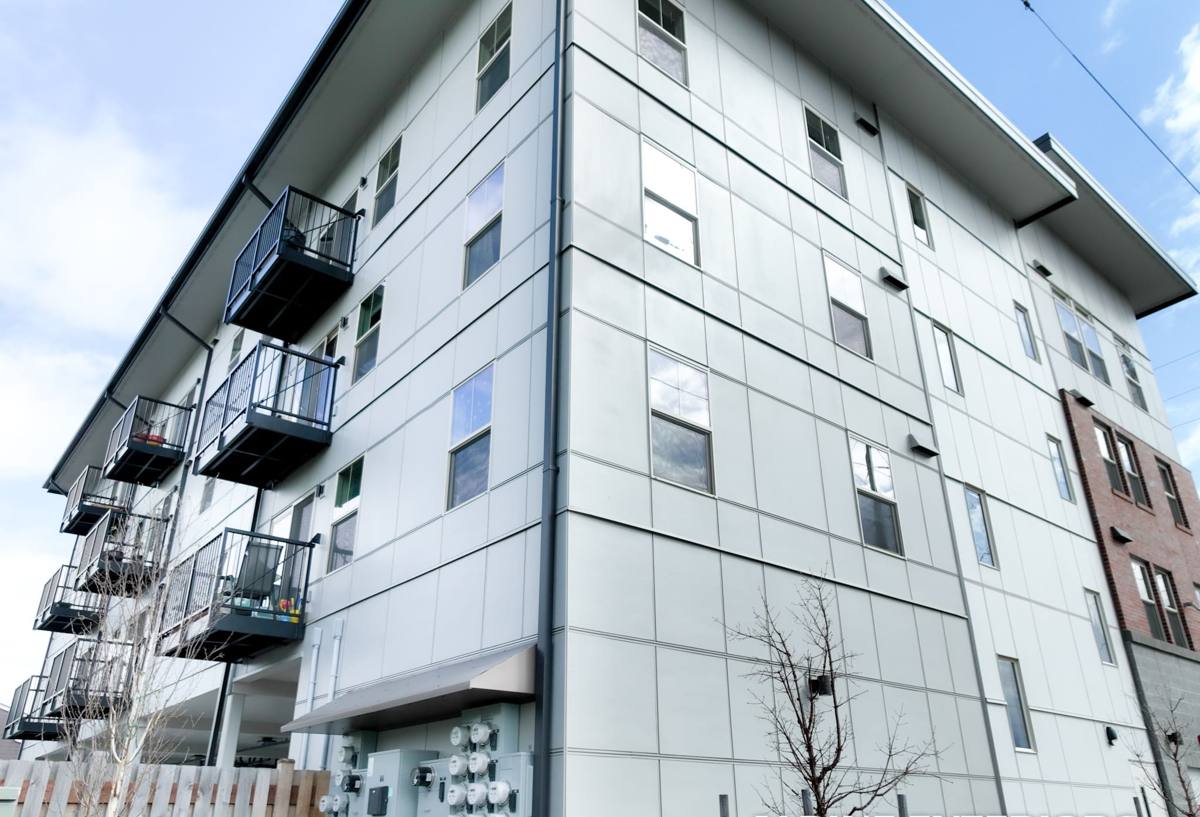
Why We Install James Hardie and Nothing Else
We've made a deliberate choice to install only James Hardie fiber cement siding — not LP SmartSide, not vinyl, not cedar or primed spruce, not off-brand fiber cement. That's not a marketing position; it's a standard we hold because of how these products actually perform once they're on a wall in a climate like this one.
James Hardie's HZ product lines are engineered for specific climate zones, and the HZ5 formulation used in the Pacific Northwest is built around moisture and freeze-thaw resistance rather than a one-size-fits-all mix. The material is non-combustible, which matters more each fire season. The ColorPlus factory finish is baked on under controlled conditions, giving it far better UV and moisture resistance than field-applied paint, and it carries a real transferable finish warranty behind it. When we say "correct installation," we mean installing a product that was actually designed to survive what Cordata throws at it — not fighting a mismatched product with extra caulk and hope.
What This Means in Practice
- No wood substrate to absorb moisture and rot from the inside out
- No vinyl panels to warp, crack, or blow off in a windstorm off the bay
- A factory finish that holds color and resists moss growth better than field paint
- A material rated non-combustible, reducing wildfire ember risk to the structure
- A manufacturer warranty structure that's transferable if you sell the home
What a Correct Fiber Cement Installation Actually Involves
Fiber cement siding is only as good as the installation behind it. Most of the siding failures we get called out to inspect in this region aren't material failures — they're installation shortcuts that let moisture in behind a product that was never designed to handle standing water against its back side. A correct job on a Cordata home includes:
Weather-Resistive Barrier and Flashing
Every wall gets a continuous weather-resistive barrier underneath the siding, with flashing detailed at every window, door, and penetration. Given how much sideways rain this area sees, this layer is doing real work — it's the backup plan if any water gets past the siding face itself.
Proper Clearances
James Hardie's installation instructions specify minimum clearances from grade, roof lines, decks, and other horizontal surfaces. These clearances exist specifically to keep splash-back and standing moisture away from the bottom edge of the siding — the single most common place we see rot start on homes that were sided incorrectly.
Fastening and Joint Treatment
Fasteners need to be corrosion-resistant and set to the manufacturer's specified depth — not overdriven, which cracks the board's edge and creates an entry point for water. Butt joints get flashed or caulked per spec, not just butted together and painted over.
Caulking and Sealant
Caulking is one of the most commonly rushed steps on siding jobs. Every penetration, corner, and trim joint needs the right sealant, applied correctly, or it becomes the weak point that undoes an otherwise solid installation.
Our Process for a Cordata Siding Project
We walk every Cordata siding job through the same sequence, because skipping steps is exactly how the moisture and moss problems we described above end up on a wall five years later.
- On-site assessment — we look at existing siding, wall condition, drainage, and any moss or moisture staining that points to underlying issues before we quote anything.
- Tear-off and substrate check — old siding comes off and we inspect the sheathing underneath for rot or damage that needs to be addressed before new material goes up.
- Weather barrier and flashing — a new continuous barrier goes on with properly lapped and sealed flashing at every opening.
- Hardie installation to spec — boards, panels, or trim installed to James Hardie's published fastening schedules and clearance requirements, not shortcuts.
- Detail work — caulking, trim, and touch-up at cut edges to keep the ColorPlus finish's warranty intact.
- Final walkthrough — we go over the finished job with you before calling it done.
Comparing Siding Options for a Marine Climate
Homeowners in Cordata often ask us to explain, plainly, why the material matters as much as the installation. Here's how the common options stack up against the specific conditions this area produces.
| Factor | James Hardie Fiber Cement | Vinyl | Wood / Primed Spruce |
|---|---|---|---|
| Salt air / corrosion resistance | High — non-metallic, engineered composite | Moderate — panels can chalk and become brittle | Low — fasteners and finish degrade faster near the coast |
| Moisture and moss resistance | High with correct install and ColorPlus finish | Moderate — seams can trap moisture behind panels | Low — porous surface holds moisture, feeds moss/algae |
| Fire rating | Non-combustible | Combustible, can melt/deform near heat sources | Combustible |
| Finish longevity | Factory-cured ColorPlus, long warranty | Color molded in, can fade unevenly over time | Field-applied paint, needs repainting on a cycle |
| Maintenance over 10 years | Occasional wash, minimal repainting | Low, but replacement panels are hard to match once discontinued | Regular painting/staining, moss treatment, rot checks |
None of this means vinyl or wood siding is a bad product in every setting. It means that in a climate that combines salt air, sideways rain, and a long wet season, we've found the trade-offs stack up against them, and we'd rather stand behind one product we trust than install several we have reservations about.
Why It Matters That Your Crew Already Works Cordata
Installation crews that work all over the state tend to apply the same details everywhere, regardless of what the local climate actually calls for. A crew that regularly works Cordata and the surrounding Bellingham neighborhoods already knows which walls take the worst of the wind off the bay, how far moss can creep up a north-facing wall in a wet winter, and where clearance mistakes on past jobs have caused problems down the road. That local pattern recognition shows up in small decisions — an extra flashing detail here, a different clearance call there — that a crew unfamiliar with Whatcom County's weather might not think twice about.
It also matters for accountability. A local crew is easy to reach if a question comes up after the job is done, and stands behind their work in the same community they live and work in.
Signs Your Current Siding May Already Be Struggling
Before you decide whether replacement or repair makes sense, it helps to know what to look for. This is the same checklist we run through during an on-site assessment.
- Persistent moss or algae staining that returns shortly after cleaning
- Soft spots, especially near the bottom courses or below window sills
- Visible gaps or cracking at butt joints and corners
- Paint that's peeling or bubbling rather than just fading
- Warping, bowing, or panels that have pulled away from the wall
- Increased drafts or higher heating bills that suggest a compromised weather barrier
What Fiber Cement Siding Costs to Consider
Every Cordata home is different — square footage, current siding condition, trim complexity, and access all affect the number. Rather than quote a figure that won't hold up house to house, we'll walk your property, look at the substrate and existing conditions, and put together a written estimate that accounts for what your home actually needs, not a generic per-square-foot guess.
If your Cordata home is due for new siding, or you're seeing moss, staining, or soft spots that suggest the current siding is losing the fight against Bellingham's weather, we're happy to take a look. Reach out for a free, no-pressure estimate using the form below — we'll walk the property, answer your questions honestly, and let you know exactly what we'd recommend and why.