 Bellingham Roofing
 Cordata's Climate Is Harder on Siding Than It Looks
Cordata sits in north Bellingham, close enough to Bellingham Bay and the open flats near the airport that the neighborhood catches a steady mix of salt-tinged marine air, driving rain off the Salish Sea, and long stretches of gray, damp weather that can run from October through May. None of that is dramatic on any single day. The damage shows up slowly, over years, as moisture works its way into seams, fasteners, and low-lying trim that never quite gets a chance to fully dry out before the next system rolls through.
Whatcom County's marine climate is mild compared to a lot of the country, which is exactly why siding failures here catch homeowners off guard. There's no hard freeze-thaw cycle tearing things apart and no scorching sun baking materials brittle. Instead, it's a slow, patient kind of wear: constant humidity, wind-driven rain hitting the same wall assemblies year after year, and a moss and algae season that can stretch nearly eight months if siding stays shaded and damp. By the time a homeowner notices a problem, the underlying moisture intrusion has usually been active for a while.
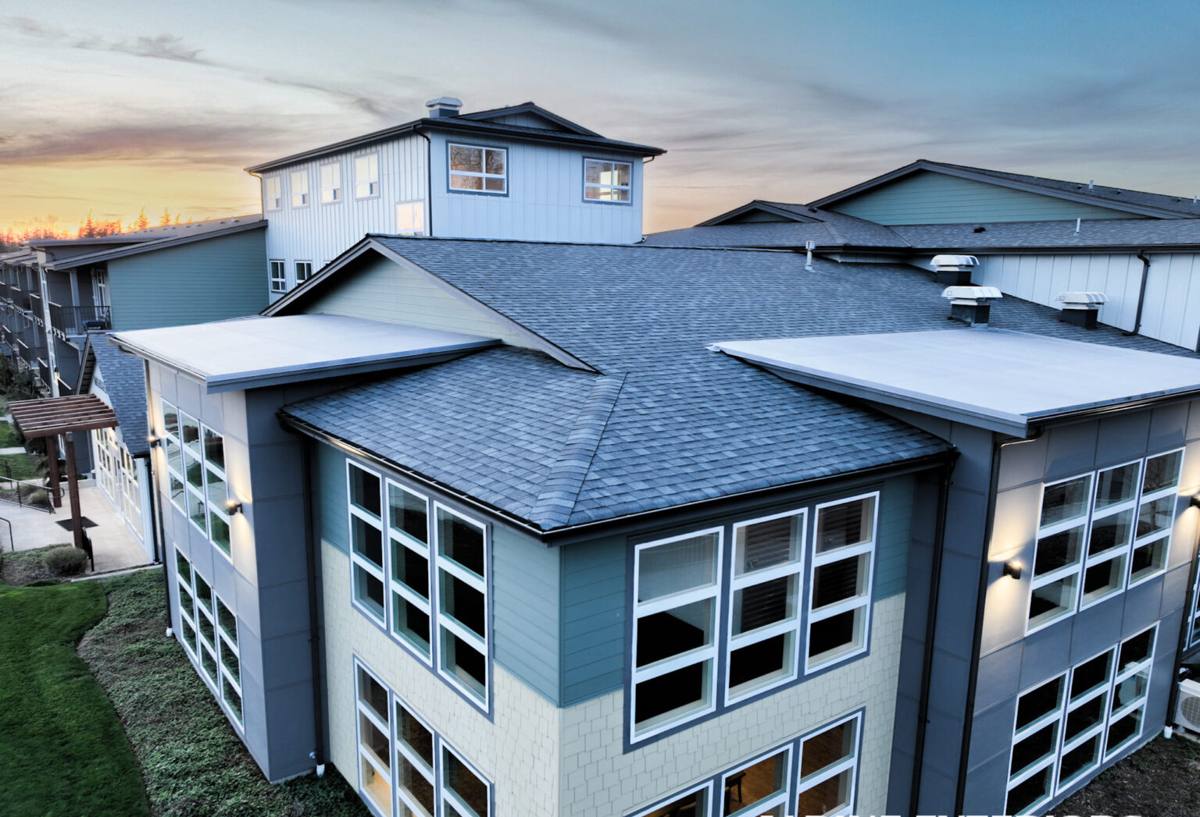
Signs of Siding Damage Common to Cordata Homes
Cordata has a mix of housing stock — newer developments built over the last couple of decades alongside older homes that have been through several rounds of exterior work. Both types show damage patterns that trace directly back to the local climate. The most common issues we get called out for are moisture-related, not cosmetic.
- Soft or spongy spots when you press on siding near the bottom courses or around window and door trim
- Visible gaps, cracking, or bowing at butt joints where two pieces of siding meet
- Persistent black or green streaking that keeps coming back within weeks of cleaning
- Paint that's bubbling, peeling, or failing faster than it should on an exterior wall
- Trim boards that feel damp or show swelling, especially around corners and roof-to-wall transitions
- A musty smell near an exterior wall from the inside of the house, which usually means moisture has already gotten past the siding
- Nail heads popping or streaking with rust stains down the face of the siding
Any one of these on its own might be minor. Several showing up on the same wall, especially a north- or west-facing wall that gets the brunt of Cordata's weather, usually means the water-resistive barrier behind the siding has been compromised and repair needs to happen before the sheathing underneath starts to suffer.
What a Correct Siding Repair Actually Involves
Removing and Inspecting, Not Just Patching Over
A repair done right starts with removing enough siding to see what's actually happening behind it — not just caulking a crack and calling it done. We pull the damaged boards, check the condition of the sheathing, and look at how the flashing and water-resistive barrier are performing at that spot. In our experience working Cordata's older housing stock, damaged siding is often a symptom of a flashing detail that was never installed correctly in the first place, not a defect in the siding material itself.
Checking the Water-Resistive Barrier
If the underlying barrier or house wrap has failed, torn, or was improperly lapped, replacing the siding without fixing that layer just resets the clock on the same failure. We repair or replace the barrier and flashing as part of the job whenever it's compromised, with proper shingle-lap sequencing so water sheds outward instead of tracking behind the wall.
Matching Material and Reinstalling to Spec
For repairs on James Hardie siding, we match the existing profile, exposure, and ColorPlus finish so the repaired section blends in rather than standing out as an obvious patch. Fasteners, joint treatment, and clearances are set to Hardie's installation requirements — including proper gaps at trim and foundation lines — because those details are what keep water from finding its way back in.
Why We Repair Only With James Hardie Fiber Cement
We install and repair James Hardie fiber cement exclusively. We don't install or patch in vinyl, LP SmartSide, Cemplank, Allura, primed spruce, or cedar as part of our own work, and we're upfront about why: those products each carry trade-offs around moisture behavior, maintenance burden, or long-term durability that we've decided aren't worth putting our name behind in a climate like Cordata's. That's not a knock on every homeowner's choice — it's our professional standard.
Wood and engineered-wood products can perform well when maintained aggressively, but they demand a level of ongoing upkeep — sealing cut edges, repainting on a tight schedule, watching for swelling at the bottom courses — that's easy to fall behind on in a wet marine climate. Vinyl handles moisture fine on its own but can warp, crack in cold snaps, and fade unevenly, and it's difficult to patch invisibly once a section is damaged. Hardie's fiber cement is non-combustible, holds its factory ColorPlus finish far longer than field-applied paint, and its HZ5 product line is engineered for exactly the freeze-thaw and moisture exposure profile the Pacific Northwest sees.
| Factor | James Hardie Fiber Cement | Wood / Engineered Wood | Vinyl |
|---|---|---|---|
| Moisture resistance | Engineered for wet climates (HZ5) | Vulnerable at cut edges and joints | Doesn't absorb water, but traps it behind panels |
| Finish longevity | Factory ColorPlus, long fade resistance | Field paint needs frequent recoating | Color molded in, but fades and chalks over time |
| Repair patch visibility | Matches existing profile closely | Grain and paint sheen can mismatch | Discontinued colors are hard to match |
| Fire resistance | Non-combustible | Combustible | Can melt/deform near heat sources |
Repair or Replace? How We Help Cordata Homeowners Decide
Not every damaged section needs a full re-side, and we'll tell you that honestly when it's true. The decision usually comes down to how widespread the moisture intrusion is and how much of the original installation is still sound.
| Factor | Leans Toward Repair | Leans Toward Replacement |
|---|---|---|
| Extent of damage | Isolated to one or two wall sections | Recurring across multiple elevations |
| Sheathing condition | Sound once opened up | Soft, rotted, or delaminating |
| Age of existing siding | Recently installed, still under warranty | Original siding nearing or past expected service life |
| Water-resistive barrier | Intact apart from the repair area | Failing broadly, torn, or improperly installed |
| Material on the wall | Existing Hardie product, easy to match | Discontinued profile or a different product entirely |
We open up the damaged area before quoting anything, because guessing at scope from the outside leads to underbidding a job that turns out to be bigger, or overselling a homeowner on a full replacement they don't actually need yet.
Our Process for a Cordata Repair Call
- Free on-site inspection, including probing suspect areas to check for soft sheathing, not just a visual look from the ground
- Honest assessment of whether the fix is a targeted repair, a section replacement, or something bigger
- Written estimate that spells out material, labor, and what we're checking behind the siding
- Removal of damaged siding and inspection of the flashing and water-resistive barrier underneath
- Repair or replacement of any compromised barrier, sheathing, or flashing before new siding goes back on
- Reinstallation with matched James Hardie material, correct fastening, and proper clearances
- Final walkthrough so you can see exactly what was found and what was fixed
Moss, Mildew, and the Maintenance Window Between Repairs
Whatcom County's long moss season is one of the most underrated stressors on siding. Moss and algae hold moisture directly against the surface, which is exactly the condition fiber cement, paint, and caulking all handle worst over time. Shaded walls, areas under overhanging trees, and north-facing sections in Cordata are the most common spots we see it take hold.
A light annual rinse — low-pressure water and a mild cleaner rather than a pressure washer, which can drive water behind panels and force seams apart — goes a long way toward extending the life of a repair. Keeping gutters clear so water isn't sheeting down a wall, and trimming back vegetation that keeps a wall shaded and damp, are both simple habits that reduce how often repair calls come up in the first place.
Why a Crew That Already Works Cordata Matters
Siding repair is site-specific work. A crew that's spent time on Cordata homes has a feel for which wall orientations take the worst weather, which older subdivisions tend to have particular flashing or barrier details from their original construction, and how the neighborhood's tree cover and lot layouts affect moss and moisture patterns. That familiarity shows up in faster, more accurate diagnosis — knowing where to look first instead of guessing.
It also matters for consistency. When a repair is done to the same standard as a full installation — correct barrier work, correct fastening, correct material — it holds up the same way a new install does, instead of becoming the next spot that fails in a few years. That's the standard we hold every repair to, whether it's one damaged board or an entire wall section.
If you're seeing soft spots, staining, or damage on your Cordata home's siding, we're happy to take a look and give you a straight answer on what it needs. Reach out for a free, no-pressure estimate using the form below.