 Bellingham Roofing
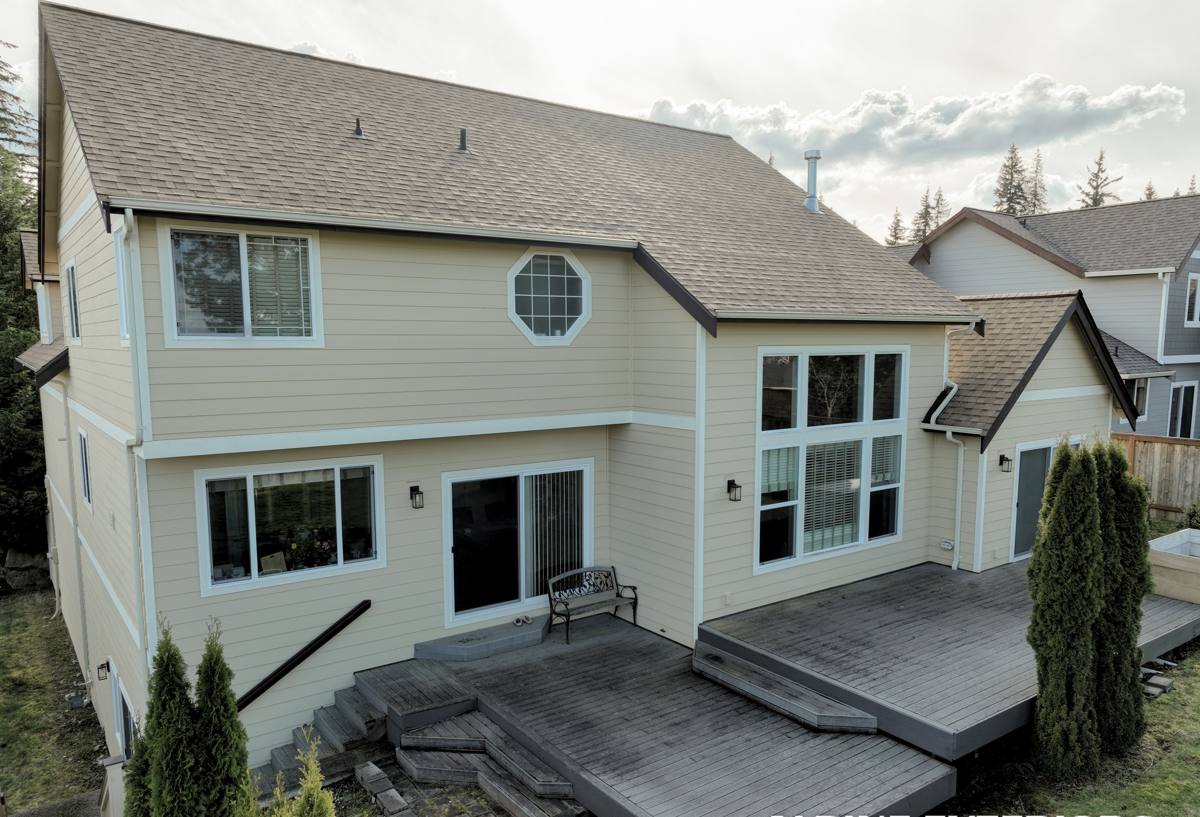
 Building Decks for Edgemoor's Coastal Conditions
Edgemoor sits close to Bellingham Bay, and that proximity to saltwater is the single biggest factor we weigh when we design or repair a deck in this neighborhood. Salt-laden air corrodes fasteners, accelerates the breakdown of unsealed wood fibers, and speeds up the failure of anything metal that isn't rated for coastal exposure. Add in Whatcom County's long wet season, and a deck built without those two conditions in mind will show its age fast — soft spots, rust streaks, cupped boards, and a slick, moss-covered surface by the second or third winter.
None of this means Edgemoor homeowners need to avoid outdoor living space. It means the deck has to be built differently than one going up in a drier inland climate. That's the whole premise of this page: what a correctly built deck looks like for this specific neighborhood, and why the details matter more here than almost anywhere else in Bellingham.
What Salt Air Actually Does to a Deck
Salt air doesn't just sit on the surface — it works into every joint, fastener head, and unsealed cut end. Over time it accelerates corrosion in standard hardware, which is why we don't treat fastener selection as an afterthought on decks this close to the water.
- Standard electro-galvanized screws and nails corrode faster near saltwater, leading to rust streaking and eventual fastener failure
- Aluminum and some lower-grade hardware can pit or degrade when exposed to salt spray over years
- Unsealed cut ends and drilled holes are where moisture and salt find their way into the wood grain fastest
- Metal railings, brackets, and post bases need coatings or materials rated for marine or coastal exposure, not just general exterior use
Our professional standard for coastal-adjacent decks is stainless steel or coated fasteners rated for corrosive environments, and structural hardware built for exterior exposure rather than general framing use. It costs more up front than standard hardware. It's also the difference between a deck that still looks and performs well in ten years and one that's rusting and loosening in three.
Wood Species and Salt Exposure
Not every wood handles coastal air the same way. Some softwoods absorb moisture readily at cut ends and fastener holes, which becomes a bigger issue when that moisture carries salt. Composite and PVC decking sidestep a lot of this because they don't absorb moisture into the fiber the way wood does, though the substructure underneath still needs to be built to the same corrosion-resistant standard regardless of what decking material sits on top.
Moss, Algae, and Bellingham's Long Wet Season
Whatcom County's rainy season stretches long, and a deck in a shaded or partially shaded Edgemoor yard can stay damp for weeks at a stretch. That moisture, combined with organic debris from surrounding trees, is exactly what moss and algae need to take hold. Once established, moss holds moisture against the deck surface, which accelerates rot in wood decking and creates a genuinely dangerous slip hazard on any material.
Design choices matter here more than most homeowners expect:
- Proper board spacing and airflow underneath the deck so surfaces can actually dry out between rain events
- Grooved or textured composite boards that shed water and resist moss better than smooth-face profiles in shaded spots
- Site orientation and any trimming of overhanging branches, where possible, to reduce the shade and leaf litter that feed moss growth
- Ledger and joist flashing detailed to shed water away from the structure rather than trapping it against framing
A deck that's designed with drainage and airflow in mind from the start needs far less scrubbing and pressure washing over its life than one where moss problems get fought after the fact.
Driving Rain and the Structure You Don't See
Bellingham's rain doesn't always fall straight down — wind off the bay pushes it sideways into ledger boards, post bases, and any point where the deck attaches to the house. This is where most serious deck failures actually start, and it's almost never visible until the damage is advanced.
| Failure Point | What Driving Rain Does | Correct Detail |
|---|---|---|
| Ledger board attachment | Wind-driven rain gets forced behind the ledger and into the house rim joist | Proper flashing, moisture barrier, and code-compliant fastening into structural framing |
| Post bases | Standing water at grade level wicks into post bottoms over time | Elevated, non-corrosive post bases that keep wood off wet concrete or soil |
| Beam and joist connections | Water pools in joist hangers if not installed with drainage in mind | Coated or stainless hangers set to allow water to drain rather than collect |
| Stair stringers | Exposed end grain absorbs rain directly | Sealed cut ends and covered or protected stringer design where feasible |
Every one of these details is buried once the deck is finished. That's exactly why they matter — a deck can look great for the first year or two even when the substructure was rushed, and the problems only show up once rot or corrosion has already progressed.
Decking Material Options for Edgemoor Conditions
There's no single "right" material for every project — it depends on budget, how much maintenance a homeowner wants to take on, and how exposed the deck site is to sun, shade, and salt air.
| Material | Coastal/Moss Performance | Maintenance | Trade-offs |
|---|---|---|---|
| Pressure-treated wood | Needs sealing and regular upkeep to resist moisture and moss | Annual cleaning, periodic staining/sealing | Lower upfront cost, shorter service life if maintenance lapses |
| Cedar | Naturally moisture-resistant but still needs sealing near salt air | Regular sealing to maintain color and resistance | Attractive appearance, moderate maintenance |
| Composite decking | Strong resistance to moss staining and moisture absorption | Occasional washing, no sealing or staining | Higher upfront cost, offset by low long-term upkeep |
| PVC decking | Fully moisture-resistant, does not absorb salt or water | Lowest maintenance of the group | Highest material cost, distinct look from natural wood |
We'll walk through these trade-offs honestly based on your specific site — how much shade it gets, how close it is to the water, and how much upkeep you actually want to do — rather than defaulting to whatever's easiest to install.
What a Correctly Built Deck Involves
A deck is only as good as what's underneath it. Getting the visible surface right matters for looks, but the framing, footings, and attachment points determine whether it's still solid in fifteen years.
Footings and Foundation
Footings need to be sized and set to local frost and soil conditions, not just poured to a minimum. Undersized or improperly set footings are one of the more common causes of a deck developing a noticeable bounce or lean over time, especially on the sloped or uneven lots common in parts of Edgemoor.
Framing and Attachment
Ledger attachment to the house, joist spacing rated for the intended load, and beam sizing that accounts for span all need to follow current code — this isn't an area where corners should get cut for the sake of a lower quote.
Permits and Inspection
Most new decks and significant deck rebuilds in Bellingham require a permit and inspection. We handle that process as part of the job rather than leaving it to the homeowner, and we build to pass inspection the first time, not to scrape by.
Our Process for an Edgemoor Deck Project
- On-site assessment — we look at sun/shade exposure, distance and orientation to the water, existing structure (for rebuilds), drainage, and access
- Design and material discussion — honest trade-offs between wood, composite, and PVC based on your budget and how much maintenance you want long-term
- Permit handling — we pull the required permits and schedule inspections so you don't have to navigate that process yourself
- Demolition (for rebuilds) — careful removal of the old structure, checking the ledger and house framing underneath for hidden moisture damage
- Footings and framing — built to current code with corrosion-resistant hardware throughout, not just at visible connection points
- Decking installation — spacing and orientation set for drainage and airflow, not just a straight, tight-fit look
- Final walkthrough — we go over maintenance expectations honestly, based on the material you chose, so there are no surprises the first wet winter
Signs an Existing Edgemoor Deck Needs Attention
If you already have a deck in the neighborhood, a few warning signs are worth acting on before they become structural problems:
- Soft or spongy spots underfoot, especially near the house attachment or stair landing
- Rust staining around fastener heads or visible corrosion on brackets and post bases
- Persistent green or black staining that returns quickly after cleaning
- Gaps opening up between the ledger board and the house siding
- Railings that feel loose or posts that flex more than they used to
- Standing water that doesn't drain within a few hours after rain stops
Catching these early is almost always cheaper than waiting — a rotted ledger or corroded post base found early is a repair; found late, it can mean rebuilding a section of the deck or, in worse cases, addressing damage to the house structure it's attached to.
Why a Crew That Knows Edgemoor Matters
General contractors who don't work this specific area regularly tend to build to a generic standard — code minimums, standard hardware, whatever decking is easiest to source. That approach isn't wrong everywhere, but it under-builds for a neighborhood sitting this close to Bellingham Bay. A crew that already works in Edgemoor knows which hardware grade actually holds up here, how the local soil and slope conditions affect footing depth, and how the shade patterns on bay-adjacent lots drive moss growth differently than a deck built a few miles inland in drier parts of Whatcom County.
That local familiarity shows up in decisions a homeowner might never think to ask about — fastener grade, flashing detail, board spacing for drainage — but it's exactly those decisions that determine whether a deck is still solid and good-looking a decade from now.
If you're planning a new deck or need an honest look at one that's showing its age, we're happy to come out, walk the site, and give you a straightforward, no-pressure estimate using the form below.