 Bellingham Roofing
 Siding Installation for Edgemoor's Waterfront Exposure
Edgemoor sits close to Bellingham Bay, on wooded, often bluff-facing lots that catch weather most inland neighborhoods never see. Homes here deal with a specific combination of stresses: salt-laden air coming off the water, driving rain that hits siding sideways rather than straight down, and long stretches of shade and moisture from mature tree cover that keep exterior walls damp well after a storm has passed. Siding that works fine in a drier, more sheltered part of Whatcom County can fail early here if it wasn't chosen or installed with this exposure in mind.
This page covers what siding installation actually looks like for an Edgemoor home — what the climate demands, what a correct installation involves, and why we've standardized on one product system instead of offering the usual lineup of vinyl, wood, and composite options.
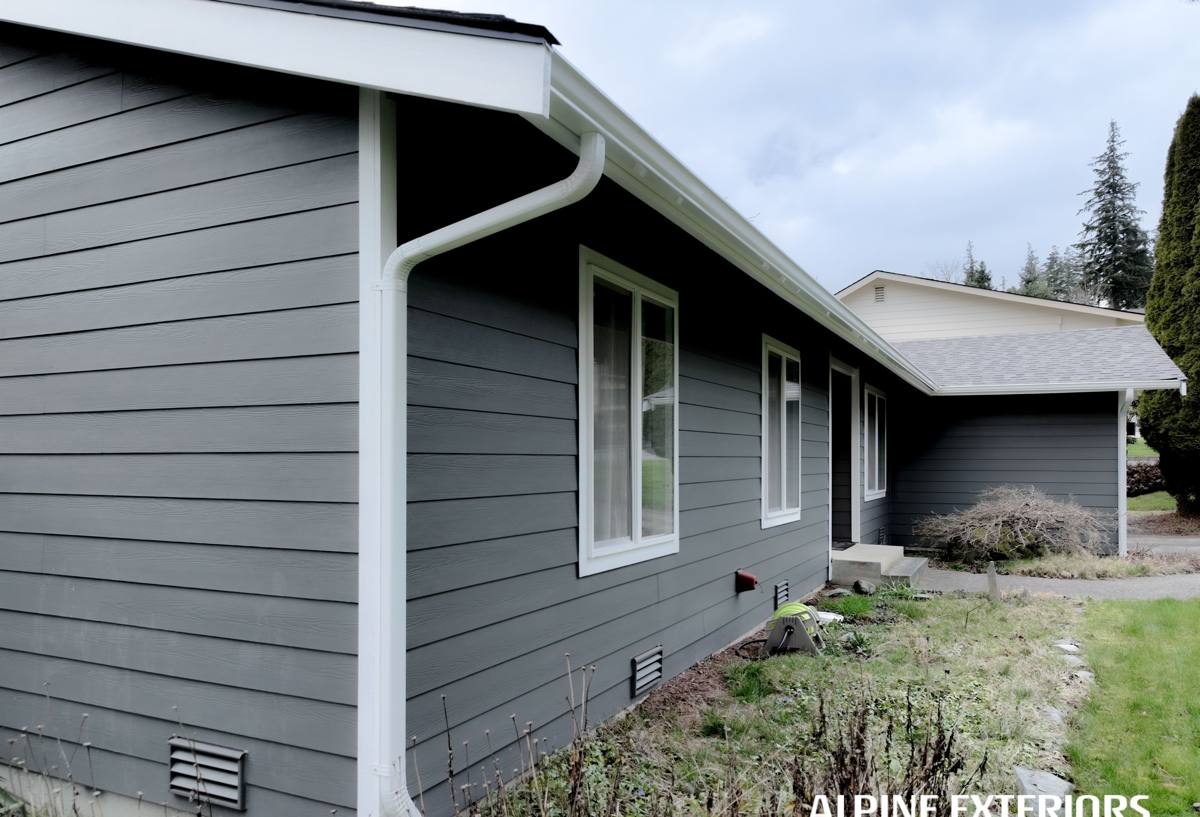
What Edgemoor Homes Are Up Against
Salt Air and Moisture
Proximity to Bellingham Bay means airborne salt settles on exterior surfaces even when there's no obvious storm activity. Over years, that salt exposure accelerates corrosion on fasteners and trim, and it speeds up the breakdown of coatings and caulking that weren't built to handle it. Siding materials and finishes that aren't rated for coastal exposure tend to show fading, chalking, or fastener staining sooner than the same product would inland.
Driving Rain
Bellingham's winter storms don't just fall — wind off the bay pushes rain horizontally into west- and south-facing walls. That means water intrusion risk isn't limited to flat, unprotected surfaces; it's a factor at every seam, joint, and penetration on the exposed sides of the house. Flashing details and water-resistive barriers matter more here than they would on a sheltered inland lot.
Moss and Shade
Edgemoor's tree cover is part of what makes the neighborhood attractive, but it also means many homes get long stretches of shade and slower drying times after rain. That combination — moisture plus shade — is exactly what moss and mildew need to take hold on siding, trim, and fascia. Once organic growth establishes itself on a porous or poorly sealed surface, it holds moisture against the wall and accelerates whatever damage is already underway.
Why We Install Only James Hardie Fiber Cement
We don't offer vinyl, LP SmartSide, primed spruce, cedar, or other fiber cement brands. That's a deliberate standard, not a supply limitation, and it matters more in a neighborhood like Edgemoor than almost anywhere else in Bellingham.
- Non-combustible core: Fiber cement doesn't feed a fire the way wood-based products can, which matters on wooded lots with limited defensible space around the structure.
- Moisture stability: James Hardie's fiber cement doesn't swell, rot, or delaminate the way engineered wood products can when they take on repeated moisture from driving rain and shaded, slow-drying walls.
- Factory-applied ColorPlus finish: The finish is baked on under controlled conditions, which holds up better against salt air and UV than field-applied paint, and it doesn't require the repainting cycle that wood siding does.
- Climate-engineered product lines: Hardie builds region-specific formulations (HZ5 for the Pacific Northwest's wet climate) rather than a single generic product for the whole country.
- Warranty structure: A transferable, manufacturer-backed warranty on both the substrate and the finish gives homeowners real recourse — something that matters most on a coastal lot where materials are working harder.
We're not going to tell you cedar looks bad or that vinyl is worthless — both have honest uses elsewhere. But cedar demands an ongoing maintenance commitment most homeowners underestimate, and vinyl's seams and thermal movement are a poor match for a site that already fights moisture intrusion on multiple fronts. For Edgemoor specifically, fiber cement is the material that holds its finish, resists moisture damage, and doesn't ask you to repaint or reseal every few years just to keep up with the exposure.
What a Correct Installation Involves
Siding is a water-management system, not just a finish layer. On a job with this much weather exposure, the parts nobody sees matter as much as the parts you do.
Water-Resistive Barrier and Flashing
Before a single piece of siding goes up, the wall needs a properly lapped weather-resistive barrier and correctly integrated flashing at every window, door, deck ledger, and penetration. On driving-rain walls, flashing errors are the single most common cause of hidden rot behind otherwise good-looking siding.
Rainscreen Gap
A ventilated gap between the siding and the wall assembly lets moisture that does get past the outer layer drain and dry out instead of sitting against the sheathing. This detail is especially valuable on shaded, slow-drying elevations like the ones common in Edgemoor's tree cover.
Fastening to Manufacturer Spec
James Hardie siding has specific fastener type, spacing, and penetration requirements, and it changes with exposure category. Under-fastening or using the wrong fastener in a salt-air environment invites corrosion staining and loosens the panel's wind and water resistance over time.
Clearances and Grade
Siding needs proper clearance from grade, roof lines, decks, and hardscape so water and splash-back don't sit against the bottom edge. On sloped, wooded lots this sometimes means adjusting trim and starter strip details rather than following a generic layout.
Caulking and Sealant Discipline
Every joint that's supposed to be sealed gets sealed with a product rated for the exposure — and just as important, joints that are supposed to stay open for drainage are left open. Over-caulking a rainscreen assembly traps moisture instead of releasing it.
Our Process, Start to Finish
- On-site assessment: We walk the property, note exposure direction, shade patterns, existing moisture damage, and any tricky access points that come with bluff or wooded lots.
- Scope and estimate: You get a written estimate that spells out product line, color, trim details, and what's included — no vague allowances.
- Tear-off and inspection: Old siding comes off and we inspect the sheathing underneath for rot or existing water damage before anything new goes up. Problems get flagged and addressed, not covered over.
- Weather barrier and flashing: This is the step that determines whether the siding performs for 30 years or 10. We don't rush it.
- Installation: Hardie panels, lap, or shingle siding installed to manufacturer spec, with attention to fastening, clearances, and trim details specific to your home's exposure.
- Final walkthrough: We go over the finished work with you before calling the job done.
Choosing the Right Hardie Product for This Climate
James Hardie's HZ5 formulation is engineered for the Pacific Northwest's wet, temperate climate, which makes it the baseline for anything installed in Edgemoor. Beyond that, the choice between lap siding, shingle-style panels, and vertical board-and-batten is mostly aesthetic and depends on your home's architecture — but color and sheen matter more here than in a drier climate. Darker, matte finishes can show water spotting differently than lighter ColorPlus tones, and we'll talk through how a given color performs against shade, moss growth, and salt residue before you commit to it.
Material Comparison for Edgemoor's Exposure
| Material | Salt Air / Moisture Resistance | Maintenance Burden | Typical Lifespan Here |
|---|---|---|---|
| James Hardie Fiber Cement (HZ5) | Engineered for this exposure; stable finish | Low — occasional wash | 30+ years with correct install |
| Vinyl Siding | Doesn't rot, but seams and fasteners are vulnerable to wind-driven rain | Low, but cracks and fades over time | 15–25 years |
| Cedar / Wood | Absorbs moisture; prone to rot in shaded, damp areas | High — regular sealing/painting | 15–25 years with diligent upkeep |
| LP SmartSide (Engineered Wood) | Vulnerable at cut edges and joints if moisture gets in | Moderate — finish maintenance | 20–30 years, install-sensitive |
These are general patterns, not guarantees — actual performance always comes down to installation quality. That's true of Hardie too, which is why we're as particular about the water-management details as we are about the product itself.
Signs Your Edgemoor Home May Need New Siding
- Soft or spongy spots when you press on the siding, especially near the bottom courses or under windows
- Persistent moss or dark streaking that comes back shortly after cleaning
- Peeling, bubbling, or chalking paint on wood or engineered wood siding
- Visible gaps, warping, or buckling panels, particularly on the sides that take the most wind and rain
- Rising energy bills that suggest the wall assembly isn't insulating or sealing the way it should
- Rust streaks below fasteners or trim, a common early sign in salt-air areas
Why a Crew That Already Works Edgemoor Matters
Edgemoor's wooded, sloped, and sometimes bluff-facing lots come with access challenges that flat, open-lot neighborhoods don't have — narrow driveways, limited staging space, tree protection considerations, and grading that affects scaffolding and material delivery. A crew that's already worked in the area knows how to plan around those constraints instead of discovering them mid-project. Just as important, we've seen firsthand how exposure direction and shade patterns play out on specific streets and elevations near the bay, which shapes real decisions about flashing details, drainage planes, and where extra attention is worth the time.
Bellingham's building department and permitting requirements also apply differently depending on lot conditions, and familiarity with how that process runs locally keeps a project moving instead of stalling on paperwork. None of that replaces a careful, spec-correct installation — but it means fewer surprises and a crew that isn't learning the neighborhood's quirks on your dime.
Get a Free, No-Pressure Estimate
If your Edgemoor home's siding is showing its age, or you're planning ahead before the wet season sets in, we're happy to take a look and walk you through what we'd recommend and why. Fill out the form below for a free estimate — no pressure, no obligation.