 Bellingham Roofing
 Happy Valley Decks Take a Different Kind of Beating
Happy Valley sits close enough to Bellingham Bay that salt-laden air reaches the neighborhood's older homes year-round, and the hillside lots and mature tree canopy that give the area its character also mean more shade, more standing moisture, and a longer moss season than you'd get on an open, sun-exposed lot. That combination is hard on outdoor structures. A deck built to a generic spec, or one that was fine when it went in twenty or thirty years ago, often can't keep up with what Whatcom County's wet-season weather actually does to wood, fasteners, and framing year after year.
Deck replacement in this neighborhood isn't just about swapping old boards for new ones. It's about correcting the parts of the original build that were never matched to this specific climate — inadequate drainage under the decking, ledger connections that trap moisture against the house, or fastener hardware that wasn't rated for a marine-influenced environment. Get those details right and a deck will handle Bellingham's rain and moss season for decades. Get them wrong and you're back to rot and soft spots in half that time.
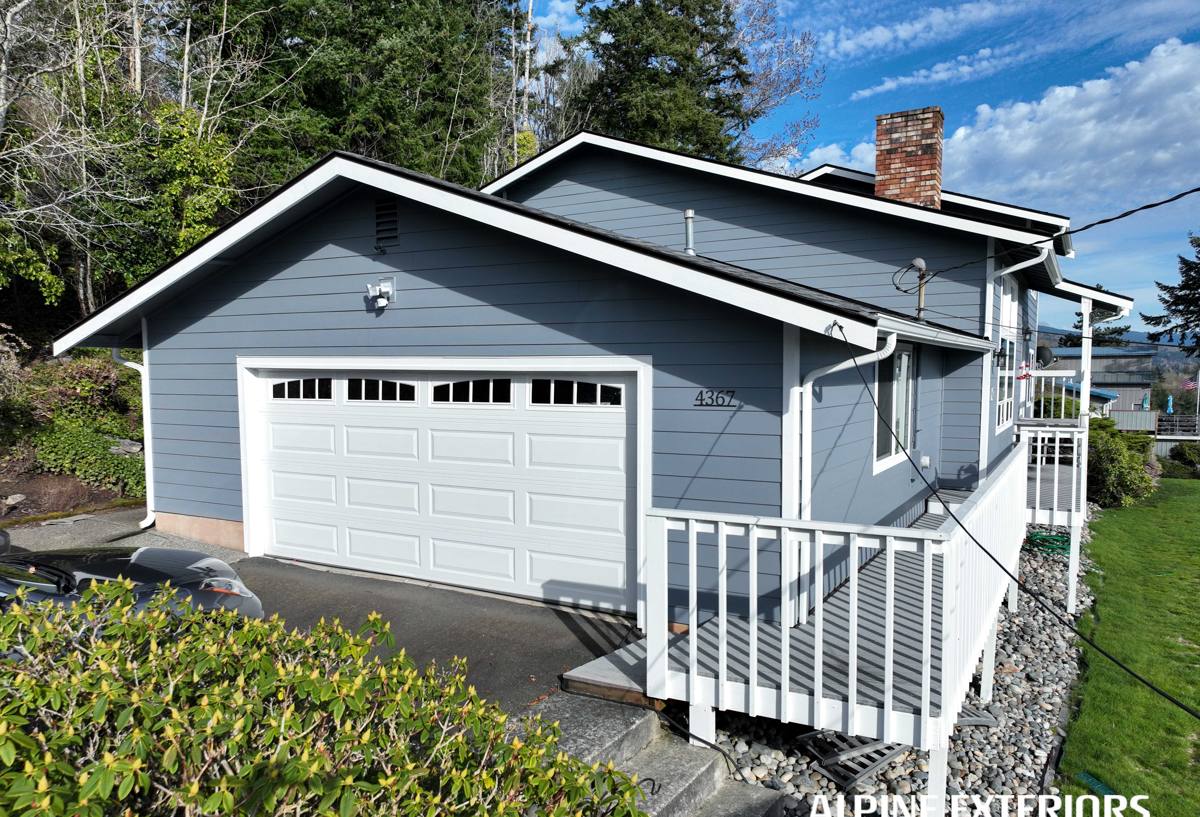
How Salt Air, Rain, and Moss Actually Damage a Deck
Moisture that never fully leaves
Driving rain off the bay doesn't just fall on a deck — it drives sideways into gaps, joints, and end grain. On shaded, tree-covered lots like many in Happy Valley, that moisture doesn't evaporate quickly. Boards stay damp longer between rain events, which is exactly the condition wood decay fungus needs to take hold.
Moss and organic buildup
A long moss season means organic growth on deck surfaces, especially on the north side of the house or under tree cover, isn't a once-a-year nuisance — it's close to constant. Moss holds moisture against the board surface, and left alone it accelerates surface decay and makes boards dangerously slick.
Corrosion of fasteners and hardware
Salt air speeds up corrosion in exposed metal. Nails, screws, joist hangers, and post bases that aren't rated for coastal exposure can weaken well before the visible decking shows any sign of a problem. A deck can look structurally sound on top while the hardware holding it together is failing underneath.
Signs a Happy Valley Deck Needs Replacement, Not Just Repair
- Soft, spongy, or spring-back boards, especially near the house or in shaded areas
- Persistent moss or algae staining that returns within weeks of cleaning
- Visible gaps opening up between the ledger board and the house siding
- Rust streaks running down from screws, nails, or metal connectors
- Railings or posts that feel loose or wobble under hand pressure
- A musty smell coming from underneath the deck or near the ledger
- Multiple past repairs that keep failing in the same general area
One or two of these on their own might mean a targeted repair is enough. Several at once, especially structural signs like soft framing or loose railings, usually means the deck has reached the point where patching costs more over time than a proper replacement.
What a Correct Deck Replacement Actually Involves
Starting below the surface
The decking boards are the last thing installed and the first thing people notice, but the framing underneath is what determines how long a deck lasts. That means checking footing depth and condition, joist spacing and condition, and how well the structure sheds water instead of trapping it.
The ledger connection
Where the deck attaches to the house is the single most common failure point in wet climates. A correct replacement uses proper flashing to direct water away from the house framing rather than letting it channel behind the ledger board — a detail that's invisible once the deck is finished but decides whether the connection stays dry for the next twenty years or rots out in five.
Hardware built for this exposure
Given the salt air in this part of Bellingham, we standardize on corrosion-resistant fasteners and connectors rather than whatever hardware happens to be cheapest at the time. It costs more up front and it's the reason the structure isn't the first thing to fail.
Drainage and airflow underneath
A deck that traps moisture underneath will grow moss and decay faster no matter what surface material sits on top. Grading, ventilation gaps, and keeping vegetation clear of the underside all matter more here than they would on a drier, sunnier lot.
Decking Material Options for a Shaded, Wet Lot
| Material | How it handles moss & moisture | Maintenance | Typical lifespan |
|---|---|---|---|
| Pressure-treated wood | Absorbs moisture; needs sealing to resist moss and rot | Annual cleaning and re-sealing recommended | 10–15 years with upkeep |
| Cedar | Naturally decay-resistant but still absorbs surface moisture | Periodic cleaning and finish maintenance | 15–20 years with upkeep |
| Capped composite | Shrugs off moisture and resists moss staining much better than wood | Occasional washing, no sealing or staining | 25–30 years |
| PVC decking | Fully moisture-resistant surface, least hospitable to moss growth | Occasional washing only | 25–30+ years |
We install all of these materials and won't push a homeowner toward the most expensive option if it isn't the right fit for the project. That said, on shaded, moss-prone lots — which describes a good portion of Happy Valley — capped composite and PVC decking generally hold up with far less ongoing effort than wood, because the surface itself doesn't feed the moisture and organic growth that wood does. The trade-off is a higher material cost upfront in exchange for lower maintenance over the life of the deck. Wood remains a solid choice for homeowners who want a traditional look and are willing to keep up with sealing and cleaning on a schedule.
Our Deck Replacement Process
- On-site evaluation. We look at the existing deck's framing, ledger connection, drainage, and any moss or moisture patterns specific to the lot before recommending replacement over repair.
- Plan and permit. We handle the permitting steps required for the scope of work, including any inspections tied to structural or ledger changes.
- Demolition and disposal. Full removal of the old structure, checking the ledger area and any framing behind it for hidden moisture damage before rebuilding.
- Framing and flashing. New footings, joists, and ledger flashing built to handle sustained wet-season exposure, not just pass a one-time inspection.
- Decking and railings. Installation of the surface material and railing system selected for the project, with attention to gaps and airflow underneath.
- Final walkthrough. We go over the finished deck together, including what routine maintenance the specific material and site conditions will actually require.
Permits and Local Code Considerations
Deck replacement in Bellingham typically involves permitting through the City of Bellingham for in-city properties, or Whatcom County for properties outside city limits, depending on where in or around Happy Valley the home sits. Requirements commonly touch on guardrail height, stair geometry, ledger attachment methods, and setback distances from property lines. We handle this coordination as part of the job so homeowners aren't left tracking down permit steps themselves, and so the finished deck is inspected and documented correctly rather than becoming a problem at resale.
Keeping a New Deck Ahead of Moss Season
- Sweep leaves and debris off the deck surface regularly, especially under tree cover
- Clean visible moss or algae promptly rather than letting it establish and spread
- Keep gutters and downspouts clear so roof runoff isn't dumping onto or near the deck
- Trim back vegetation that's shading the deck surface or blocking airflow underneath
- Check the ledger area at the house connection once a year for any signs of moisture
- Reseal wood decking on the schedule appropriate to the product, not just when it looks worn
- Address loose boards or hardware early instead of waiting for a bigger repair
Why a Crew That Already Works Happy Valley Makes a Difference
A deck built by a crew unfamiliar with this specific microclimate can look fine on completion day and still be set up to fail early — the wrong hardware, a ledger flashing detail that doesn't account for how hard the rain drives sideways here, or a decking material that wasn't matched to how much shade and moss the lot actually gets. Working regularly in Happy Valley and the surrounding Bellingham area means we've seen which details hold up under these exact conditions and which ones don't, and we build to that standard by default rather than figuring it out after something fails.
It also means straightforward answers grounded in what we've actually seen work in this neighborhood, not a generic national playbook applied to a coastal Pacific Northwest lot.
If your deck is showing soft spots, persistent moss, or loose railings, or you're simply ready to replace an aging deck the right way for this climate, we're happy to take a look and walk you through what we find. Use the form below to request a free, no-pressure estimate.