 Bellingham Roofing
 Building a Deck That Can Actually Handle Puget's Weather
Puget sits close enough to the water that salt air is part of daily life, and close enough to the foothills that rain rolls through steadily for months at a time. A deck built here isn't just an outdoor living space — it's a structure that has to shed water fast, resist corrosion, and stay usable through a moss season that can stretch from late fall well into spring. A deck design that works fine in a drier inland town will often show problems within a few years out here: soft spots, black streaking, corroded fasteners, and boards that stay slick long after the rain has stopped.
We build decks for Whatcom County homeowners, and the jobs we do in Puget specifically get planned around three things: constant moisture, salt-laden air off the water, and shade from mature trees that keeps surfaces damp longer than homeowners expect. None of that means you can't have a great deck here — it means the details matter more than they would somewhere drier.
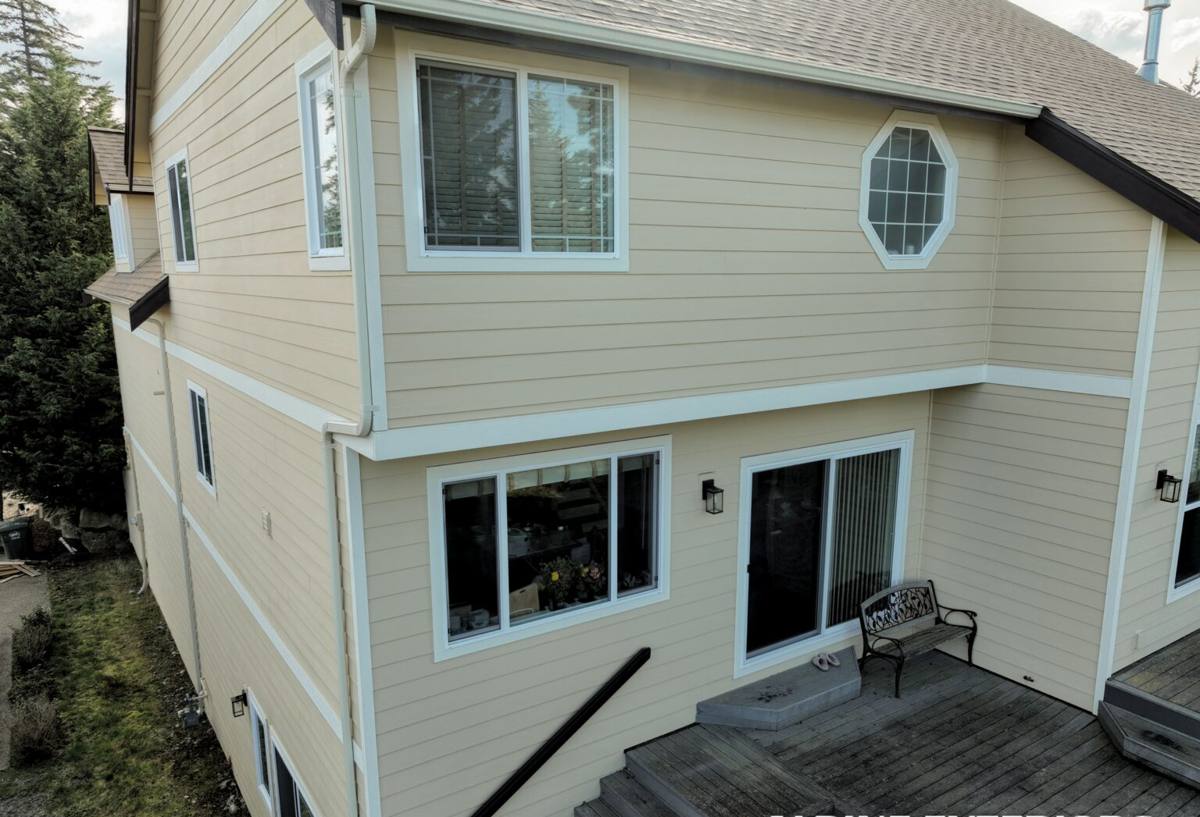
Why Salt Air and Driving Rain Change the Build
Salt Air and Metal Fasteners
Salt-laden air accelerates corrosion on any exposed metal — nails, screws, brackets, and joist hangers included. A deck built with standard hardware can start showing rust streaks and weakened connections well before the wood itself is a problem. We spec hardware rated for coastal or marine-grade exposure on Puget projects, not because it's required everywhere in Bellingham, but because it's the right call this close to the water.
Driving Rain and Water Management
Rain here doesn't just fall straight down — wind-driven rain gets pushed sideways into ledger connections, under flashing, and into any gap in the decking that isn't properly spaced. A deck that isn't detailed for lateral water movement will trap moisture where you can't see it, right at the house connection, which is the single most common place we find rot when we're called out to inspect an older deck.
Moss and Prolonged Dampness
Whatcom County's long, cool, wet stretches are exactly what moss needs to take hold. On decks, moss doesn't just look bad — it holds moisture against the surface, makes boards slippery, and on wood decking it can work its way into grain and fastener holes and speed up decay. Shaded portions of a deck, north-facing sides, and areas under overhangs are the spots that need the most thought in the design.
What a Correctly Built Deck Needs in This Climate
| Component | Why It Matters Here |
|---|---|
| Ledger flashing | Stops wind-driven rain from getting behind the ledger board and into the house rim joist — the most common failure point on older decks |
| Corrosion-resistant fasteners | Salt air corrodes standard hardware faster than inland conditions; structural connections need to stay sound for decades, not years |
| Proper board spacing and airflow | Lets water drain and surfaces dry between rain events instead of staying damp and growing moss |
| Footings sized and set below frost/water table concerns | Saturated soil common in wetter months needs footings that won't shift or heave |
| Joist tape or protective barrier on framing | Reduces the rate at which framing lumber absorbs moisture through fastener penetrations |
Decking Material Options for Puget Conditions
There's no single "best" decking material — it's a trade-off between upfront cost, maintenance commitment, and how the material behaves in sustained moisture and shade. Here's how the common options actually perform in this climate specifically.
| Material | Moss/Moisture Behavior | Maintenance |
|---|---|---|
| Pressure-treated wood | Resists rot with proper sealing, but needs regular cleaning to keep moss from taking hold in shaded spots | Annual cleaning and periodic re-sealing |
| Cedar | Naturally more rot-resistant and handles moisture well, but still needs upkeep to prevent surface staining and moss | Regular cleaning, occasional oiling |
| Composite decking | Doesn't absorb moisture the way wood does, which limits rot risk, but can still develop surface growth in constantly shaded, damp areas if not cleaned | Periodic washing; no sealing needed |
| PVC/capped decking | Best resistance to moisture absorption and surface growth of the common options; still benefits from occasional cleaning | Lowest ongoing maintenance |
For a shaded Puget lot, we'll often steer the conversation toward composite or capped boards if low maintenance is the priority, or toward cedar if the homeowner wants a natural wood look and is willing to keep up with cleaning. Either can work — the honest trade-off is maintenance time versus upfront material cost, and we'll walk through both with real numbers for your specific site.
A Note on Product Choices
We don't push one brand over another based on marketing. Our material recommendations come from how a product performs against moisture, how forgiving it is during installation in wet weather, and what the warranty actually covers versus what it excludes. If we steer you away from a particular product for your site, it's because of how it handles sustained shade and dampness — not because of any claim about the manufacturer.
Structural Details That Matter Most on Puget Lots
The Ledger Connection
Where the deck attaches to the house is the highest-risk spot for water intrusion. Correct flashing — installed in the right order relative to the house's siding or water-resistive barrier — is what keeps driving rain from tracking behind the ledger and into framing that's expensive to repair once it rots.
Footings and Post Bases
Wet Whatcom County soil, especially on lots with poor drainage or heavy shade, needs footings sized correctly and post bases that keep the post end grain off standing water. We check drainage on-site before finalizing footing placement rather than assuming a standard layout will work.
Joist Protection
A strip of protective tape or barrier over joists before decking goes down keeps water from wicking into the top of the framing lumber through every screw hole. It's a small add during framing and a meaningful difference in how long the structure underneath the decking lasts.
Reducing Moss Without Turning Maintenance Into a Chore
You can't eliminate moss risk entirely on a shaded Puget lot, but good design choices cut down how often you have to deal with it:
- Board spacing sized for drainage rather than a tighter, purely visual gap
- Decking orientation that lets the prevailing rain and wind help dry the surface
- Railing and skirting details that don't trap debris and standing leaves against the decking
- Material choice matched to how much shade the specific deck area gets, not a one-size answer for the whole structure
- Planning for trim-back of overhanging branches where trees are contributing to constant shade
Our Process for Puget Deck Projects
We keep the process straightforward and specific to your site:
- Site visit — we look at drainage, sun/shade exposure, existing structure if there's a deck to replace, and how the new deck will tie into the house
- Design and material discussion — honest trade-offs on decking material, layout, and railing options based on what your specific lot needs
- Permitting — we handle the permit process for the build so you don't have to chase it down
- Framing and flashing — ledger, footings, and joist protection done to hold up against this climate, not just to pass a quick inspection
- Decking, railing, and finish work — installed with the spacing and detailing that supports drainage and airflow
- Final walkthrough — we go over care and maintenance specific to the material you chose
Simple Maintenance That Extends the Life of Your Deck
- Sweep off leaves and debris regularly, especially in shaded corners where they trap moisture
- Clean the surface at least once a year to knock back early moss and algae before it establishes
- Check the ledger flashing and railing connections annually for any sign of water staining or loosening
- Re-seal or re-oil wood decking on the schedule the product calls for — skipping years is what leads to premature failure
- Keep gutters and downspouts near the deck clear so runoff isn't dumping extra water onto or under the structure
Why a Crew That Already Works Puget Makes a Difference
A contractor who builds decks across a wide range of climates might not think twice about ledger flashing sequencing or fastener grade — details that are optional in a dry climate but not optional here. We work Puget and the surrounding Bellingham area regularly, so we already know which lots drain poorly, which areas hold shade longest, and what actually causes call-backs on decks in this specific stretch of Whatcom County. That's the difference between a deck that looks good for a season and one that's still solid a decade from now.
If you're planning a new deck or replacing one that's showing its age, we're happy to come take a look and give you a straightforward, no-pressure estimate — just fill out the form below.