 Bellingham Roofing
 Why Metal Roofing Performs Differently on Puget Homes
Homes in the Puget area sit close to the water, and that changes what a roof has to deal with year-round. Bellingham and the rest of Whatcom County get a steady mix of salt-laden air off the Sound, driving rain that comes in sideways more often than straight down, and a moss season that can run eight months or longer in a shaded, moisture-heavy yard. A roof here isn't just shedding water — it's fighting corrosion, holding up under wind-driven moisture, and resisting organic growth that never fully dries out.
Metal roofing can be an excellent fit for that environment, but only when the system, the coatings, and the installation details are matched to marine conditions. A metal roof installed the same way you'd install one in a dry inland climate will show problems in Puget within a few years — fastener corrosion, coating breakdown at cut edges, and moss holding moisture against seams. We approach every Puget metal roof as a marine-climate installation first and a metal roof second.
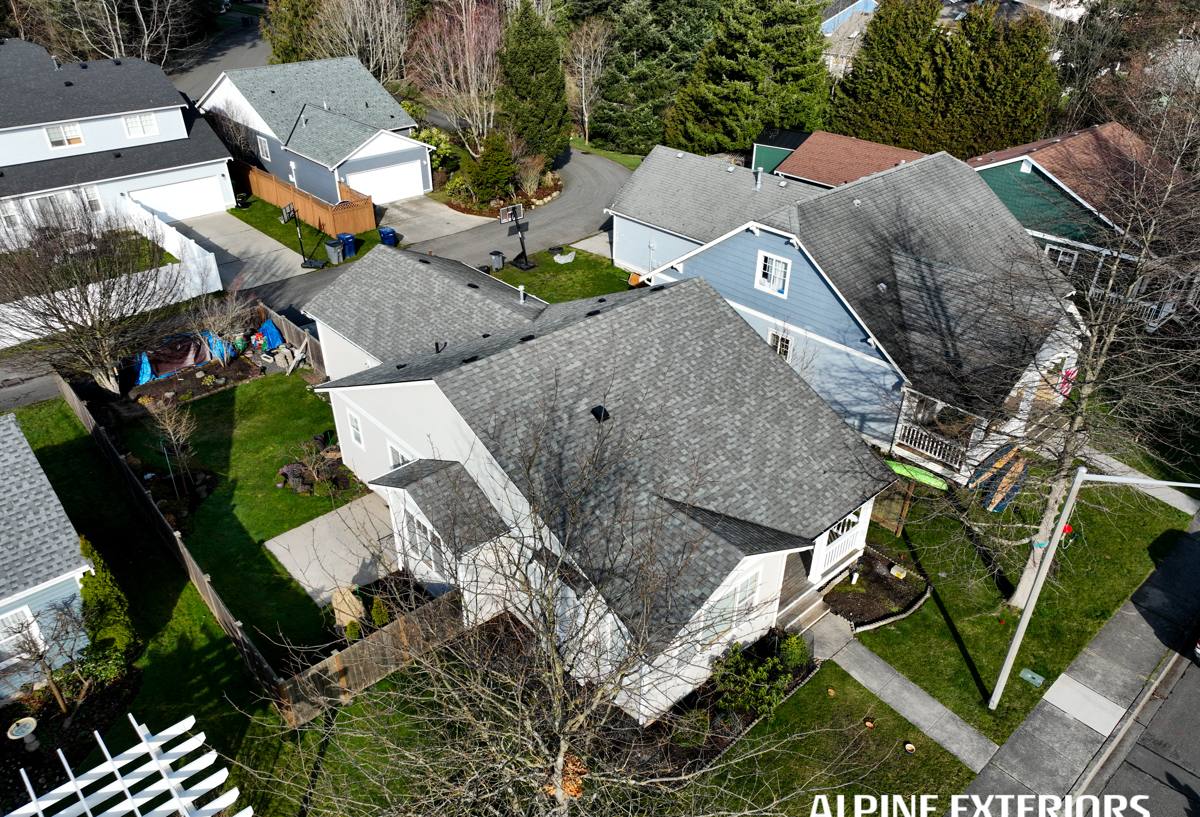
What Salt Air and Constant Moisture Actually Do to a Roof
Salt air isn't just an inconvenience — it's chemically corrosive to unprotected metal, and it accelerates the breakdown of fasteners, flashing, and cut panel edges faster than it affects the broad face of a coated panel. Combine that with rain that doesn't let a roof dry out for days at a stretch, and you get a specific failure pattern in this area:
- Fasteners and exposed screws corroding well before the panels themselves show wear
- Cut edges and field-fabricated flashing rusting from the inside of the coating out
- Moss and algae holding moisture against seams and valleys long after the rest of the roof has dried
- Underlayment breaking down under panels that trap condensation in a humid, rarely-dry climate
- Dissimilar-metal contact (the wrong flashing or fastener alloy against a panel) causing galvanic corrosion at the contact point
None of this means metal roofing is a poor choice for Puget — it usually means the opposite, since a correctly specified metal system resists most of this far better than composition shingles do. It does mean the product selection and the installation details matter more here than in drier parts of the state.
Choosing a Metal Roofing System for This Climate
Not every metal roofing product is built the same, and the differences matter most in a salt-air, high-rainfall environment. We typically steer Puget homeowners toward standing seam panels with a marine-grade coating system, concealed fasteners, and factory-applied finishes rather than field-painted or exposed-fastener alternatives, for reasons that come down to long-term maintenance rather than upfront cost.
Panel and Coating Considerations
The base metal (steel or aluminum) and the coating system on top of it both affect how a roof holds up near salt water. Aluminum doesn't rust the way steel can, which makes it a strong option close to the Sound, while properly coated steel can perform well too if the coating and cut-edge treatment are handled correctly. The finish system — the paint and protective layers over the base metal — is what actually stands between the metal and years of salt-laden rain, so it's worth more attention than panel color or profile.
| System Type | Fastener Style | Typical Fit for Puget |
|---|---|---|
| Standing seam, concealed fastener | Hidden clips, no exposed screws on the field | Preferred — fewest long-term corrosion points, cleanest water shedding |
| Exposed-fastener panel (screw-down) | Gasketed screws through the panel face | Usable on secondary structures, but every screw is a future maintenance point in this climate |
| Aluminum panels | Concealed or exposed depending on profile | Strong choice close to salt air — won't rust, though it dents more easily than steel |
| Coated steel panels | Concealed preferred | Good option with a marine-rated coating and properly sealed cut edges |
Why We're Selective About What We Install
We don't install every metal roofing product on the market for Puget homes, and that's a deliberate call rather than a limitation. Lower-tier coating systems and exposed-fastener panels can work fine in drier regions, but in a salt-air, high-moisture climate they shift the maintenance burden onto the homeowner years earlier than a properly specified system would. We'd rather walk a homeowner through why a particular product isn't a good fit here than install something that looks fine on day one and causes callbacks in year five.
The Flashing and Fastening Details That Actually Prevent Leaks
On a metal roof, the panels themselves rarely fail first — the details around them do. Valleys, penetrations, wall transitions, and eave edges are where water finds its way in, and in a climate with this much sustained rain, those details need to be right the first time.
What a Correct Installation Includes
- Fasteners and clips matched in alloy to the panel metal, to avoid galvanic corrosion between dissimilar metals
- Cut panel edges sealed or coated rather than left exposed to salt air
- Closed or foam-filled ridge and eave details that block wind-driven rain without trapping condensation
- Properly lapped and sealed valley flashing, since valleys carry the highest water volume during heavy Whatcom County rain events
- Underlayment rated for the temperature swings and moisture exposure a metal roof sees in this climate, not a generic felt product
- Penetration flashing (vents, chimneys, skylights) sealed with boots and materials rated for long-term UV and moisture exposure
Skipping or shortcutting any one of these doesn't usually cause an immediate leak — it causes a leak in year three or four, after the sealant or the underlayment gives out. That's the trap with fast, cheap metal roof installs: the failure shows up long after the crew is gone.
Moss, Algae, and the Puget Wet Season
A long, damp season with limited direct sun in shaded yards creates ideal conditions for moss and algae growth, and metal roofing responds to that differently than shingles do. Metal doesn't give moss the same foothold that the rough surface of a shingle does, which is one of the real advantages of switching materials — but moss can still take hold in valleys, at panel seams, and anywhere debris collects and holds moisture against the surface.
The panel profile and how the roof sheds water both affect how much moss pressure a Puget roof deals with. A steeper pitch and a smooth standing seam profile shed water and debris faster than a low-slope, screw-down panel with more surface interruptions. Where the roof geometry allows it, we factor moss and debris shedding into the panel and profile recommendation, not just the finished appearance.
How Our Process Works for a Puget Metal Roof
Every metal roof we install in this area follows the same sequence, adjusted for the specific house and its exposure to wind and salt air:
- On-site assessment — we look at pitch, exposure to prevailing wind and rain direction, existing moss or moisture damage, and how close the home sits to open water or heavy tree cover
- System recommendation — panel type, metal, coating, and fastener plan based on that exposure, not a one-size answer for every Puget property
- Tear-off and deck inspection — checking the roof deck for moisture damage before anything new goes down, since covering a compromised deck defeats the purpose of a durable roof
- Underlayment and flashing installation — the layer most homeowners never see, and the layer that determines whether the roof stays dry for decades or leaks in a few years
- Panel installation — proper seaming, fastening, and edge treatment matched to the coating system
- Final walk-through — reviewing the completed roof with the homeowner, including what routine maintenance will look like going forward
Maintenance a Metal Roof Still Needs in This Climate
Metal roofing needs far less maintenance than shingles, but "low maintenance" isn't "no maintenance" in a salt-air, high-rainfall area. A short annual routine catches most problems before they become expensive ones.
- Clear debris and organic buildup from valleys and around penetrations before the wet season sets in
- Check for moss or algae starting in shaded valleys and low-sun areas, and remove it before it holds moisture against seams
- Inspect exposed fasteners (if the system has any) for early corrosion signs
- Confirm gutters and downspouts are clear, since overflow during heavy rain events pushes water back up under eave flashing
- Look for any coating damage from fallen branches or foot traffic, and touch up before bare metal is exposed to salt air
What Metal Roofing Costs Depend On in Puget
Cost for a metal roof in this area is driven less by square footage alone and more by the system and details a marine climate requires. Broadly, homeowners should expect metal roofing to sit meaningfully above composition shingles in upfront cost, with the range depending heavily on the factors below.
| Factor | Why It Moves the Price |
|---|---|
| Panel and coating system | Marine-grade coatings and concealed-fastener systems cost more than base steel or exposed-fastener panels |
| Roof complexity | Valleys, dormers, and multiple planes require more flashing labor and material |
| Tear-off condition | Deck repair from prior moisture damage adds cost that's only visible once the old roofing is off |
| Panel profile | Standing seam generally costs more installed than screw-down panels, but requires less long-term upkeep |
| Access and pitch | Steeper or harder-to-access roofs take longer to work safely and correctly |
We'd rather walk a homeowner through these factors on-site than quote a number without seeing the roof, since the same square footage can price very differently depending on what the tear-off reveals and what system actually fits the exposure.
Why Hiring a Crew That Already Works in Puget Matters
A metal roof installed by a crew unfamiliar with marine climate conditions can still look correct on the day it's finished — the failures that come from wrong fastener alloys, unsealed cut edges, or underlayment not rated for sustained moisture don't show up until years later. Working regularly on homes exposed to Puget Sound's salt air and Whatcom County's rainfall means we're specifying and installing to conditions we see repeatedly, not guessing at what a "coastal" climate requires from a general playbook.
That local pattern recognition also shows up in smaller decisions — which valleys on a given roof geometry tend to collect debris, which orientations catch the most driving rain, where moss tends to establish first. Those details come from doing this work in this specific climate, not from a manufacturer's install guide alone.
If you're weighing metal roofing for a home in the Puget area, we're happy to walk the roof with you and talk through what actually fits your home's exposure — no pressure, no obligation. Use the form below to request a free estimate.