 Bellingham Roofing
 Fairhaven's Roofs Work Harder Than Most
Fairhaven sits close to Bellingham Bay, on hilly, tree-shaded streets that make it one of the most distinctive neighborhoods in Whatcom County — and one of the toughest on a roof. Homes here take on a combination of stresses that inland Bellingham properties don't deal with in the same way: salt-laden air off the water, driving rain that comes in sideways during winter storms, and heavy tree cover that keeps roof surfaces damp and shaded for long stretches of the year. Add in a housing stock that skews older, with a mix of original framing and multiple past re-roofs, and you get a neighborhood where roof problems tend to show up earlier and progress faster than a homeowner might expect.
None of this means a roof in Fairhaven is doomed to fail young. It means the replacement has to be specified and installed with these conditions in mind from the start, not treated the same as a roof going on a dry, open-lot home twenty minutes inland.
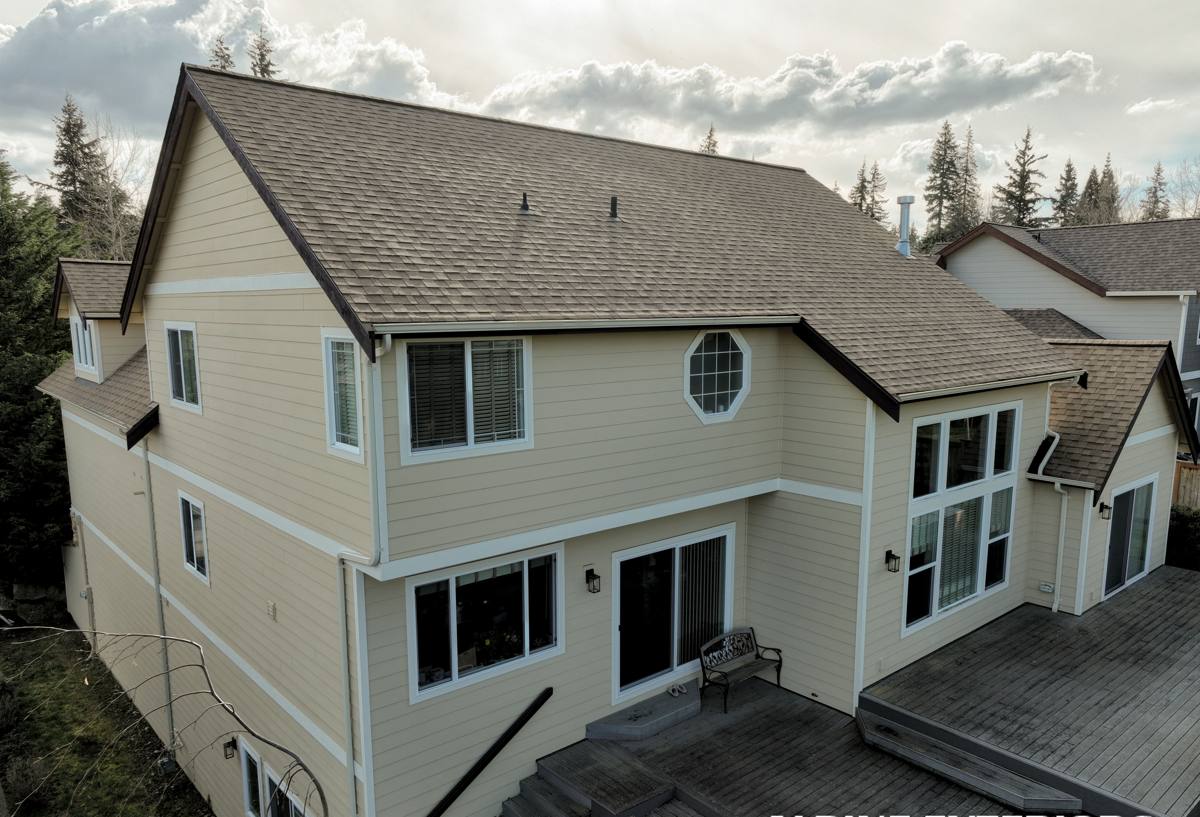
What Salt Air, Rain, and Moss Actually Do to a Roof
Salt Air
Airborne salt from Bellingham Bay accelerates corrosion on exposed metal — flashing, fasteners, vents, and gutter hardware — faster than it does even a mile or two away from the water. Fasteners and flashing that would hold up fine elsewhere in Whatcom County can start showing rust streaks and early failure on a waterfront-adjacent roof.
Driving Rain
Storms coming off the Sound don't just fall straight down — wind pushes rain sideways and up under shingle edges, at valleys, and around any penetration in the roof (vents, chimneys, skylights). A roof system built for calmer conditions can leak in exactly these spots even when the shingles themselves look fine.
Moss and Shade
Fairhaven's tree canopy is part of what makes the neighborhood what it is, but it also means many roofs stay shaded and damp long after a storm passes elsewhere in town. That moisture-retaining environment is exactly what moss needs to take hold, and once moss establishes itself it lifts shingle edges, holds water against the roof deck, and shortens the life of the roofing material underneath it.
Signs a Fairhaven Roof Is Due for Replacement
Roofs rarely fail all at once — they show warning signs first. In this neighborhood, watch for:
- Shingles that are cupping, curling, or missing granules in patches, especially on shaded slopes
- Moss or dark streaking that keeps coming back within a season or two of cleaning
- Rust staining around flashing, vents, or metal fasteners
- Soft spots or sagging when walked on, which can indicate a wet or compromised deck
- Daylight visible through the roof deck from inside the attic
- Interior water stains that appear or worsen during wind-driven storms specifically
- A roof that's simply reaching the end of its material's expected service life
Any one of these can sometimes be handled with a repair. Several together, or a roof that's already past the age where repairs make financial sense, usually points to replacement.
What a Correct Replacement Involves in This Neighborhood
Full Tear-Off and Deck Inspection
We remove the old roofing down to the deck rather than layering over it. That's the only way to actually see the condition of the sheathing underneath — which matters more in a damp, shaded neighborhood like Fairhaven, where hidden moisture damage is more common than on drier lots. Any soft or rotted decking gets replaced before anything new goes down.
Underlayment and Water Barriers Sized for Wind-Driven Rain
Given how much of Fairhaven's weather comes in sideways off the bay, we don't treat underlayment as an afterthought. Ice-and-water shield goes at eaves, valleys, and around every penetration — the places wind-driven rain actually finds its way in — with synthetic underlayment across the rest of the field for consistent protection.
Flashing and Fasteners That Handle Salt Air
Because of the corrosion risk from salt exposure, flashing and fastener choices matter more here than on an inland roof. We use materials rated to hold up against salt air rather than defaulting to whatever's cheapest, since flashing failure is one of the most common causes of roof leaks regardless of how good the shingles above it are.
Ventilation That Actually Dries the Roof Out
A shaded, damp roof needs proper intake and exhaust ventilation to let the deck dry between rain events. Poor ventilation traps moisture, which shortens shingle life and feeds exactly the kind of moss and algae growth this neighborhood is prone to. We check and correct ventilation as part of every replacement, not as an upsell.
Choosing a Roofing Material for Fairhaven's Conditions
There's no single "best" roofing material for every home — it depends on the roof's pitch, the home's style, your budget, and how much long-term maintenance you're willing to take on. Here's how the common options stack up against Fairhaven's specific conditions:
| Material | Typical Lifespan | Handling Salt Air & Moss | Relative Cost |
|---|---|---|---|
| Architectural asphalt shingle | 25–30 years | Good with proper flashing and regular moss control | Low–Mid |
| Standing seam metal | 40–50+ years | Sheds moisture fast, resists moss buildup; needs corrosion-rated fasteners near the water | Mid–High |
| Cedar shake | 20–30 years with upkeep | Attractive but moisture-sensitive; requires diligent moss and rot maintenance in shaded lots | High |
| Synthetic/composite shake or slate | 40–50 years | Won't absorb moisture like wood; holds up well to damp, shaded conditions | Mid–High |
For a lot of Fairhaven's older homes, where roof character matters to the look of the house, we often talk through synthetic options that mimic wood or slate without the maintenance burden that real cedar carries on a shaded lot. That's our professional recommendation based on moisture behavior and upkeep, not a knock on any particular product — cedar can be the right call for an owner who's committed to the maintenance schedule it needs.
Our Process, Start to Finish
- Free on-site inspection — we walk the roof and attic, check the deck, flashing, and ventilation, and give you a straight assessment of whether you need replacement or repair.
- Written estimate — a clear scope of work and material options, no pressure to decide on the spot.
- Scheduling around Fairhaven's weather windows — we plan tear-off and dry-in for stretches with the least storm risk, since an open roof deck and driving rain don't mix.
- Tear-off, deck repair, and installation — done in the sequence above, with daily site cleanup so debris isn't sitting around a residential street.
- Final walkthrough — we go over the finished roof with you, including ventilation and any moss-prevention steps specific to your lot's shade and tree cover.
Why Hiring a Crew That Already Works Fairhaven Matters
Fairhaven isn't a neighborhood where a generic roofing approach works well. Steep, narrow streets and tight lots affect how materials get staged and how a crew accesses the roof safely. Mature tree canopy affects both moss strategy and how careful a crew needs to be with property, landscaping, and debris containment during tear-off. And because a meaningful share of the housing stock is older, knowing what to expect from original framing and past re-roofing work — rather than being surprised by it mid-job — keeps a project on schedule and on budget.
A crew that's done this work in the neighborhood before also knows which flashing and fastener specs actually hold up this close to the water, instead of learning that lesson on your roof. Local familiarity isn't a marketing line — it's fewer surprises and fewer callbacks.
Keeping a New Roof Healthy Through Moss Season
A correctly installed roof still benefits from some basic upkeep, especially given how long moss season runs in Whatcom County's wet, mild winters. A few habits go a long way:
- Keep gutters and valleys clear of needles and leaf debris so water can actually drain
- Trim back overhanging branches where practical to reduce shade and debris buildup
- Have moss growth addressed early rather than left to spread across a slope
- Schedule a roof check after major windstorms, since that's when flashing and fasteners are most likely to be disturbed
- Watch for granule buildup in gutters, which can signal accelerated shingle wear
Warranty and What It Actually Covers
Roofing warranties come in two parts, and it's worth understanding both before you sign anything: the manufacturer's warranty on the material itself, and the contractor's workmanship warranty on the installation. Most roof failures trace back to installation details — flashing, fastening, ventilation — not the shingle or panel itself, which is why the workmanship warranty matters just as much as the material warranty. We're upfront about what's covered under each so you're not caught off guard if something needs attention down the road.
If your roof is showing wear, or you just want a straight answer on whether it's holding up under Bellingham's coastal conditions, we're glad to take a look. The estimate is free, there's no pressure attached to it, and you'll get a plain explanation of what we see and what your real options are — use the form below to get started.