 Bellingham Roofing
 Why Silver Beach Homes Need Siding Built for the Local Climate
Silver Beach is one of those Bellingham neighborhoods where the exterior of a house works harder than most homeowners realize. Whatcom County sits in a marine climate belt, and that means the siding on a Silver Beach home is dealing with a steady combination of moisture, wind-driven rain, and salt-tinged air off Bellingham Bay for most of the year. Add in the shade and dampness that come with the mature tree cover common in this part of town, and you get long stretches where siding simply doesn't get a chance to fully dry out between storms.
That combination is exactly why we treat siding installation in Silver Beach as a different job than siding installation in a dry inland climate. The product choice, the flashing details, the fastening pattern, and the prep work underneath the panels all have to account for a home that will spend months at a time damp, cool, and exposed to salt-laden air. Get any of that wrong and the siding will look fine for a year or two before problems start showing up.
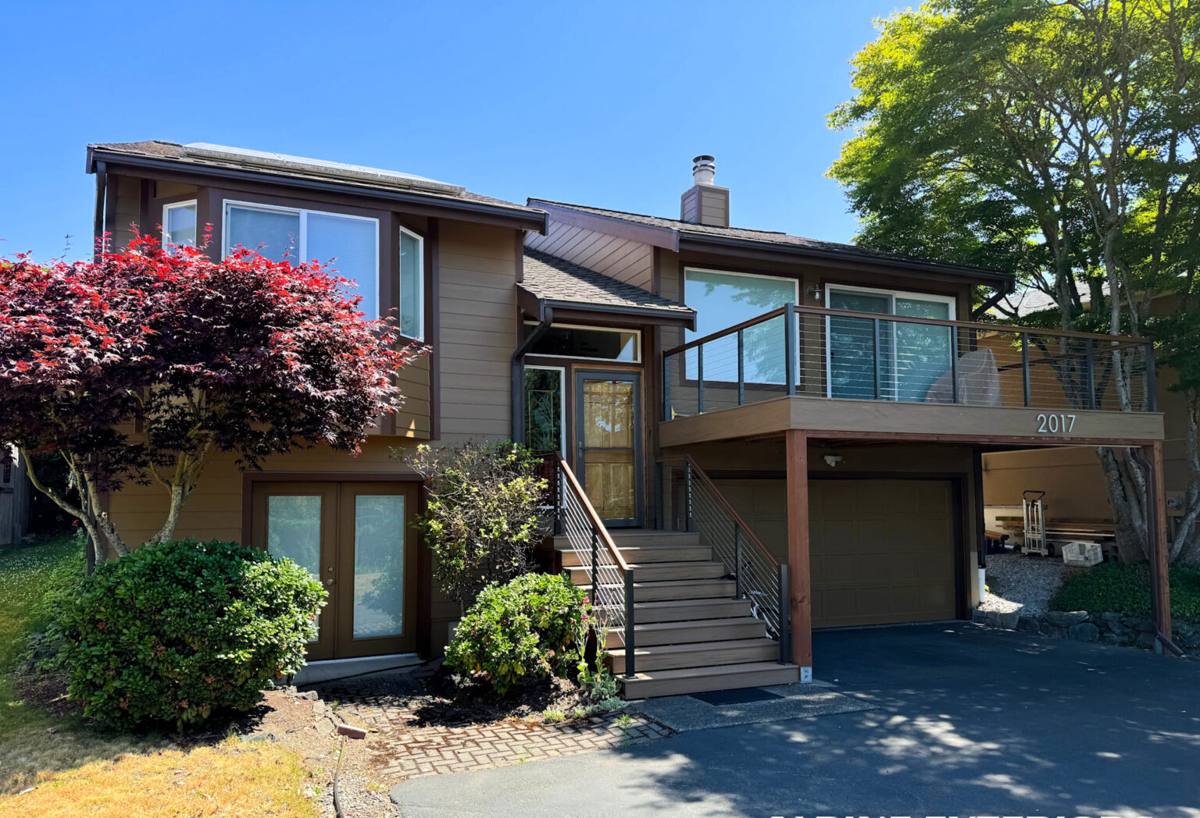
What Salt Air, Driving Rain, and a Long Moss Season Do to Siding Over Time
Three things define the wear pattern on Bellingham-area siding, and Silver Beach gets all three.
Salt air off the bay accelerates corrosion on anything metal — fasteners, flashing, trim edges — and it also degrades cheap paint finishes faster than inland exposure would. Driving rain, the kind that comes in sideways during winter storms, doesn't just wet the face of the siding — it tests every seam, joint, and penetration for a path inward. And Whatcom County's long moss season means organic growth gets a foothold anywhere siding stays shaded and damp, particularly on north-facing walls and under tree canopy, which describes a lot of Silver Beach lots.
None of this is dramatic on its own. It's cumulative. A siding system that's engineered for this kind of climate — and installed correctly — shrugs off decades of it. A siding system that isn't, or one that's installed with shortcuts, starts showing swelling, staining, soft spots, or paint failure well before it should.
Where Problems Show Up First
- Bottom courses near grade, where splash-back keeps material wet longer
- Butt joints and seams that weren't properly sealed or flashed
- Areas around window and door trim where water can track behind the cladding
- Shaded, north-facing walls where moss and algae take hold
- Corners and fastener heads exposed to direct wind-driven rain
Signs Your Silver Beach Home's Siding Is Falling Behind
Most siding failure is gradual, which is why it's easy to miss until it's expensive. Homeowners in this neighborhood should walk the exterior at least once a year and look for these warning signs.
- Soft or spongy spots when you press on the siding, especially near the bottom courses
- Visible swelling, bubbling, or delamination of panels or trim
- Paint that's peeling, chalking heavily, or failing well before its expected repaint interval
- Persistent moss, algae, or dark streaking that comes back shortly after cleaning
- Gaps opening up at seams, corners, or where siding meets trim
- Any musty smell or visible staining on interior walls that back up to exterior siding
If two or three of these show up together, it's usually worth a professional look before the damage spreads to the sheathing underneath.
What a Correct Siding Installation Actually Involves
Siding installation isn't just fastening panels to a wall. In a climate like this one, most of what determines whether a job lasts happens before a single piece of finished siding goes up.
Tear-Off and Sheathing Inspection
Once the old siding comes off, the sheathing underneath gets inspected for rot, soft spots, or hidden water damage — problems that are invisible until the wall is opened up. Any compromised sheathing gets replaced before anything else happens. Skipping this step to save time is the single most common source of siding failures we get called out to diagnose.
Weather-Resistive Barrier and Flashing
A correctly lapped weather-resistive barrier, combined with properly integrated flashing at every window, door, and penetration, is what actually keeps driving rain from reaching the wall assembly. The siding itself is the visible layer, but the barrier and flashing system underneath is what does the real work of managing water. This is also where corner and seam details matter most in a wind-driven-rain climate — it's the first place water gets pushed if the details are wrong.
Fastening and Panel Layout
Fastener type, spacing, and depth all follow the manufacturer's engineering specs, not shop habit. Under-driven or over-driven fasteners, wrong fastener material, or incorrect spacing all shorten the life of the installation — and in a salt-air environment, fastener corrosion resistance matters more than it would inland.
Factory Finish vs. Field Painting
A factory-applied finish that's baked on and warrantied for color retention holds up far better against UV, salt air, and moisture cycling than field-applied paint. This is one of the clearest differences between a premium fiber cement system and lower-cost alternatives — the finish is engineered as part of the product, not added afterward.
Why We Install Only James Hardie Fiber Cement
We made a deliberate decision as a company to install James Hardie fiber cement siding exclusively, and we don't install vinyl, LP SmartSide, primed spruce, cedar, or other fiber cement brands. That's not a marketing position — it's a standard we hold because of what we see happen to exteriors in this exact climate over time.
Vinyl siding is inexpensive and easy to install, but it moves with temperature swings, can become brittle in cold snaps, and offers limited protection where wind-driven rain gets behind panels at seams and corners — a real vulnerability in a climate that delivers plenty of both. Wood products, including cedar and primed spruce, look great initially but require an ongoing maintenance commitment — regular refinishing, moisture monitoring, and prompt repair — that most homeowners underestimate until the first signs of rot appear. LP SmartSide and other engineered wood products perform reasonably well when installation and maintenance are followed to the letter, but they remain wood-based, which means moisture management at every seam and cut edge is non-negotiable in a wet climate. Other fiber cement brands compete on price but don't carry the same factory finish warranty or climate-engineered product lines that Hardie offers.
James Hardie fiber cement is non-combustible, dimensionally stable across our temperature and humidity swings, and available in HZ product lines specifically engineered for different climate zones. Its ColorPlus factory finish is baked on and backed by its own warranty, which matters in an area where sun, salt, and rain all work against paint film over time. Combined with a strong transferable warranty on the substrate itself, it's the system we're willing to stand behind on a house that has to perform for decades, not just look good at project completion.
How Common Siding Materials Compare in This Climate
| Material | Moisture Behavior | Maintenance Burden | Typical Lifespan Here |
|---|---|---|---|
| James Hardie Fiber Cement | Dimensionally stable, resists moisture-driven swelling | Low — occasional wash, factory finish holds color | 30+ years to substrate warranty |
| Vinyl | Can allow water intrusion at seams; moves with temperature | Low upfront, but limited repair options if damaged | 15-25 years, shorter with UV and impact wear |
| Cedar / Primed Spruce | Absorbs moisture; prone to rot without upkeep | High — refinishing and inspection on a regular cycle | Highly dependent on maintenance follow-through |
| LP SmartSide / Engineered Wood | Wood-based; sensitive at cut edges and seams | Moderate — moisture checks and prompt repair matter | Varies widely with installation quality |
This isn't a claim that the other materials are without merit — vinyl and engineered wood both have a place depending on budget and goals. It's simply why, given what this climate does to exteriors, we've standardized on one system we trust to perform without constant homeowner intervention.
Our Process for Silver Beach Projects
Estimate and Inspection
We start with a walk-around of the home, checking existing siding condition, trim, flashing, and any areas showing early signs of moisture damage. Because we already work in this neighborhood, we have a good sense of which orientations and wall areas tend to need extra attention before we even start pulling siding.
Prep, Tear-Off, and Installation
Old siding comes off, sheathing gets inspected and repaired as needed, the weather-resistive barrier and flashing go in per manufacturer detail, and then Hardie panels or planks go up with the correct fastening schedule for the product line and exposure. Trim, corners, and penetrations get the same level of attention as the field of the wall — those are the spots that fail first if rushed.
Cleanup and Walkthrough
We clear debris and fasteners from the site, then walk the finished exterior with the homeowner to review the work and answer questions about care going forward.
What Affects the Cost of a Siding Installation
| Factor | Why It Matters |
|---|---|
| Amount of sheathing repair needed | Hidden rot found during tear-off adds material and labor |
| Home size and wall complexity | More corners, gables, and trim detail mean more labor per square foot |
| Siding profile and finish selection | Lap width, texture, and ColorPlus color all affect material cost |
| Access and site conditions | Slopes, tight lot lines, and landscaping affect setup time |
| Existing trim and flashing condition | Reusable trim lowers cost; failing trim adds scope |
We provide a written estimate that breaks these factors out so homeowners can see exactly what's driving the number, rather than a single lump figure.
Questions Worth Asking Before You Sign a Siding Contract
- What happens if rot is found under the old siding once it comes off?
- What weather-resistive barrier and flashing details will be used at windows and corners?
- What's the manufacturer's fastening spec for this product, and will it be followed exactly?
- What warranty covers the material, the finish, and the labor — and are they separate?
- Has this crew installed siding on other homes in this same neighborhood or climate zone?
Why Hiring a Crew That Already Works Silver Beach Matters
A siding crew that already knows this neighborhood isn't guessing at how the local climate behaves — they've seen how the wind comes off the water, which walls stay damp longest, and where moss takes hold first on homes just like yours. That familiarity shows up in small decisions throughout the job: where to pay extra attention to flashing, which fastener spacing to hold to in wind-exposed spots, and how to sequence the work around Whatcom County's wetter months.
It also matters for accountability. A local crew has a reputation in the neighborhood to protect and is easy to reach if a question comes up five or ten years down the road — not a distant sales office. For a job that's supposed to protect a home for decades, that kind of local, ongoing accountability is worth as much as the product on the wall.
If you're considering siding replacement for a Silver Beach home, we're happy to take a look and put together a free, no-pressure estimate — no obligation, just a straight assessment of what your home needs.