 Bellingham Roofing
 Siding Replacement Built for Sehome's Marine Climate
Sehome sits close enough to Bellingham Bay and the Salish Sea that homes here take on a steady diet of salt-laden air, wind-driven rain, and the kind of damp, shaded conditions that keep moss and algae active for most of the year. Add in the mature tree cover common around Sehome Hill and the neighborhood's older housing stock, and you get siding that ages faster than it would in a drier, sunnier climate. If your siding is cupping, staining, or feels soft in spots, it's not a cosmetic problem — it's your home's weather barrier breaking down.
We install siding replacements across Whatcom County, and Sehome jobs come with their own set of considerations: narrower lots and older construction that call for careful tear-off, mature landscaping that limits staging and material handling, and a climate that punishes any material or installation shortcut within a few winters. This page covers what a proper siding replacement in Sehome actually involves, and why we only put one product on the homes we work on.
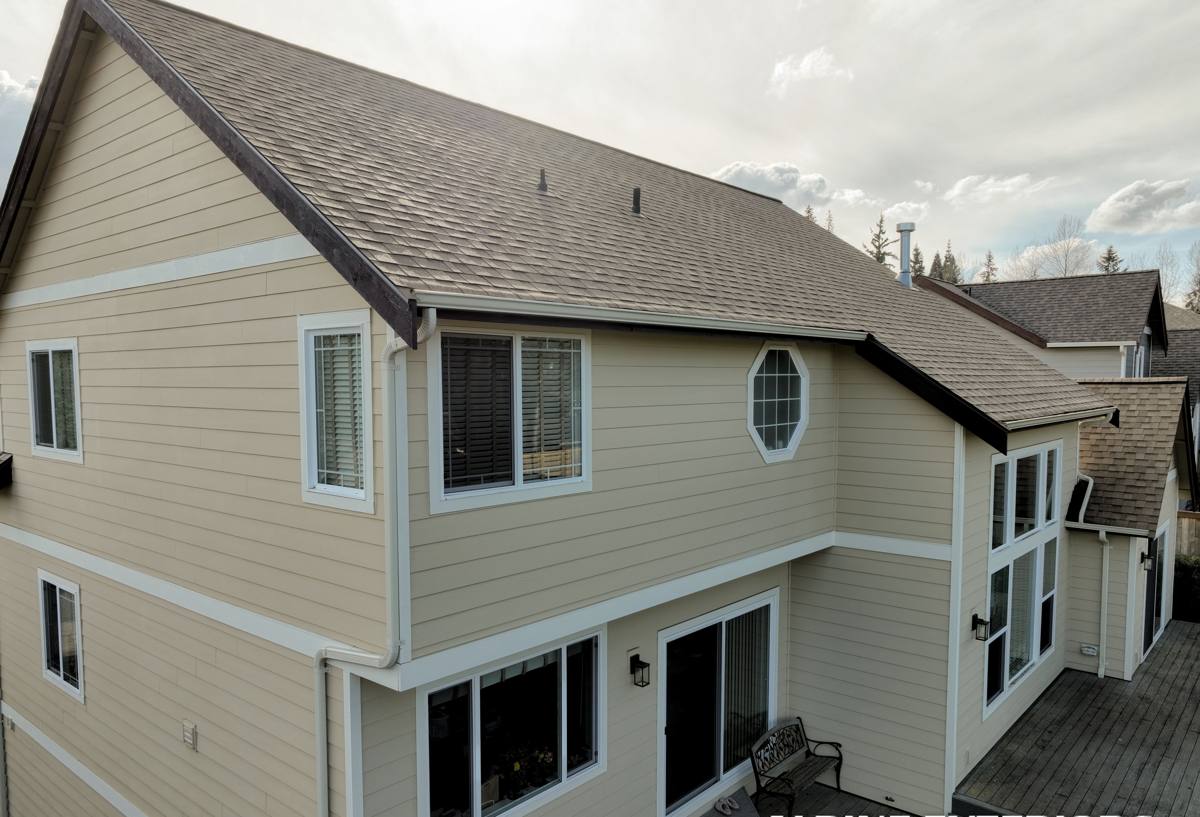
What Bellingham's Climate Does to Siding Over Time
Whatcom County's marine climate is milder than most of the country, but "mild" doesn't mean easy on a home's exterior. Three factors do most of the damage:
Salt Air
Proximity to the bay means airborne salt settles on exterior surfaces year-round. Over time it accelerates corrosion of fasteners and trim, and it can degrade paint films and less weather-resistant siding materials faster than inland homes ever experience.
Driving Rain
Bellingham doesn't just get rain, it gets sideways rain pushed by wind off the water. That means siding has to shed water at seams, laps, and penetrations, not just on flat faces. Poorly lapped or under-flashed siding lets water track behind the cladding, where it can sit against sheathing for months during the wet season.
Long Moss Season
Shaded, damp conditions in neighborhoods like Sehome keep moss, algae, and mildew active for most of the year, not just a few weeks. Siding that holds moisture — or that's painted with a finish that doesn't resist mildew growth — will show green and black staining faster and need more frequent cleaning and repainting.
Signs Your Sehome Home Needs Siding Replacement
Not every siding problem calls for a full replacement — sometimes a repair or repaint is enough. But certain signs mean the material itself is failing and patching it will only buy a little time:
- Soft, spongy spots when you press on the siding, especially near the bottom courses and around windows
- Visible cupping, warping, or delamination of boards or panels
- Paint that won't hold no matter how often it's redone, or finish that's chalking heavily
- Persistent moss, algae, or dark staining that comes back within a season of cleaning
- Gaps opening at seams, corners, or butt joints
- Rising interior humidity, musty smells, or peeling interior paint on exterior walls
- Visible rot at the bottom edge of walls or around penetrations like faucets and vents
If you're seeing two or more of these, it's worth having the siding evaluated before another wet season adds to the damage.
Why We Only Install James Hardie Fiber Cement Siding
We get asked regularly why we don't offer vinyl, LP SmartSide, or other fiber cement brands as options. The honest answer is that we've made a professional call to standardize on one product line because it performs best in exactly the conditions Sehome deals with.
Vinyl siding is inexpensive and easy to install, but it's a petroleum-based product that can warp or crack in temperature swings, and it doesn't offer the same fire resistance or paintable, factory-cured finish that fiber cement does. In a climate with driving rain and salt exposure, vinyl's seams and lack of rigidity make it more prone to water intrusion behind the panels over time.
Engineered wood products like LP SmartSide use a wood-strand core with a resin coating, which works well in some climates but relies on the coating and field-applied caulking staying intact at every cut edge to keep moisture out. In a marine climate with a long wet season, any breach in that coating gives moisture a wood-based material to feed on.
Other fiber cement brands exist, and fiber cement as a category is the right material for this climate. But we've settled on James Hardie specifically because of its factory-applied ColorPlus finish, its HardieZone engineering for regional climates, and a transferable warranty structure that holds up when the product is installed to Hardie's own specifications. Non-combustible, dimensionally stable, and engineered for wet, coastal climates — that combination is why it's the only product we put on a wall.
What a Correct Siding Replacement Job Involves
Tear-Off and Sheathing Inspection
Replacement starts with full removal of the old siding, not installation over it. That's the only way to actually see the sheathing underneath — which is often where the real damage is hiding, especially on a home that's had water intrusion for a while. Any soft or rotted sheathing gets identified and replaced before anything new goes up.
Weather-Resistive Barrier and Flashing
A correctly installed weather-resistive barrier and properly integrated flashing at windows, doors, and other penetrations is what actually keeps water out — the siding itself is the second line of defense, not the first. This is the step that gets rushed on cut-rate jobs and is the single biggest predictor of whether a home stays dry through a Bellingham winter.
Installation to Manufacturer Spec
James Hardie siding has specific requirements for fastener type and placement, clearance from grade and roofing, joint treatment, and caulking — all of which affect both performance and warranty coverage. Installing to spec isn't optional; it's what makes the product perform the way it's engineered to.
Trim, Caulking, and Finish Detail
The last step is finishing every seam, corner, and penetration so the assembly sheds water as one system rather than relying on any single component. This is also where a job either looks clean and tight for decades, or starts showing gaps and staining within a couple of years.
Comparing Siding Materials for a Whatcom County Home
| Material | Moisture Behavior in a Marine Climate | Maintenance | Fire Resistance |
|---|---|---|---|
| Vinyl | Seams and panel flex can allow water behind cladding; doesn't absorb moisture itself | Low, but fades and can crack over time | Combustible |
| LP SmartSide (engineered wood) | Wood-strand core is vulnerable if coating or caulking fails at cut edges | Moderate; edge sealing needs monitoring | Combustible |
| Primed cedar / spruce | Natural wood movement and moisture absorption; needs a sound paint film to perform | High; repainting on a regular cycle | Combustible |
| James Hardie fiber cement | Engineered for wet climates (HardieZone HZ5); dimensionally stable when wet | Low; factory-cured ColorPlus finish resists moss and mildew staining | Non-combustible |
This isn't a knock on every product on that list — cedar has real appeal, and vinyl has its place on tighter budgets. It's a summary of why, for the climate Sehome sits in, fiber cement is the category we recommend, and Hardie is the brand within that category we've chosen to install.
Our Process, From Estimate to Finished Job
- On-site evaluation of your current siding, sheathing condition where accessible, and any trouble spots you've noticed
- A written estimate covering material selection, scope of tear-off, and any sheathing or flashing repairs anticipated
- Scheduling that accounts for Bellingham's wet season — we plan tear-off and dry-in around weather windows so open walls aren't exposed longer than necessary
- Tear-off, sheathing repair as needed, weather-resistive barrier and flashing installation
- James Hardie siding installed to manufacturer specification, with trim and caulking detail
- Final walkthrough so you know exactly what was done and what maintenance, if any, the finish requires
Cost Factors for Siding Replacement
Every home is different, so we don't publish a flat price — but the main variables that move a siding replacement estimate up or down are consistent:
| Factor | How It Affects Cost |
|---|---|
| Sheathing condition | Hidden rot found during tear-off adds material and labor to repair before new siding goes on |
| Home size and wall complexity | More corners, gables, and penetrations mean more cutting, flashing, and trim work |
| Siding profile chosen | Lap, shingle, and panel profiles differ in material and installation labor |
| Access and site conditions | Mature landscaping, tight lot lines, or limited staging area common in older Sehome lots can affect labor time |
| Trim and detail work | Window and door trim, fascia, and soffit work bundled into the project add scope |
Why Hire a Crew That Already Works in Sehome
Siding work in an established neighborhood is different from siding work on a new build. Older homes often have sheathing and framing quirks that don't show up until tear-off starts, tighter lots that require careful material staging and cleanup, and mature trees and landscaping that need to be protected during the job. A crew that's worked Sehome and similar Bellingham neighborhoods before knows what to expect walking in, plans for it, and doesn't treat a discovery of hidden damage as a surprise that derails the schedule.
It also matters that we're a local, licensed roofing and exterior contractor working year-round in Whatcom County's weather — not a crew passing through for one job. We stand behind what we install, and we're still here if a question comes up two, five, or ten years down the road.
If your Sehome home's siding is showing its age, we'll come take a look and give you a straight, no-pressure estimate — no obligation, no pressure to decide on the spot. Use the form below to get started.