 Bellingham Roofing
 Deck Building on Bellingham's South Hill
South Hill sits above the flats of Bellingham with a mix of older homes, mature tree canopy, and lots that slope toward the bay. That combination makes it one of the more demanding parts of the city to build a deck correctly. Between the elevation changes, the shade from established trees, and the salt-laced air coming off the water, a deck up here takes a different kind of abuse than one built on a flat, open lot elsewhere in Whatcom County. We build and rebuild decks on South Hill regularly, and most of what separates a deck that lasts from one that rots out early comes down to decisions made before the first board is ever cut.
This page covers what actually matters for a deck built on South Hill: the climate factors working against it, the material and structural choices that hold up, and what our process looks like from first visit to final walkthrough.
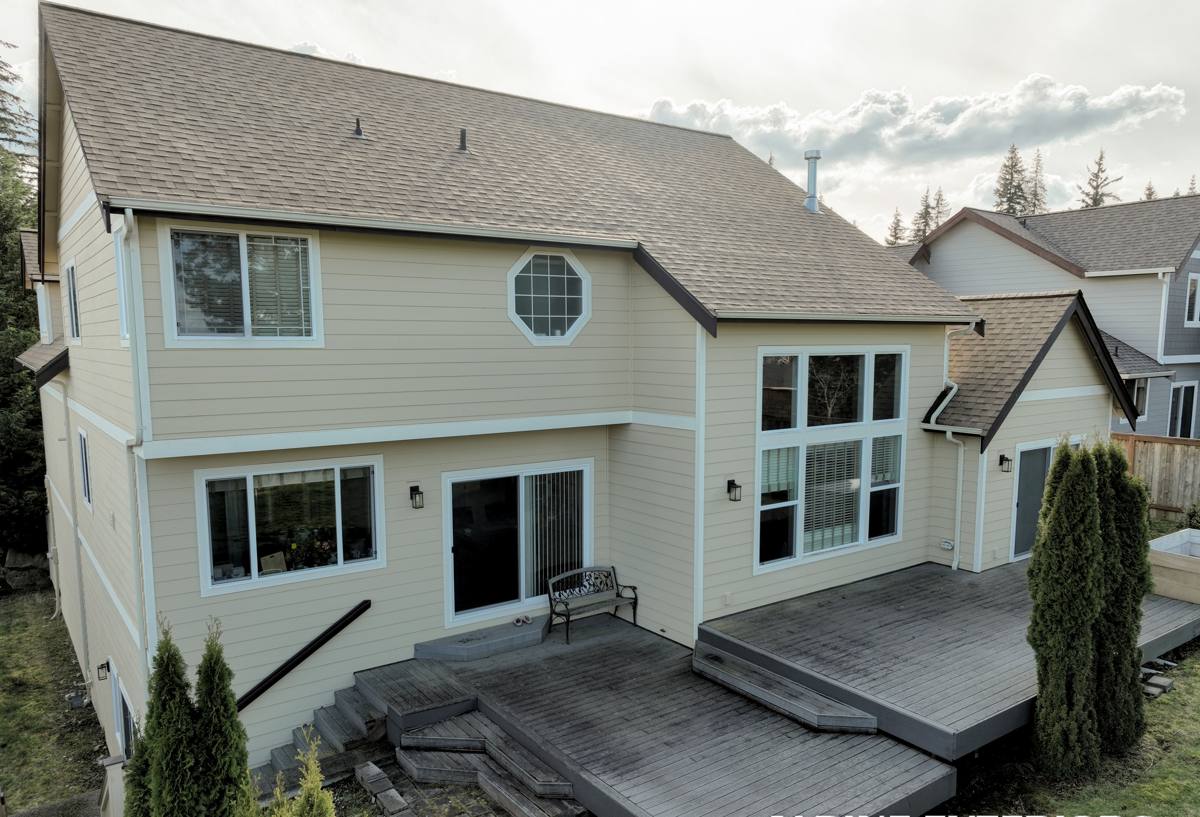
What Bellingham's Climate Does to a Deck Over Time
Every deck in Whatcom County deals with rain. What makes South Hill specific is the combination of moisture, shade, and air quality working together year-round.
Moss and Standing Moisture
Bellingham's long wet season, combined with tree cover common on South Hill lots, means moss and algae get a real foothold on decking surfaces, especially on the north or shaded side of a house. Moss doesn't just look bad — it holds moisture against the wood or composite surface, keeps boards from drying out between rains, and accelerates rot in framing underneath. A deck built without attention to drainage and airflow will grow moss in the joints faster than it should, no matter what material sits on top.
Salt Air and Metal Fasteners
Proximity to Bellingham Bay means a steady low level of salt in the air, which speeds up corrosion on anything metal — fasteners, joist hangers, railing hardware. Framing built with the wrong grade of fastener can start showing rust streaks and weakened connections years before it should. This is a bigger factor on South Hill than it is further inland.
Driving Rain and Grain-Direction Water
Wind-driven rain off the water doesn't just fall straight down — it gets pushed sideways into ledger boards, stair stringers, and any horizontal surface where it can collect. Decks that ignore this and rely on basic flashing or none at all end up with water tracking behind the house band board, which is one of the more expensive problems to fix once it's been happening unnoticed for a few seasons.
Choosing the Right Decking Material for a South Hill Lot
There's no single "best" decking material — it depends on how much sun the lot gets, how much upkeep the homeowner wants to do, and budget. Here's how the common options stack up specifically against South Hill's shade-and-moisture conditions.
| Material | Moss & Moisture Resistance | Maintenance | Notes for South Hill Lots |
|---|---|---|---|
| Pressure-treated lumber | Fair — needs sealing to perform well | Annual cleaning, periodic staining/sealing | Lowest upfront cost; shaded areas need more frequent moss treatment |
| Cedar | Good natural resistance, but surface needs upkeep | Regular sealing to hold color and resist graying | Handsome look, but shaded South Hill lots will still see moss without maintenance |
| Composite decking | Very good — doesn't absorb moisture like wood | Occasional washing, no staining or sealing | Performs well in shade; higher upfront cost offset by less ongoing work |
| PVC decking | Excellent — fully moisture resistant material | Lowest maintenance of the group | Best for heavily shaded, moss-prone areas; highest material cost |
For sun-exposed lots on the west or south side of South Hill, wood species remain a reasonable choice as long as the homeowner is committed to sealing on a regular schedule. For the shaded, tree-covered lots common on the north and east sides of the neighborhood, we generally steer homeowners toward composite or PVC — the reduced moisture absorption matters more than the upfront cost difference over the life of the deck.
Structural Considerations for Sloped and Hillside Lots
South Hill's terrain means very few decks here are simple flat builds. Slope changes how footings, framing height, and drainage all have to be handled.
Footings and Post Height
On a sloped lot, post heights vary across the same deck, which means footing depth and post bracing need to be engineered per-post rather than treated as a uniform detail. Footings also need to sit below frost depth and on undisturbed soil — cutting corners here is invisible until the deck starts to shift.
Ledger Attachment and Flashing
Where the deck attaches to the house is the single most common failure point we see on rebuilds. Proper ledger flashing — including flashing tape and a drip edge that directs water away from the band board — is not optional in a climate that gets this much sideways rain. A ledger bolted on without correct flashing is one of the more common causes of hidden rot behind older South Hill decks.
Drainage Underneath
On lots where the deck sits low or close to grade, water needs somewhere to go. That means grading the ground beneath the deck away from the foundation and, where the deck is enclosed underneath, considering a drainage system so the crawlspace or storage area below doesn't stay damp all winter.
What a Correctly Built Deck Involves
A deck that's going to hold up on South Hill needs several details done right, not just one. The differences aren't always visible once the deck is finished, which is exactly why they matter.
- Stainless steel or hot-dip galvanized fasteners and hardware rated for coastal/marine exposure, not standard interior-grade coatings
- Ledger flashing with a proper drip edge and moisture barrier at the house connection
- Joist tape or comparable protection on top of framing members to keep water out of end grain and fastener holes
- Board spacing that allows for drainage and airflow rather than tight-fit joints that trap debris and moisture
- Footings sized and placed for the specific slope and soil conditions of the lot, not a one-size-fits-all layout
- Guardrails and stair framing built to current code height and spacing requirements
- A finish plan — sealing schedule for wood, or a realistic maintenance conversation for composite/PVC — handed to the homeowner at completion
Our Deck Building Process
We walk every South Hill project through the same sequence, adjusted for the specific lot:
- Site visit. We look at slope, sun exposure, tree cover, and how water currently moves across the lot before recommending materials.
- Design and material selection. We go over the options in plain terms — what each material costs to maintain over time, not just to install — and settle on a layout that fits the house and the site.
- Permitting. We handle the permit application and inspection scheduling required for the project so the homeowner isn't chasing paperwork.
- Build. Footings, framing, decking, and railing, with flashing and fastener details handled as described above — not skipped to save time.
- Final walkthrough. We go over the finished deck with the homeowner, including what maintenance (if any) the chosen material needs going forward.
Permits and Code Requirements in Whatcom County
Most deck projects above a certain height or size require a building permit in Bellingham and unincorporated Whatcom County, and inspections typically cover footings before they're backfilled and framing before decking goes down. Guardrails are required above a certain deck height, with minimum height and baluster spacing rules that get checked at inspection. Requirements can vary depending on exact location and whether the property falls inside city limits or the county, so we confirm the specifics for each site rather than assuming — this is one of the areas where working with a crew that pulls permits in this area regularly saves real time.
Maintaining a Deck on South Hill
Even a well-built deck needs some ongoing attention in this climate, and what it needs depends on the material:
Wood Decks
Plan on a yearly inspection for moss and soft spots, cleaning before it accumulates, and resealing or staining on the schedule the product calls for — usually every one to two years depending on sun exposure. Shaded areas of the deck will need moss treatment more often than sunny ones.
Composite and PVC Decks
These need far less upkeep, but "low maintenance" doesn't mean "no maintenance." Periodic washing keeps organic buildup from taking hold in shaded corners, and keeping gutters and nearby tree debris clear reduces the moisture load the deck has to deal with.
Tree Canopy Management
On heavily shaded South Hill lots, keeping branches trimmed back from the deck surface makes a bigger difference than most homeowners expect — more sun exposure and airflow means faster drying between rains and less moss pressure overall.
Why Hire a Crew That Already Works South Hill
A deck built to a generic spec sheet can still fail here if it ignores what the neighborhood's slope, shade, and salt air actually do to materials over time. Working with a crew that already builds on South Hill means the footing plan accounts for the slope before we're on site, the fastener grade is already set to handle the coastal air, and the permit process with the local jurisdiction isn't a guessing game. That local familiarity is what keeps a project on schedule and keeps the deck performing the way it should for years after the crew leaves.
If you're planning a new deck or need to replace one that's showing its age, we're happy to take a look and walk you through the options for your specific lot. Fill out the form below for a free, no-pressure estimate.