 Bellingham Roofing
 Deck Repair Built for South Hill's Conditions
South Hill is one of Bellingham's older, established neighborhoods, and it comes with a mix of mature tree canopy, hillside terrain, and homes built across several different decades. That combination is tough on decks. Heavy shade from established trees means moisture lingers on deck boards long after a storm has passed. Slopes and retaining walls around many South Hill lots change how water sheds off a property, and older homes may have decks that were built or repaired to standards that don't hold up to today's wet-season demands. When we repair a deck in this neighborhood, we're not just patching boards — we're accounting for the specific way South Hill's terrain and tree cover interact with Whatcom County's climate.
Bellingham's climate is defined by long stretches of rain, cool damp air, and a moss season that can run from fall through spring. On a deck that gets regular sun, moisture evaporates and the wood dries out between rain events. On a shaded, tree-covered lot like much of South Hill, that drying cycle barely happens. The result is wood that stays damp for weeks at a time, fasteners that corrode faster, and moss and algae that get a foothold on horizontal surfaces and never fully let go.
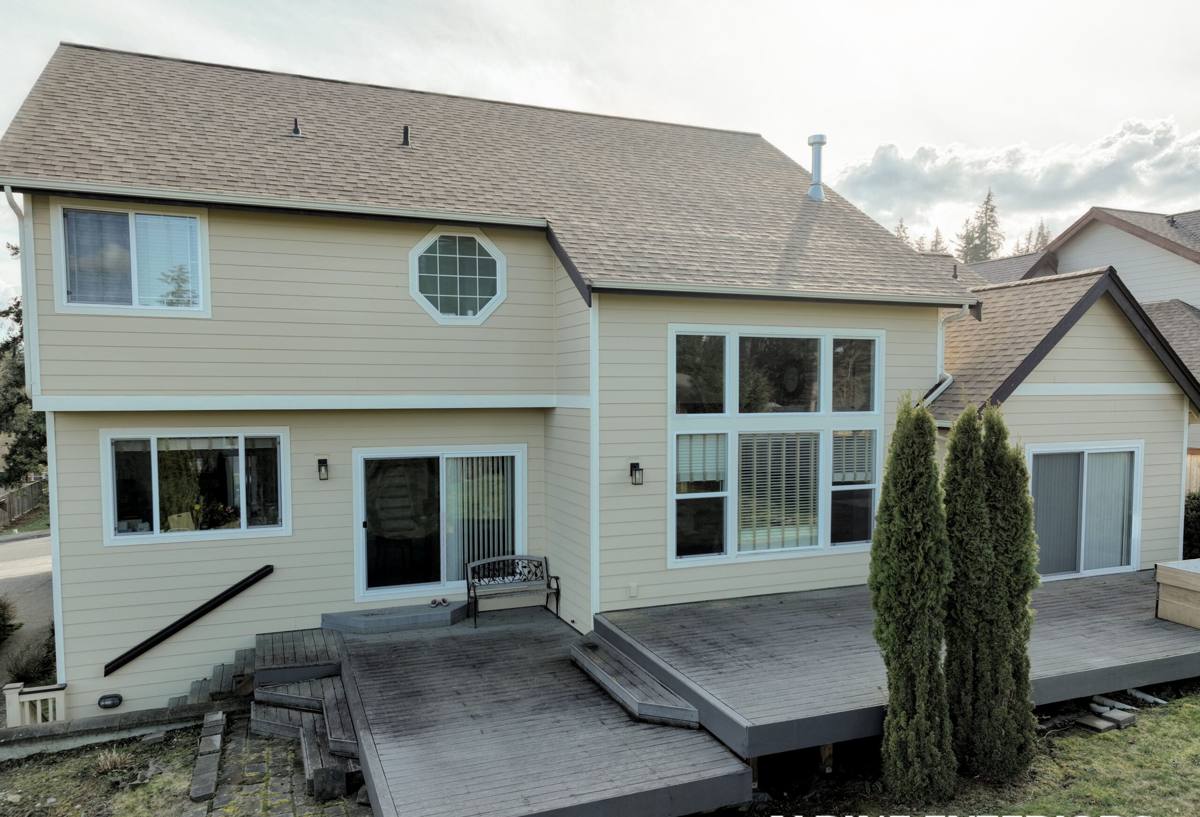
Why Shade and Moisture Are the Real Enemy Here
Most deck failures we see aren't caused by one dramatic event. They're caused by slow, repeated exposure to moisture that never fully dries. A few things make this worse on South Hill properties specifically:
- Tree canopy: Overhanging branches drop debris onto deck surfaces and block airflow, keeping boards wetter longer than an open, sun-exposed deck.
- Hillside drainage: Sloped lots can direct extra water toward foundations, ledger boards, and support posts if grading and gutters aren't doing their job.
- Older construction methods: Decks built before modern flashing and fastener standards became common are more vulnerable to hidden rot, even if they look fine on the surface.
- Salt-tinged coastal air: Bellingham's proximity to the water means metal hardware — nails, screws, joist hangers, bolts — corrodes faster than it would further inland, which weakens connections you can't see from above.
None of this means a South Hill deck is doomed. It means the repair has to address moisture management and hardware condition, not just replace the boards that look bad.
Signs Your Deck Needs Repair
Homeowners often wait until a board visibly gives way, but most decks show warning signs well before that point. Walk your deck and check for these:
- Boards that feel spongy, springy, or soft underfoot
- Persistent green or black staining that returns quickly after cleaning
- Gaps opening up between the ledger board and the house
- Rust streaks running down from screws, nails, or metal connectors
- Railings that wiggle or feel less rigid than they used to
- Stairs that feel uneven, bouncy, or make new creaking sounds
- Visible daylight or gaps where support posts meet footings
- A musty smell coming from underneath the deck structure
Any one of these on its own might be minor. Several together usually mean moisture has been working on the structure for a while, and it's worth having someone look underneath, not just at the surface.
Cosmetic Wear vs. Structural Concern
Graying, weathered wood or faded stain is a cosmetic issue — it affects appearance, not safety. Soft wood, loose framing connections, corroded hardware, or a ledger board pulling away from the house are structural issues. The two get confused often because both can look similar from a few feet away. A proper inspection means getting under the deck and checking framing, not just walking the surface.
What a Correct Deck Repair Actually Involves
A repair that only replaces the boards you can see, without checking what's underneath, tends to fail again within a few seasons — especially in a shaded, damp environment like much of South Hill. A repair done right addresses the whole system:
Framing and Structure
Joists, beams, and posts get checked for soft spots, splitting, and rot, particularly anywhere water tends to pool or run. Any compromised framing gets sistered or replaced before new decking goes down — covering up bad framing with fresh boards just hides the problem.
Ledger Board and Flashing
The ledger board — where the deck attaches to the house — is the single most common source of hidden rot, because it's constantly exposed to water running off the house and off the deck surface itself. Correct flashing here isn't optional; it's what keeps water from tracking behind the board and into the rim joist and framing of the house itself.
Fasteners and Hardware
Given the corrosion risk from Bellingham's damp, salt-tinged air, we check every joist hanger, bolt, and structural screw for rust and wear. Hardware that's compromised gets replaced with corrosion-resistant fasteners rated for exterior and coastal-adjacent use, not standard interior-grade hardware.
Drainage and Airflow
Where tree cover or grading is keeping a deck wet longer than it should be, we look at whether gaps between boards, ventilation underneath, or grading nearby needs adjusting as part of the repair — not just the boards themselves.
Repair or Replace? How We Help You Decide
Not every deck problem calls for a full rebuild, and not every deck is worth saving. The honest answer depends on how much of the structure is still sound.
| Factor | Repair Usually Makes Sense | Replacement Usually Makes Sense |
|---|---|---|
| Framing condition | Posts, joists, and beams are solid; only isolated spots are soft | Rot is widespread through the main structural members |
| Ledger board | Attachment point is sound with only minor flashing issues | Ledger is significantly rotted or pulling away from the house |
| Age of deck | Deck is relatively young or was well-built originally | Deck is decades old and built to outdated standards |
| Scope of damage | Damage is limited to specific boards, railings, or stairs | Damage is spread across most of the deck surface and structure |
| Design and layout | Current layout and size still work for how you use the space | You want a different footprint, size, or usable area |
We'll always tell you plainly which category your deck falls into. If a targeted repair will genuinely hold up, we recommend that — a full replacement isn't the right answer just because it's more work.
Our Deck Repair Process
- On-site inspection. We check the deck surface, but more importantly we get underneath and inspect framing, ledger board, footings, and hardware.
- Honest assessment. You get a clear explanation of what's causing the problem, what needs to be repaired versus what's still sound, and why.
- Written estimate. A detailed scope of work and cost, with no surprise add-ons once work begins.
- Repair work. Framing, flashing, and hardware are addressed first, then decking, railings, and stairs.
- Final walkthrough. We check the finished repair with you and go over any maintenance steps specific to your deck's exposure and shade conditions.
Materials We Use and Why
Material choice matters more on a shaded, damp lot than it does on a deck that gets regular sun. Pressure-treated framing lumber is standard for structural members because it's rated for ground and weather contact. For decking surfaces, both traditional wood and composite boards have a place, and the right choice depends on how much sun and shade a given deck actually gets.
Wood decking is more affordable and repairable board by board, but it needs regular cleaning and refinishing to hold up in a shaded, moss-prone spot — skip that maintenance for a couple of seasons and it shows. Composite decking costs more upfront and resists moss and rot better, but it still needs the framing underneath to be sound and properly flashed, since composite boards don't fix a moisture problem in the structure below them. We'll walk you through the honest trade-offs for your specific deck rather than pushing one material as a universal fix.
For fasteners and hardware, we use corrosion-resistant, exterior-rated products throughout — this isn't optional in a coastal-adjacent climate like Bellingham's, where standard hardware corrodes noticeably faster than it would in a drier inland region.
Why Hire a Crew That Already Works South Hill
A deck repair crew that's worked on South Hill homes before already understands how tree cover, hillside drainage, and older construction methods in this neighborhood interact with the local climate. That matters because a repair approach that works fine on an open, sun-exposed lot elsewhere in Whatcom County can fall short on a shaded South Hill property where boards simply don't dry out the same way. Knowing what to check for — where moisture tends to collect, which older building methods need extra attention, how much airflow a given deck actually gets — comes from having done this work in this specific neighborhood, not just from general deck experience.
It also means a more accurate estimate from the start. We're not guessing at how South Hill's terrain and tree coverage will affect the repair; we've seen the pattern before.
Keeping Your Deck in Good Shape After Repair
A well-done repair still needs some upkeep, especially in a shaded, damp environment. A few habits go a long way:
- Clear leaves and debris off the deck surface regularly, especially in fall
- Clean moss and algae buildup before it gets a deep foothold
- Check railings and stairs for looseness once or twice a year
- Keep gutters and downspouts near the deck clear so water isn't dumping onto or under it
- Re-seal or refinish wood decking on a regular schedule rather than waiting until it looks worn
- Trim back branches that are keeping the deck surface from drying between rains
If you'd like an honest look at what your South Hill deck actually needs — a targeted repair, a partial rebuild, or just some maintenance advice — we're happy to come take a look. Estimates are free, there's no pressure, and you'll get a straight answer about what your deck needs and why.